Welcome back to The Varsity, where I’m not so happy to report that my March Madness chalk
strategy has worked like a charm so far. Through the first two rounds, my bracket is third in Puck’s annual pool. (Lauren Sherman, Puck’s formidable fashion eminence and Line Sheet author and all-around point spread hustler, is currently in first place.) I’ll be at Capital One Arena Friday night for a couple of epic Sweet 16 matchups: Duke–St.
John’s and Michigan State–UConn.
Tonight’s issue uncovers the latest in the NFL’s media deals, checks into how much it costs to score a Sweet 16 ticket, and dives into the numbers behind High Point’s March Madness success. Let’s jump in!
Pod alert: Marchand returns to The Varsity on Wednesday to hit on today’s biggest sports media stories. Also, I’ve had a ton of feedback from NAB president Curtis LeGeyt’s
appearance yesterday. It turns out that the industry’s top executives are insanely curious about what’s happening in D.C. right now.
This issue was created with contributions from Curtis Rowser and Maya Tribbitt.
Also mentioned in this issue: Matt Norlander, Roger
Goodell, Michael Morris, David Ellison, Brendan Carr, and more… |
- Cinderella
who?: Heading into the NCAA tournament, plenty of college basketball fans have pearl-clutched about the steady disappearance of true Cinderellas in the N.I.L. era. When 12-seed High Point University upset 5-seed Wisconsin in the first round, however, these hardened souls were invoking Princeton–UCLA all over again. But upon further inspection, High Point is hardly a Cinderella. The Panthers, who came into the tournament with a 30-4 record, play in a state-of-the-art, $170 million
arena. Late last year, the university announced gifts totaling over $195 million to support athletics, academics, and campus growth, per Front Office Sports. Last week, they chartered a plane for students to travel cross-country to cheer on the team in Portland.
Of course, none of that matters if the talent on the floor doesn’t measure up. When previewing this
year’s bracket after Selection Sunday, CBS Sports’s Matt Norlander revealed that he’d heard High Point’s roster carried an N.I.L. value north of $4 million—more than many, dare I say most, major conference programs. In other words, the glass slipper didn’t get left in High Point, North Carolina. Alas, Arkansas knocked out High Point in a close one on Saturday night. - Cinderella who? (cont’d): You know who the N.I.L.
era has really benefitted? Duh: Blue chip programs with large fan bases that are fully committed to basketball voyeurism. Washington, D.C.’s Capital One Arena will host a veritable dream lineup for the Sweet 16 later this week, with UConn matching up against Michigan State and the highly anticipated upset-watch game between the country’s number one safety school, Duke, and St. John’s. As of Monday morning, the get-in price on StubHub was $536. At Houston’s Toyota Center, the cheapest
ticket to see Nebraska–Iowa and Illinois–Houston was $477. You could get into Chicago’s United Center for $334 to see top-seed Michigan play Alabama, followed by Iowa State vs. Tennessee. Finally, single tickets for Thursday’s Purdue–Texas and Arizona–Arkansas doubleheader at San Jose’s SAP Center were going for as little as $251. Nothing exactly cheap, but for alumni and boosters, certainly worth the price of admission. (Prices as of 12 p.m. ET, March 23.)
|
And now for the main event… |
|
|
|
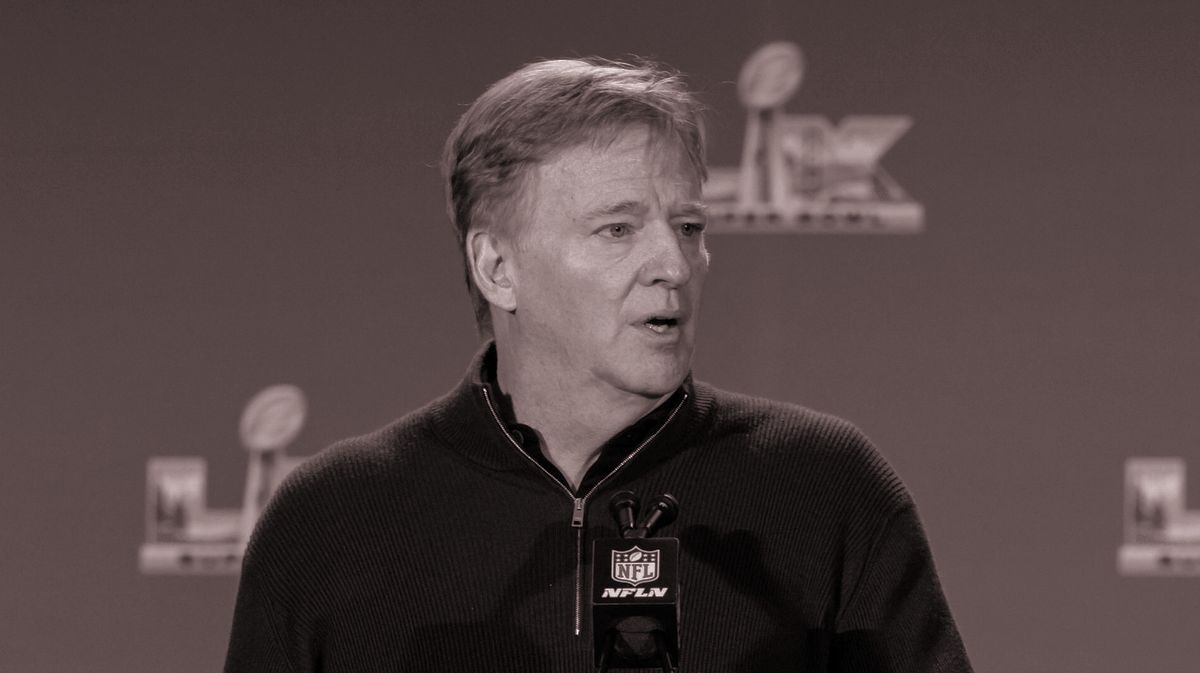
The NFL wants more money from its broadcast and streaming partners and hasn’t been shy about
its desire to rip up its current, and still-young, contract to get it. On the media side, there are quiet but growing questions about whether the league’s ask is too high. |
|
|
|
As regular readers, sports fans, members of the professional media class, and the guys in legal are now
abundantly aware, the NFL is currently in the midst of an upscale shakedown—an attempt to renegotiate its media rights with existing partners, ahead of schedule, and at a premium that could reach 60 percent. Nevertheless, the league is likely going to get what it wants: It’s the juggernaut of American sports broadcasting, and perhaps the last possible defibrillator of linear TV. And its leadership feels understandably devalued following a rash of frothy deals among lesser competitors, such as
the NBA ($76 billion) and UFC ($7.7 billion), which reset the market for sports rights.
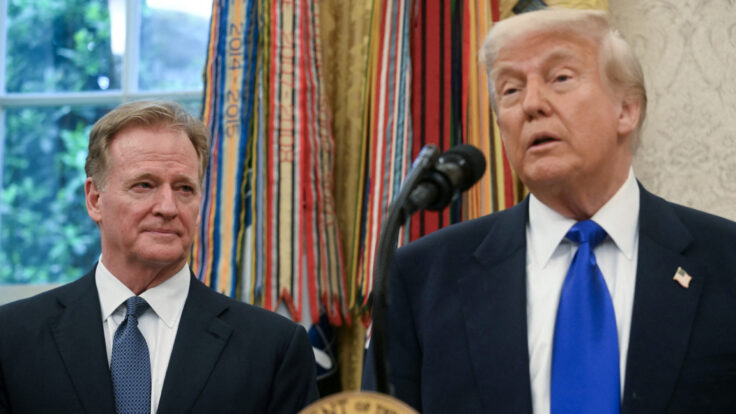
The current agreements run through the 2033 season, and discussions so far have centered not on extending the timeline, but on buying out the NFL’s opt-out clause. The league can exit its deals with Amazon Prime, CBS, Fox, and NBC after the 2029-30 season—four seasons from now—with ESPN’s opt-out coming a season later. And as I’ve previously reported, Roger Goodell has already
telegraphed his moves: The league’s first stop on the renegotiations roadshow will be longtime partner CBS, which is now owned by the munificent Ellison clan, before wending his way to Fox, etcetera. (David Ellison’s acquisition of Paramount last summer triggered a “change-of-control” clause that allowed the NFL to reopen that CBS deal immediately.) The NFL is looking to boost CBS’s annual fee from about $2.1 billion to $3 billion.
Of course, the fact
that the TV business is falling off faster in every category that is not live sports provides a compelling argument. “The reason to do [a media rights renewal] is because the concept of losing the NFL in 2030 is devastating to their valuation—or at least that’s the way it’s perceived right now,” Guggenheim Securities’ Michael Morris told me, stating the obvious. “Can networks afford to take the risk of losing it in 2030 versus the option purchase, which could be close
to $8 billion? We have no idea what’s going to happen in the media marketplace between now and then. A 2030 contract expiration is still far away.”
But an interesting question has emerged among network observers and media analysts in recent weeks: What if the networks and streamers decide to just stand pat? It’s far too early to suggest that the negotiations have hit a snag. But based on the early numbers being floated, network executives have started weighing whether to hold off until
the end of the decade rather than reopen deals this summer and extend their runway. After all, they’ve only just completed the third year of the 11-year deals, and historically, the largest value comes toward the back end of these agreements. Paying an additional $1 billion annually is simply hard to justify—especially given the broader decline of the television business.
How might the NFL countenance this budding resistance? In theory, the league could take an even harder line and tell
the networks that, come 2030, they will negotiate exclusively with the trillion-dollar market cap streamers. If the league waits until 2030 to use its opt-out, the NFL wouldn’t have to come back to any current partner if they secure a higher bid. But that would be a surprising turn, given the league’s longstanding relationships with traditional media partners, not to mention its ownership stakes in both CBS and ESPN—and the fact that the NFL relies on the remains of broadcast TV almost
as much as broadcast TV relies on the league. |
Washington Interventionism
|
In any case, the league doesn’t operate in a vacuum; Washington may shape the contours of this showdown just
as much as the marketplace. Regulators have consistently pushed back against the migration of NFL games from linear television to streaming—just last week, the F.C.C. and D.O.J. waved through the $6.2 billion Tegna-Nexstar merger.
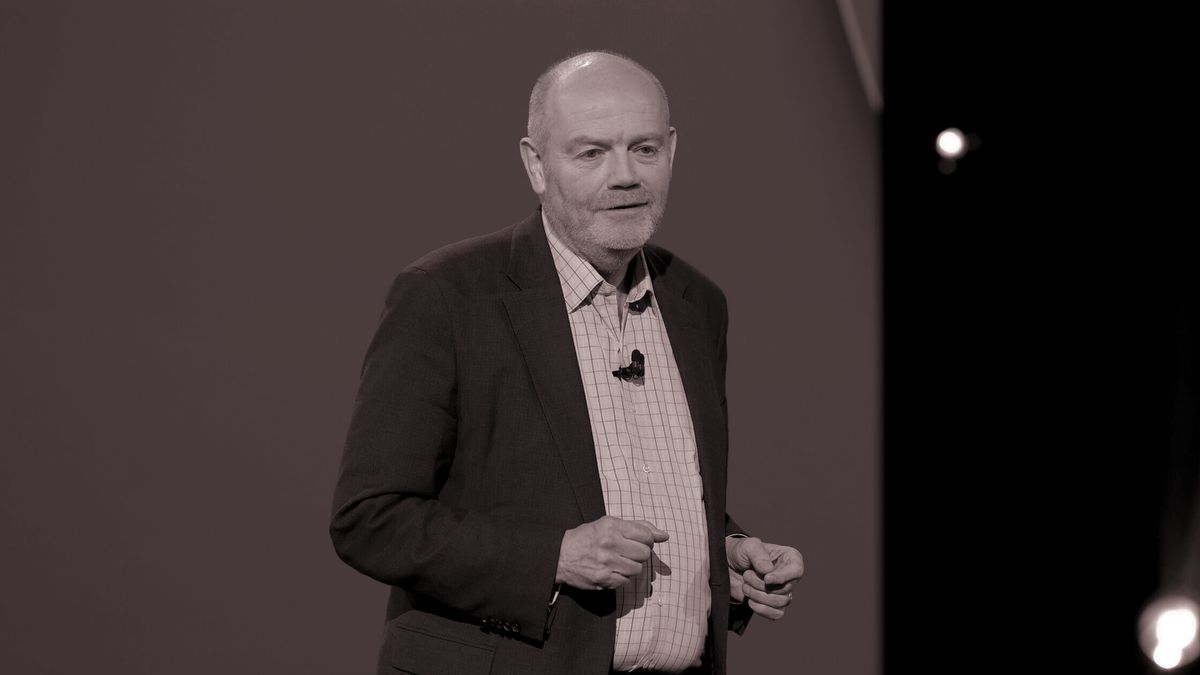
Whether that’s good or bad largely depends on which side you’re on. Curtis LeGeyt, C.E.O. of the National Association of Broadcasters, gave me his take on consolidation during yesterday’s episode of
The Varsity. “I think for better or worse, it’s an essential thing—and I’m looking at this purely through the lens of broadcast,” he told me. We also talked about his efforts to persuade policymakers that the NFL should stay on broadcast. What follows is an abridged, lightly edited version of our conversation.
John
Ourand: Why is the idea of the NFL moving off of broadcast such a big deal in Washington?
Curtis LeGeyt: There’s no doubt that consumers are frustrated by suddenly having to sign up for multiple new subscription services just to watch their favorite team. We want to ensure that these policymakers are aware that there are benefits when consumers have access to the most premier sports through broadcast. Some of these
laws were written in a universe where broadcasters were only competing against other broadcasters—where streaming didn’t even exist. These lawmakers and these agencies are right to ask the question as to whether this legal framework is enabling outcomes that are consumer-friendly, and broadcast is going to be a big part of that.
The F.C.C. opened an inquiry into the migration of NFL games to streaming. The D.O.J. is looking into it. How serious are these
moves?
We are in somewhat uncharted waters in Washington, D.C., right now, where we are seeing a very outcome-driven administration. I wouldn’t take for granted that just because things were done a certain way in the past, it means the past is likely to repeat itself. The F.C.C. has taken a really important first step by asking questions around the state of the current media marketplace and how those consumers of sports are being impacted by the
significant changes that are going on on the media side.
Shouldn’t we just let the market dictate in this case?
There are two elements that are really central to my local television members. The first is that we need more scale to be able to compete for these sports rights. We’ve asked the F.C.C. to modernize its regulations to allow broadcasters to get a little bit bigger if we’re going to be competing with Netflix, Amazon, and
Google. I think F.C.C. chairman Brendan Carr is hitting on the right point, which is that consumers need to be put front and center in ensuring that this media landscape is serving them. We’re going to be very, very engaged in that process at the F.C.C. |
On NBA All-Star Game viewership: “Really? You think that the new NBA All-Star Game format
was the main reason for the ratings spike this year? I don’t know… maybe the Olympics lead-in has some impact on the game ratings.” —A Varsity subscriber
On the NAB’s president’s appearance on the podcast: “Did Curtis LeGeyt really say with a straight face that broadcast networks are freely available? Not even close. The level of my disappointment regarding the lack of a single question regarding retransmission consent as a response is measurable. The NAB is milking
billions of dollars from cable customers in retrans fees.” —A cable guy
On the NCAA studio show: “What happened to Kenny Smith? I know CBS said he was sick on Friday, but there’s been no mention since then.” —A Varsity subscriber
[Ed. note: I checked in with a network spokesperson who said the studio host is expected back on the set Thursday.]
On SportsNet LA carrying the Varsity vodcast: “No man doing more to
keep the R.S.N. bundle together than John Ourand.” —A perspicacious media executive |
Have a great week. See you tomorrow,
John |
|
|
|
Join Puck’s chief political columnist, John Heilemann, as he roams the corridors of power and influence in America on this
twice-weekly interview show, taking you beyond the headlines with the people who shape our culture: icons and up-and-comers, incumbents and insurgents, moguls and machers in the overlapping worlds of politics, entertainment, tech, business, sports, media, and beyond. The conversations are rich and revealing, unrehearsed and unexpected… and reliably impolitic. A Puck-Audacy joint, new episodes drop every Wednesday and Friday. |
|
|
|
An essential, insider-friendly Hollywood tip sheet from Matthew Belloni, who spent 14 years in the trenches at The
Hollywood Reporter and five before that practicing entertainment law. What I’m Hearing also features veteran Hollywood journalist Kim Masters, as well as a special companion email from Eriq Gardner, focused on entertainment law, and weekly box office analysis from Scott Mendelson. |
|
|
|
Need help? Review our
FAQ page or contact us for assistance. For brand partnerships, email ads@puck.news.
You received this email because you signed up to receive emails from Puck, or as part of your Puck account associated with {{customer.email}}. To stop receiving this newsletter and/or manage all your email preferences, click here. |
Puck is published by Heat Media LLC. 107 Greenwich St., New York, NY 10006 |
|
|
|
|