Welcome back to The Varsity, live from San Francisco, where it is finally starting to
feel like Super Bowl week. Everyone wants to know about the party scene here in San Francisco, and I’ve reliably told them to ask Dylan Byers instead. Last night, however, I scored a coveted invite to the Rao’s pop-up, an export of the impossible-to-book East Harlem red sauce joint, developed by Wheels Up C.E.O. Kenny Dichter. The scene included Barstool’s Dave Portnoy and Big Cat eating a ceremonial meatball in front
of the crowd.
I hung with my fellow Terps, RedBird’s Jason Port and Seventy Six Capital’s Wayne Kimmel. I also took a selfie with the comedian Jeff Ross and bombarded the guy with questions about the Brady roast. As for tonight, my daughters are appalled that I passed up tickets for a SiriusXM Noah Kahan event in favor of a quiet-ish dinner with sources.
Pod alert: I hung out with
Mike “F’n” Florio on Radio Row this afternoon for a wide-ranging podcast that will post this weekend. And make sure you listen to yesterday’s pod: Top NFL policy and health executive Jeff Miller engaged on some of the biggest topics facing the league, from the 18th game to the Rooney Rule. You can also read some of the highlights from our rollicking
conversation below the fold.
As always, this issue was created with contributions from Curtis Rowser. |
Player of the Week: Adam Silver
|
Here I am covering Super Bowl week—my 21st, by the way—when much of the buzz in San Francisco has
been focused on the NBA trade deadline. My phone blew up yesterday with the news that my hometown Washington Wizards had traded for Anthony Davis. The day before, I was walking on Radio Row when I learned that James Harden had been shipped off to Cleveland. The NFL is still the king of North American sport, but NBA mindshare is creeping up. |
Down to the J.V.: Will Lewis
|
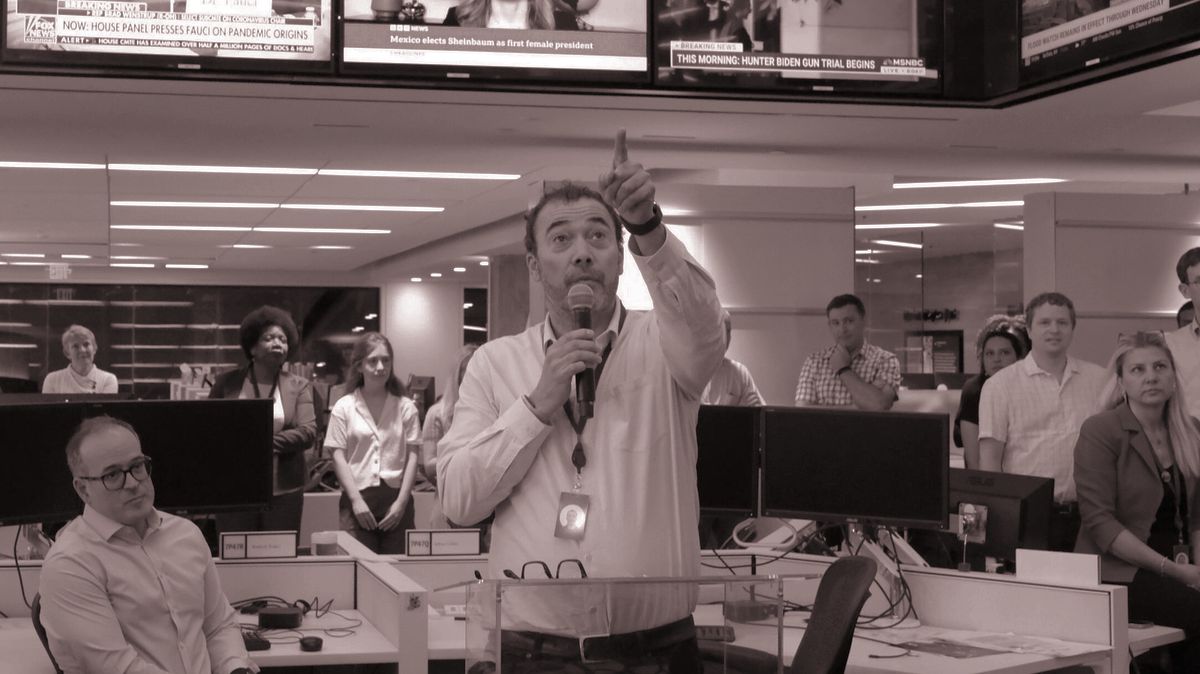
What an easy choice this week. A Washington Post without a sports section? Financially
necessary, perhaps, but still utterly inconceivable. Laying off 300 under the cover of ill-defined growth? I’m going to bring back Dylan Byers’s comment from last week: “At this point, it seems like this story is in danger of writing itself: After years of fractious infighting, the boss is laying off virtually everyone in order to save himself. This never ends well.” The best
eulogy out there comes from Sally Jenkins (of course). |
- Rooney revisited: Back in 2003, the NFL rolled out what’s now known as the Rooney Rule, which required teams to interview at least one candidate of color during their head-coaching and senior operational role searches, with the goal of diversifying league front offices. Over time, however, the rule proved impotent and was often tokenized. Following the conclusion of this year’s regular season, none of the 10 head coaching vacancies went to Black candidates.
I brought
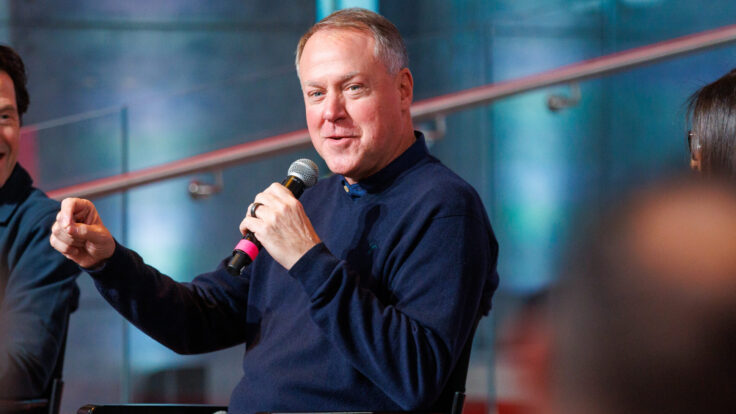
this up on yesterday’s pod with the NFL’s Jeff Miller, who oversees government relations and health and safety issues for the league. He conceded that more work needed to be done to diversify the hiring pipeline. “The Rooney Rule is a tool, but it’s not the entire toolbox,” he said. “If you look holistically, there’s no question that NFL sidelines are more diverse than they were, say, 10 years ago.” (By our accounting, there will be three fewer nonwhite head coaches this coming
season than there were in 2016.)
Miller argued that there are signs of progress. “Let’s look at coordinators and other coaches who are growing up the ranks,” he said. “The goal is to have the best possible workforce, and that requires pulling from the most diverse group of people. The more people involved in the NFL, the better off we’re going to be, in any number of roles—men, women, people of color, etcetera. … That’s a conversation we’re going to be taking very seriously, I imagine, as
soon as the Super Bowl is over and we get back to the office.” - A.I. & Art McNally: Miller also talked about where the league stands with its increasing implementation of A.I. “I think we’re going to be able to use A.I. to better understand objective decisions made on the field, and be able to make those decisions faster,” he said. He also pointed to some very specific examples of future implementation. “The kind of thing that you get when you see the
replay, but an official may not be able to see in the moment—was his foot out of bounds, did the ball get across the goal line, did somebody move too early—all that kind of stuff. There’s no reason to think that we can’t train computers in real time to be able to identify these things for us and help us officiate the game more accurately and more efficiently.”
This raises questions about how much human judgment the league is ultimately willing to cede—a question that MLB is
managing amid the rise of the robo-umps. “At the end of the day,” Miller said, “we want the humans aided by technology, not replaced by technology.” - Casey’s future: Will Casey Wasserman still be the LA28 Olympics Committee chair when the Olympic cauldron is lit in Los Angeles a little more than two years from now? That question has come up during several interviews this week, as experienced sports business executives consider whether
Wasserman’s appearance in the Epstein files—including salacious emails with Ghislaine Maxwell—will force him to step down. (Wasserman has expressed regret for the 2003 emails and said they corresponded “long before her horrific crimes came to light.”) In my informal poll of sports
business notables, most, but not all, predicted that Wasserman will at least step back so that he’s not the public face of the Games. A minority believed that Wasserman would be able to ride it out. Earlier this week, an L.A. Times story quoted several local politicians calling on Wasserman to
resign. Though it should be noted that the I.O.C. has so far maintained its support. In fact, Wasserman showed up to a presentation in Cortina where he was reportedly “greeted warmly by I.O.C. members.”
|
And now for the main event… |
|
|
By moving up the timeline of its rights negotiations to this year, the
NFL has thrown the entire sports market into chaos, as secondary leagues (and they’re all secondary to the Shield) scramble to make new deals while the networks prepare to dig deeper than ever. |
|
|

| John Ourand
|
|
|
|
Walking around San Francisco this week, the full extent of the National Football League’s decades
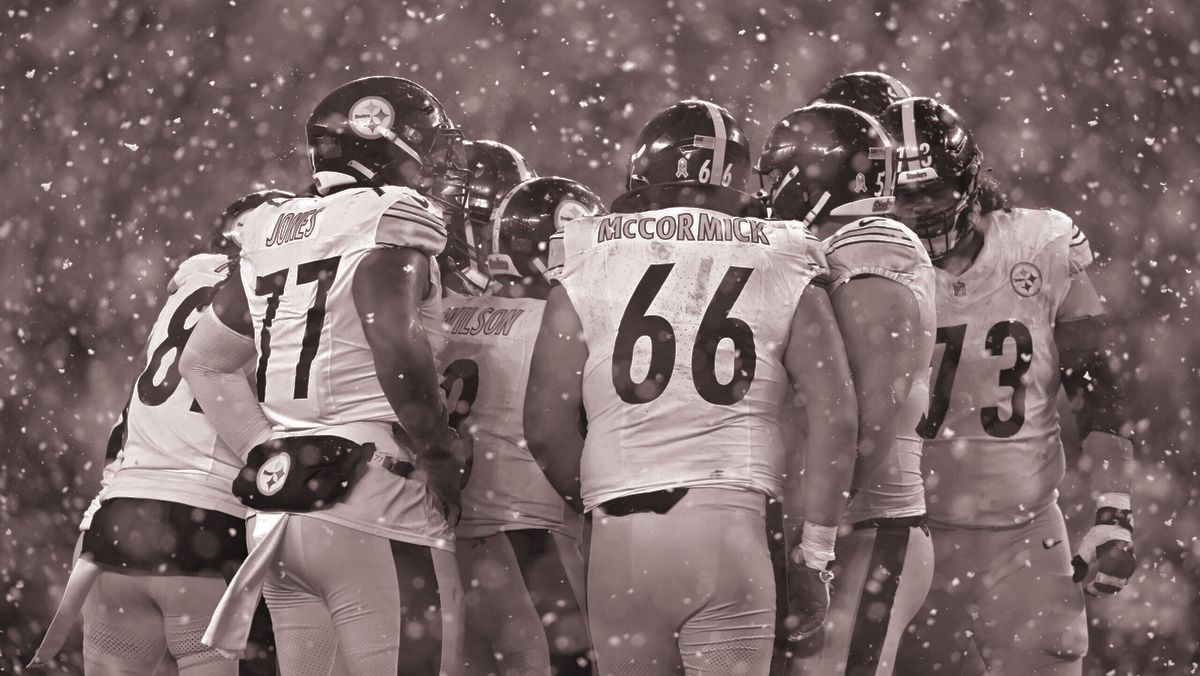
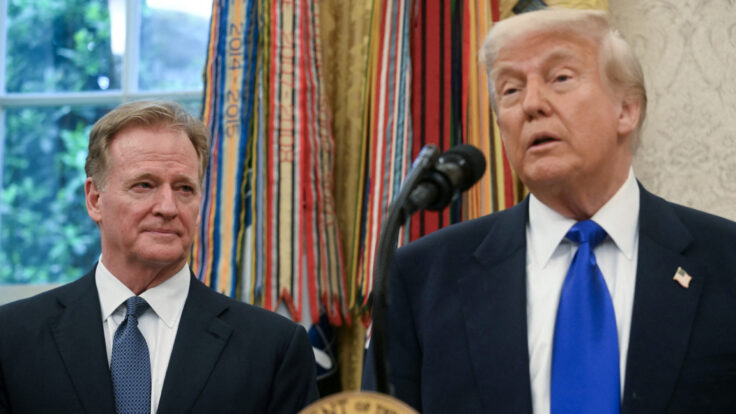
of empire-building was on its annual display—the only exception, of course, being Shedeur Sanders headlining the flag football “Pro Bowl Games” at the Moscone Center. And the story animating the sotto voce conversations on the sidelines of Radio Row had nothing to do with Bad Bunny, the potential 18th game, or Kraft vs. Belichick, but rather the truest manifestation of the league’s awesome power: when commissioner
Roger Goodell will preempt the end of his league’s current media deals and convince his existing partners (and some new ones) to cough up an ungodly fortune for the pleasure of broadcasting America’s Game.
In a world where Disney is spending $2.6 billion a year on NBA rights, the NFL’s 11-year, $110 billion rights deals seem like Canal Street handbag prices. And that’s especially true in a culture where the NFL so dominates ratings and marketing budgets. NBC, for its
part, has already booked nearly $1 billion for this Super Bowl alone. It’s easy to understand why Goodell has been so eager of late to revisit the league’s current media deals ahead of their scheduled 2030 renegotiation. The NFL has been so popular for so long—and has minted so much cash for its media partners—that it’s in a position to essentially write the rules as it goes.
The NFL’s move to open up the books early has also thrown the rest of the sports media marketplace into chaos.
Every other league, network, and streamer’s future depends at least somewhat on what the NFL does next, and which players will still have money to spend when the dust settles. In conversations across the sports media beat this week, I encountered this anxiety often—indeed, several non-football sports leagues have expressed interest in going to market early themselves, hoping to make deals before the TV networks commit billions more dollars to the NFL.
The PGA Tour’s media rights deals
with CBS, ESPN, and NBC extend through 2030, but the Tour’s new-ish C.E.O., Brian Rolapp, has told reps for those companies that he’d be open to negotiating extensions over the next year or two, according to several sources. All to ensure the Tour doesn’t end up with table scraps in the wake of the NFL’s lavish feast. It’s not too much of a stretch to imagine that execs with other looming deadlines—the Premier League’s deal with NBC is up next year, the NHL and MLB’s current
packages run through 2028, and FIFA’s World Cup rights will hit the market after this summer’s event—have been thinking similar thoughts.
But the broadcasters and streamers are wary of committing money to these—let’s face it, lesser—leagues until they know how much the NFL will demand. During Fox’s Q2 earnings call on Wednesday, C.E.O. Lachlan Murdoch said the company would consider “rebalancing” its portfolio to help pay for NFL
rights—an unmistakable message to the league that it is not messing around. Or consider what CBS Sports president David Berson told The New York Times: “As soon as [the NFL] indicates they want to sit down and have a legit conversation about the future, we’ll be excited to sit down and have those conversations.”
No one is pretending to even remotely play hard to get. The TV networks know they will have to pay more… a lot more. And they realize
that the ask is coming soon. Several sources said they expect formal negotiations to begin by this fall, but the NFL may also be marketing enough packages to placate longtime partners while enticing new ones. Everyone expects one package of games to include the four international contests that the league took back from NFL Network as part of its deal to take a 10 percent stake in ESPN. It also includes two Christmas games (Netflix’s deal ends this year). And then there are the big-ticket
packages, which have become the cornerstone of many media companies’ P&Ls. After all, the NFL isn’t just the largest league in the world. It’s become the biggest media company, too. |
On broadcast versus streaming: “A question for you to ask as you pursue these types of
stories. How many NFL games are viewed on broadcast TV using an over-the-air antenna? A huge percentage are watching these channels through cable or satellite. What does league viewership look like when the retransmission fees distributors have to pay finally hit the tipping point? From where I sit, the train wreck is coming. And it is inevitable since the solution currently requires an act of Congress. The bubble will burst and the Trillion-Dollar Tech Companies will be the last
distributors standing—unless the retransmission rules and the broadcast buy-through requirements are removed and reflect the new world order.” —A cable guy
On WaPo troubles: “Layoffs suck. I’ve been there. The most staggering layoff number I have seen through all these stories is that more than 3,300 newspapers have closed since 2005.” —A Varsity subscriber
More on WaPo: “As I read about the Washington Post layoffs, I keep wondering how
they plan on covering local sports teams?” —A Varsity subscriber
[Ed. note: Courtesy of National Journal’s Kirk Bado, here’s what the Post website looked like yesterday as the local NBA team completed its biggest trade in a decade or more.] |
Have a great weekend. See you Monday,
John |
|
|
Join Puck’s chief political columnist, John Heilemann, as he roams the corridors of power and influence in America on
this twice-weekly interview show, taking you beyond the headlines with the people who shape our culture: icons and up-and-comers, incumbents and insurgents, moguls and machers in the overlapping worlds of politics, entertainment, tech, business, sports, media, and beyond. The conversations are rich and revealing, unrehearsed and unexpected… and reliably impolitic. A Puck-Audacy joint, new episodes drop every Wednesday and Friday. |
|
|
An essential, insider-friendly Hollywood tip sheet from Matthew Belloni, who spent 14 years in the trenches at
The Hollywood Reporter and five before that practicing entertainment law. What I’m Hearing also features veteran Hollywood journalist Kim Masters, as well as a special companion email from Eriq Gardner, focused on entertainment law, and weekly box office analysis from Scott Mendelson. |
|
|
Need help? Review our
FAQ page or contact us for assistance. For brand partnerships, email ads@puck.news.
You received this email because you signed up to receive emails from Puck, or as part of your Puck account associated with {{customer.email}}. To stop receiving this newsletter and/or manage all your email preferences, click here. |
Puck is published by Heat Media LLC. 107 Greenwich St., New York, NY 10006 |
|
|
|