Welcome back to The Varsity. I left Vegas this morning following a quick trip for the National
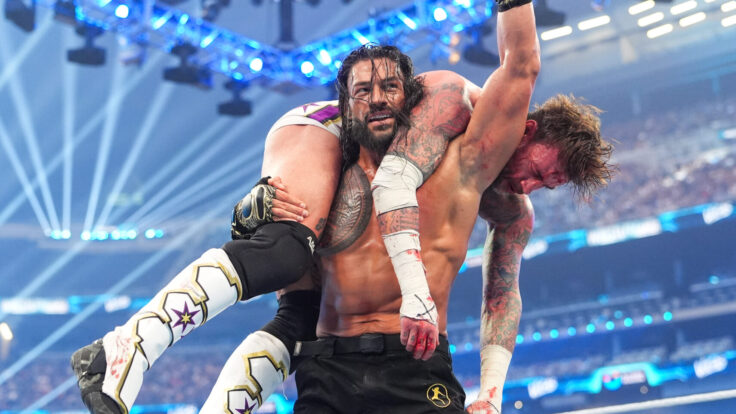
Association of Broadcasters annual convention. This was the type of weekend that showed why Vegas is set to be in the regular rotation of Super Bowl host cities. In addition to the 55,000 or so broadcast types milling around the convention center, WrestleMania packed more than 100,000 spectators into Allegiant Stadium over two days. Oh, and the Golden Knights had a home playoff game last night. And the Strip didn’t even feel crowded, thank God.
Pod alert: Yes, I did make
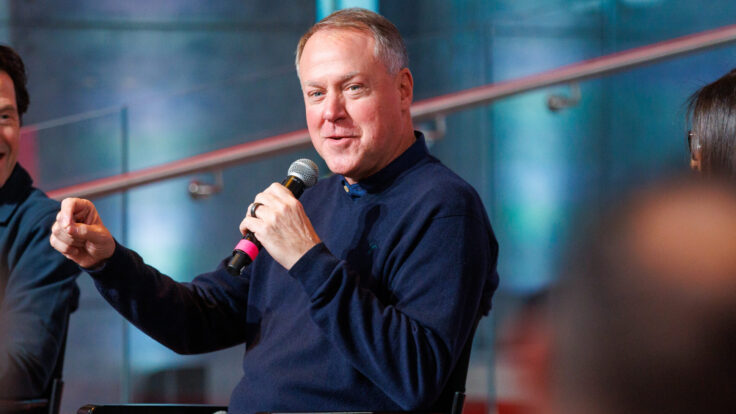
my way out to Allegiant on Saturday. But I spent most of yesterday at the convention center, where the atmosphere seemed surprisingly upbeat given the steady migration of sports to streaming. I interviewed Jon Miller, NBC Sports’s president of acquisitions and partnerships, on the convention’s main stage—and unsurprisingly, he gave a full-throated defense of broadcast television. That conversation will run in full on Wednesday’s episode of the Varsity
podcast.
Also mentioned in this issue: Val Ackerman, David Stern, Matthew Berry, Brendan Carr, Elizabeth Warren, Mike Lee, Brett Kavanaugh, Roger Goodell, Shira Scheindlin, Pat Sullivan, Wayne Gretzky, Jay Marine, Ilan Ben-Hanan, Alexander
Ovechkin, Dorian Craft, and more…
As always, this issue was created with contributions from Curtis Rowser. |
- Ackerman’s
victory lap: Val Ackerman, among the most-game-changing executives in the history of the sports business, is calling it a career, as reported this morning by USA Today. She began in 1988 under David Stern and, within a few years, was tapped to launch the WNBA, becoming the league’s first president and holding the post for a decade. Her most recent act was a 13-year run atop the Big East, where she inherited a conference in freefall, gutted by
realignment, and rebuilt it around the one thing it had always done best: basketball. She arrived in 2013 with a résumé uncommon in college sports: founding president of the WNBA, president of USA Basketball, U.S. representative to FIBA, and with credibility earned at every level of the game. She made full use of it. Ackerman is a trailblazer in every sense, and did more for women in sports than just about anyone. A national search for her successor will begin immediately, the league said.
- Owning the Amazon blip: Last week, I bestowed The Varsity’s not-so-coveted Down to the J.V. honor to Amazon’s Jay Marine after the feed of Prime’s first NBA playoff game went dark during a tense overtime period. The next day, I received an email from Game Creek Video president Pat Sullivan, who emphasized that Marine was not at fault. “Our company, Game Creek Video, provides mobile production facilities to Amazon
and the other major producers of regional and national sports events,” per Sullivan’s stand-up email. “One of our trucks caused the failure that affected the Charlotte vs. Miami game. A human error occurred when one of our engineers made the wrong decision at the wrong time. The failure had nothing to do with Amazon’s streaming protocols. We have produced thousands of hours of Amazon content, including every one of its Thursday Night Football games since their inception. Amazon’s
streaming of TNF, NBA events, and New York Yankee events that our company has handled has been flawless. Jay Marine and his team have set up an extraordinary transmission and streaming concept. I just want you to be aware of the reason for that unacceptable failure on our part.”
- Dear Mr. Fantasy: For years, before the rise of legalized gambling, fantasy sports liked to pass as the gentleman’s alternative to hardcore wagering. Now the
value proposition is fuzzier: Does fantasy endure, or does it get swallowed whole? Few are better equipped to answer that existential question than Matthew Berry, NBC Sports’s fantasy sports authority and the founder of Fantasy Life.
So I put that very question to him on yesterday’s episode of the Varsity podcast. “No, I don’t think it’s a problem, because I think more options are good for the consumer,” he told me. “I am pro-gaming. I’m
pro-sports betting. I’m pro-regulated sports betting. I think it should be legal in all 50 states. The fact that it’s not is silly because when it’s regulated, you have a better chance of catching any bad actors. In general, I think sports betting is a great thing, because more game types and more formats encourages competition and innovation. That’s a win for everyone.”
|
And now for the main event… |
|
|
|
The league’s recent push to sign new rights deals with its media partners and ongoing
relationship with the streamers has opened it up to a wave of regulatory inquiry. But is any of the scrutiny more than just a headache? |
|
|
|
A couple of weeks ago, over dinner, a veteran lobbyist asked a table of media executives to name a time when
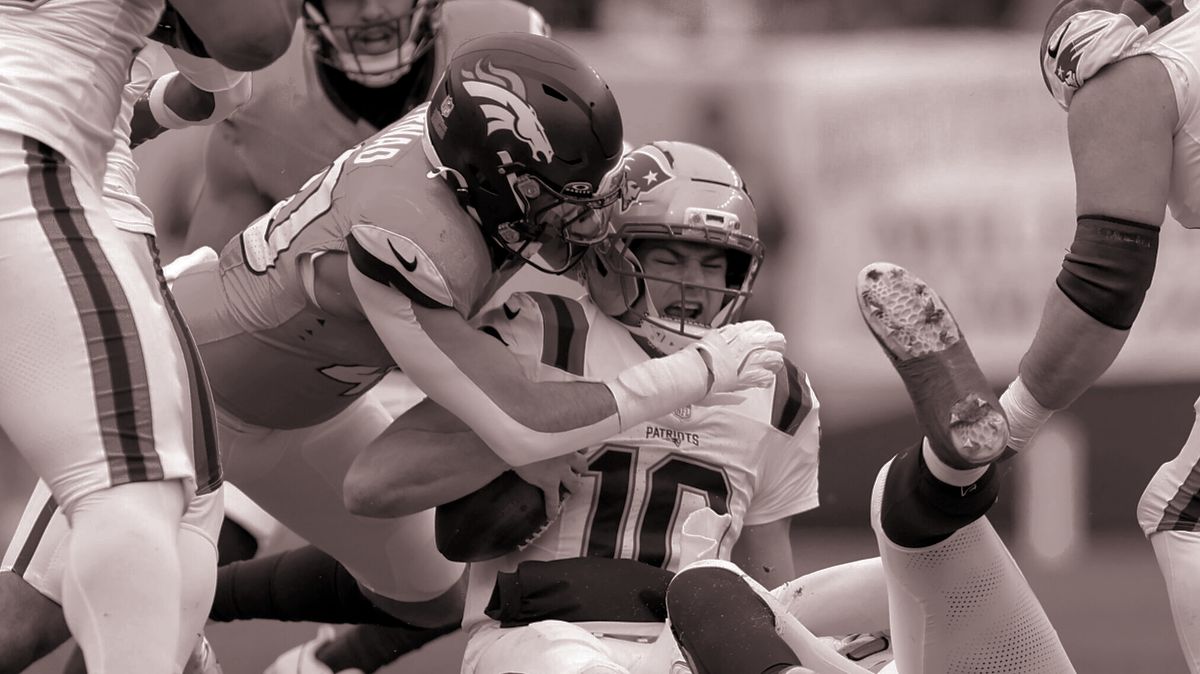
Capitol Hill had ever shown this much interest in the sports business. Nobody had an answer. From the F.C.C. to the Justice Department to various House and Senate committees, the NFL’s media rights strategy has become a topic of conversation in Washington in a way that even seasoned hands couldn’t recall.
Yet for all the attention, there’s a fair chance it leads nowhere. My Puck partner Eriq Gardner, our legal maestro, sees the NFL’s most serious challenges not in the
corridors of government, but in the courts. The F.C.C. may issue a sternly worded reminder that the NFL ought to prioritize broadcast TV even more than it already does, and the Justice Department may rattle its sabers over the league’s antitrust exemption. But such gestures feel light—almost ceremonial—beside the weight of a $4.6 billion Sunday Ticket verdict, which could alter the league’s business in a far more material way. Herewith, a lightly edited version of the conversation I had with
Eriq about these issues. |
John Ourand: Let’s start on Capitol Hill. The F.C.C. opened a public
inquiry into the NFL’s migration to streaming. The Department of Justice is looking into whether the NFL is selling its rights in an anticompetitive way. Regulators on both sides of the aisle are wondering aloud whether the league should keep its antitrust exemption. This is a real issue in D.C.; regulators and lawmakers really seem to care about it. On the other hand, we all know how difficult it is for anything to get through Congress. Is the NFL in
peril here?
Eriq Gardner: The NFL is facing a lot of peril from cases that are making their way through the courts—not so much from Capitol Hill. The F.C.C. inquiry, in particular, is overhyped. The agency really has no jurisdiction over streaming. I expect Brendan Carr will merely write back to Congress about the laws he believes should be adjusted. (Don’t hold your breath.)
Now it’s possible that the Justice
Department takes direct action, but I see that as unlikely. Antitrust cases aren’t easy. The D.O.J. would essentially have to refute the NFL’s pro-competitive justifications for centralizing rights sold—balance among teams, a coherent broadcast schedule, avoiding further fragmentation, etcetera. Of course, things have become unpredictable in the Trump era, so I wouldn’t rule out some bold stroke. But traditionally, this is not something the Justice Department would lead
with.
Let me push back a bit here. The idea of keeping games on broadcast television—or “free TV,” as the lawmakers call it—is a bipartisan issue. Who’s against helping consumers save money rather than buying a bunch of streaming services and a cable TV package? Everyone from liberal Sen. Elizabeth Warren to conservative Mike Lee has made headlines on this issue over the past month.
Yes, there’s a
populist sentiment against putting NFL games behind streaming paywalls. On the other hand, Republican and conservative administrations tend to be pro-business and laissez-faire. They prefer to let the market dictate—which, of course, would be much friendlier to the league’s position that it’s free to sell to whomever it wishes. Remember, the NFL asked the Supreme Court a few years ago to take up the Sunday Ticket case when it was first revived by the Ninth Circuit. At the time, the justices
turned it down, but Brett Kavanaugh was receptive to the league’s position. It showed the more traditionally conservative way to view the issues.
Is there nothing to be done? Well, a more populist prescription might be to adjust tax policy to incentivize the NFL to keep games on broadcast rather than behind paywalls. But that’s just one idea.
Okay, let’s get to the courts, which is where the NFL faces the biggest challenges—particularly
with the Sunday Ticket case that’s been making its way through the system. I’m perplexed as to why the NFL doesn’t settle. If there is real danger here—and we both think there is for the league—why hasn’t Roger Goodell settled this case and made it go away?
We don’t know what the settlement calculus is or what the offers are. This is a case that resulted in a $4.6 billion verdict—and that was before the figure
was tripled. If the plaintiffs are saying they want $2 billion, or even $1 billion, to settle this case, that could impact things like the salary cap. Of course, with its business model on the line, you’d think the NFL would be very receptive to even that amount. But at the moment, the league is digging its heels. We’ll see if that posture survives appeal.
Where does that case stand right now? It seems like things have gone
quiet.
We’re waiting for the decision from the Ninth Circuit, which could come any day or any week. Once that decision comes, expect the losing side to ask the Ninth Circuit for a rehearing. That’ll happen relatively quickly. From there, expect a petition to the Supreme Court. It’ll get real noisy, real quick.
I understand that the NFL is the biggest sports property in the U.S. today, so it’s not a surprise to see so much focus on
the Shield. But what about the other sports? Surely, there are some knock-on effects from all of this that could affect the NBA or MLB.
This happened so many years ago that people forget, but before the Sunday Ticket case, there were very similar cases against both MLB and the NHL. Both of those cases were settled.
What about MLB’s famous antitrust exemption?
The judge in the case,
Shira Scheindlin, actually ruled that the exemption applied only to what was central to the business of baseball, and—get this—she said TV broadcast contracts weren’t central. She rejected MLB’s summary judgment motion—Comcast’s, too—and the case was settled before a trial could examine the league’s pro-competitive justifications, such as how centralized dealmaking encourages broadcasters to invest in higher-quality telecasts.
I think it’s noteworthy that these leagues
settled for pretty cheap: Fans got the option to purchase single-team packages and discounts on leaguewide ones; the lawyers, of course, got legal fees. Whereas the NFL dug its heels in with a high-stakes game of legal brinksmanship.
Still, be mindful of the possibility that someone could bring a new case against, say, the NBA for its recent deals. That next generation of litigation on the sports-rights dealmaking front will almost certainly be influenced by what the Ninth Circuit and
Supreme Court soon say in the Sunday Ticket case. |
On ESPN’s layoffs: “When someone like Ilan Ben-Hanan gets laid off, it’s a humbling
reminder that no one is safe in an increasingly tenuous industry. Ilan also made the Spelling Bee a nationally televised event and was the programming point person when ESPN first expanded to Los Angeles.” —A broadcast executive
On the Great 8: “True story: A doc featuring Ovi breaking Gretzky’s goal record was shopped, but there were no good offers. He was on board, but the doc market has become so, so tough.” —A production
executive
More on the Great 8: “I was at Ovi’s last game on Tuesday. It felt like a gentle sail into the sunset, though some reporting indicates the Caps are more willing to move on than he is…” —A business executive |
Have a great week. See you tomorrow,
John
Correction: In my scoop about Monumental Sports
hiring Dorian Craft to call Mystics games, I described the play-by-player as a “former ESPN and CBS Sports Network announcer.” Craft is still working at other networks in addition to her Mystics gig. I apologize for the error. |
|
|
|
Join Puck’s chief political columnist, John Heilemann, as he roams the corridors of power and influence in America on this
twice-weekly interview show, taking you beyond the headlines with the people who shape our culture: icons and up-and-comers, incumbents and insurgents, moguls and machers in the overlapping worlds of politics, entertainment, tech, business, sports, media, and beyond. The conversations are rich and revealing, unrehearsed and unexpected… and reliably impolitic. A Puck-Audacy joint, new episodes drop every Wednesday and Friday. |
|
|
|
An essential, insider-friendly Hollywood tip sheet from Matthew Belloni, who spent 14 years in the trenches at The
Hollywood Reporter and five before that practicing entertainment law. What I’m Hearing also features veteran Hollywood journalist Kim Masters, as well as a special companion email from Eriq Gardner, focused on entertainment law, and weekly box office analysis from Scott Mendelson. |
|
|
|
Need help? Review our
FAQ page or contact us for assistance. For brand partnerships, email ads@puck.news.
You received this email because you signed up to receive emails from Puck, or as part of your Puck account associated with {{customer.email}}. To stop receiving this newsletter and/or manage all your email preferences, click here. |
Puck is published by Heat Media LLC. 107 Greenwich St., New York, NY 10006 |
|
|
|
|