 |
 |
|
Welcome back to The Best & The Brightest, where today you get to read me and my billionaire-tracking B.F.F. Teddy Schleifer as we report on two facets of the Ron DeSantis insurgency: his money machine whirring to life at the Miami Four Seasons, and his online mercenary troll army crashing Elon Musk’s Twitter Space. Call it the DeSantis DeDouble DeFeature—the kind of reporting you’ll only find at Puck. (Seriously, we dare you to find this elsewhere.)
|
|
|
| For months, I’d been hearing the same canard out of Trump’s camp when it came to DeSantis’s political future: he’s too online and his campaign thinks Twitter is the real world. Funny coming from MAGA world, which is itself very online, but it’s true that DeSantis and his political apparatus, in seeking to outflank Trump’s populism, seemingly took many of their cues and talking points from whatever acronyms were obsessing right wing social media: C.R.T. in schools, D.E.I. in the boardroom, L.G.B.T.Q., well, anywhere. Instead of fighting the mainstream media, like Trump, DeSantis has avoided it almost entirely, relying on Twitter surrogates, like Christina Pushaw, to engage with journalists.
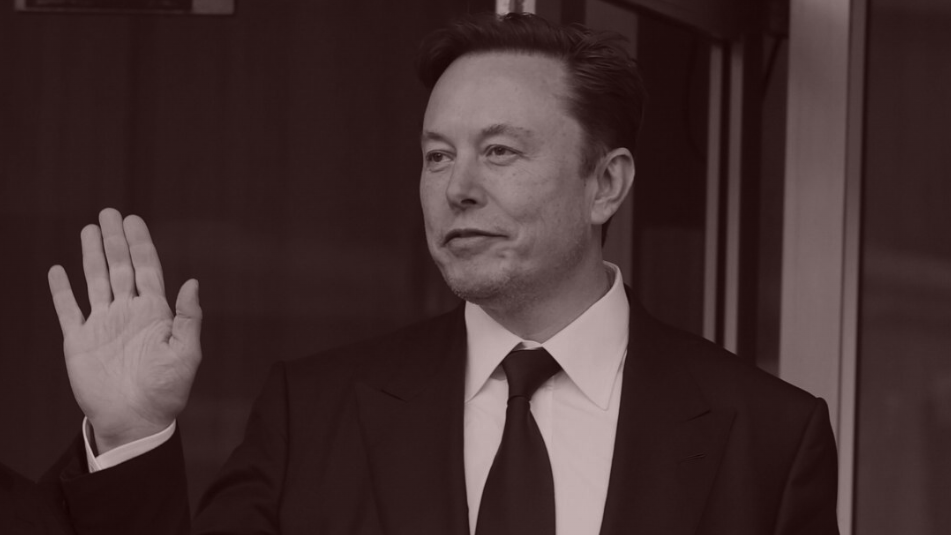
The majority of the MAGA power structure that DeSantis has attempted to court was nevertheless befuddled by his insistence on literally rolling out his campaign on Twitter, taking the too-online metaphor to its apotheosis. By now, you’ve probably seen the recaps: a 20-minute delay, the audio-only livestream continually crashing, the oddly monotonous way that DeSantis delivered his speech, the manner in which even Fox News dunked on his announcement by calling it “amateur hour”—brutal.
And in an environment where MAGA populism is defined by the projection of strength and authenticity, DeSantis felt as flat as the audio in his Twitter Space. “I appreciate him being adventurous but the whole thing just feels so over orchestrated by consultants,” a G.O.P. comms official who advises presidential candidates told me. “I think we all miss the old Ron: the vibe and tone and not giving an eff.”
Beyond the tech snafu, however, was a calculation that even I can’t wrap my head around: The idea that a DeSantis message targeted at Iowa and New Hampshire voters was going to carry through on a platform geared towards an online-first constituency. “Only 20 percent of Americans are even on Twitter. Breaking that down to Republican primary voters, it’s a fraction of eligible primary voters,” a second Republican campaign official told me. “There wasn’t enough focus on pocketbook issues. I think the campaign is realizing it was a misstep, hence the Iowa event they announced today.”
But six months is a long time to traipse through Iowa, and the media has the attention span of a mayfly on Adderall, so DeSantis might be able to recover a step. But beyond the obvious jokes about whether Elon Musk fanboys are a meaningful Waterloo constituency, the DeSantis rollout fiasco does raise the question about the future of conservative media on Twitter—a group that now includes right-wingers such as Tucker Carlson, the popular but exiled Fox News host who has promised to take his show to Musk’s platform, and conservative content creators, such as the Daily Wire, whom Musk’s team has approached about streaming hours of their shows on the platform.
The right-wing content creatorverse has their doubts about Elon’s current ability to execute, as I’ve reported. If 700,000 people caused a mere audio-only Twitter meltdown, the future of streaming video seems bumpy. (To provide an example of what standards right-wing content creators have for their streaming platforms, let’s look at the personalities a few steps below Tucker: podcaster Tim Pool hosts a regularly streamed two-hour long show with up to 300,000 viewers on average. On the higher end, commentator Steven Crowder hosted 8.1 million concurrent viewers on his Election Night YouTube livestream—in 2020.)
For now, right-wing content creators have an incentive to engage and experiment with Musk—namely, Twitter could potentially allow them to reach a new audience of millions outside of the geriatric Fox bubble, with little financial risk for them, and should Musk work out some sort of viable revenue-share agreement, they could make some money off it, to boot. However: rolling out content on a janky, barely-functional platform might win them an audience of Elon simps, and no one else.
I can’t think of anyone who has more to risk with this platform than Tucker Carlson, whose new content will live exclusively on Twitter, either due to his faith in the platform or due to contractual restraints from Fox News or his lack of business creativity (or male fragility). After all, if Twitter fails, content creators can run back to any number of other platforms: Rumble, Discord, Twitch, YouTube, or even their own home-brewed subscription-streaming services. Tucker, on the other hand, does not seem to have that option.
And now for Teddy’s privileged inside view on the DeSantis fundraising machine pumping its engines at the Four Seasons in Miami… |
|
|
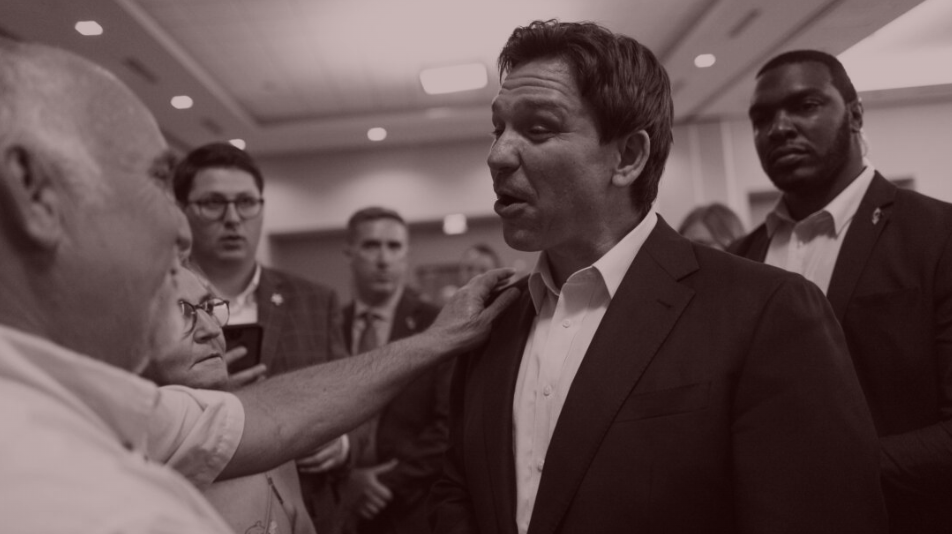
| An unspoken, grim reality of presidential fundraising is that it actually sucks. On Wednesday, Ron DeSantis brought 150 or so members of his Day One finance team to the Four Seasons in Miami so that they could arm-twist their friends for money, prior to the official launch of the campaign that evening, which DeSantis would announce during a glitch-ridden Twitter interview with Elon Musk. By the following morning, the bundlers had traded their sports coats for polos, jeans and navy-blue “Day One” DeSantis hats and sky-white DeSantis quarter-zips, as they amped themselves up to pitch their networks. “I need you with me right now,” I overheard one prominent bundler shout into his phone as he began to roll calls. “I’m here in Miami with the next President of the United States.”
Bundling, after all, is a grueling and not always glamorous endeavor. Sure, campaigns will block off 100-plus rooms at luxury hotels for top donors—the lobby of the Four Seasons is undeniably splendid, with a massive bronze Fernando Botero sculpture—and sure, some of the bundlers at the DeSantis gathering flew in on private jets. But the briefings that Democratic or Republican aides give at these affairs—the DeSantis two-day confab was dubbed “Ron-o-Rama”—can be obvious and pedestrian. The private “behind-the-scenes” details aren’t much different from what campaigns message publicly. And badgering friends and contacts to donate up to $3,300 each, as several DeSantis bundlers self-servingly reminded me this week, is work. “Alright, it’s time to work,” one bundler said to another. “Gonna be a lot of work today,” a third told me. There’s much to admire in the fine, and increasingly antiquated, art of collecting other people’s money.
And what do donors—or “investors,” as it said on their lanyards—get in return? People want you to think that there’s palace intrigue surrounding what happens at these events, in ostensibly dimly-lit rooms and on clandestine conference calls. But behind the earpieced security apparatus keeping reporters at bay is mostly standard campaign operation gobbledy-gook, just with better canapés and champagne. As one DeSantis bundler at the Four Seasons confidently told me, the briefing with senior DeSantis officials in the Miami Room was probably something he could read on his phone. That’s why I found him there with me in the lobby, instead. |
|
A MESSAGE FROM INSTAGRAM
|
|
 |
| Explore 30+ tools for parents and teens on Instagram.
Once Family Center supervision tools are set up, teens can send a notification to their parents whenever they report another account on Instagram, helping teens ask for support when they need it.
Explore 30+ tools. |
|
|
|
|
| Good campaigns tend to create finance teams that reflect the candidate, and there was as wide a cross section of DeSantis homies as there are DeSantis voters. The combatants I encountered at the Four Seasons were heavy on Texas and Florida, as you’d expect, all united by the desire, no matter their personal politics or the precise week at which they think abortion should be illegal, to win: prominent D.C. and Tallahassee lobbyists seeking to cultivate or leverage business relationships; die-hard DeSantis believers who babbled about transgender rights or Covid lockdowns; longtime G.O.P. fundraisers who see this as their professional sport of choice, and tell war stories about the Romney operation as if it was they were revisiting their varsity quarterback tape.
There are various tricks of the trade that allow campaigns and veteran bundlers to supercharge their early fundraising hauls. The DeSantis bundling team, for instance, is currently asking for checks of up to $13,200 per couple by collecting for both the primary and the general election, a move that will boost their overall “money raised” headline number, even if it can’t all be spent unless (or until) DeSantis wins the G.O.P. nomination. The other trick is that bundlers, naturally, begin with the very softest targets. Some of the money that DeSantis will raise over the coming days has actually been pre-raised, so to speak, by fundraisers who had already agreed to wire money and were simply waiting for the campaign bank account to open for business. Others have effectively alley-ooped their fundraising goals; one bundler, who set out to raise $200,000 on Thursday, told me that they had greased the skids by emailing their entire network the night before, telling them to expect a phone call. Another told me that they had made 350 phone calls on Thursday. A third said they hand-delivered pre-collected, post-dated checks to the DeSantis team, allowing them to skip out on the actual Ron-o-Rama event. (There are more fun things to do in Miami, after all.)
Given the workload, bundlers, not known for their humility, can feel under-appreciated. At around lunchtime on Thursday, movement got restricted as DeSantis and his security dropped into the bullpen to thank the worker bees for their support and rally the troops. Later that evening, the plan called for bundlers to be toasted at a reception with the governor and his wife, Casey, in honor of their important contributions. “The Governor and our team wish to extend our heartfelt gratitude for your decision to join the team on Day One—your commitment holds tremendous significance as we battle to revitalize America,” read materials distributed to donors from Lauren Lofstrom, DeSantis’s finance director.
But in many ways, as I’ve argued before, their work is over-appreciated, too. Self-sufficient campaigns rely more than ever on small-dollar contributions, which can be set to recur monthly and require less labor and no quarter-zips. At the other end of spectrum are the UHNW donors who will cut seven- or eight-figure checks to the DeSantis super PAC, Never Back Down, which can take in unlimited money, replacing the work of a hundred bundlers or 10,000 smaller donors with a single successful meeting in Holmby Hills or River Oaks. (I saw Adam Laxalt, the close DeSantis confidant who now chairs the super PAC, milling around.) One DeSantis donor told me that he was skipping out on the bundling calls because he prefers to stage high-dollar super PAC functions that are more, shall we say, efficient. “Too much brain damage,” he said of the bundling work. |
|
|
| If DeSantis loses the 2024 G.O.P. primary, it won’t be because he lacked the money. At the Four Seasons, it was hard not to be reminded of the 2016 campaign and the mountains of cash that Republicans raised to try to topple Donald Trump. Having covered Ted Cruz during that primary for the Houston Chronicle, and later for CNN, I recall staking out plenty of similar donor retreats.
There is, naturally, a real feeling of déjà vu for those who were around back then, including some donors I talked with: It was only eight years ago that everyone in the Republican money world was lining up behind Jeb Bush, and eventually a well-funded Cruz, always with the same vain hope that more money and better ads could overcome Trump’s groundswell of popular support. That’s why it was remarkable this week to run into some of the very same G.O.P. operatives—people like Cruz aides Sam Cooper or Jason Johnson—who are still working to best Trump, as if no time had passed. Once again, the Trump team actually expects to be outspent, an extraordinary scenario for a former president.
DeSantis supporters argue, and even dare to hope, that this time will be different: That their candidate is more in touch with the base in a way that Jeb never was; that Trump will not be underestimated like he was last time; that campaign funds will be raised and spent more effectively in a smaller field, and in the key markets that truly matter. On Thursday, senior aides for DeSantis walked their bundlers through it all. “No one ever dropped out of a race because they didn’t have anything else to say,” the brain trust told the bundlers, according to a donor who paraphrased the team’s language. “They dropped out because they ran out of money.”
Indeed, the DeSantis second-quarter fundraising schedule, which was distributed to donors, is aggressive and timed to make a splash by the June 30 reporting deadline with at least 20 events. DeSantis will have six events in Texas from June 7 to June 9 (Houston, Fort Worth, Dallas, Midland, San Antonio and Austin), and four Florida finance events in the second half of June (Ft. Lauderdale/Boca, Orlando, the Villages, Tampa/St.Pete). Other events include a swing through Las Vegas on June 16; California on June 19 and 20; an event in D.C. on June 23; one in New Jersey on June 28; and a final, end-of-quarter fundraiser in Philadelphia on June 30.
What feels different this cycle, in talking to donors, is how many of them seem to be settling from the outset. It was hard not to notice the occasional disconnect between his supporters and the candidate. DeSantis is more right wing than the average bundler, without the Romney or Youngkin-esque back-slapping demeanor that makes money fall out of pockets. Some DeSantis investors are bundling not because they are passionate about DeSantis, but because they really want to beat Trump. Others haven’t actually committed at all. Despite all the Day One hats and bragging rights on the line, I talked with three separate people who attended the DeSantis retreat who said they weren’t yet sold on raising money for him. |
|
|
|
|
| Campaigns are always at their most romantic at the beginning, with bundlers riding high on swag, access, and optimism. It is one of the best fundraising weeks of an entire operation, and an ill-fated campaign’s launch can be its emotional high point. In any case, it’s clear that there is a highly professional Cruz-heavy operation surrounding DeSantis, and plenty of wealthy people willing to dump money into his campaign and super PAC. Admittedly, it can be hard to not feel swept up by the rhetoric of a passionate team—but this particular launch did not go smoothly.
On Wednesday night, while donors at the Four Seasons picked at crab cakes and charcuterie boards, their cocktail reception was intended to double as a Twitter-streamed pep rally with Elon Musk and DeSantis chatting in the background while donors cavorted and scanned the crowd for old friends. Instead, the reception was marred by technical difficulties that mirrored the botched Twitter Spaces. The screen at the front of the ballroom that was meant to project the sound of the conversation ended up projecting, well, silence, as Musk and donor-influencer David Sacks struggled to troubleshoot the crashing livestream. The “Twitter as Background Noise” plan failed, as various donors were forced to hold up their individual phones to tune in.
Eventually, the technical issues abated, but one donor told me that with all the snafus, he didn’t even hear the most important line, and the reason he was in Miami in the first place: that Ron DeSantis was, indeed, running for president. |
|
|
|
| FOUR STORIES WE’RE TALKING ABOUT |
 |
|
 |
| Bezos at Sea |
| A conversation encircling the latest mediaworld plotlines. |
| DYLAN BYERS |
|
 |
| Gorman’s Goodbye |
| Handicapping the Morgan Stanley C.E.O. succession odds. |
| WILLIAM D. COHAN |
|
 |
| Netflixonomics |
| A close look at the putative success of the streamer’s ad tier. |
| JULIA ALEXANDER |
|
|
|

|
 |
|
|
|
Need help? Review our FAQs
page or contact
us for assistance. For brand partnerships, email ads@puck.news.
|
|
|
|
Puck is published by Heat Media LLC. 227 W 17th St New York, NY 10011.
|
|
|
|