 |
 |
|
Hi, welcome back to Line Sheet. Thanks for having me this week, Chicago. I heard you were great in the ’90s!
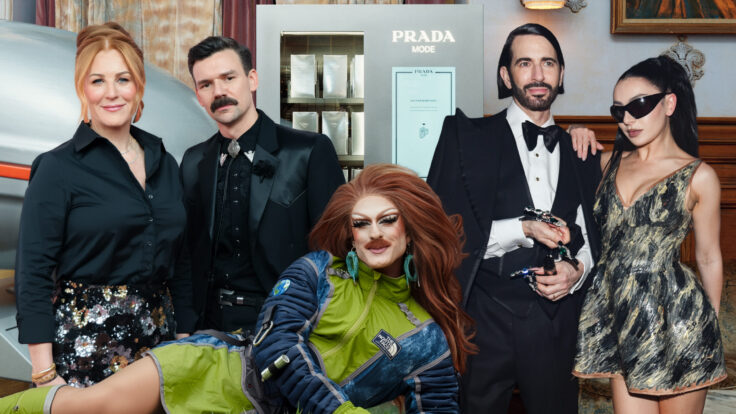
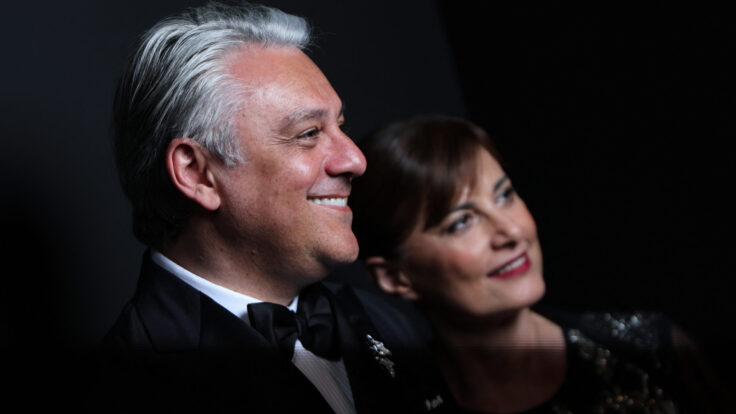
I kid, it’s still a very nice town with a beautiful cityscape. People go out to eat past 8 p.m. I approve. Also: There are still fantastic places to shop. Last night, Lance Lawson and Jim Wetzel hosted a party for Chantal Fernandez and me at Space 519, their amazing micro-department store and restaurant, in the Gold Coast’s Seneca Apartments complex. We sold and signed many books. People dressed up. (I saw lots of black leather—including a Chloé bracelet bag.)
Between introductions, Lance and Jim and I gabbed about what lines they’re eyeing for spring, our mutual love of Métier London (especially the clutches), what they buy from top-selling brands Proenza Schouler and Jil Sander, the great shoes that Co. is making right now, why people buy High Sport in bulk, and the Fortunato sisters. I’ll stop there before I get any of us in trouble. Their e-commerce offering is minimal, so stop by next time you’re in Chi. Once again, sending a thousand thank-yous to the World’s Greatest Hugger, Travis Martin, for organizing it all, including my stay at Soho House: I recommend it if you find yourself traveling to ORD.
Today, herewith, you’ll find more on former Abercrombie & Fitch C.E.O. Mike Jeffries, his rivalry with both Les Wexner and Mickey Drexler, and why this sex-trafficking arrest surprises no one who’s ever worked for him. (Legal representatives for Jeffries have previously denied wrongdoing.) I’m also digging into those Kering and Hermès numbers. And of course, I can’t ignore The Row’s truly dumb sample sale line. I’ll get into Lina Khan’s blocking of the Tapestry-Capri merger on Monday, okay? Sheesh! I can’t believe it.
🎧 Programming note: Today on The Powers That Be, I join my fantasy football teammate Dylan Byers to talk Abercrombie and Condé. (Sign up for his new podcast, The Grill Room, while you’re at it!) And tomorrow on Fashion People, I host the queen of Sun Valley and the wrap dress, Diane von Fürstenberg. We discuss her new exhibit at the Skirball Cultural Center (one of the best museums in Los Angeles, I.M.O.), plus how to run a fashion business, why women are less afraid of death than men, and we even touch on Barry Diller’s Paramount play. Listen here and here.
Mentioned in this issue: Sabato De Sarno, Gucci, Alessio Vannetti, Valerie Leberichel, Kering, LVMH, François-Henri Pinault, Bernard Arnault, Hermès, Anthony Vaccarello, Matthieu Blazy, Bottega, Les Wexner, Mike Jeffries, Abercrombie & Fitch, Jeffrey Epstein, and much more…
|
|
A MESSAGE FROM OUR SPONSOR
|
|
Flawless glam goes with everything. Now that’s what we call an all-season accessory. Book now with code LINESHEET to get 20% off your next Glamsquad service. Terms apply.
|
|
|
| Three Things You Should Know… |
|
- If you are a plebe and went to The Row’s public sample sale in New York City on Wednesday…: You are crazy! The first guy in line was paid to start standing there at 7:45 p.m. on Tuesday. Just F.Y.I., if you do go (it runs through Saturday), you need to be clear-headed about it, even if everything is at least 75 percent off. The last time I went, in 2021, I had a 4-month-old sleeping on my chest and, in a postnatal hormonal haze, spent four figures on a smattering of ill-fitting items, most of which I eventually sold on The RealReal. (The good news is that I made a profit on a couple things.)
The lesson: If you like lines and chaos and feeling stressed out, sample sales can be fun. If you don’t, please remember that you can almost always find the thing you want on sale or second-hand. You can also always try to get into the saner V.I.P. sale next time. A friend who went to the press preview on Tuesday said it was really good and she wished she had bought more.
- Pinault’s Kering predicament: I’m sure the folks at Kering are glad that the LVMH numbers weren’t great last week, because it indicates that it’s not all their fault and that there are macro forces at work. Still, the numbers at the second-most-watched fashion conglomerate were worse than expected, and they were already expected to be very bad. At the group level, sales were down 16 percent overall. Sales at Gucci were down 26 percent, while sales at Saint Laurent were down 13 percent. The bundle that includes Balenciaga and McQueen was down 15 percent. On the bright side, Bottega Veneta was up 4 percent overall, and up 5 percent at stores open at least one year. Perhaps more concerning was the third profit warning this year: Group operating income is set to decrease 50 percent in the second half of 2024. But, ya know, shares have actually inched up a bit (almost 3 percent) during the past five days, even if they are down 40 percent this year. We’ll take the Ws where we can get them.
At Gucci, Sabato De Sarno-designed product still only makes up 35 percent of the overall offering, but his ready-to-wear outperformed (I’m not surprised; a good sign for him), and the company promised that there would be new, “major” handbag launches by the end of this year. Gucci also hinted that there will be further changes in the communications department, indicating that chief brand officer Alessio Vannetti, whose exit was made known last week, will be replaced. One of the most talked-about candidates is Valerie Leberichel, who runs communications at Givenchy and is, as the French would say, “super great.” There was also an acknowledgement that some smaller stores would be closed. (The company went ham on opening in tertiary cities in the peak Alessandro years.)
Kering attributed the dip at Saint Laurent to tough strategic choices that will pay off in the long-run—pulling out of wholesale and other organizational changes—while insisting that Anthony Vaccarello’s designs remain “desirable.” They’re excited about the Bottega fragrance launch and believe that the brand’s high-end positioning has protected it in the U.S. and Europe, where wealthy consumers are still spending. (Kering also made a point to note Bottega is doing well because Matthieu Blazy is so good.) In the other categories, they acknowledged that while Balenciaga’s handbags are doing well, traffic to the stores is not optimal.
In short, it’s going to get even worse before it gets better. But overall, no surprises. As I mentioned earlier this week, I suspect there will be executive changes at Kering beyond Gucci as the company engages in further succession planning. (Someone presumably needs to replace deputy group C.E.O. Francesca Bellettini at the Saint Laurent level, where she is also currently C.E.O.)
Remember, Kering C.E.O. and chairman François-Henri Pinault’s instinct is to continue to invest even when the going gets tough. (Bernard Arnault, on the other hand, tends to starve brands when they’re underperforming.) How that strategy is reflected over the next few quarters remains to be seen.
- See, you just can’t copy Hermès: There was a hilarious meme (is that what they’re called?) going around this morning showing two real BoF headlines: One written yesterday, pre-Hermès earnings, suggesting that the company was set to face its “slowest quarter in years as luxury woes spread” and then a second headline, published this morning following the news that Hermès actually beat street expectations with sales up 11 percent. The word from Hermès was, along with just being the best in class, Chinese customers showed their loyalty.
For the past few years, many luxury brands have attempted to copy what they see as the Hermès model of selling classic, easy-to-understand goods at the highest possible price imaginable. But the lesson here is that Hermès successfully managed supply and demand, and continues to do so. They sold fewer goods than they could have at the height of the luxury boom, and only increased their prices when it was totally necessary. Therefore, consumers see Hermès as a better value than their competitors. Every luxury brand needs to understand what value they bring, and create and price their product accordingly. Easier said than done, but Hermès shows it’s possible.
|
 |
| The Fall of an Abercrombie It Boy |
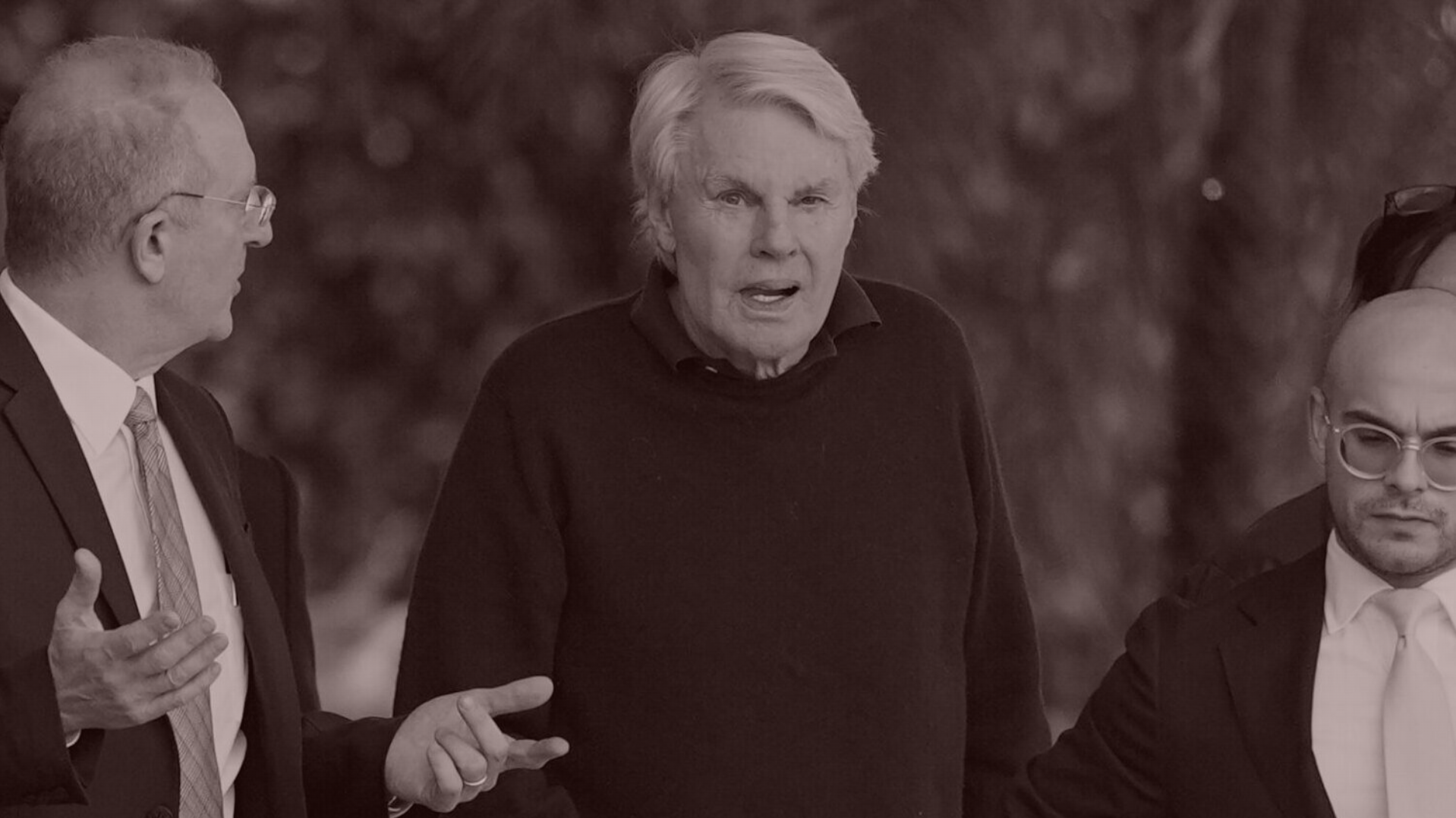
| The whole, gross Mike Jeffries sex-trafficking scandal offers the chance to revisit the era when Victoria’s Secret’s parent company owned Abercrombie & Fitch, and whether former owner Les Wexner prematurely exited the company to distance himself from the only C.E.O. he couldn’t control. |
|
|
|
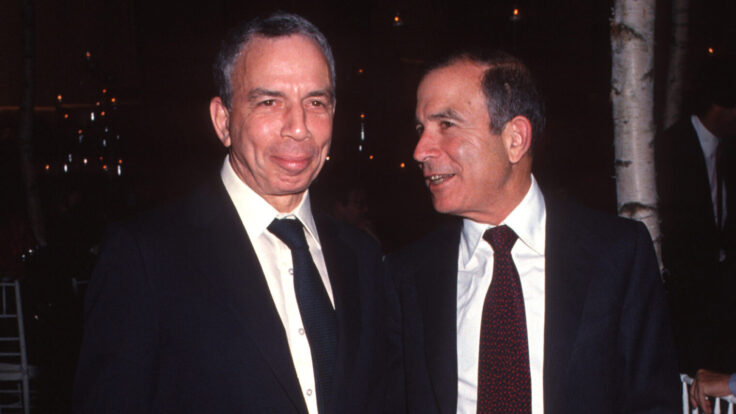
| While researching our book about the history of Victoria’s Secret, Selling Sexy, my co-author Chantal Fernandez and I obviously dug into the biography of its former owner, billionaire Les Wexner, one of the chief architects of the American mall. After creating The Limited in the 1960s, when he was still in his 20s, Wexner funded the ascendance of not only V.S. but also Express, Bath & Body Works, and Abercrombie & Fitch. During this era of corporate expansion, he was famously a bachelor, with only one known girlfriend, before he eventually started going with Abigail Koppel, formerly a lawyer at Davis Polk, in his mid-50s. The couple, who married in ’93, remain together to this day.
Partly because of this biographical detail, Wexner was perpetually trailed by rumors that he was gay, which he flat-out denied in a famous 1985 New York magazine profile. When a representative for Wexner declined to comment on any element of our book, including this one, I reiterated that we weren’t the slightest bit interested in his sexuality. Nevertheless, the topic came up in nearly every interview with Victoria’s Secret executives during the reporting process—probably even more than Wexner’s relationship with Jeffrey Epstein, who held power of attorney over his estate for nearly two decades. Fair or not, employees felt that Wexner was hiding something.
Regardless, Wexner’s buttoned-up professionalism helps explain why he clashed so violently with Mike Jeffries, the former C.E.O. of Abercrombie & Fitch, who was indicted this week on international sex-trafficking charges. When the news broke about Jeffries and his boyfriend (and manager of the Jeffries family office), Matthew Smith, I was hardly surprised, nor was anyone who knew him. After all, the accusations first surfaced more than a year ago in a BBC report, and the indictment has given the world permission to obsess over every little salacious detail, including accusations that he groomed men at “sex events he hosted around the world” and “personally inject[ed] men with an erection-inducing substance for the purpose of causing the men to engage in sex acts the men were incapable or unwilling to engage in.” While Jeffries has denied similar claims in the past, his lawyer told reporters this week that they won’t respond to media questions regarding the charges, but instead wait to address them in court.
But it’s obvious that, in those early years, when he was managing Abercrombie & Fitch under Wexner, Jeffries was near-invincible—and people certainly felt that he often behaved that way. It’s one of the reasons he was so successful in rebranding Abercrombie, an outdoorsy heritage line once worn by Teddy Roosevelt, into a School Ties-worthy picture of collegiate excess and arrogance, all captured in black-and-white by Bruce Weber. |
|
A MESSAGE FROM OUR SPONSOR
|
|
Flawless glam goes with everything. Now that’s what we call an all-season accessory. Book now with code LINESHEET to get 20% off your next Glamsquad service. Terms apply.
|
|
|
|
|
| Like Wexner, whose parents owned a women’s clothing shop named after him, Jeffries was born into retail in Glendale, California, where his parents operated a small chain of party supplies stores. In 1992, Wexner hired Jeffries after Alcott & Andrews, a women’s clothing store that Jeffries founded in the early 1980s within the Federated Department Store group, went bankrupt. Alcott & Andrews had opened too many stores, and the concept—professional clothing for working women—couldn’t compete with Ann Taylor, which Mickey Drexler had overhauled before taking over The Gap in 1983, the spark of a lifelong rivalry.
In most ways, Wexner and Jeffries were opposites. Jeffries is married to a woman named Susan Hansen, but he was open about his extracurricular activities. Employees would see him out at gay bars in Columbus. His sexuality was less of a question, and more of an open secret. (His long-term relationship with Smith, for instance, has been far from hidden.)
The best way to describe Jeffries is that he remained, for most of his career, “unchecked,” as one former employee put it to me the other day. This is a guy who would park his black Porsche diagonally in the lot so that he took up three spaces. Once, he yelled at the team for an hour because a t-shirt didn’t look sheer enough on a mannequin. “His reaction was so extreme, I’ve never witnessed anything as bizarre,” one person who was present for that meeting told me. “Everyone knew to sort of clear the way for him.”
Wexner could get angry, too, especially in his famous Monday night meetings that would often drag into the early morning. He liked telling people they had “shit for brains,” but he bristled at Jeffries’ unchecked pugnacity and lack of compliance. “[Abercrombie] was the only brand that we didn’t have control over,” one Limited Brands C-suite executive told me a couple years ago. “We had no control over their store design, over their marketing.”
And yet, Wexner let it ride because Jeffries had an undeniable talent for branding and merchandising. When Abercrombie was still housed in the same building as Victoria’s Secret, Jeffries constructed a separate entrance for his employees so that they wouldn’t be exposed to gaudy and tacky imagery and marketing from another label. At the same time as Abercrombie’s rise, The Limited continued to decline both in sales and relevance. While Wexner isn’t a sentimental or overly emotional person, executives said that Abercrombie’s success surely vexed him, even as it earned him millions of dollars.
Wexner could have made far more money off Abercrombie & Fitch if he had stuck with it. Instead, in 1996, four years into Jeffries’ reign, he spun it off into its own company, which Jeffries supported even though he hated dealing directly with Wall Street analysts. One employee told me that Jeffries purposefully delayed opening multiple Abercrombie stores in New York because he didn’t want such direct exposure to investors and analysts after his torturous Alcott & Andrews experience.
Perhaps it wasn’t so strange that Abercrombie went public: The company was growing quickly and needed the capital. But there were always questions about whether friction between Wexner and Jeffries played a part. Just a year after the I.P.O., Wexner announced during an impromptu executive session that he planned to divest fully from Abercrombie. Was he sick of Jeffries? Wounded by the juxtaposition of the company’s success and The Limited’s decline? Or simply attempting to refocus on his core brands? Whatever the case, it was a massive mistake. When he sold, in 1998, the company was generating $520 million a year in sales. Less than a decade later, in 2006, annual revenue was $2 billion.
While reporting on the head-scratching transaction for my book, I left multiple messages on Jeffries’ answering machine. Despite his wariness of the press even at the height of his success, I really thought he’d talk to me: After all, what did he have to lose? More than I knew. |
|
|
|
|
| Over time, the gestalt of the Abercrombie brand morphed from Ivy League cool to something more prurient. There were those Weber ads, of course, and even a cultish magazine, A&F Quarterly, produced by Jeffries’ friends Savas Abadsidis and Sam Shahid, with contributions from Monocle-founder Tyler Brûlé. And we all recall the shirtless guys standing outside the darkened windows and impossibly heavy doors of Abercrombie’s New York City flagship, the reek of Fierce (a men’s cologne) wafting down an entire block of Fifth Avenue.
At both the corporate and store level, employees were also woven into the narrative. Yesterday, a former Gap employee wrote to me with a memory of being recruited by Abercrombie at the height of the Drexler-Jeffries rivalry. (A little known fact is that Drexler actually worked with Jeffries for a couple of years in the 1970s at a department store called A&S that was owned by Federated.) “Their main selling point was that there were really hot guys at the front desk of the offices, and everywhere,” she emailed. “I’m not kidding, this is what the head recruiter would be saying, to try to convince you to come to Columbus—how hot all the guys were. Different times!”
Then there was the infamous employee handbook, which included illustrated guidelines for how a woman’s nails should be shaped. (No polish, and they had to be short. A bottle of remover was kept in the back room for those who didn’t comply, because secret shoppers would report stores to corporate headquarters if they spied a French tip.) A friend of mine who worked at Abercrombie in the early 2000s was paid something like $1,500 in a class-action lawsuit related to the handbook rules just a couple of years later. As recently as the late aughts, the company also distributed a “model guide” to hiring managers: essentially a binder of imagery that was meant to serve as inspiration when managers were recruiting customer-facing employees. (The best-looking store teams were featured in a book each year.)
Abercrombie, of course, no longer has anything to do with Jeffries, who is 80 years old and left the company 10 years ago, after 11 consecutive quarters of same-store sales declines. But the company will still have to answer for his alleged crimes, if only because the media will be relentless over the next several months. Yesterday, Abercrombie released a statement saying that the company is “appalled and disgusted” by the accusations, and noted that Jeffries is long gone. C.E.O. Fran Horowitz looks smarter than ever for refusing to play the nostalgia game and divorcing the retailer from the sexualized imagery and concept Jeffries created.
Today, Abercrombie still sells jeans and flannels, which are marketed in the image of their very current TikTok-obsessed customer, not a whitewashed definition of All-American. By contrast, for what it’s worth, Victoria’s Secret still doesn’t know how to move on from the controlling and exacting leader it desperately needed to outrun. |
|
|
| R.I.P. Gary Indiana. [Frieze]
Frasers, the group that bought and killed Matches, is going after delightfully skanky fast-fashion group Boohoo, which, along with its namesake brand, owns Nasty Gal. [WWD]
At a parent get-together at my kid’s preschool the other day, everyone (except for my husband and me) was wearing Adidas. Small sample, yes, but still interesting. [BoF]
The Council of Fashion Designers of America (CFDA) will honor the late Isabel Toledo at its awards show on Monday night. [Vogue]
I have a feeling that Apple C.E.O. Tim Cook’s influence at Nike, where he sits on the board, is overblown in the press. Although, about a decade ago, I did correctly predict that they were going to phase out the Nike FuelBand as soon as the Apple Watch was introduced, despite every person in my life telling me I was wrong. I always know! [Bloomberg] |
|
|
| And finally… Today marks the end of the first Selling Sexy press push. (There will be more, but in smaller doses.) Thank you to every single person who lifted us up along the way, but especially the Frommer boys, Dan and Fritz. I love you two! Now it’s really back to our regularly scheduled programming.
See you at the CFDAs on Monday,
Lauren
P.S.: We are using affiliate links because we are a business. We may make a couple bucks off of them. |
|
|
|
| FOUR STORIES WE’RE TALKING ABOUT |
 |
|
 |
|
 |
|
 |
| Moore ’24 Warnings |
| A bracing chat with the Democratic governor of Maryland. |
| JOHN HEILEMANN |
|
|
|
|
|
 |
|
|
|
Need help? Review our FAQs
page or contact
us for assistance. For brand partnerships, email ads@puck.news.
|
|
You received this email because you signed up to receive emails from Puck, or as part of your Puck account associated with . To stop receiving this newsletter and/or manage all your email preferences, click here.
|
|
Puck is published by Heat Media LLC. 227 W 17th St New York, NY 10011.
|
|
|
|