{{ 'now' | timezone: 'America/New_York' | date: '%b %d, %Y' }} |
|
|
|
Hi, and welcome back to Line Sheet. Congrats to all the LVMH Prize finalists, but especially
Colleen Allen and Zane Li, two of my pets.
In today’s issue, I’m sharing thoughts and intel from Milan Design Week, as well as my conversation with MillerKnoll global creative director Kelsey Keith about the fashion industry’s descent upon Salone del Mobile.
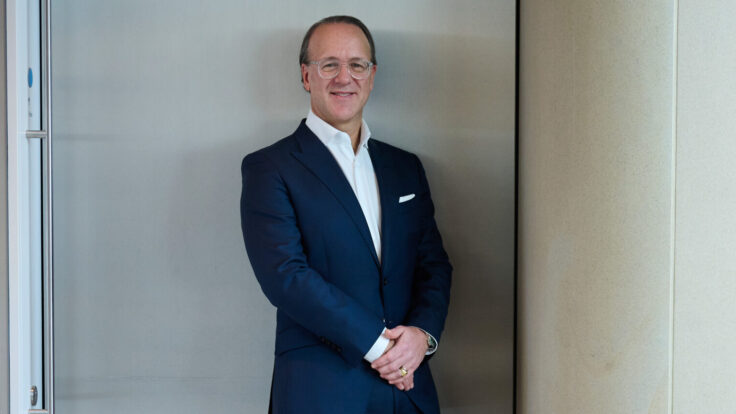
Up top, I’m reading between the lines of LVMH C.E.O. and chairman Bernard Arnault’s message to shareholders during the
group’s annual meeting. (It was, unsurprisingly, quite different from Luca de Meo’s presentation just a week earlier at Kering’s Capital Markets Day in Florence.) Malique Morris is also here with intel on the Nike layoffs, and Sarah Shapiro has a report from the front lines of teen fashion. Did you know kids still go to prom?
Also mentioned in this issue: Michael Bargo, Hanya Yanagihara,
Kendall Becker, Carla De Benedetti, Loro Piana, Jonathan Anderson, Laila Gohar, LVMH, Chase Infiniti, Alexis Fabry, Le Nouvel Obs, Clayton Christensen, Elliott Hill, I Am Delilah, Charlotte Macaux Perelman, Jeff Bezos, Delphine Arnault, Dior, Yi Ng, Hania Rani, Anne
Hathaway, The Last Supper, Demna, John Donahoe, Venkatesh Alagirisamy, Trump, Rose Byrne, Theaster Gates, Cini Boeri, and more… |
Three Things You Should
Know…
|
- Real-ish
talk at LVMH’s annual shareholder meeting: At a dinner last night in Paris with professionals from outside the luxury industry, some of whom had no idea what I do for a living, I was struck by the fact that Bernard Arnault was top of mind for everyone. Like Jeff Bezos and Amazon in America, you can’t have a conversation here about anything, really, without someone mentioning Arnault or LVMH. Earlier that very day, Arnault had stood in front of
shareholders to address the state of the business, and the state of the world, at the group’s annual meeting. (Arnault noted that LVMH is the “leading” contributor of corporate tax revenue in France.)
I wasn’t at the LVMH meeting this time, but I’ve been before. I remember it was fun to see all the old-fogey investors, who maybe own only a few—or even one!—shares in the business, but make a day of it. And they didn’t disappoint this year by asking truly stupid questions, like whether
Arnault would take a selfie, and if the company would consider holding next year’s meeting in Toulouse.
Meanwhile, Bernard managed to dodge the few queries about succession, noting that he would address the issue in “seven or eight years.” Why wait? Presumably, there is a
contingency plan in place if Arnault needs to step down earlier, but my feeling is that he doesn’t yet know who will replace him as C.E.O. if he can work until 85, nor does he want to think about it too much. Nevertheless, Arnault made the last-minute decision to have each of his children give a brief presentation about the work they do, presumably as an antidote to the exhaustive succession investigation published by Le Nouvel Obs earlier this week. (Read more about it here.) The most revealing admission came from Delphine, his eldest child and only daughter, who said that being the C.E.O. of Dior is “daunting” but promised there is “something of a revolution” happening
there with Jonathan Anderson, who is “genius.” Her remarks underscored what I’ve said here before: LVMH is all in on Anderson.
Arnault also underscored his confidence in the company’s go-forward plan, noting that when the share price goes down, he always buys more—not only because it gives him more control, but because he knows he’s going to gain. Perhaps most critically, Arnault did not mince words regarding the potentially devastating repercussions of the
current geopolitical situation. “The world is now in a pretty serious crisis,” he said, noting that one outcome is a “world catastrophe with a very serious, very negative economic impact.” Arnault’s relationship with Donald Trump is more important than ever now.
|
|
|
|
A MESSAGE FROM OUR SPONSOR |
Agentic commerce isn’t a future concept. It’s already reshaping how people shop. Static storefronts are giving way to
guided, conversational experiences that don’t just surface products. They drive decisions and conversion in real time. Swap’s Agentic Commerce 101 breaks down what’s real and what it means for brands right now. Inside: |
• What agentic commerce is and why most AI tools don’t qualify • Why AI discovery platforms aren’t built to convert for your brand • Why owning your AI experience and your data is becoming non-negotiable |
|
|
|

| Malique Morris
|
|
- What the latest Nike layoffs
really mean: On Thursday, Nike announced roughly 1,400 staff cuts, mostly in technology roles, pegged to “a change to its global operations.” C.O.O. Venkatesh Alagirisamy framed the cuts as straightforward consolidation—another step in the company’s turnaround under C.E.O. Elliott Hill. The cuts themselves aren’t especially surprising. In January, Nike laid off around 800 warehouse workers. (Overall, the company has about 77,000 employees worldwide,
although most work retail.)
Hill’s predecessor, John Donahoe, likely leaned heavily into hiring in technology while simultaneously shedding a lot of product and merchandising talent—the very people who, in retrospect, might have helped Nike avoid its current slump. I talked to someone familiar with the business who posited that this piecemeal approach to layoffs, instead of a one-and-done reduction, is further evidence that Hill may not yet have a firm grasp on
the turnaround he’s charged with executing. More charitably, maybe he’s trying to save as many jobs as possible, and going department by department makes that easier. Inside the company, I’m hearing this has been expected since the beginning of the year, following the previous round of cuts. There’s likely more on the way, given that this turnaround will take a while.
|
|
|
|

| Sarah Shapiro
|
|
- Prom is still a thing:
In the Gen Alpha era, dress codes for most adolescent rituals—school dances, bat mitzvahs, etcetera—have relaxed significantly. Prom, though, has moved in the opposite direction, becoming the single event that absorbs all the pressures and pageantry of high school. This spring, pastels have taken over, especially in the South. According to Kendall Becker at Trendalytics, sales of pink prom dresses are up 136 percent from last year. Social media engagement involving floral prints
is up 46 percent. Those sequined dresses haven’t disappeared, though—metallics are up 71 percent.
Where are the youngs shopping? Peppermayo, I Am Delilah, Revolve… and, for a few dollars more, Sherri Hill. The mermaid gown has exploded, up 277 percent in weekly searches versus last year, according to Trendalytics. The silhouette’s recent turn on the red carpet via stars like Chase Infiniti, Anne Hathaway, and Rose Bryne created momentum
for prom night, and millions of GRWM TikToks beforehand.
|
|
|
|
As the fashion and influencer crowds flooded Salone del Mobile during Milan Design Week, the
real winners were brands like Hermès and Prada that treat design as culture, not simply commerce, and invest accordingly. |
|
|
|
I’ve always felt paralyzed by proper trade shows: the sprawl, the lack of clarity on what to see, etcetera.
Milan Design Week, home of Salone del Mobile, was no different. It’s fair game to anyone with the budget to participate, which makes deciding between all the programming a challenge, especially because there is so much to experience—both good and bad. In 2025, the government-estimated impact on Milan’s economy was €278 million. Who knows if that’s true, but during Salone, my Airbnb cost twice as much as during Milan Fashion Week.
We also know that fashion marketers will flock
anywhere with enough rich people who like to spend money. But were their exhibitions any good? The brands in some form of dialogue with the design community did a better job than the fly-bys. As outgoing T magazine editor Hanya Yanagihara told me at her final party at Villa Necchi Campiglio—the only truly exclusive invite during what is a generally democratic week for anyone willing to queue—“Fashion people look down on design people, but design people don’t think about
fashion people.” |
|
|
|
A MESSAGE FROM OUR SPONSOR |
Agentic commerce isn’t a future concept. It’s already reshaping how people shop. Static storefronts are giving way to
guided, conversational experiences that don’t just surface products. They drive decisions and conversion in real time. Swap’s Agentic Commerce 101 breaks down what’s real and what it means for brands right now. Inside: |
• What agentic commerce is and why most AI tools don’t qualify • Why AI discovery platforms aren’t built to convert for your brand • Why owning your AI experience and your data is becoming non-negotiable |
|
|
|
Nevertheless, a few fashion brands did manage to make the design people take notice. I liked Loro Piana’s exhibition of their plaids—blankets that are ornate enough to display as wall hangings. It also helps that the brand, like Hermès, is a materials business first and happens to be based in Milan. Hermès’s home designers, Charlotte Macaux Perelman and Alexis Fabry, didn’t disappoint with
their own installation, built around 30 rectangular columns.
Meanwhile, New York interior designer Michael Bargo’s work with Yves Salomon Editions received raves, and people were pleasantly surprised by the thoughtfulness behind Jil Sander’s Reference Library, a
collaboration with the interiors media brand Apartamento and Studioutte, a Milanese interiors and architecture firm. The concept—ask 60 culture-makers to choose one favorite book—brought a sharpened focus to the current obsession with physical media. I enjoyed the less obvious selections, such as Yi Ng’s choice of the late Clayton Christensen’s seminal M.B.A. self-help book, The Innovator’s Dilemma.
Gucci Memoria, a retelling of the
brand’s story staged in the Basilica of San Simpliciano, was interactive, with a vending machine that popped out little canned drinks fashioned after the cocktails sold at Gucci’s Florence bar, Giardino, and illustrated Demna-style with logos like “Fashion Icon” and “Drama Queen.” The cloister, framed in tapestries depicting different moments in Gucci history, was filled with gorgeous live florals inspired by the famous Gucci motif. It was all a little funny and weird—Demna’s
signature. Fashion’s favorite food person, Laila Gohar, was everywhere, with some projects more successful than others. Her collaboration with Arket, H&M’s Scandi answer to Uniqlo, fell flat to me—even after I took a selfie sitting on the radish she designed for her food-themed carousel. It made me think she needs to develop more fashion for Gohar World. She’s done a few aprons, but just look at Miu Miu this season.
And yet, the richest fashion-adjacent experiences came
from Prada and Miu Miu, which staged a series of talks and performances, including the Prada Frames viewing of The Last Supper, which lives inside the Basilica di Santa Maria delle Grazie. I made it to concert pianist Hania Rani’s performance later in the evening. First time I’ve been to church in years.
Prada’s success speaks to the bigger opportunity at Salone for brands to engage directly with the design community by staging, or simply sponsoring, projects
that aren’t directly connected with the products they sell. My favorite moment of the week was visiting the Osvaldo Borsani apartment, furnished by Interni Venosta, the line from the Milanese design firm Dimorestudio. On a recent episode of Fashion People, I discussed this very subject with the design writer and editor Kelsey Keith, currently
global creative director of MillerKnoll, which owns Design Within Reach, Herman Miller, Knoll, and Maharam. Herewith, find a condensed and edited version of our conversation. |
Lauren Sherman: What was Salone del Mobile like when you started coming
here 15 years ago versus now?
Kelsey Keith: My first Salone was maybe 2011, and what’s been interesting about that trajectory is that it really traced all of the changes in media and also technology. Editors aren’t the gatekeepers anymore, and influencers are here. It’s all over social media. This year, there are a ton of Milan lifestyle posts on Instagram, like people giving their top five places to eat in Milan from a local’s perspective. Architecture people have
always loved Milan; the built environment here is beautiful. But it’s sort of a specialized taste, and now everybody’s kind of hip to it, as evidenced by the crowds, which are just insane.
What do you think of fashion’s ever-expanding presence during the week?
The houses that are taken really seriously by design people are Hermès, Prada, and Loewe. Hermès just knocks it out of the park every time. The quality of their exhibitions
is unparalleled. Prada, the way they activate around Design Week has a lot to do with art. This year they’re doing something loosely titled “Prada Home” with Theaster Gates, but that’s pretty art-based, very much a Prada thing. |
|
|
|
Loewe isn’t doing anything this year, but because they were doing the Craft Prize, that’s obviously catnip to
design people. Under Jonathan Anderson, they had been doing great things in the design sphere.
Some fashion brands have furniture or home lines, like Armani, Ralph Lauren, and Hermès, but most don’t. Do you see it as a big opportunity for luxury brands that see consumers moving away from soft luxury?
There has to be a commitment to doing it well, because with a significant purchase like actual furniture, you can tell pretty quickly if it’s made
poorly. If it’s bad, if it’s uncomfortable, and if it doesn’t work.
In terms of whether there’s a market, yes. Consumers don’t necessarily always know what they want until you tell them. And I don’t say that in an elitist way. Designers play a real role in this world; they solve problems, even if that problem is making something beautiful that wasn’t there before. And a lot of these designers have a great sensibility and evolved taste. No designer, even a fashion designer, is just
interested in fashion. Look at The Row, for example.
I’m not a Row shopper myself, but I’m interested more in the aura of The Row and actually the world that they’ve built, rather than the clothes. The taste is interesting: how they design the stores, the antiques they collect, the third-party things they’re bringing in, the art that they post. There’s definitely an appetite for that sort of thing.
The reason
Charvet slippers have become so popular with Americans is because they had them in the store 10 years ago.
And Bode is another good example; she has created a world. Any good brand is really world-building, and you’re not building a world unless you’re considering the environment, furniture, lighting, textiles. Those opportunities absolutely exist for
fashion brands that are really committed to design.
For people who are still (somehow) in Milan when they’re reading this, do you have a recommendation or two?
There is a small gallery named Emanuela Campoli, with a show right now called Verdant Garden. It’s a pair of artist-designers who live in France. It is small—I don’t want to ruin it because it’s a very
intimate show, but absolutely worth stopping by. It’s pretty central. Please go to that.
The other one is a photography show of this Italian photographer named Carla De Benedetti, who photographed a lot of ’70s interiors, including these Cini Boeri interiors. Anyone who’s
pulling reference images for mood boards, whether in fashion or design, would be super interested in these images, because they’re kind of the origin of them. She doesn’t have a huge presence, certainly outside of Italy, although she’s well known here. |
Until Monday,
Lauren
P.S.: We use affiliate links because we are a business. We may make a
couple bucks off them. |
|
|
|
Puck fashion correspondent Lauren Sherman and a rotating cast of industry insiders take you deep behind the scenes of this
multitrillion-dollar biz, from creative director switcheroos to M&A drama, D.T.C. downfalls, and magazine mishaps. Fashion People is an extension of Line Sheet, Lauren’s private email for Puck, where she tracks what’s happening beyond the press releases in fashion, beauty, and media. New episodes publish every Tuesday and Friday. |
|
|
|
The industry’s go-to source for unflinching reporting on the trillion-dollar business of artificial intelligence - perhaps the
single most important technology of our time. Ian Krietzberg, the powerhouse journalist behind The Deep View, delivers twice-weekly insights into the latest dealmaking and breakthroughs in A.I., and how the intersecting worlds of finance, entertainment, media, and politics are being transformed in its wake. |
|
|
|
Need help? Review our
FAQ page or contact us for assistance. For brand partnerships, email ads@puck.news.
You received this email because you signed up to receive emails from Puck, or as part of your Puck account associated with {{customer.email}}. To stop receiving this newsletter and/or manage all your email preferences, click here. |
Puck is published by Heat Media LLC. 107 Greenwich St., New York, NY 10006 |
|
|
|
|