 |

|
|
Welcome to the latest edition of The Varsity, my twice-weekly private email on everything that happens in the owners’ boxes, the CAA conference rooms, and Bristol—and all points in between. Happy Opening Day to all who celebrate.
I am writing this email from Puck’s airy home office in Chelsea. I have been in New York for most of this week for what I imagine a bar mitzvah might feel like if it were conferred in middle age and without people pinching your cheeks. Puck threw a launch party for The Varsity at a hip spot in the village, not far from NYU, that attracted a Who’s Who list of the top sports executives, people like Jimmy Pitaro, Sean McManus, David Levy, Ray Hopkins, Tim Brosnan, and David Preschlack. My favorite part of the night had to be watching Puck’s inimitable founder Jon Kelly geek out over meeting his hero, fantasy sports king Matthew Berry.
As a reminder, this email is behind Puck’s impenetrable paywall. Sign up here to read the full version, plus all the missives from my partners Matt Belloni, Bill Cohan, and Dylan Byers, among others. Puck uses state-of-the-art technology to know exactly who is forwarding these emails. And I swear that we’ll hunt all of you down and subscribe you to Marchand’s new paint-by-numbers video series.
Let’s get to it…
|
| Player of the Week: David Ellison |
|
In the horserace to buy Paramount Global, it appears that David Ellison’s group has gained a pivotal edge. (It’s good news for Shari Redstone, too.) I’ll let my partner Bill Cohan, a former banker and author of Puck’s Dry Powder private email, explain…
- Shari’s silver lining: Sometimes it’s better to be lucky than good. On Wednesday, S&P Global, the rating agency, downgraded Paramount Global’s already low-grade investment debt to BB+, or junk status. Normally, of course, this would be rough news. No once-proud company—especially one that just broadcast the most-viewed telecast ever for February’s Super Bowl—wants their credit rating dropped to junk status, if for no other reason than it increases, often dramatically, a company’s cost of borrowing money. But this downgrade may work out to Shari Redstone’s benefit, and here’s why…
Faithful readers of Puck will know that I’ve been harping on the “change of control” provision in Paramount’s $11.2 billion of senior notes as potentially being a serious impediment to David Ellison’s fledgling efforts to acquire control of Paramount Global by buying the Redstone family’s holding company, National Amusements, Inc., which controls about 10 percent of the economic ownership of Paramount Global but nearly 80 percent of the company’s voting control. In other words, if Ellison could buy NAI from Shari—it’s a private company with other annoying assets and liabilities—he could potentially get control of Paramount Global on the cheap. What Ellison and his team at RedBird Capital and KKR don’t seem to have focused on is the change of control provision in the Paramount senior notes, which would likely force Ellison & Co. to repay or refinance that $11.2 billion of debt if they were to buy NAI and if the three major credit ratings agencies downgraded Paramount’s debt.
But after yesterday, that provision in the Paramount senior notes may be moot, since one of the three major ratings agencies already downgraded Paramount’s debt, and therefore only two of the ratings agencies are left to downgrade the debt, not three. So even though the downgrade was a negative event for Paramount Global, it may now work to the advantage of David and Shari getting a deal done because that major impediment may no longer be in play.
That $11.2 billion landmine, to me anyway, was why Ellison’s idea of buying NAI was a non-starter. If that trigger risk is eliminated, the Ellison/NAI deal has much better prospects for success than it did a day ago, assuming of course that David and Shari can ever reach a deal on what NAI is worth… a big if. As I say, sometimes it’s better to be lucky than good, and this is a rare piece of luck for Shari. —William D. Cohan
|
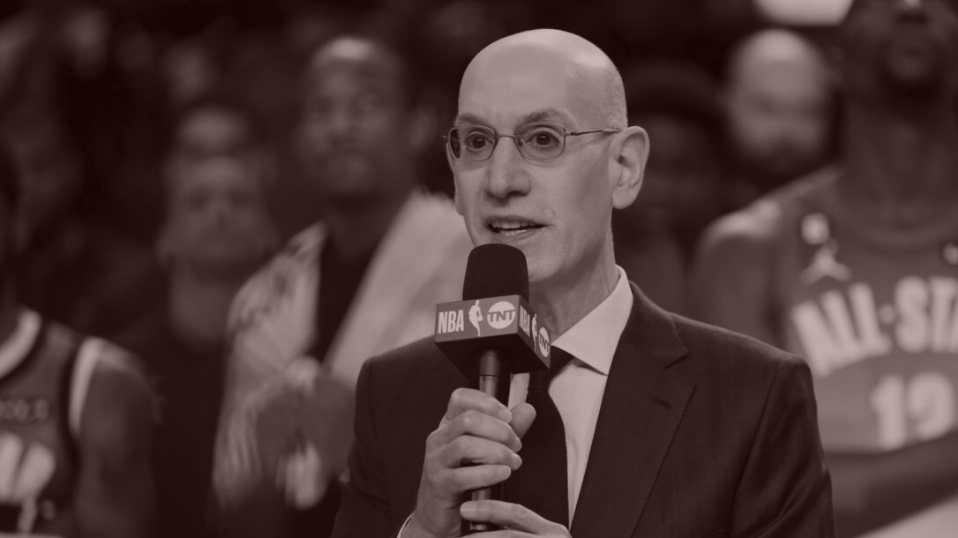
| Down to the J.V.: Adam Silver |
|
| It used to be easy to figure out the sports calendar. New Year’s Day was reserved for college football. NASCAR runs the Daytona 500 every President’s Day weekend, and IndyCar stages the Indianapolis 500 every Memorial Day weekend. July 4th is baseball; Thanksgiving is the NFL; and Christmas Day was dedicated to wall-to-wall NBA action, from noon until past midnight. Easy, right?
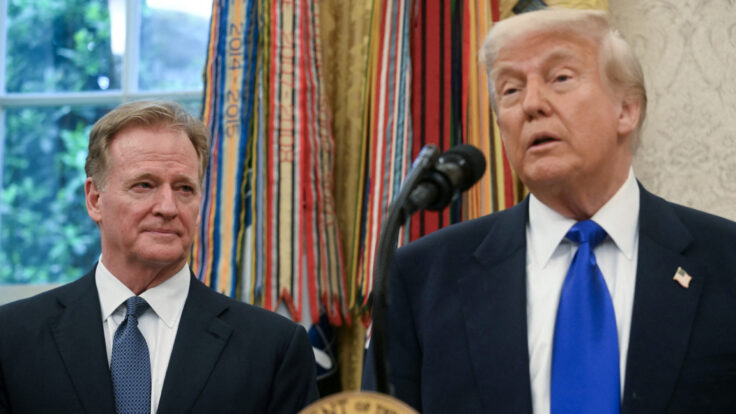
The NFL’s recently announced decision to play two games this forthcoming Christmas—even though it falls on a Wednesday—is a veritable blasphemy in the otherwise collegial sports business. And it’s also a somewhat ironic power move since the league has been incensed that the College Football Playoff had the indignity to schedule a playoff game on a December Saturday—a slot that the NFL had promiscuously encroached upon some time ago. But the NFL can (and generally does) do whatever it wants, and Roger Goodell & Co. were motivated by the success of last Christmas’s Raiders-Chiefs contest, which had nearly 30 million viewers—a huge number for a regular season game.
Last Christmas, meanwhile, the NBA saw its viewer numbers drop 30 percent. A glass-half-full view: the NBA’s TV viewership on Christmas still was higher than typical regular season games. But given the NFL competition, don’t expect NBA numbers to rebound this year. |
|
A MESSAGE FROM OUR SPONSOR
|
| |
 |
Dreams of Postseason glory start now with the beginning of a new Major League Baseball season. Because now is the time where anything can happen, where an unknown can become a household name, and where any team can stake their claim as a World Series contender. Can the star-studded Dodgers reach the World Series again? How about those young Orioles? Are the defending champs — the Rangers — able to become the first repeat World Series champions in over 20 years? It all starts now and you’re not going to want to miss a single moment. Visit any ballpark or go to MLB.com to see what everyone is talking about.
|
|
|
| The Starting Five: Opening Day Edition |
|
- Shohei-gate: As the sports media industrial complex begins to grapple with the various enigmas surrounding the Shohei Ohtani interpreter gambling scandal, everyone is focusing on how the leagues and networks deal with the gaming companies. Sports betting proponents have been quick to point out, in their emails and texts, that the Ohtani scandal involved illegal betting and probably would not have escalated so quickly had those wagers been made legally. But Tony Kornheiser got right to the bottom of the issue on Tuesday’s PTI when he noted, “All of these sports leagues and this network, have gotten into partnerships with gambling concerns. And it grays the line between what’s right and what’s wrong to me.”
Mike Wilbon followed up by saying, “We’re going to have one of these stories every week. Every week. Because this is what the leagues and the networks—including this one—have wrought. They have gotten into bed with gambling interests. They have decided to make hundreds of millions of dollars… with gamblers. With sports gambling… I am more upset with the people above [the players] who encourage it.” My takeaway: This will remain a storyline for the foreseeable future. The news of the mysterious Jontay Porter O/U scoring line has only compounded the questions around Ohtani.
- The Diamond extension that wasn’t: On Monday, Diamond Sports Group asked the bankruptcy court for an extension of its exclusivity period, which would keep others from filing competitive business plans for Diamond’s assets until September. Some mistook this arcane legal maneuver as a sign that Diamond wanted to delay filing its own business plan by five months, but that’s not the case.
Here’s what I know. The bankruptcy court still has a hearing scheduled for April 17, and Diamond has to file its business plan before then. Expect Diamond to use most of the next three weeks to make that filing. “DSG’s technical filing has no impact on the April 17 hearing date, and we are moving forward with the original timeline as outlined to the court,” a Diamond spokesperson emailed me. The blocker, as I wrote about Monday, is that Diamond can’t present a business plan until it cuts long-term deals with the top distributors: Comcast, Charter and DirecTV.
Diamond also needs the NBA and NHL to get on board. But I’m told that NBA executives have told Diamond officials that they have their own blocker: the league needs to settle its national media deals before contemplating any long-term local deal, and those deals may take many more months before getting finalized. It seems likely that the NBA would consider short-term deals that wind up before its national deals end, at the end of next season, which would help Diamond emerge from bankruptcy.
- Women’s sports growth: Considering the amount of investment being poured into women’s sports, the category’s growth could very well become a regular feature in The Varsity. This week’s item comes from Broadcasting & Cable’s John Lafayette, who reported that GroupM, the ad agency, is planning to double its spending on women’s sports over the next 12 months. That means brands like Ally, Coinbase, Discovery, Google, Mars, Nationwide, Unilever, and Universal Pictures will soon be attached to WNBA, NWSL, and women’s college basketball programming. The story quotes chief investment officer Matt Sweeney, who said that women’s sports “only comprise a mere fraction of total media spend in sports.” GroupM is doing its part to cover the spread.
Obviously, none of these brands or executives are pure altruists. Yes, they want to be aligned with an important sector, but they also know that these leagues will be increasingly valuable in a new media ecosystem and early investments pay back the most.
- This! Is! The UFL!: The United Football League opens its season this weekend in Arlington, Texas, with a game between the hometown Renegades and the Birmingham Stallions. (The Stallions, by the way, are coached by Skip Holtz, the son of the Notre Dame legend, who recently helped Northwestern survive its player-hazing crisis.) This, of course, marks the first game of the new league, which formed last year after the XFL merged with the USFL.
Springtime professional football has long been a marketer’s fantasy, but this new league likely marks its best chance at success. After all, spring football is a relatively high priority for Fox and ESPN, which carry the games. (Fox owns 50 percent of the league; Disney has a smaller stake.) For years, network executives have salivated over the prospect of owning their own programming, and keeping rights fees in check (see the original XFL and X-Games). Now, the incentives are aligned.
Fox Sports C.E.O. Eric Shanks will be at the opening game. So, too, will RedBird namesake Gerry Cardinale, former XFL owner Dwayne “The Rock” Johnson and his business partner Dany Garcia, SMAC Entertainment C.E.O. Constance Schwartz, and former Cowboys Troy Aikman, Jason Garrett, and Dez Bryant.
- Let’s Go O’s: In honor of MLB’s Opening Day, I had to post something from Camden Yards, where the fans’ honeymoon with the team’s new ownership has reached an apex. One particularly cynical fan who works in sports business texted me this video of Mike Arougheti buying beers for fans and simply said, “We won the owner lottery.” Another fan, Kyle Mace, the son-in-law of an old college buddy, sent me a picture of him meeting David Rubenstein in front of Boog’s Barbeque. Especially after such a terrible week in Charm City, it’s great to see hope return to local nine.
|
|
|
| Perhaps the greatest mystery in the current sports media ecosystem—beyond the Shohei Ohtani saga, of course—is the denouement of the NBA’s national media rights auction. The timing, of course, is fraught on a number of levels—league play is at an all-time high, as a new generation of international superstars (S.G.A., Wemby, Jokic, Ant-Man) come into their own; the league’s traditional partners are all operating in a complex post-ZIRP media environment; and live sports remain the last bastion of the linear ecosystem. Disney (ABC and ESPN), Comcast (NBC), and Warner Bros. Discovery (TNT and TruTV) all want as many TV games as they can acquire. Sure, they know that their futures will be defined by streaming and free cash flow, but current cash flow optimization models rely on raking in as much money as humanly possible from live sports—the cable fees, advertising, etcetera—pronto.
What makes this NBA negotiation even more fascinating, though, is the presence of the deep-pocketed—in some cases trillion-dollar-plus market capitalization—tech companies. Indeed, while Disney, Comcast, and WBD all have pretty straightforward motivations for landing NBA rights, the tech streamers have very distinct enticements. Representatives from Amazon, Apple, Google, and Netflix have all approached their NBA talks in different ways, which neatly express their ultimate end goal and the manifold value of the NBA product. (They haven’t had formal negotiations yet; the NBA is in the middle of an exclusive negotiating window with Disney and WBD that runs through April 22.)
Amazon, for its part, is unique among the streaming companies because it is interested in operating a broadcast-style deal. Using its NFL Thursday Night Football as a template, Amazon wants exclusive access to one of the NBA’s main packages. Amazon executives will point to its TNF performance to show their ability to handle and maintain big streaming audiences. Last year, TNF averaged nearly 12 million viewers per game.
But Amazon has also shown interest in other aspects of the NBA’s media offering. The company, which owns a piece of YES Network, also has expressed interest in the NBA’s local digital rights. Amazon has also made a $115 million investment to handle the bankrupt Diamond Sports’ streams, which seems like a veritable gateway drug for the company to explore how to use sports fandoms to optimize its Prime product via both advertising and shopping capabilities. As a result, Amazon seems virtually certain to wind up with some sort of NBA deal. Its executives are even interested in the NBA’s out-of-market League Pass package.
Netflix executives have told league officials that they are not interested in one of the main packages, but rather one of the smaller groupings of games, akin to the In-Season tournament or the play-in games that commence the playoffs. Netflix, I’m told, is particularly interested because they can acquire the worldwide rights to these contests. The NBA synced all of its international deals so that they end at the same time, at the end of next season, when its domestic deals lapse. If Netflix is able to work out a deal, I expect it would look similar to the one the company cut with WWE Raw, which includes both domestic and international rights. It will take a leap of faith for Netflix to cut a deal for live sports rights, but this is the most bullish I’ve ever been on a potential Netflix-NBA partnership. It may still be a longshot, but I’d give the streaming giant much better odds than Google or Apple.
For a glimpse of Google/YouTube’s sports strategy, take a look at the deal it cut for the NFL Sunday Ticket package. I don’t expect that YouTube will bid on a package of rights to live games, but the company is interested in League Pass. YouTube’s sports strategy is focused on subscription, of course, which is where League Pass or the league’s local streaming rights could come into play. There’s no question that YouTube wants this; I only wonder if they’ll outbid Amazon (and I don’t think they will).
Meanwhile, many assume that Apple only wants to bid on a league when it can own all the rights, à la its vaunted MLS deal and its bygone tender for Pac-12 rights. (Alas, if the Pac-12 had taken the deal, there might still be a Pac-12…) But I’m told that its conversations with the NBA has not focused on one massive bid for the league’s worldwide rights. Rather, Apple executives are interested in an exclusive suite of games.
The push for exclusivity could present a problem for the NBA. Apple TV+’s reach has to be concerning, especially if it wants exclusive games. In February, it accounted for just 0.29 percent of all streaming viewership, per Nielsen’s Gauge report.
It’s hard to see a path for Apple to cut an NBA deal this go-round. And even if NBA owners are younger and more risk-friendly than their peers in the NFL membership, they must balance the twin goals of revenue and relevance. And just like their counterparts in the media business, everyone knows that streaming is the future but linear still pays the bills. |
|
|
|
|
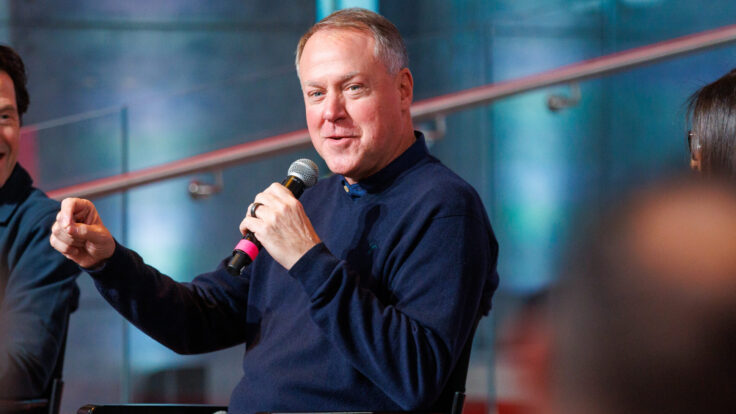
| “Wait. What? Did Preschlack really say, ‘Diamond, in the near and long term, is the best economic engine for our team partners to drive maximum value’? Maximizing value for team partners screws consumers and distributors. If success is 50/50, take the under.” —A cable executive
“Good interview with David Preschlack. It’s literally the first interview with him that I’ve seen.” —A broadcast lawyer
“ESPN’s collab with R.S.N.s is about more than local rights and extra cash: it’s about trying to become the place to find out where events are on. It’s a mess between streaming, local areas, and blackouts. As Apple, Roku et al. try to build their apps’ content listings, Disney needs to do the same within ESPN, even if it’s about redirecting users elsewhere for that one session. This is a long-term play, but ESPN’s been short-term (pay for inclusion) about it.” —A former Disney executive
“ESPN is also obligated to have MLB.tv within ESPN+ but you can only purchase it via the web and it’s not used (but amazing inclusion if you’re not blacked out from your favorite team). What to do with this is a small piece of a future deal, but factor in local rights and RSN collapse and it has the potential to do a lot more… or just go away.” —The former Disney executive (again)
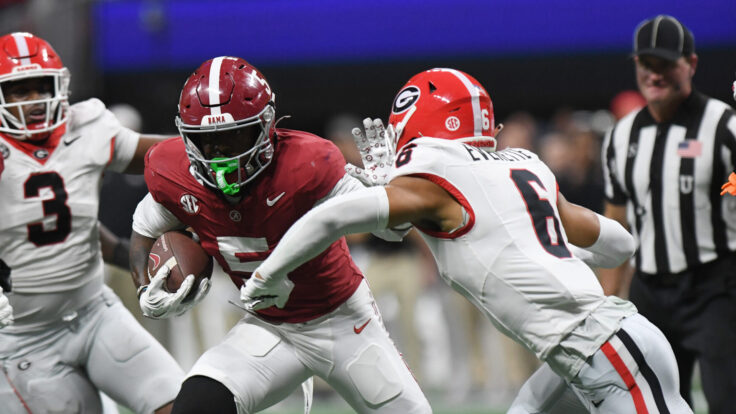
“With N.I.L. agreements, one-and-done, and other changes, is there any reason for college sorts to still be the conduit for pro basketball and football?” —A national radio journalist
“I started following you when you were at Cablefax. Here is my anonymous question: Not only is the NFL killing the NBA Christmas Day, but won’t the two Saturday NFL games that are necessary to set up the Christmas Day games kill the Saturday CFP games? In one bank-shot move, the NFL has diminished the ratings of the NBA’s highest rated regular season day and really put a crimp into the start of ESPN’s expanded relationship with the CFP. Makes me wonder if the NFL really wants an equity stake in ESPN.” —A media analyst
“I listened to your appearance on Peter Hamby’s The Powers That Be pod today and have a quick comment. In the first commercial break, the pod ran a spot asking Disney shareholders to vote for the recommended slate of board nominees. How’s that for inside baseball!” —A former college sports executive
“Every once in a while, I get a prediction right. The NFL will play on Wednesday, Christmas day. It will be interesting to see if they follow my formula to make it work.” —Patrick Kiernan, a public accountant and happy subscriber to The Varsity.
Ed note: I want to offer a tip of the cap to Kiernan, who sent me the following email more than two months ago!
“I have a question about the future of the NFL on Christmas when it’s on a Wednesday, like it is this year. Most have assumed they’d pass on games that day, but I wanted to get your thoughts on if the following scenario could work.
It’s too late for bye weeks, but could you see them getting creative and doing the following:
* Play 2 divisional games on Saturday before Christmas. (Total 4 teams).
* Flip flop the divisional games the Wednesday of Christmas.
* Count the Wednesday as those teams’ TNF appearances. Maybe Amazon even gets the games.”
|
| Postscript: We may refer back to this email in future years if Goodell takes his advice. |
|
|
See you Monday,
John |
|
|
|
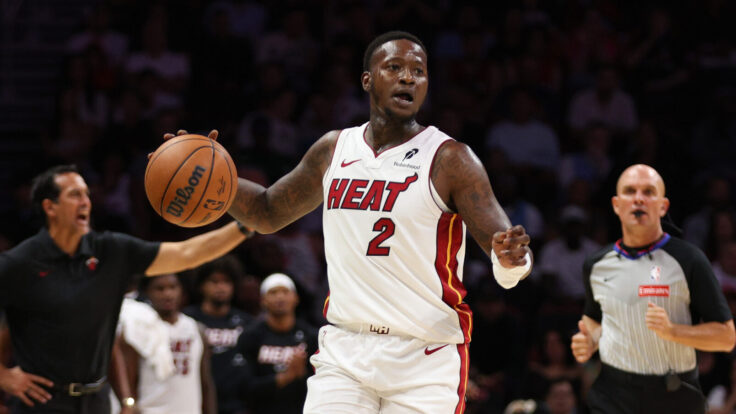
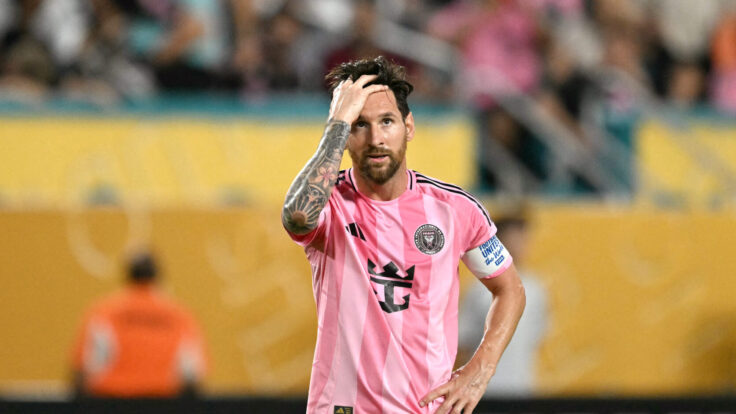
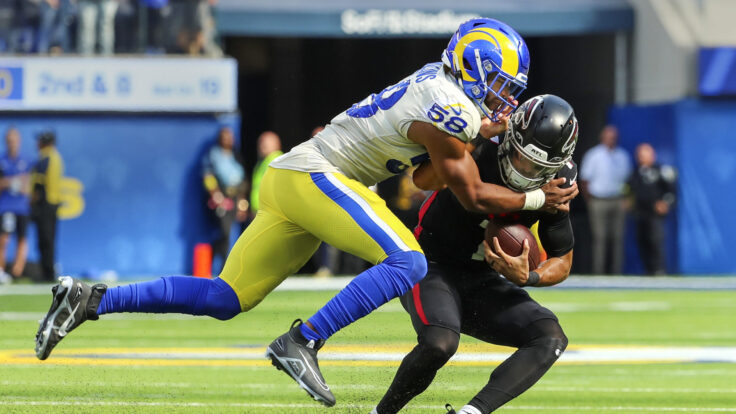
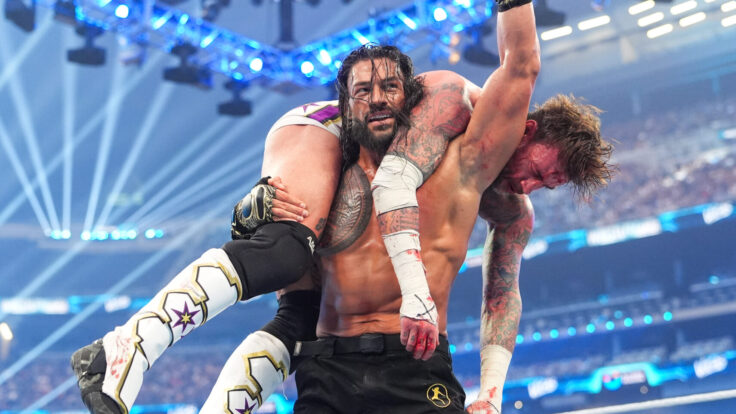
| FOUR STORIES WE’RE TALKING ABOUT |
|
|
|

|
 |
|
|
|
Need help? Review our FAQs
page or contact
us for assistance. For brand partnerships, email ads@puck.news.
|
|
You received this email because you signed up to receive emails from Puck, or as part of your Puck account associated with . To stop receiving this newsletter and/or manage all your email preferences, click here.
|
|
Puck is published by Heat Media LLC. 227 W 17th St New York, NY 10011.
|
|
|
|