Hello and welcome back to What I’m Hearing...
Happy Thanksgiving from Jackson, Mississippi, where I’m visiting in-laws (and carbs). If this email was forwarded to you, sign up for Puck here, or celebrate Black Friday by giving memberships to everyone on your team.
Sponsored by Amazon Prime Video 
Thanksgiving Thoughts...
Turkey trot: My studio sources don’t quite understand the media’s exuberance over the middling holiday box office. Sure, pandemic expectations, new normal, etc. But everything is still way down from 2018 and 2019. Disney’s Encanto will likely open to about half of 2018’s Ralph Breaks the Internet, and MGM’s House of Gucci is a bona fide yikes, with a projected $20 million or so for the five-day. Not what Mike DeLuca wanted on a $75 million budget and a massive campaign.
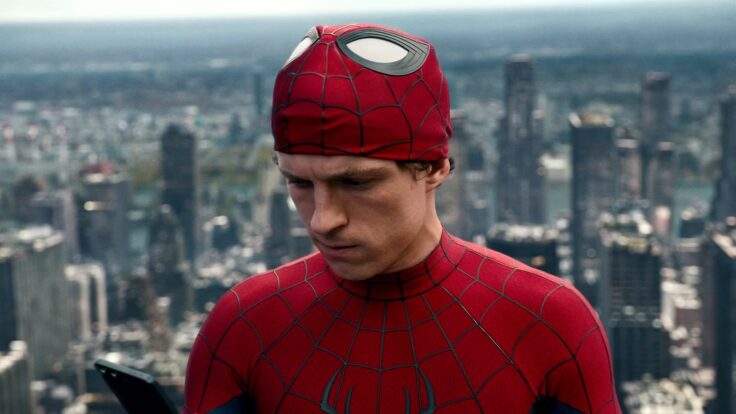
Oh my Omicron: Disney and ViacomCBS shares hit 52-week lows today amid the new Covid variant scare before recovering slightly. Sony’s Tom Rothman, purveyor of Spider-Man: No Way Home (Dec. 17), must be looking extra nervously at Omicron, on top of the Delta spikes in Europe. And given the scares, I’m not optimistic that Spielberg’s West Side Story (Dec. 10) will lure the old people who have stayed away from everything except Bond.
Today, as a Thanksgiving digestif, I went back and forth with William D. Cohan, the author and former M&A banker, whose own biweekly email, Dry Powder, is a part of Puck. We’ve done this a couple times: Bill brings Wall Street insight to our chat about media’s subscriber obsession, Netflix vs. Tesla, Apollo’s entertainment goals, and, of course, this season of Succession. Matt Belloni: Earnings season for Big Media just ended, and the takeaway is that streaming services are slowing. At least for Disney and ViacomCBS, that has translated into drops in share price. The market largely values subscription creation, presumably on the theory that only three or four global services will survive this arms race. Meanwhile, Netflix, the leader in the category, is now more valuable than Disney, even though its subs are slowing, too. I’ll again ask the age-old question: Is Netflix overvalued?
William D. Cohan: I don’t want to draw a comparison between Netflix and Tesla, but the graveyards are full of people who shorted both of them. Nearly ten years ago, I wrote a piece for Vanity Fair about Reed Hastings, Ted Sarandos and Netflix. It was just after Reed announced he was splitting the company into two pieces—a streaming service and his then-dominant DVD-by-mail service (remember Qwikster, anyone?). Netflix’s stock tanked and Reed fell on his sword and abandoned the split. I’ll never forget meeting Sarandos in his L.A. office. He had no handlers or entourages. He shared with me a copy of a script for a show Netflix had bought, written by Beau Willimon: House of Cards. At that time, Netflix’s stock was trading at around $65 a share. Carl Icahn, the billionaire corporate raider, decided to load up on Netflix stock. No leverage. No saber-rattling. No takeover talk. Just looking at a stock that had been beaten down, and thinking it would recover. Soon enough, the stock was at $350 a share. Icahn had made six times his money. So, bet against Netflix? I don’t think so.
Belloni: Any other media stocks you like right now? Even in this overheated market, Roku is a company I think might be undervalued. It’s one of the key streaming video gatekeepers, it just announced an ambitious original content initiative, it’s got earnings momentum, and for some reason the share price has dropped 30 percent this year.
Cohan: Well, I don’t like to pick stocks, especially overpriced/highly valued media stocks at the top of a 12-year bull market. It’s hard to know where value resides these days, since many stocks are at or near their 52-week highs, even after today’s drop. As we have discussed before, though, I don’t understand the trading on Discovery—which is down 15 percent year to date, and down some two-thirds from its March high at the time of the announcement of the WarnerMedia deal. I can’t figure out why investors have soured so much on the prospects of this merger, with David Zaslav running the combined companies. To me, this looks like a screaming buy, not only from a strategic point of view but also from a financial point of view. I would also consider buying Apollo stock (see below), which has a number of big media investments and is trading at a fraction of Blackstone’s value and will likely be revived under its new C.E.O., Marc Rowan. Buying the big private equity firms, which will continue to benefit from cheap money and roaring markets, might be the smartest way to play media these days. But take these recommendations with a cone of salt, as I am not an authorized broker (not that that necessarily matters when it comes to giving sound investment advice).
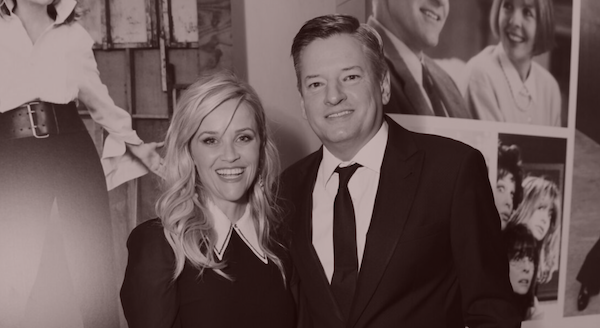
Belloni: Neither am I, of course. On the subject of private equity, in the wake of Blackstone’s backing of Disney alums Kevin Mayer and Tom Staggs, and their big-ticket deals for Reese Witherspoon’s Hello Sunshine and the CoComelon studio Moonbug, I’ve heard other private equity shops are kicking the tires on Hollywood deals. Apollo, for instance, is out looking for media investments, I’m told, and they were in the early mix for Endeavor Content before it sold to a South Korean company. Is this just that the P.E. firms have more money than they know what to do with?
ADVERTISEMENT
Prime Video presents the Amazon Original comedy series HARLEM, following four stylish and ambitious best girlfriends in Harlem, New York City, the mecca of Black culture in America. Together, they level up from their 20s into the next phase of their careers, relationships, and big city dreams. 
HARLEM will be available for guild members at ConsiderAmazon.com starting December 3rd.
Belloni: Music catalogues and companies are also big P.E. targets these days. What are they seeing here?
Cohan: Now that Spotify, Apple Music et al. have made digital streaming a huge money maker—for some, but by no means most musicians—it’s no surprise that the P.E. moguls are scooping up catalogs of the better-known artists. If you are Bob Dylan or Neil Young, and you’ve been doing this gig your whole life, and someone offers you more than $300 million, in Dylan’s case, or $150 million (for a half interest), in Young’s case, you’d be kind of nuts not to do it. As the old saying goes, “You can’t take it with you,” unless you are Elon Musk launching yourself off to Mars.
Belloni: You’re finishing your new book about General Electric, which made me think of its two decades of owning NBCUniversal before off-loading it to Comcast in 2009, in a deal that many now consider to be a steal. With AT&T spinning off WarnerMedia to Discovery and basically admitting that the market rejected its Hollywood foray, do you think the era of non-media businesses dabbling in entertainment is over?
Cohan: The Comcast-NBCUniversal deal was crazy. The funny thing is that when Jack Welch bought RCA, in 1986, for $6.2 billion, it was considered one of the best M&A deals of all time. Not only did GE get NBC, it also got RCA’s television manufacturing business—a dog, for sure—but Jack then swapped it for Thomson’s medical equipment business, which formed the basis for GE’s valuable healthcare division. On Wall Street, the GE-RCA deal was considered a home run. By contrast, GE’s sale of NBCUniversal to Comcast for around $26 billion is considered a huge mistake by GE because NBCUniversal is now worth around $100 billion. It’s not quite apples to apples, of course—it rarely is—but directionally, that is right. GE needed cash after the financial crisis, and the savvy dealmakers at Comcast were only too willing to pounce.
Belloni: But AT&T is a different situation. In the new HBO oral history book, Jeff Bewkes, the Time Warner C.E.O. who sold off the pieces of the company over a decade, calls AT&T’s management of the WarnerMedia assets “malpractice.”
Cohan: AT&T bought TimeWarner for a total of $108 billion, including debt assumed, and three years later agreed to spin it off it to Discovery for—what?— $43 billion in stock, cash and assumed debt. By my calculation, that’s a $65 billion destruction of value in three years. That’s not easy to do. All is not completely lost for the long-suffering AT&T shareholders, as they will own something like 72 percent of the combined Warner Bros. Discovery. So, if Zaz can work some magic, there’s still hope for a recovery.
As for whether it’s the end of non-media behemoths buying media companies, it’s difficult to say. At the moment, the valuation, alone, of media companies probably puts them out of the reach of most non-media acquirers. They are just too damn expensive! (See Netflix discussion above.) But these businesses always seem to retain their allure, so I wouldn’t say it won’t happen again. The AT&T disaster should serve as a cautionary tale for at least another few years until the next ego-driven C.E.O. decides he wants to get into the media/Hollywood business.
ADVERTISEMENT 
Belloni: Finally, since you were a consultant on Season 1 of Succession, I gotta ask what you think of this season. I love that the writers are incorporating very specific real-life media dramas. Big Sumner and Shari Redstone vibes, right?
Cohan: I was getting serious Shari-Sumner flashbacks. That scene of the elderly mogul in the wheelchair, unable to talk, with the daughter interpreting what he’s supposedly saying for her own benefit, is directly out of the Shari-Sumner playbook. Of course, Shari got her father to sign documents giving her control of what is now ViacomCBS when he was very late in his life. Look, I love the show, and the characters, and the music. It all seems very familiar to me, given what I have been writing about for almost two decades. I do wish this season—and I am not involved anymore—would move past the shareholder vote and who will replace Logan. It’s dragging a bit. Of course, kudos to Jesse Armstrong. The show is great fun.
Belloni: I’m Team Shiv. If the show doesn’t end with her in control, I’ll be very upset.
Cohan: Good luck with that. I don’t see it. Roman appears to have the upper hand at the moment. But I don’t see that either. Cousin Greg always seems to land on his feet/squirm out of every difficult situation doesn’t he? Hmmm.
See you Sunday, Matt
Got a question, comment, complaint, or want some free market research about movie theaters in Mississippi? Email me at Matt@puck.news or call/text me at 310-804-3198.
FOUR STORIES WE'RE TALKING ABOUT 
Netflix is finally, subtly lifting the veil on its ultra secretive streaming data—in a way that benefits Netflix, of course. MATTHEW BELLONI 
Backlashes against racial progress are as American as apple pie. But C.R.T. has unleashed a new torrent of grievances. BARATUNDE THURSTON 
... doubling down on Hulu? Yes, Hulu. Plus: Could Joe Scarborough be the next loose-in-the-saddle talent to put the screws to MSNBC? DYLAN BYERS 
An insider look at the questions transfixing Wall Street this week. Among them: What does Larry Culp really want from GE? WILLIAM D. COHAN 
You received this message because you signed up to receive emails from Puck.
Was this email forwarded to you?
Sent to {{customer.email}}
Puck is published by Heat Media LLC.
For support, just reply to this e-mail. For brand partnerships, email ads@puck.news |


SHARE