Welcome back to What I’m Hearing...
Happy almost-weekend. If this email was forwarded to you, become a Puck member by clicking here. And if you’re already a member and you enjoy What I’m Hearing, check out my colleague Dylan Byers’ private email, In the Room. Dylan just did a great dissection of CBS News and that boneheaded move to court Brian Williams.
Sponsored by Amazon Studios 
Thursday Thoughts…
With Oscar voting starting today, and the guilds narrowing the contenders, let’s check in on the most aggressive campaign narratives. Netflix, always among the most shameless—er, active—lobbyists, seems to be telling voters in ads and media that this is how you must think:
There are others, of course; Netflix isn’t alone in pushing virtuous narratives that make their films feel larger and more important; that’s kinda how the awards game is played. But I suspect (hope?) that voters increasingly see through this stuff.
– More Oscars nuttiness: We Don’t Talk About Bruno won’t be nominated for best original song (Dos Oruguitas is Disney’s Encanto submission). But Oscars telecast producer Will Packer would be silly not to open the show with the tune that currently sits at No. 2 on the Billboard Hot 100 chart (the highest for Disney since Aladdin’s anthem, A Whole New World) and has become a TikTok sensation. A full ensemble rendition would be tricky and expensive, and studios actually get charged production costs for the performances of their songs. But Disney Animation should think of it as a gift to sister company ABC. What kid wouldn’t tune in for the first live performance of their favorite song? Queen’s We Will Rock You was the highlight of the 2019 show, but performing a movie’s non-nominated song when another song is (likely) nominated would buck tradition, so it probably won’t happen.
– Lawsuit watch: Adele’s abrupt cancelation of her pricey Vegas residency at Caesars Palace has sparked a furious, behind-the-scenes back-and-forth between the singer’s team, AEG Live, and Caesars Entertainment over who’s to blame. Hard to see how this doesn’t spill into court or arbitration soon. Speaking of Caesars, look for ESPN’s newest stars, Peyton and Eli Manning, to make an appearance there on Super Bowl Sunday. It’s part of the family’s huge endorsement deal pegged to sports betting.
Jim G. Lines Up a Post-Paramount Gig
It’s been more than four months since Paramount C.E.O. Jim Gianopulos was abruptly replaced by kids TV executive Brian Robbins, so I was curious what Jim G. is up to. I’d heard he was planning on teaching, and when I checked in with him, he confirmed he’s prepping a course called “The Future of Creative Content” at USC School of Cinematic Arts this fall.
Gianopulos joined the USC film school board in 2013, and he says he’s looking forward to finally having time to teach there. “It’s an exploration of how cinema technology has evolved over the years, how creators have embraced and utilized it, how audiences have changed in their habits and enjoyment of film and televised content, and what all that informs for the future,” he emailed me. Given Jim’s relationships, I’m betting the guest speakers will be A-list.
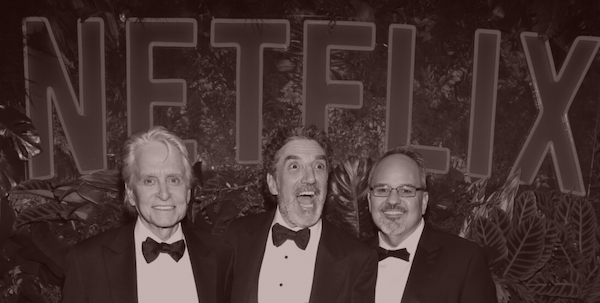
Reed Hastings' recent stock swoon could portend a compensation crisis inside his executive ranks. But the right-sized valuation might just bring some competitive normalcy to the rest of the entertainment industry. The only thing people love more than gawking at a fiery car crash is when that crash involves a fancy sports car. This explains why the recent Netflix stock swoon has consumed so much of the chatter around Hollywood. Netflix shares have swung wildly before, and the price inched up in the past few days, likely thanks to the $1 billion bet made on Wednesday by investor Bill Ackman. But after peaking at around $700 in November, shares closed at $387 today. For now, at least, it’s a full-on retrenchment, and Schadenfreude seems to be everywhere.
I wrote on Sunday about why I think Netflix has more of a market problem than a business problem, especially since it enjoys such a head start on TV’s transition to streaming. A number of people responded to my email by saying that I ignored a key constituency here: Netflix employees, especially those who joined the company in the past few years. “Might as well burn my wife’s options,” one spouse of a Netflix executive emailed. “Welp! I can always say I was rich for awhile,” another lamented.
I know, boo-hoo, let’s whip out the world’s tiniest violins for well-paid media execs whose stock options declined in value. After all, nobody is losing their shares, and total compensation for the median Netflix employee was $219,577 in 2020—highest in the media industry and more than double ViacomCBS, according to S&P Global. That’s well above the pity line. Plus, Netflix, in its wild, decade-long run from DVD-by-mail outfit to streaming video powerhouse, has become known more for its top-of-market salaries than its equity grants, as any frustrated H.R. executive at a rival company will tell you.
But it’s worth discussing how such a dip in a roller-coaster stock can reverberate at Netflix, and throughout Hollywood, where the hierarchy of employers has been largely redrawn in favor of tech companies in recent years. The streamers haven’t just scooped up many of the big creative projects, they’ve also grabbed the in-demand executive talent. So much so that Fox actually sued and won over the poaching. Some of those hires have churned out, thanks to the unrelenting culture at Netflix. But a new-normal valuation of the company, as well as recent stock dips at places like Amazon, could change the calculus for workers throughout the entertainment ecosystem.
ADVERTISEMENT Amazon Studios presents BEING THE RICARDOS. Writer/Director Aaron Sorkin examines one production week of I Love Lucy— from table read through taping — as Lucille Ball (Nicole Kidman) and Desi Arnaz (Javier Bardem) face personal and professional crises that threaten their show, careers, and marriage. Now nominated for 2 SAG Awards — Best Actress Nicole Kidman and Best Actor Javier Bardem, and 3 Critics Choice Awards — Best Original Screenplay Aaron Sorkin, Best Actress Nicole Kidman, and Best Supporting Actor J.K. Simmons. Variety raves it’s “Being the Ricardos is molten magic.” 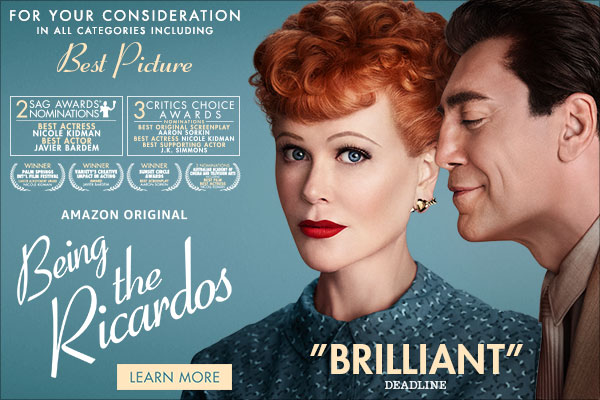
BEING THE RICARDOS is streaming now on Prime Video.
At most public media companies, executives earn a market-rate salary, plus some kind of bonus contingent on hitting milestones, plus equity in restricted stock units (RSUs) that vest over three or four years, and other negotiated perks. Netflix co-founder Reed Hastings thought that system was dumb. Too subjective, and it incentivized short-term achievements over long-term goals. He didn’t want a situation like what went on for years at places like Viacom, where Philippe Dauman, Brad Grey and others mortgaged the future to hit their quarterly numbers and pocket huge bonuses. I don’t blame him.
So at Netflix, you get a salary at the top of your “personal market” (meaning you’re probably overpaid), but no bonus, generally, and—here’s the key part—you can elect to take any percentage of your pay in Netflix stock. All, none, or something in between; you determine your cut once a year. The shares are granted monthly, they vest immediately, you can sell them at any time (subject to insider trading rules), and they’re good for 10 years.
But the granted shares need to go up by 40 percent in value to equal the cash you would have received in salary. It’s complicated, but if you get stock at $500, it must rise to $700 for the recipient to be whole. “Anything below a 40 percent appreciation in the stock means that the employee would have been better off electing cash,” Netflix explained in its 2021 proxy report. So you’re essentially betting that the stock will go up 40 percent within 10 years.
That happened a lot sooner for many Netflix employees, of course. As CNBC noted last year, $1,000 in Netflix stock on April 20, 2011, would be worth $15,252 a decade later—an astounding gain of 1,425 percent. That growth outpaced the gains of even Apple and Alphabet. A lot of Netflix employees have made a lot of money on their options, or at least they had the chance to do so. Just ask the giddy realtors selling properties in Brentwood or Atherton. Overseas, too.
To Hastings, this was an attractive compensation system because employees could choose how much they wanted to bet on the company, and when they did, their interests aligned with the shareholders. And, of course, the stock usually went up. Hastings himself took nearly all of his $34.65 million compensation for 2021 in stock—98 percent, according to the company’s proxy report, as he has done for many years. Co-C.E.O. Ted Sarandos took 42.3 percent in stock, similar to C.F.O. Spencer Neuman (48 percent), C.O.O. Greg Peters (36 percent); and chief legal officer David Hyman (50 percent). Only chief communications officer Rachel Whetstone isn’t on board; she took only 9.5 percent of her $5.25 million salary last year in stock. Netflix also doesn’t pay its board members, instead offering stock grants.
Those are the top executives, but it’s safe to say many employees also choose to take big chunks of their pay in equity. It’s part of the culture, say insiders, especially for higher-earning people, though it’s by no means required or even formally encouraged. While Netflix employee salaries are famously available for managers above a certain level to view, stock elections are not, I’m told. And for obvious reasons; the culture at Netflix is cutthroat enough; the last thing I’d want is my boss knowing how much I’m invested in the future of the company.
But here’s the hitch: Most Netflix staffers haven’t been with the company for 10 years. In fact, the majority are relatively recent hires, thanks to its explosive growth. At the end of 2017, Netflix said it had 5,500 employees; today it employs more than 12,000. That’s a huge jump. And if you took the majority of your options more recently—say, any time after the pandemic began, or, worst case, in 2021, when the stock flirted with $700, the money price for you is 40 percent above that. You’re now kinda screwed, or at least you’re forced to wait it out and hope for a recovery. “It’s depressing,” the Netflix spouse griped to me. (Netflix declined to comment on the stock price or its compensation, but a rep confirmed some policy details for me.)
ADVERTISEMENT 
This isn’t a novel phenomenon, of course. Relatively recent hires at all tech companies miss out on the spoils of growth. Amazon actually forces its white collar employees—that includes most of its entertainment executives—to take much of their compensation above $160,000 in company stock, adding grants that gradually vest over four years. Again, that wasn’t a problem between 2015 and 2021, when the stock appreciated from around $400 to above $3,000. Now the share price is down about 25 percent from its high last July, and executive turnover is said to be reaching a “crisis level,” with a record 50 vice presidents exiting last year.
Netflix isn’t in that situation, thanks to those lofty “personal market” salaries. But few of the Big Tech fraternity have seen their valuations decline so much, so fast, since bringing on thousands of new employees. And Netflix was luring those people in part based on that narrative of never-ending growth—a narrative that won’t be true if, as many suspect, we are entering an era of lower growth rates in streaming video. Will it lead to damaging turnover? If a traditional media company can match that base salary and throw in an attractive bonus, all of a sudden the balance of power might shift.
The upside for Netflix employees, of course, is that new hires, as well as current employees with new equity grants, can start to build value at the reduced stock price. That could be attractive, especially if employees, like Ackman, believe that Hastings can right the ship, as he’s done before. This correction might even cause more employees to shift a bigger chunk of their pay to equity the next chance they get. So maybe Netflix is a growth company after all.
Back on Sunday, Matt
Got a question, comment, complaint, or good new restaurant rec in Palm Springs? Email me at Matt@puck.news or call/text me at 310-804-3198.
FOUR STORIES WE'RE TALKING ABOUT 
With apologies to Wall Street, the streamer's stock price apocalypse is a market problem more than a business problem. MATTHEW BELLONI 
A conversation with Fiona Hill about the Russia-Ukraine crisis, Putin's next move, and where the White House goes from here. JULIA IOFFE 
Knives are out at the Evening News amid a clandestine search for a replacement anchor. But does anyone actually want the job? DYLAN BYERS 
Why did Michael Saylor convert MicroStrategy’s reserves into Bitcoin? Perhaps it’s because, as Ray Dalio says, “cash is trash.” WILLIAM D. COHAN 
You received this message because you signed up to receive emails from Puck.
Was this email forwarded to you?
Sent to {{customer.email}}
Puck is published by Heat Media LLC.
For support, just reply to this e-mail. For brand partnerships, email ads@puck.news |


SHARE