Welcome back to What I’m Hearing...
Start fresh in 2022 with a Puck membership. Remember, as a subscriber you can “gift” articles to friends and colleagues, impressing them greatly. Just click on the little box icon at the top of the article.
Sponsored by Amazon Studios 
Thursday Thoughts
Apple’s spending spree could turn out to be the story of 2022. Two sources tell me that the price tag on the Brad Pitt Formula One movie it is buying from director Joe Kosinski (Top Gun: Maverick) is $225 million, including about $40 million for Pitt to star and produce, and a committed theatrical window. That was enough to pry the project from Netflix, which wanted to serve it to fans of its Formula One docuseries.
Next up for Apple (and nowhere near that budget): I’m told the company is developing an Audrey Hepburn biopic with Rooney Mara starring and Luca Guadagnino (Call Me By Your Name) directing. Seems like perfect casting.
And speaking of ridiculous spending, the Russo brothers’ company ABGO is apparently valued at $1.1 billion thanks to Japanese game maker Nexon pumping in $400 million for a 38 percent stake? Sure, OK. If Blackstone thinks the Kevin Mayer-Tom Staggs venture Candle Media can be worth $30 billion, then anything is possible.
Now on to a topic I’ve been wanting to write about for weeks…
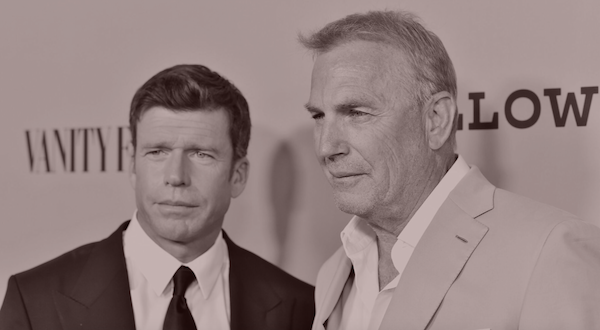
The story of Yellowstone is the story of modern Hollywood—complete with all the egos, corporate dysfunction, botched strategy pivots, the #metoo movement, and, despite it all, incredible creative execution and financial windfalls. Here’s what actually happened, according to multiple sources close to the show. In the Hollywood of 2022, even the runaway hits can cause bouts of anxiety. Just ask Shari Redstone. Her ViacomCBS possesses a truly miraculous property in Yellowstone, Taylor Sheridan’s soapy western that finished its fourth season this week as not only the most-watched series on linear cable; it’s pretty much the only thing in all of scripted television that is growing its audience year-over-year. The finale rose to 9.3 million same-day viewers—a crazy 81 percent increase from last season. If only Redstone cared about her cable TV business.
The tragedy of Yellowstone, of course, is that its streaming rights—the platform that Shari and ViacomCBS C.E.O. Bob Bakish actually do care about; the one they are reconfiguring their entire company to serve; and the metric that Wall Street is using to value their assets—are owned by Comcast’s Peacock. The more Yellowstone grows, the more it enriches a rival streaming service that is jockeying to become the fourth or fifth most popular player in a market that will ultimately support only a handful of general-interest competitors. It’s a literal life-or-death game, and Redstone’s underlings gifted her combatant a gilded sword.
The Yellowstone saga will go down both as one of the biggest success stories and missed opportunities of the streaming age. So how did it happen? I became preoccupied by this question as I tried, without luck, to watch the damn show this season. I have cable, but it’s through the Spectrum app, so no DVR. That means I needed to tune in live on Paramount Network, which I’m never going to do; or either go to ParamountNetwork.com or download the Paramount Network app—which is not the Paramount+ app, despite all the ads you might see on the site for Paramount+—and enter my cable login, which I’m also never going to do. Or I could buy episodes individually on Amazon, which I hate doing because I already pay a fortune for all these streaming services.
So I just decided to not watch one of my favorite shows until it hits Peacock 90 days after the linear finale. This is why “how to watch Yellowstone” has been a top search term on Sunday nights. It’s infuriating.
ADVERTISEMENT
Amazon Studios presents THE TENDER BAR. From director George Clooney and based on the memoir, THE TENDER BAR follows an aspiring writer (Tye Sheridan) pursuing his romantic and professional dreams. From a stool in his uncle’s (Ben Affleck) bar, he learns what it means to grow up from a colorful group of local characters. “Director George Clooney and screenwriter William Monahan magnificently conjure the look, sound, and feel of a household" declares The Independent. 
THE TENDER BAR is streaming now on Prime Video.
When I started looking into it, I quickly realized that the story of Yellowstone is the story of modern Hollywood—complete with all the egos, corporate dysfunction, fear-based decision-making, botched strategy pivots, the #metoo movement, and, despite it all, incredible creative execution and financial windfalls. Here’s what actually happened, according to multiple sources close to the show.
The Yellowstone project was originally in development at HBO, with Robert Redford attached. That went nowhere, so The Weinstein Company, which liked what it saw from Sheridan on his film Wind River, bought the project out of turnaround and sent the pilot script to Brad Slater, Kevin Costner’s agent at WME. Costner signed on almost immediately, though he initially thought it was a miniseries, not a series. Good thing it wasn’t; Costner made $500,000 an episode during that first season, but has since re-negotiated up to $1.2 million an episode for season 4, according to two sources familiar with his deals. He’s now closing on another renegotiation for season 5 and beyond, I’m told, which will give him an overhead deal in exchange for future seasons.
With Costner attached, Weinstein Co.’s David Glasser and producer John Linson shopped the show and got surprisingly little interest. Netflix passed, as did TNT and FX. And with an $80 million budget, the project was too expensive for broadcast. Cue all the usual excuses that make bicoastal television executives seem out of touch in hindsight: Nobody watches westerns; it skews too old; no international value; Sheridan was untested in TV.
Kevin Kay, a Viacom lifer who had been put in charge of rebranding SpikeTV as Paramount Network, and another exec, Keith Cox, finally bought the show, but only after Sheridan, a Texan writer-actor who was living in Park City at the time, nearly blew the deal by refusing to come to L.A. for the pitch. Glasser ended up having to send a private jet to bring Sheridan to the Paramount lot for 45 minutes, wherein he declared he wouldn’t deliver outlines or take any studio notes. Kay, Cox and Bakish greenlit the show anyway.
Then in fall 2017, near the end of production on the first season, Harvey Weinstein happened. TWC imploded and failed to make payments on the show, Glasser was out, and Paramount took over. Viacom soon looked for a new investor, and the highest bid came from 101 Studios, Glasser’s new company with backing from financiers Ron Burkle and Bob Yari. They spent $20 million to attach 101 to Yellowstone and all of Sheridan’s projects. Not a bad investment.
The first season, airing on Paramount in summer 2018, did fine, especially in the Midwest, but nothing too special. And when it came time a few months later for Viacom to shop the streaming rights—again, there wasn’t huge interest. Netflix made an offer on international. Amazon wanted just three territories, and the money wasn’t great. Why didn’t ViacomCBS just swoop in and take the show off the table? First, remember, Viacom and CBS were still separate companies. Viacom owned Paramount Network but, amazingly (this was just three years ago!), it had no streamer of its own. And CBS All Access, the service that eventually became Paramount+, wasn’t really investing in SVOD rights for shows that didn’t already air on CBS. It was more focused on making its numbers.
By Spring 2019, when Yellowstone hit the market, Les Moonves had been MeToo-ed out of CBS, Joe Ianniello was acting C.E.O., and it was clear Redstone would soon merge her two media companies and develop a real streaming strategy—but it hadn’t actually happened yet. And still, Viacom chose to take both Yellowstone and South Park to the streaming market during that time. South Park ended up going to HBO Max, a deal ViacomCBS was later desperate to unwind, and Yellowstone went to Peacock for $1.5 million an episode, according to sources. The Viacom executives were simply maximizing value, and they got more outside the Redstone empire. These kinds of short-sighted streaming deals happened a lot in the mid-2010s, a period the traditional studios would like to forget. Remember when Disney took Netflix cash for its movies right before C.E.O. Bob Iger announced plans for Disney+? Plus, Viacom and CBS weren’t exactly cordial siblings. Executives at the two companies famously battled for credit and compensation, and the rank and file often regarded the others with suspicion. This culture goes back decades.
The CBS executives all looked at Yellowstone—including David Nevins, who is currently the top scripted programmer of Paramount+ but was then the chief content officer of CBS, which gave him ultimate oversight of All Access. Again, it wasn’t CBS’s strategy to bid for off-network streaming. But it probably should have been, given where the company—and the entire industry—was going. Two sources told me it was ultimately Nevins’ call to let Yellowstone go. (ViacomCBS and Peacock declined to comment. Disclosure: I’m an executive producer of an upcoming Peacock show, Angelyne, based on a Hollywood Reporter article I edited.)
Meanwhile, Season 2 of the show was growing in popularity, and beyond those Midwest and Montana hubs. But it was expensive to make. A couple months later, MTV executive Chris McCarthy added Paramount Network to his portfolio, and he had a choice to make: cut (or go cheap on) Yellowstone or double down. He ended up tripling down. The CBS-Viacom merger closed in December and the Peacock deal was announced in January 2020. Then the pandemic hit, causing me and everyone else I know to have a version of this exchange with their significant other: “Hey, there’s this western with Kevin Costner that people say is good.” “Wait, Kevin Costner did a TV show?”
ADVERTISEMENT 
According to three sources, ViacomCBS has made several attempts to buy back streaming rights from Peacock, with no success. Why would NBCU sell? Peacock doesn’t release ratings data, but a good source there says the show is a huge driver of both sign-ups and consumption, which isn’t surprising. It’s such a draw that the source referred to “Yellowstone churn” as a problem a few weeks after a new season drops. How much value has Par+ lost in sign-ups that are instead going to Peacock? I’d love to see that number.
Still, ViacomCBS has made tons of lemonade out of its streaming lemon. After seeing those rising ratings, McCarthy turned Sheridan’s $30 million overall deal into a $175 million deal with bonuses that go even higher. And McCarthy has essentially annointed Sheridan his one-man programming machine for Par+ and MTV Entertainment Studios. The so-called Sheridan-verse output is pretty insane:
There’s more in the works, too. Sheridan writes and often directs every episode of Yellowstone and its spinoffs, and he writes the pilots and oversees the others. He’s basically the hyper-prolific hitmaker Netflix wanted when they signed Ryan Murphy and Shonda Rhimes to nine-figure deals.
Given the lack of breakout hits so far on Paramount+, the Sheridan shows have been a godsend, and probably serve as the model for how to exploit an active TV writer in the streaming age. But they’re not the mothership, and it must hurt Redstone to see her prize property propping up a competitor’s service. Of course, the best solution here might be for Peacock and Par+ to merge one day, but that’s an entirely separate column.
See you Sunday, Matt
Got a question, comment, complaint, or a favorite Yellowstone moment? Email me at Matt@puck.news or call/text me at 310-804-3198.
FOUR STORIES WE'RE TALKING ABOUT 
Part II of my year-end list of the 22 boldest, totally bankable, 100 percent probable predictions from true industry insiders. MATTHEW BELLONI 
What I witnessed that day wasn't a surprise, after years of reporting on the far-right. It’s everything that came next that shocked me. TINA NGUYEN 
Ben Smith and Justin Smith had been quietly discussing their new media ambitions, on and off, for years. Here's what they had to say. DYLAN BYERS 
The epic story of how a crafty bond salesman took over Bear Stearns—and risked an apocalypse to fight for it. WILLIAM D. COHAN 
You received this message because you signed up to receive emails from Puck.
Was this email forwarded to you?
Sent to {{customer.email}}
Puck is published by Heat Media LLC.
For support, just reply to this e-mail. For brand partnerships, email ads@puck.news |


SHARE