Welcome back to What I’m Hearing...
Another Sunday night, another new week. I’ll be at the Cinemacon movie theater conference in Las Vegas for a couple days; hit me up if you want to get coffee or play high-stakes blackjack with your corporate card. And in advance, I’ve got a very theater-centric analysis today…
Discussed in this issue: Reed Hastings, Gunnar Wiedenfels, Kelly Bush, Toby Emmerich, Adam Aron, Michael Keaton, Bob Chapek, Todd Boehly, Paul Haggis, David Herrin, and the cringiest of publicist profiles…
Who Won the Week: Michael Nathanson
The media analyst and longtime Netflix bear was finally vindicated by the stock selloff and Wall Street’s about-face on streaming. Now he (and everyone else) is trying to figure out how the new advertising business will work.
A little more on the Netflix correction and the impact around Hollywood…
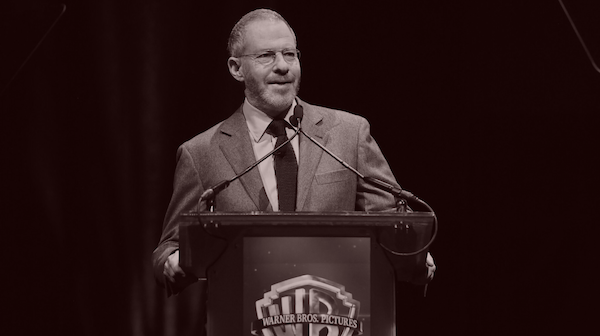
The Great Netflix Correction is forcing Hollywood to rethink the “all-in” strategy for streaming. It’s not nearly a full reversal of fortunes, but it’s definitely a vibe shift. Consider the debate over Batgirl. There’s an interesting debate going on at Warner Bros. right now. They’ve got Batgirl, a $70 million-ish film that just finished shooting, and the plan under former WarnerMedia C.E.O. Jason Kilar was to release it directly on HBO Max. Kilar’s singular mission, as anyone who walked the lot with him knows, was to build up the streaming service to compete with Netflix, the north star of the entertainment industry, even if it meant shrinking—sorry, evolving—the century-old theatrical business. So debuting on HBO Max a mid-budget DC movie, one based on a known but untested character who already stars in a TV show, made perfect sense.
But maybe, Toby Emmerich and his Warners team are thinking, now is the time to invest a bit more money into Batgirl, perhaps up the visual effects and the music budget and the planned marketing spend, and give the movie a theatrical run first? After all, it’s a new day under Warner Bros. Discovery C.E.O. David Zaslav. The Batman, admittedly the company’s marquee superhero property, is putting up huge numbers on Max, I’m told, even after generating $750 million in theaters over 45 days (or, perhaps, because it generated those numbers). And, more importantly, the Great Netflix Correction of ‘22 is causing Warners and all of Hollywood to rethink the “all-in” strategy for streaming.
No, these studios aren’t suddenly flipping the streaming switch to off, nor should they. Streaming remains the potential growth engine, and the future of the industry. But for certain titles, the streaming-vs-theatrical debate has taken a turn. Like maybe Pixar’s Turning Red should have generated a few hundred million bucks for Disney, and then become a huge hit on Disney+, just like Encanto did. Or maybe Sony should take a few more swings in theaters rather than dumping anything that isn’t pre-branded on a streamer. If Netflix can no longer reliably grow by spending about $20 billion a year on content, maybe no film studio should be throwing the kitchen sink at their service without first generating a little more cash in theaters. We know Zaslav thinks that way. He said, “we plan on being careful and judicious” in streaming. Gunnar Wiedenfels, Zaslav’s C.F.O. and hatchet man, went further, vowing a “conservative approach.”
After all, if a streaming-only company like Netflix can slide from a $300 billion market cap to less than $100 billion in six months, what does that mean for the other companies that have bet their future on the notion that there is a billion-person market for digital consumers? One film producer told me this week that two of his projects initially conceived as streaming-only were now being debated as theatrical. Paramount, fresh from four strong box office openings in a row, with Top Gun: Maverick coming next month, has signaled to the community in recent weeks that it is re-committing to theatrical. Universal is sticking to a day-and-date strategy for Blumhouse’s Firestarter reboot next month, and it will continue to experiment with non-tentpole titles, but at this point those moves seem like the outliers.
So, are movie theaters back, baby? No. And yes. And also kinda no. Box office will still be way down this year compared to 2019, and the long-term prospects of the exhibition business are still potentially calamitous. We’re talking here about a small subset of the movies that used to have a chance in theaters, and may still. The rest will increasingly go to streamers, if they get made at all. But the Sunday numbers seem to be getting better each week, while the questions around the economics of streaming grow louder and louder. It’s not quite a reversal of fortune, but it’s definitely a vibe shift.
A new study that I was slipped (it will be released publicly tomorrow) confirms this sentiment. David Herrin’s film research firm, The Quorum, along with the research, strategy and creative agency Fanthropology, and Linda Ong’s consultancy Cultique, polled the general public and found their willingness to return to theaters is rising significantly. Specifically, “casual” moviegoers increased from 18 percent of moviegoers in October to 31 percent in the new study. That’s a 73 percent jump, making casual filmgoers the biggest category of moviegoers overall. Moviegoing “hopefuls”—meaning those sitting on the sidelines who have yet to return to theaters—shrank from 33 percent to 18 percent, a 45 percent drop.
This is the same team that got a lot of attention in November, amid the Omicron surge, for a survey that found that 8 percent of moviegoers were likely “lost forever.” That may still be the case, and all the critiques of theaters are still there—rising ticket and food prices, outdated theaters, obnoxious audiences, generational shifts toward gaming and streaming. “But there’s a swath of people who are no longer sitting on the sidelines,” Herrin told me today.
A couple other insights here:
That last point is a good one. My buddy Adam Aron, the C.E.O. of meme stock AMC Theaters, got some nice press this week for announcing a big upgrade to theaters, which will be outfitted with laser projection. Good for AMC; still, most moviegoers don’t really notice that stuff. They want the experience to improve, which creates the value proposition for leaving the home and going to the theater. The stuff that Herrin is talking about is what ultimately distinguishes the experience.
I’m going to the Cinemacon conference for theater owners in Las Vegas this week, and I’m betting there will be very little talk about this experience. It’s usually all about which plane Tom Cruise jumps out of or how many Marvel or Jurassic World movies are coming this summer. Yet experience seems to be a dominant factor in how people perceive movies. Another study this week showed that 68 percent of people think movies in theaters are “better.” In survey after survey, Herrin told me, Netflix titles always score lowest in terms of the “awareness” and “interest” in seeing a follow-up movie. It’s not because the Netflix movies are that much worse (although many would argue they are). It’s about how we experience these movies. And the passive, forgettable experience of the digital content farm is a huge problem for Netflix, which, above all else, is spending billions to create properties that people care about. It’s also a big advantage for movie theaters, and for the studios that may want to think twice about whether they put their movies there or not.
Quote of the Week
“There was not an intentional head butt.” –Johnny Depp, testifying in his cringe-inducing defamation trial against ex Amber Heard, about defending himself in an incident in which Heard claimed her nose was injured.
Runner up: “This just proves that I will do anything to avoid interviewing Jason Bateman.” –Stephen Colbert, announcing on Twitter that he has Covid.
Second runner up: “I don’t know how Robert Evans would have felt about a premier with no food!!!” –Producer Jason Blum, tweeting from Paramount’s premiere of The Offer, about the making of the legendary producer/executive’s opus, The Godfather.
Third runner up: “The woke mind virus is making Netflix unwatchable” –Elon Musk, tweeting about the Netflix stock slide.
Golden Globes Charities Want the Show Back
After the Oscars officially became a punchline last month, a film executive texted: “Well at least nobody hits anyone on stage at the Globes!” That’s true, but, as we know, the Golden Globes fights are all off camera—and we’re heading toward another round.
Nearly 15 months into the talent publicists’ boycott of the Hollywood Foreign Press Association over its diversity and practices, NBC will soon need to decide whether to air the 2023 show. Those talks are ongoing, I’m told, as are a new round of discussions with the publicists. And earlier this month, H.F.P.A. interim C.E.O. Todd Boehly offered to expand the group to 300 members and create a streamlined, for-profit entity to house the organization’s assets. It’s all an effort to convince NBC Universal C.E.O. Jeff Shell that the H.F.P.A. has its act together and NBC should reinstate the show.
One group that’s especially nervous about Shell’s decision: the beneficiaries of H.F.P.A. charitable giving. According to sources, about a dozen grant recipients are sending a letter to NBCU as soon as this week that cites the progress the H.F.P.A. has made over its year in exile, and the fact that several grantees are Black. The beneficiaries want Shell to consider their causes when deciding the fate of the Globes.
It’s a savvy move because people forget that the group behind the silly awards show gives away at least 5 percent of its profit to charity. (The H.F.P.A. says it didn’t put the grantees up to it.) In 2021, that largesse translated to $4.4 million for schools, press freedom-related groups and film restoration organizations. No Globes, no money for grants, and while the H.F.P.A. dipped into its reserves last year to fund its charity, kicking the show off the air two years in a row could be fatal. Something that Kelly Bush and the militant wing of publicists should think about.
Speaking of the H.F.P.A., one of its better-regarded members, Silvia Bigio, is organizing a new film festival in Puglia, Italy, set for June. Allora Fest will start small, and Bigio is co-artistic director with Rome-based art curator Sol Costales Doulton. They’ve put together an advisory board with people like producers Sophie Watts and Celene Rattray, and actors Matt Dillon and Raoul Bova, with plans to give out awards based on social and environmental issues. They’re also being helped by Paul Haggis, which has raised some eyebrows among talent reps who have been briefed on the plans. The Oscar-winning Crash filmmaker, who has been a brave critic of Scientology, has also been fighting a legal battle against a publicist who alleges he raped her after a premiere in 2013. Haggis says the encounter was consensual.
My Reading List (Netflix and More)...
Lucas Shaw says Netflix employees want to leave, which I don’t think will elicit much sympathy from the companies they bailed on for higher salaries and stock options that are now worthless. [Bloomberg]
Jessica Toonkel says Netflix employees pressed management for extra stock grants to make up for the worthless options. Again, cue the violins. [Information]
Alex Sherman looks at how the password crackdown will (and won’t) actually work. Spoiler: You will have to decide whether your ex-boyfriend or deadbeat sister or podcast producer is worth paying an upcharge to support. [CNBC]
My Puck partner Dylan Byers dissects the still-warm CNN+ corpse and finds one major cause of death: Conflicting digital strategies. [Puck]
BONUS: I made history as the guest on the last edition of Brian Stelter’s Reliable Sources Daily. I couldn’t help but acknowledge the weirdness of going on a show to talk about the demise of that show. [Reliable Sources]
From 60 Minutes to a right-wing crackpot Substack: What the heck happened to Lara Logan? Charles Leerhsen suggests P.T.S.D.. [Airmail]
The TV world Jon Stewart left in 2015 just isn’t the same as the one his Apple show inhabits today, and Devin Gordon traces it all back to Stewart calling Tucker Carlson a “dick” on Crossfire. [Atlantic]
BONUS: I talked about Stewart’s ratings problems and the challenge of launching a late-night show on streaming with the expert Bill Carter on my podcast The Town. Listen here.
Here’s that instantly infamous profile of The Lede Company and its publicists, in which a fashion writer encounters that whole Will Smith thing and decides to make the story about what the subjects won’t talk about. [NYT]
A D.C. Weekend for (Emmy) Campaigning
Look for Michael Keaton on the red carpets of the White House Correspondents Dinner events next weekend. His appearance is part of the return of Obama-era “normal” after Trump and Covid canceled the annual media and politics kissyface. But Keaton also has an agenda: He and showrunner Danny Strong will be stumping for Hulu’s Dopesick, which is excellent and faces a ton of competition in this summer’s Emmy race.
Pre-Trump, D.C. pilgrimages were part of the Emmy campaign playbook. Shows like HBO’s Veep and Showtime’s Homeland always benefited from their casts hobnobbing with powerful people. I remember seeing Jon Hamm get absolutely mobbed by the Beltway sycophants during the Mad Men years. It’s a sister strategy of sending the Oscar movie cast to visit the White House, like Apple did with CODA. Let’s see who else shows up this year.
Speaking of Apple, its Emmy campaigners are facing an awards media that is still pissed over being excluded from the CODA afterparty at the Oscars. Will be interesting to see if that impacts the coverage in the next couple months.
The Feedback
It was Netflix Netflix Netflix in my inbox this week, with an occasional dash of “Why isn’t Disney responding to DeSantis???” Some highlights…
“So the future of television involves advertising and an all-in-one package encompassing everything from reality TV to live sports? Time is indeed a flat circle.” –A lawyer
“As far as Wall Street is concerned, the N in FAANG is now officially NVIDIA.” –A writer-producer
“Reed Hastings was on Facebook’s board for a long time. Netflix was also one of the largest direct response advertisers in the early days. So they probably know more about ads than people give them credit for.” –An accountant
“In defense of Netflix, a major part of the content spend has been to ensure they are one of the winners. Which they have accomplished.” –An executive
“Both sides would probably say no to this, but it would have been interesting to see Netflix pivot into gaming by partnering with Google's Stadia business (or something similar). Google would have probably had much higher visibility on their cloud gaming if it was a tile on Netflix, and Netflix could have had a better idea on how much people really wanted to use a streaming service as a multimedia entertainment platform.” –A lawyer
And a couple unsolicited pieces of advice for Disney:
“If Disney has any guts and strategic sense, they would follow Amazon’s lead: announce that they are moving Disney World out of Orlando in 10 years and are looking to see which states/cities would be interested in being the new home to the happiest place on earth.” –An executive
“Why hasn’t Bob [Chapek] freed the Imagineers from having to move to Florida? Nobody wanted to move even before the governor started calling us “groomers” or pedophiles or whatever nonsense. –A Disney employee
Have a great week, Matt
Got a question, comment, complaint, or an underrated Vegas restaurant? Email me at Matt@puck.news or call/text me at 310-804-3198. 
You received this message because you signed up to receive emails from Puck.
Was this email forwarded to you?
Sent to {{customer.email}}
Interested in exploring our newsletter offerings?
Puck is published by Heat Media LLC.
For support, just reply to this e-mail. For brand partnerships, email ads@puck.news |


SHARE