 |
 |
|
Welcome back to What I’m Hearing, a little late tonight because I’m enjoying some L.A. Kings hockey.
An event plug: Puck’s The Powers That Be: Live series hit New York on Tuesday, where my partner Bill Cohan interviewed Goldman Sachs C.E.O. David Solomon on the hundredth floor of one of those glass condo buildings that make me queasy. I heard it was great, so thanks to those who attended, and to Mayer Brown for sponsoring. I’ll do one with a big Hollywood figure in the spring.
As always, if you were forwarded this email, click here to become a Puck member. And send me ideas or news tips by replying to this email.
Let’s begin…
|
|
|
- An Entourage-style agency split: Litigators are involved and a mediation has been set for the messy exit of Verve C.E.O. Bill Weinstein from the agency he co-founded in 2012. In fact, Weinstein thought his partners had agreed to mediate their feud and keep it all quiet… until they called him after a board vote on Monday, fired him, and quickly alerted the media. Very Ari Gold. “There was absolutely no agreement to mediate at that time,” the agency’s lawyer, Julie Gerchik of Glaser Weil, countered today when I asked why they sacked their C.E.O. like that. “Verve wishes Bill well.”
I bet! This split has been brewing for at least a couple years, and employees have gotten in touch (albeit anonymously) about how much of a jerk Weinstein could be. He’d hoard clients, reward and punish people based on his personal whims, and was prone to outbursts. (Weinstein declined to address specific claims.) He also differed on the direction of the agency with Bryan Besser and Adam Levine, the former Endeavor lit agents who founded Verve with Weinstein as a small but well-regarded boutique catering primarily to writers and directors.
By all accounts, Weinstein, who sees himself as a C.E.O.-type, wanted to continue to grow the 40-agent shop, and had resisted sale overtures from the likes of ICM, and, recently, Gersh. Besser and Levine, by contrast, were less interested in his “vision”—and, at least according to Weinstein loyalists, wanted to take more money out of the company. When it became clear the differences weren’t fixable, each side lawyered up. (Weinstein has Devin McRae at Early Sullivan.) It’s extra awkward because Weinstein’s brother Adam is an agent at Verve, and he’s staying.
Now it’s a free-for-all, with Weinstein taking a few minor allies with him and trying to set up a new company. Both sides are calling clients and fending off vultures from other agencies. One source says he saw an employee crying in the hallway. “I had the privilege of building Verve over 14 years with many wonderful partners, colleagues, and clients,” Bill told me. “I’m proud of what we accomplished. And I’m not done building, I have a lot left to do.”
- Zaslav BonusWatch ’24: With Warner Bros. Discovery’s Q4 earnings tomorrow, C.F.O. Gunnar Wiedenfels will no doubt tell us about all the free cash flow generated from layoffs, Max cancellations, shelved Looney Tunes legal dramas, and financial shell games. But let’s also remember that every dollar of free cash flow in ’23 will pad C.E.O. David Zaslav’s bonus when it’s revealed in a month or two, thanks to the shift from stock price to F.C.F. as his key metric. I know we’re all really hoping Zaz hits at least $39.3 million, his package from last year, and maybe he’ll get closer to the $246.6 million for 2021. Fingers crossed.
- Speaking of Warners…: Variety reported yesterday that Lady Gaga is getting $12 million for Joker 2. It’s actually $10 million, but whatever. A more interesting tidbit is that Gaga was cast in mid-2022, before Toby Emmerich left the studio, for an $8.5 million fee. But when Mike De Luca and Pam Abdy took over, her deal hadn’t technically closed, so they gave her a quick raise to $10 million and everyone (Gaga and, importantly, CAA) was happy. (Warners declined to comment.)
- If a tree falls on Apple TV+, does it make a sound?: The lack of U.S. viewership on Apple’s streaming service continues to be one of the most under-discussed topics in town. Why? Maybe we’re all in denial because they spend so much on content, but man, tucked into Nielsen’s January streaming report, per the reliable TV Grim Reaper account, was this stark number: 0.32 percent. That’s the total percentage of streaming viewership in the U.S. for Apple TV+, which is about a third of Paramount+ (0.9 percent)—commonly referred to as the lowest-rated mass-market SVOD service—and just above Discovery+ (0.24 percent), a service that spends peanuts on its content and also provides it for free to Max subscribers.
That Apple share is basically the same as December, despite January featuring the splashy debut of Scorsese’s $250 million-ish Oscar contender Killers of the Flower Moon (Jan. 12) and the $300 million WWII series Masters of the Air (Jan. 26). About $550 million on two pieces of content and they don’t move the consumption needle? Yikes. Yeah yeah, rounding error. But unless Apple TV+ is waaay overindexing in foreign countries, how long will Eddy Cue continue with his Hollywood strategy?
|
| Now, a long-overdue update on Disney’s talent compensation system… |
 |
| Disney’s New Normal for Talent Pay |
| Few moves better exemplify Hollywood’s modern—yet undeniably regressive—take-it-or-leave-it TV talent compensation deals than Disney’s latest changes on shows like Only Murders in the Building. |
|
|
|
| I swear that half my emails—like half the conversations around town, I suppose—could be categorized as either: Can you believe how badly this company is screwing this person? or Can you believe how badly this person is screwing this company? Those sentiments are not unique to Hollywood, of course, but I do think there’s a heightened mistrust ingrained in a business that began through decades of exploitation of talented people, then flipped to a long era where in-demand talent could—with many exceptions—earn what they were worth (and then some), and is now regressing back to an earlier, take-it-or-leave-it period for all but those with the most leverage.
You see the general regression all over town. There’s the obvious TV pullback; the death of pilot season (R.I.P. Oakwood pool parties); whatever the theatrical movie business is now (really, Paramount? A Ferris Bueller spinoff about the valets?); Netflix realizing it can make fewer originals now that the cash-poor studios are more than happy to license theirs; and so on. The result: The studios and streamers have far more leverage over the people who make their product, and they’re using it. And a lot of people feel like they’re getting screwed.
Few moves have exemplified the new realities and suspicions more clearly than Disney’s recent changes to how it compensates TV talent. Early members of the What I’m Hearing community might remember my mid-2021 discussion of the then-newish “Series Bonus Exhibit.” That’s Disney’s company-wide effort to mimic Netflix and the other streamers by replacing traditional backend compensation with upfront payments and “bonus” pools. |
|
A MESSAGE FROM OUR SPONSOR
|
 |
|
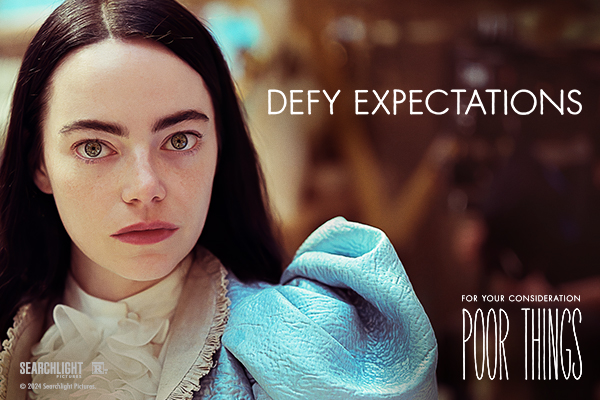
FOR YOUR CONSIDERATION IN ALL CATEGORIES INCLUDING BEST ACTRESS AND BEST PICTURE
11 ACADEMY AWARD NOMINATIONS
Including Best Actress Emma Stone, Best Director Yorgos Lanthimos, and Best Picture
5 BAFTA WINS
Including Leading Actress Emma Stone
2 GOLDEN GLOBE WINS
Best Actress and Best Picture Musical or Comedy
Critics rave that Searchlight Pictures’ Poor Things is the “the greatest artistic achievement of Emma Stone’s career.” American Film Institute said “Emma Stone redefines the modern movie star in a fearless performance.” Winner of the BAFTA, Critics Choice, Los Angeles Film Critics Association, and London Critics Circle for Best Actress and the Golden Globe Award for Best Actress Musical or Comedy.
|
|
|
| I won’t repeat the impetus for the S.B.E., but the gist is that Disney was sick of shelling out hundreds of millions of dollars to producers like Mark Gordon (Grey’s Anatomy) and James L. Brooks (The Simpsons) simply because their deals included lucrative profit participation, A.G.R. (adjusted gross receipts), M.A.G.R. (modified) or net participations, which entitled them to a cut of revenue after costs and other fees were deducted. The definitions fueled spectacular wealth in success, but they also sparked audits and lawsuits from aggrieved talent who—yes—felt they were getting screwed out of their share.
I know this because, back when I was a litigator, I represented many such aggrieved talents. And yeah, most were getting screwed. Maybe not as much as they suspected, but the definitions were so purposely complicated, and the money so easy to hide, that it took years (and countless rounds of discovery) to even scrape at those barriers. We used to joke that there was a single business affairs executive at each studio who actually understood every nuance of a 30-page profit definition, and that person was kept chained in a basement. Remember, in 2019, when the arbitrator in the Bones talent litigation eviscerated Peter Rice and Dana Walden, then Disney’s top TV executives, for “false testimony in an attempt to conceal their wrongful acts”? Messy.
So out went the lengthy M.A.G.R. definitions, and in came the S.B.E., which offered a pool of points for bonuses when shows hit certain milestones, like additional seasons, awards, and viewership, but prevented the massive windfalls from home run hits. At the time, I echoed a lot of talent reps when I mourned the death of skin in the game, meaning top showrunners and actors were being reclassified from essentially co-owners of their work to hired hands who were occasionally thrown some extra coins from executives in their castles. But one thing even I acknowledged was that the S.B.E. was cleaner, it avoided audits and litigation, and it gave Disney greater flexibility with its content. |
|
|
| Having said all that, the surprising thing is that four years in, the S.B.E. isn’t as hated as I would have expected. It’s not the heyday of talent dealmaking, but a couple top lawyers told me recently they actually prefer it to the morass of profit definitions in a television universe where syndication revenue basically doesn’t exist and shows can sit idle on a streaming service.
Only Murders in the Building, a pre-S.B.E. show produced by Disney’s 20th TV with M.A.G.R. definitions, is actually in the process of switching to an S.B.E. model (at the nudging of Disney, of course, but still). You would think that a hit like Only Murders would pay massive profits via the M.A.G.R. formula, but with the traditional definition, there’s overhead and interest charged against it, there’s bloated overall deals, Covid expenses, and cast renegotiations. That’s all on the cost side. And then on the revenue side, you’d have the various license fees or imputed license fees for affiliated platforms.
Or you go with an S.B.E. and it’s all clearer—and guaranteed. Plus, you make millions on increased upfront payments and overall deals. So, it’s not too surprising that the talent and creators are converting from the old to the new model. That puts more cash in their pocket sooner, and smart reps are not just taking S.B.E., but looking for other ways to enhance the payoff. |
|
|
| Newer S.B.E. shows, like FX’s The Bear, are actually generating decent bonuses, according to reps associated with the show. A big cast renegotiation after Season 2 also helped on that front. Jeremy Allen White just closed his new deal, I’m told, and the Emmy winner got a huge raise. (The Only Murders producers and stars have also upped their personal salaries and overall deals accordingly.) To think about the S.B.E. categories for a show like The Bear, here’s the actual form language that Disney sends to reps:
1. Longevity Bonus. Commencing in season 2, for exhibition of each additional new season of the Series.
2. Current Series Ranking Bonus. Commencing in season 1, for each Original Exhibition Season in which a Series achieves the requisite ranking, Producer shall award a bonus pool of compensation.
3. Critical Acclaim Bonus. Commencing in season 1, for each Original Exhibition Season that the Series is nominated for or awarded an “Outstanding” Series Emmy and/or “Best” Series Golden Globe, Producer shall award a bonus pool of compensation.
4. Library Series Bonus. Commencing one year after the U.S. premiere date of the final new episode of the Series, for each year in which the Series achieves the requisite ranking on the designated SVOD service, Producer shall award a bonus pool of compensation.
5. Ancillary Contingent Bonus. Commencing in season 1, for home entertainment, music publishing, soundtrack recordings, and merchandising and publishing pursuant to separate streams of receipts in each such category.
Keep in mind, that’s the floor—a starting point for negotiation—and this isn’t a specific S.B.E. for The Bear. But, as an example, The Bear is now filming its third season (check!), performs very well on Nielsen charts (double-check!), and wins Emmys and Globes (triple-check!). With the S.B.E. model, the pool starts to get pretty deep.
There are disadvantages for talent too, of course. The S.B.E. allows the owner of a show to place it on different platforms without worrying about triggering additional payments. Every time The Simpsons goes to a new home, like FXX or Disney+, Jim Brooks’ lawyer Sam Fischer can pick up the phone and get his client a massive check. But with the S.B.E. there’s no call to make. Disney recently put the first season of Only Murders on ABC, which would have required payments to producer Dan Fogelman, Steve Martin, and others, but instead the agents involved are likely using the success on ABC as a negotiating point in their overall deal and acting renegotiations. By contrast, CBS aired the first season of Yellowstone, from sister Paramount Network, as a filler during the strike, and that required payments to the producers.
These conversations are happening more and more as shows jump around. This isn’t the old days, when all channels were available to the same number of people. Now, the Netflix audience is way bigger and totally different than the Peacock crowd, and a show on Hulu can find a unique and somewhat meaningful audience on ABC, even though both are owned by Disney. That, and the desperate financial situation of these media companies, encourages creative windowing and frequent shifts to different platforms.
It’s really not different from the move from backend to bonuses in theatrical movies. The Russo brothers made two Avengers movies for Marvel that together grossed more than $5 billion. They didn’t have backend, they had cash bonuses, which means Disney can put Endgame on Disney+ or ABC or FX or the Apple Vision Pro without paying them. That’s the real upside for Disney.
And increasingly, people seem okay with this. Maybe the agents and lawyers are just getting used to the diminished leverage. Maybe they are starting to see payouts on S.B.E. shows like The Bear that feel meaningful and don’t require an army of $2,000-an-hour litigators to disgorge. Or maybe this is just a sign of the times. In an era with fewer wins, taking even money is better than hoping for a blackjack against an ace. |
|
|
See you Sunday,
Matt
Clarification: The Academy stops plugging individual movies during the six days when ballots are live. In my Sunday item on the politics of promoting certain movies, I was referring to its postings on social channels during the Phase 2 period between nominations and that final voting window. Apologies for not being clearer.
Got a question, comment, complaint, or a petition to stop Barry Keoghan from being photographed nude AGAIN? Email me at Matt@puck.news or call/text me at 310-804-3198. |
|
|
|
| FOUR STORIES WE’RE TALKING ABOUT |
 |
|
 |
| Blue Munich |
| An insider’s dispatch from the annual security conference. |
| JULIA IOFFE |
|
 |
| Trump’s Liquidity |
| Can Trump actually fork over half a billion in legal penalties? |
| WILLIAM D. COHAN |
|
 |
|
|
|
|
|
 |
|
|
|
Need help? Review our FAQs
page or contact
us for assistance. For brand partnerships, email ads@puck.news.
|
|
You received this email because you signed up to receive emails from Puck, or as part of your Puck account associated with . To stop receiving this newsletter and/or manage all your email preferences, click here.
|
|
Puck is published by Heat Media LLC. 227 W 17th St New York, NY 10011.
|
|
|
|