 |
|
Welcome back to What I’m Hearing, still in a coma from turkey and catching up on Oscar movies. We’ve got a mailbag issue tonight with answers to burning reader questions. I couldn’t get to them all, so I’ll do another soon. Send yours by responding to this email.
Programming note: This week on The Town, Lucas Shaw and I revealed the sneaky winners and losers of the strikes (and I repeatedly mispronounced the name of the actor Xolo Maridueña, apologies!); and I asked Peter Kafka what Big Tech wants out of Hollywood. Subscribe here and here.
Tis the season for Puck! Click here to become a member, or to gift a subscription to all the people you’ve underappreciated this year.
Discussed in this issue: Shari Redstone, Bob Iger, Maha Dakhil, David Zaslav, Sam Levinson, Kathy Kennedy, David Ellison, Jennifer Lee, Zendaya, Bob Bakish, Susan Sarandon, Justine Bateman, Kevin Feige, Scott Rudin… and a Trolls mystery.
No winners, quotes, or feedback tonight, let’s go right into…
|
|
|
|
|
|
|
| It’s been a while since I’ve done a mailbag issue with questions from readers. Some are topical, others are bigger-picture issues. I (lightly) edited the questions for clarity, and apologies if I didn’t get to yours.
Let’s start with an email from an actor…
Everyone on my social feeds seems to be voting “no” on the SAG-AFTRA deal. What happens, exactly, if ratification fails?
First, say it with me now: Social media is not real life. Despite the vocal skepticism from Justine Bateman and others toward the union’s concessions on A.I., I still expect more than 50 percent “yes” when the results are revealed after voting closes Dec. 5, and that’s all it takes.
For the what if question, I’ll turn it over to guild expert Jonathan Handel:
- If the SAG-AFTRA agreement doesn’t ratify, only three things are certain: AMPTP projects will revert to SAG-AFTRA’s 2020 TV and theatrical agreements—this per the Strike Suspension Agreement, which says nothing more on the subject—and existing independent projects under interim agreements will continue under those terms. The strike won’t automatically resume.
But the likelihood is that the union’s board would reactivate the strike, especially given the discount that AMPTP companies would be enjoying compared to independents operating under more stringent interim agreements. Either way, there’s no mandated timetable for restarting negotiations. The AMPTP companies would be furious, and would likely refuse to immediately resume talks or offer additional concessions. That would incentivize Hollywood unions to reject future tentative deals.
Negotiations would probably not resume until after the holidays, and the companies might seek to claw back previously agreed concessions, forcing the union to fight to get back to where it was already. Anything further, like a prohibition on A.I., seems highly unlikely, as I’ve written.
But we would be in uncharted waters. The closest historical parallel is summer 2008, when SAG rejected a new media deal that had been negotiated by the DGA and accepted by others. SAG didn't strike, but it worked under its expired agreement into the new year, losing almost a year of wage increases that it never got back. The union finally accepted the same deal it had refused almost a year earlier, but there was lasting damage: According to a union source, when SAG and AFTRA merged and were attempting in 2014 to harmonize the two unions’ TV contracts, SAG-AFTRA was forced to accept the lower SAG rates and forgo the approximately 3 percent higher TV and Internet rates that AFTRA had enjoyed as a result of timely agreeing to the new media deal.
|
|
|
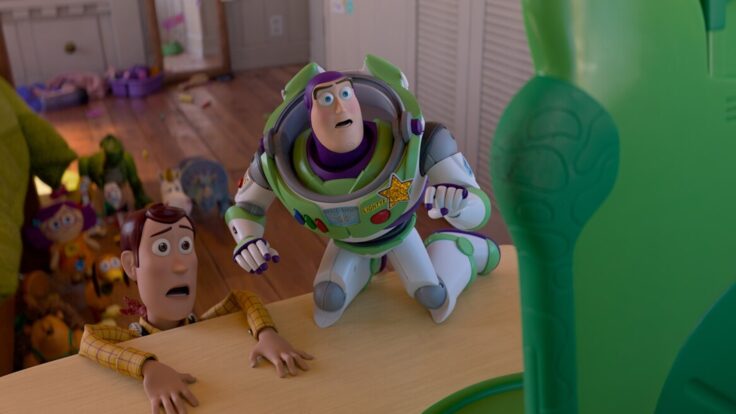
| Disney, man. The film studio went from unstoppable force to can’t catch a break. Wish isn’t a bad movie. Neither were The Marvels or Indiana Jones or Little Mermaid. They just feel like more of the same thing Disney has done for a decade now. It suggests new leadership is needed, so why hasn’t Bob Iger replaced any of his creative leaders?
Are you gonna be the one who fires Kevin Feige? Didn’t think so, and that would be stupid. Most likely, Marvel will get a major reset, reduce the Disney+ shows and separate their storylines from the MCU movies, recenter around the “new” Fox properties—Deadpool, X-Men, and Fantastic Four— and maybe pay whatever ransom CAA demands to bring back the original Avengers. What that means for the announced Phase 5 movies and the Jonathan Majors of it all is still being figured out. The strike bought some time, and Majors’ domestic violence trial is set to begin this week. Its outcome may determine a lot.
As for Lucasfilm, Iger has so far spared Kathy Kennedy—inexplicably so, in my opinion, especially after she spent more than $300 million on an Indiana Jones five-quel. I think Iger feels partially responsible for her troubles on the film side. He announced Lucasfilm would make one new Star Wars movie a year back in 2012, and it was almost immediately clear that wasn’t possible. Now, with no new Star Wars movie until at least 2026, Disney is waving off speculation that the recent promotion of Dave Filoni to chief creative officer implies that Kennedy, 70, is close to riding off into a binary sunset. But this sets a clear heir apparent, or maybe half of an eventual tag team, even if Filoni continues to write and direct upcoming projects. Ahsoka and many of the Disney+ shows have worked, but Star Wars can’t just be a TV franchise. It’s time to pull the trigger, Bob.
With Sean Bailey’s live-action studio still executing on Iger’s mandate to remake the hits, and 20th Century’s Steve Asbell managing Avatar, Apes, and smaller plays, Disney’s animation units are the more perplexing issue. Some internally feel Disney Animation and Pixar are finally feeling the creative drift from the 2018 exit of John Lasseter, perhaps the genre’s most successful force since Walt. Others wonder whether original animation has a strong place in theaters post-Covid. (Illumination’s Migration will be a big test around Christmas.)
Jennifer Lee and her Disney Animation lieutenants really thought Wish would work—it disappointed with $31.7 million domestic over the holiday, but who knows, maybe it will follow Elemental’s trajectory and chug along to $500 million worldwide, which quelled some speculation about Pete Docter’s future at Pixar. But probably not, and it hasn’t solved the problem of why these movies cost $200 million, well above rival animation studios’ budgets, and if that expense is justified with the reduced box office. (Some day I’d like to read a book on how last year’s Strange World debacle happened.) But Disney still plans to release a new film next Thanksgiving, and with Lee’s babies coming after that—Frozen 3 and Frozen 4—I’d be surprised if Iger fired or demoted her.
All of these creative leaders (and the Searchlight co-presidents) report to Alan Bergman, co-chair of Disney Entertainment, and you could make the argument that Bergman bears ultimate responsibility for the recent misfires. Maybe. Unlike his predecessor Alan Horn, I don’t see Bergman, who came up as a C.F.O., having the creative juice to tell Feige that maybe a second Captain Marvel featuring stars of Disney+ shows wasn’t the right way to go. But Bergman is a seasoned Disney manager and Iger confidant, so the question becomes: Who the heck would replace him?
The non-Disney animated movies seem to rely more and more on popular music to keep kids and parents interested. What’s the song budget for a movie like Trolls Band Together?
Jeffrey Katzenberg was using Top 40 source music as far back as Shrek. But Illumination and DreamWorks Animation have both leaned in lately. I’m told the music licensing budget for a Sing movie, which is basically American Idol with farm animals, is about $6 million—a nice windfall for artists and music publishers. Trolls movies have fewer songs and spend a few million less than that.
Money isn’t the only licensing issue, of course. A recent example: Trolls Band Together features two scenes set to the ’80s classic “Sweet Dreams (Are Made of This)” by the Eurythmics. DreamWorks cleared the song, but only subject to the sign-off of Annie Lennox—whose approval is needed for all Eurythmics licenses—on how it was used. When Lennox was shown the initial footage, she wasn’t a fan and asked that the song not be used. DreamWorks freaked, a back-and-forth ensued, the clock was ticking on the production, and ultimately DreamWorks parent Universal had to cut a check of around $300,000 to two of her favorite charities to secure the song. Problem solved, but if you check Spotify, the Trolls version of “Sweet Dreams” is not on the film’s soundtrack.
CAA’s Maha Dakhil was the lead agent on the recent poaching of Dakota Johnson from WME. Does that mean she’s “back”?
Not really. I guess it’s a positive for Dakhil that a name actress would sign with her (along with Sue Carls, Joe Machota, and Laura Gordon). She’s still on her “listening tour” after being demoted at CAA over her Instagram post suggesting Israel’s response to the Oct. 7 attack was “genocide.” But I know from conversations with studio executives that Johnson has burned a lot of bridges over the years, and WME was kinda expecting she would leave—which she did a couple days after her Madame Web trailer debuted with a thud.
The real issue is bigger than Dakhil: What exactly should talent agencies do with all these clients who are making anti-Israel comments? It’s such a tough question, and as usual, the town seems to be inconsistent in its outrage. UTA dropped Susan Sarandon over her pro-Palestine comments online and at a rally, but still represents Ta-Nehisi Coates, who has spoken out against Israel’s “segregationist apartheid regime”? WME has invited Rabbi Steven Leder and the head of the ADL to speak to its employees, yet it still has Boots Riley on its roster, despite the filmmaker having referred to a recent Simon Wiesenthal Center showing of raw footage of the Oct. 7 Hamas attack as “murderous propaganda.” (One of Riley’s lead agents is no longer working with him, I’m told.) There are tons of other examples at all the agencies.
Agencies have thousands of clients, so there’s gonna be wide diversity of opinions on this war. The question is what opinions are unacceptable? Spyglass chief Gary Barber is telling people he dropped Melissa Barrera from Scream 7 because, in his view, her posts crossed into antisemitism. From people I talk to, that seems to be the line, though obviously it’s subjective. When Sarandon’s two agents called her to tell her that her comments were hurtful to them, her response was unapologetic: “I had no idea you were Zionists,” she is said to have told them. When nobody at the agency wants to represent the client, it’s probably time for the client to be elsewhere.
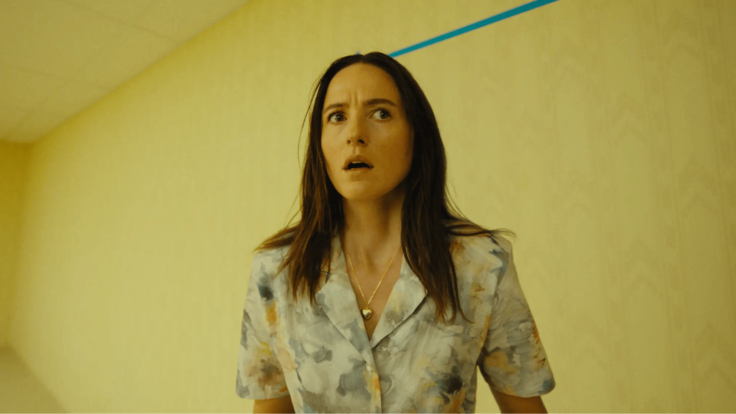
Why didn’t Sam Levinson attend the funeral for his Euphoria and The Idol producer Kevin Turen? It was glaring not to see him and [wife and producer] Ashley there.
This is a sensitive one, because Turen was so well-liked and his death on Nov. 12, at just 45, after suffering an apparent heart attack while driving his young son, was such a tragedy. The funeral was held last Friday with a service at stage 25 on the Warner Bros. lot, and guests included Zendaya and Tom Holland, HBO’s Casey Bloys and Francesca Orsi, Zac Efron, WME’s Andrew Finkelstein, Fifth Season’s Graham Taylor, Jay Penske, filmmaker Ti West, and tons of the independent film community. (Producer Scott Rudin, who was close with Turen, called Warner Discovery C.E.O. David Zaslav and helped secure the venue.)
But it’s true, neither Euphoria creator Sam Levinson nor his wife/producer Ashley attended. I’m told they recently had a falling-out with Turen, with whom they’d partnered on such films as Operation: Endgame, Assassination Nation, and Malcolm & Marie. It’s not totally clear what the beef was about—I’ve heard both sides and won’t get into details here—but regardless, the Levinsons were asked not to attend, and, I’m told, they did their own private tribute to Turen with a rabbi at their home. (Levinson’s rep declined to comment.) |
|
|
|
|
| No disrespect, but why is Elizabeth Banks hosting Press Your Luck on ABC?
Why not? Over the past five years or so, scripted stars like Banks, Alec Baldwin (Match Game), Will Arnett (Lego Masters) and Jamie Foxx (Beat Shazam) could command about $200,000 an episode to host and executive produce a primetime game show, which have proliferated as broadcast networks reduce costs. And with little impact on their other jobs, like directing Cocaine Bear. Those fees have come down a lot for new shows, I’m told, as ratings have declined, and the thinking in the unscripted world is that Steve Harvey is basically the only reliable name that brings an audience to a game/court show. But lay off Liz!
You were making fun of the Wonka trailers [on The Town] for including no evidence that it’s a musical. Then the Mean Girls musical trailer dropped and zero music; even The Color Purple trailer has almost no on-camera singing. Why are studios making musicals but hiding the fact that they’re making musicals?
It’s a polarizing genre, so concealing the musicality just helps the movie reach a bigger potential audience. “Musicals haven’t worked theatrically for the last several years, so the studios are nervous that their openings will be too soft and ‘ghettoized’ too early,” Kevin Goetz, the film research guru, told me today. For some properties—say, films of Broadway smashes like Les Misérables, Mamma Mia!, and Cats—it would be silly to hide what they are, so Universal’s initial materials didn’t. But Wonka, Mean Girls and Color Purple aren’t obvious musicals, so why tip the hand?
And the Wonka tracking is now at about $40 million domestic and rising, so it looks like Warner Bros.’ strategy is working. The downside is the audience might be surprised when they see the actual movie (as many were when Rachel Zegler belted multiple songs in the new Hunger Games). Back in 2007, Paramount omitted music from the trailers for Sweeney Todd, and when audiences showed up for the nearly entirely sung Sondheim musical, some walked out.
Everyone seems confident that Paramount Global will be absorbed by Comcast or Warner Bros. Discovery or maybe both together. But are there any other potential buyers?
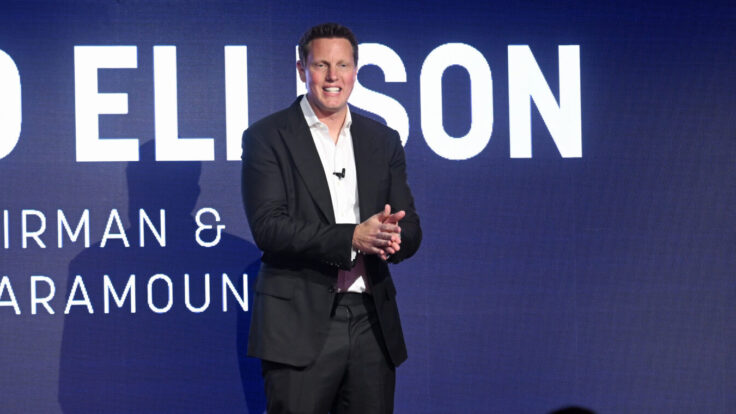
I’m sure there are any number of potential private equity suitors that would love to milk the cable carriage fees and potentially auction off parts like CBS, BET, and the storied film studio. One name I’ve heard that makes sense to me is David Ellison. He denies any talks, I’m told there’s still no formal sale process, and Paramount owner Shari Redstone says the company is not for sale. But a dwindling number of people believe her. The economics of pay TV are getting worse. Even the bigger companies like Disney and Warner Discovery are struggling to make streaming work, and Paramount just quietly granted golden parachutes to its top executives in the event of a sale or change of control in the next few years. The writing’s on the wall.
Still, selling right now to Big Tech or a rival media company would be tough, given the regulatory politics of an election year. And while C.E.O. Bob Bakish has been offloading assets like Simon & Schuster, real estate, and, just last week, the Bellator MMA league, P.E. or the publicly traded suitors might want Paramount to be skinnied down even more before making an offer.
But a strategic, private buyer like Ellison and his Skydance Media might be willing to take Paramount off Shari’s hands for a big premium, and as is. He could sell or shut down Paramount+ and combine the studio and Skydance into a Sony Pictures-style franchise-based content producer and seller to the bigger platforms. Plus, Skydance is already in business with Paramount on the Mission: Impossible, Jack Reacher, Top Gun, and Jack Ryan franchises. Wells Fargo analyst Steven Cahall said the Paramount studios are worth about $30 billion, and while Ellison’s family certainly has the money to pay that or whatever the company would cost (dad Larry is personally worth about $150 billion), Ellison has brought deeper pockets into Skydance in Abu Dhabi-backed RedBird Capital, KKR, and Tencent, one or more of which might be willing to back a much bigger play. |
|
|
| Place this John Carreyrou story in a time capsule to reflect the era in which Netflix gave the totally nuts director of the notorious bomb 47 Ronin more than $60 million, part of which he used to buy Rolls-Royces and crypto for himself. [NY Times]
Amazon’s sports head Jay Marine says he wants “meaningful” NBA games (meaning playoffs) or else the cost of a package might not be worth it for Prime Video. [SBJ]
Sadly, Bob Evans’/David Zaslav’s screening room did not make this otherwise fun list of L.A.’s 27 best movie theaters. [LA Times]
I remain baffled that Taylor Swift, who controls her own media narrative more than any famous person, continues to let Travis Kelce do podcasts and magazine interviews to talk about their relationship. [WSJ] |
|
|
Have a great week,
Matt
Got a question, comment, complaint, or do you know what movie Napoleon star Joaquin Phoenix thought he was starring in? Email me at Matt@puck.news or call/text me at 310-804-3198. |
|
|
|
| FOUR STORIES WE’RE TALKING ABOUT |
 |
|
 |
| House Turmoil |
| Are MAGA knives out for Speaker Johnson? |
| TINA NGUYEN |
|
 |
|
 |
|
|
|
|
|
 |
|
|
|
Need help? Review our FAQs
page or contact
us for assistance. For brand partnerships, email ads@puck.news.
|
|
You received this email because you signed up to receive emails from Puck, or as part of your Puck account associated with . To stop receiving this newsletter and/or manage all your email preferences, click here.
|
|
Puck is published by Heat Media LLC. 227 W 17th St New York, NY 10011.
|
|
|
|