 |
 |
|
Welcome back to What I’m Hearing, where we’re celebrating what would have been Chris Farley’s 60th birthday by rewatching the greatest talk show entrance of all time.
🚨🚨 Super Bowl Winner!: Forget Mahomes and Kelce (and Swift). Thomas Andriello, a Westchester high school history teacher who also leads a pop culture and media class, is the winner of the WIH Super Bowl ratings contest. Out of about 300 predictions, only Thomas guessed 123.7 million, which is the exact final viewership number from CBS. If this were The Price Is Right, he’d get a $100 bonus, but instead some priceless Puck merch (including a boat tote) is in the mail.
Runners-up: Shoutouts to Andrew Marshall (123.65m), Maggie Pearson (123m), and me! (I guessed 123.1m).
As always, if you were forwarded this email, click here to become a Puck member. And send me ideas or news tips by replying to this email.
Let’s begin…
|
|
|
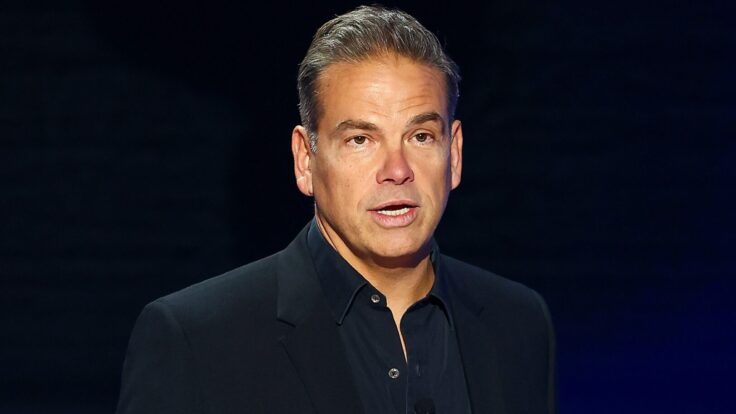
- ZuckerWatch ’24: Another U.K. deal: Congrats to Jeff Zucker and Gerry Cardinale, whose RedBird IMI vehicle has closed a deal for the British production outfit All3Media, I’m told. (Zucker is telling friends the acquisition will be announced in the next couple days; his rep didn’t immediately respond.) The purchase will put Zucker atop the proprietor of Squid Game: The Challenge and The Traitor, among other assets. The Financial Times floated a couple months ago that Zucker wanted to take All3Media from Warner Discovery and Liberty for about $1.3 billion, even as the British government is still holding up the Emirati-backed RedBird IMI’s controversial deal for The Daily Telegraph and The Spectator.
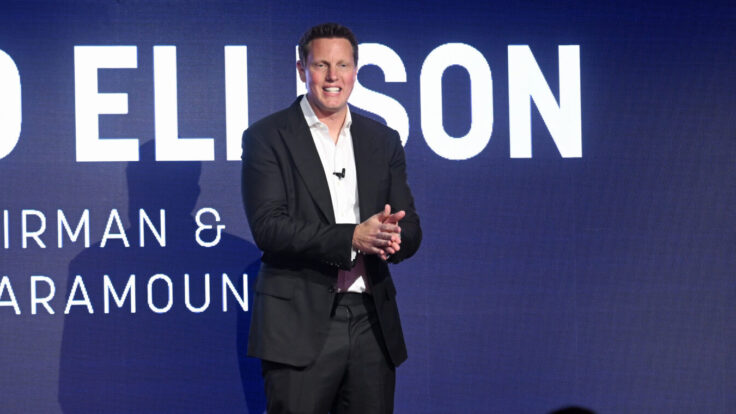
- Buffett’s Paramount bath: Everyone seems to have a theory about why Warren Buffett is dumping Paramount Global stock at a big loss. Buffett’s Berkshire Hathaway recently sold about a third of the 15 percent stake it bought in 2022, which made him Paramount’s largest investor. The thinking was that Buffett (or an underling) was betting on Shari Redstone finally selling the company, which could lead to a windfall. Maybe he now has reason to believe that sale won’t happen? Maybe he thinks a deal with David Ellison or someone else will spark messy shareholder lawsuits? Maybe he’s doing the Ellisons a favor and tanking the stock so they can buy the company cheaper? Or maybe he’s just taking losses to cover gains from Apple, which he also sold? Adding to the mystery, Buffett has a long relationship with banker Byron Trott, who also happens to be helping Shari field offers for the company (and prop it up in the meantime). My leading theory might be the most obvious: Warren realized he made a huge mistake.
- Box office over/under: I’m cheating because Paramount’s biopic Bob Marley: One World and Sony’s Marvel-lite debacle Madame Web opened last night to $14 million and $6 million, respectively. So I’ll take the over on the adjusted 6-day tracking of $35 million for Marley and the under on $25 million for Madame Web, with an added prediction that Dakota Johnson and the Dakota Johnson Madame Web Press Tour will both be nominated for Razzies.
|
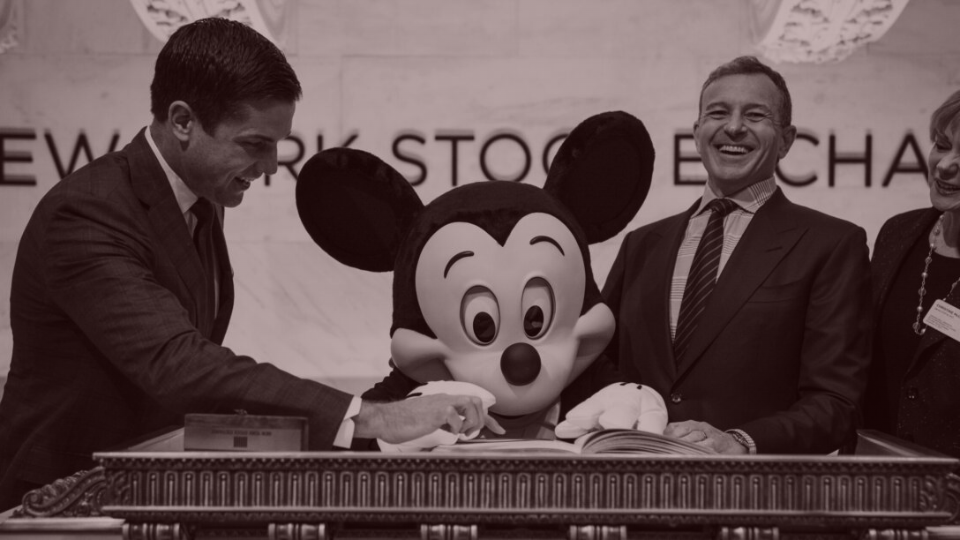 |
| Bob Iger Has a Brand Problem, But Does It Matter? |
| An exclusive survey reveals that Americans (and especially Republicans) are twice as likely to think of Disney unfavorably as other media companies, even if that doesn’t necessarily mean they won’t see Pixar, Star Wars, or other Mouse House movies in theaters. |
|
|
|
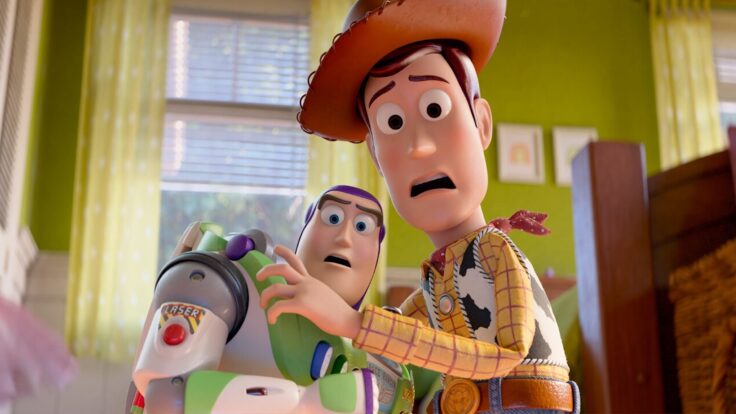
| Exactly how big a brand problem does Bob Iger have these days? It’s a tough question. You can definitely feel it in the culture—the heightened politicization of Disney thanks to the fights with Florida Gov. Ron DeSantis and now Elon Musk, who is waging war in a very Elon way, by backing Gina Carano’s dubious discrimination lawsuit and tweeting years-old Disney “inclusion” standards as if they were the Pentagon Papers. But when it comes to the actual movies and shows, Disney has always dismissed the “woke” outcry as just noise. Even if Trump Country may not love Disney as a company, they’re not gonna not see a Pixar movie or watch a Marvel show just because it’s from big, bad Disney.
Or at least that was the thinking. Then the movies started flopping, Star Wars got eviscerated by South Park, and in November, Iger himself publicly criticized the company’s push toward more agenda-driven storytelling. If you remember, he dropped this declaration at the DealBook conference: “We have to entertain first. It’s not about messages,” adding that when he returned as C.E.O., “what I have really tried to do is to return to our roots.”
Iger wasn’t explicit, and the comment could simply be taken as a call to refocus on Disney’s core competency, which is pleasing family audiences. But many in the creative community interpreted his words as, Okay, people. We did what WE wanted for a few years. Let’s lay off the lesbian kisses and revisionist Black mermaids and disabled dogs for a while. That’s probably overstating his mandate, but Iger doesn’t use a public appearance to call out Disney “messaging” unless one of two things is true: Either he sees the “wokeness” of the past five to seven years as negatively impacting the creative process, and ultimately the output; or he fears the escalating culture wars and the polarization of red and blue America as having a potentially significant impact on the ubiquity of the Disney brand. Most likely, it’s both.
Disney under Iger has always leaned left politically, and nobody cared much until his successor/predecessor Bob Chapek enraged both his own employees and DeSantis by flip-flopping on Florida’s so-called “Don’t Say Gay” law. But now, it’s a problem, and for many, each Disney miss is viewed through the lens of whether a flawed process focuses too much on virtue signaling over creative execution. In the current proxy fight, Nelson Peltz and his fellow spite store proprietor Ike Perlmutter haven’t expressly gone after the politics of the Disney content. But given that both are Palm Beach residents with Trumpy politics, they kinda don’t have to. |
|
A MESSAGE FROM OUR SPONSOR
|
 |
|
ACADEMY AWARD® NOMINEE | BEST ANIMATED FEATURE
Directed by Peter Sohn
Produced by Denise Ream, p.g.a.
“Director Peter Sohn has crafted the strongest character-driven narrative we’ve ever seen in a major animated movie.” CinemaBlend
“Magic and beauty reflect both the immigrant experience as well as the power of love.” CNN
“The most human rom-com in years.” NY TIMES
“Charming. Delightful. Spectacularly stunning.” Daily Herald
The Making of ELEMENTAL: A Conversation Behind the Lens with Brad Bird, Oscar®-Nominated Director Peter Sohn & Producer Denise Ream + The Filmmaking Team
WATCH NOW
|
|
|
| Granted, many of the recent movies have simply not been good, irrespective of casting or inclusive storylines. After all, people are still packing the Disney parks, to the tune of nearly $9 billion in operating income in its “experiences” division last year, up 23 percent from 2022. But the overall political climate, which has also ensnared brands like Bud Light and Target, has made it harder for Disney—perhaps the most famous American corporation—to remain apolitical while also satisfying its largely liberal-leaning workforce.
But how big is this problem? And does it actually prevent people from going to see Disney movies? That was the impetus behind a study called “Left and Right: Are Political Divisions Impacting the Box Office?” that was prepared for Puck by The Quorum, which has done other branding research for us. This project surveyed 2,000 people over five days in January to test the conventional wisdom that Republican-leaning audiences feel alienated from Hollywood in general and Disney in particular.
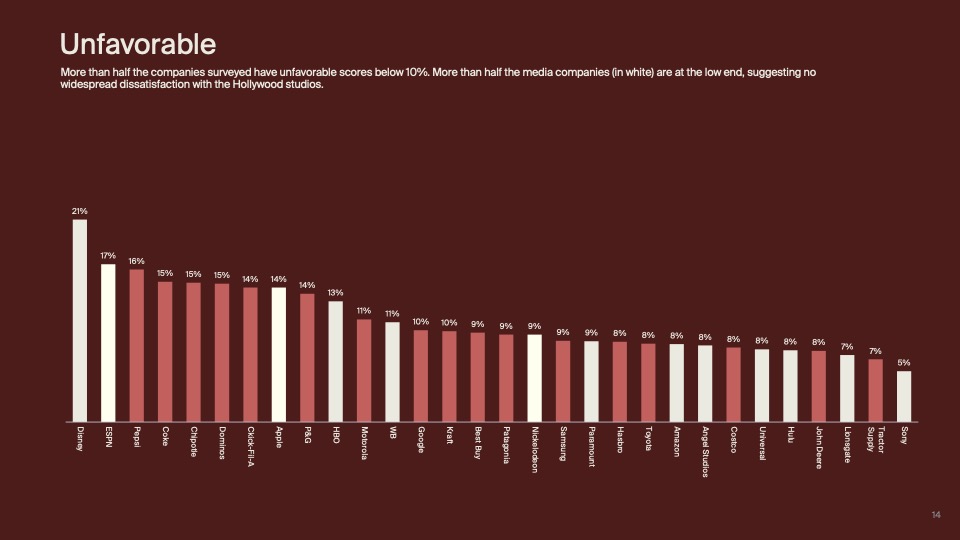
Respondents were presented with 29 companies in various industries (Pepsi, Kraft, Toyota), including 13 media companies (all the major Hollywood studios and a few new entrants like Apple and Amazon, which bring their own general brand profile), and asked if they had a favorable or unfavorable opinion of those companies. (They could also answer “no opinion” or “not familiar.”)
The results were a bit unexpected. All 29 companies have high favorability ratings (that’s consistent with most opinion surveys of major companies), and people actually carry pretty positive feelings about the major studios. But Disney clearly scores the lowest, with 21 percent unfavorable. No other entertainment company had an unfavorable rating above 11 percent, meaning Disney is nearly twice as disliked as any other Hollywood entity we included. (Hulu, which is owned by Disney, scored especially well at only 8 percent unfavorable, indicating the problem is the Disney brand, not any of its sub-brands necessarily.) |
|
|
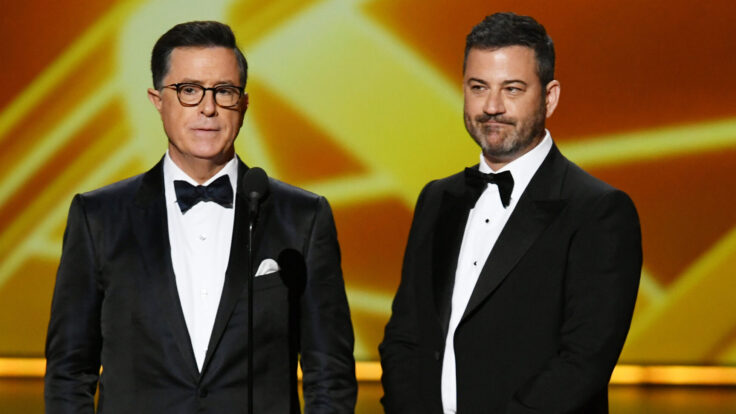
| Obviously, Disney is a lot more well-known than, say Warner Bros. or Paramount, so people will harbor stronger feelings about Disney than the others. And we included the larger studio name, not sub-brands like Marvel or Pixar, or individual projects, which people might feel more strongly about. But we compared the media companies to other mass-market and potentially controversial brands like Google and Chick-fil-A, and the unfavorables for Disney are still higher. Respondents were also asked about ESPN, which is owned by Disney and is the second-least liked of the big media brands. (ESPN has endured its own journeys through the culture wars, of course, most recently with the Pat McAfee-Jimmy Kimmel spat.)
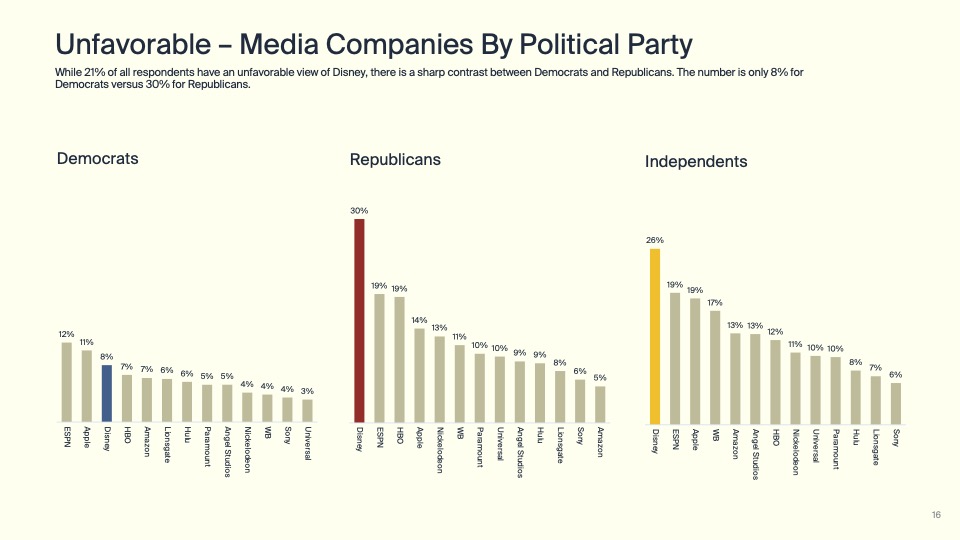
Worse for Disney, polarization by political party is especially apparent in the survey. Fully 30 percent of Republicans and 26 percent of independents have an unfavorable opinion of the company, compared to only 8 percent of Democrats. Republicans also have an elevated unfavorable opinion (about 19 percent) of HBO, and Democrats overindex on negativity toward ESPN. (Importantly, Fox News or Fox was not included in the survey; I think we know how that would poll.) Bottom line: When it comes to Disney, you are much more likely to view it negatively if you are conservative. |
|
|
| Okay, but does any of this Disney sentiment actually matter to moviegoing? The answer, in the aggregate, is probably not much. We asked people why they don’t go to theaters more often, and political messaging in the movies was hardly a factor at all. Overwhelmingly (43 percent) and not surprisingly, people said the cost of going to a theater is the No. 1 deterrent. Only 0.3 percent of those who are not frequent filmgoers said they stay away due to political ideology or “wokeness,” according to the survey. That’s less than half a percent, or four people out of 1,400, way less than the 5 percent who still fear Covid.
Now, the study didn’t ask whether people stay away from Disney movies due to ideological differences, which might have yielded a much higher number. But with so few citing politics as a deterrent at all, it’s unlikely that specifying “Disney movies” would have moved the needle that much. “The data suggests a separation between the brand and the content,” David Herrin, the lead pollster, told me today. “While conservatives give Disney higher unfavorables, it’s not ‘perceived wokeness’ that’s keeping people from theaters. The more immediate issues facing the entire industry, not just Disney, is the quality of the content and the price of moviegoing.” Agreed. People don’t care about the “messages” in content, as long as that content is entertaining. Barbie could have been ignored or pilloried by the Fox News crowd for its feminist messaging. Instead, it sold tickets about evenly between Republicans and Democrats, per polling data. |
|
|
| Iger knows this, which is why he’s talking about the “messaging” in the context of an overall creative turnaround that he’s trying to execute. But he also knows that the impact of the politics stuff is kinda unknowable, and if Disney becomes a general target, its financials could start to look like Bud Light, which still hasn’t recovered from its transgender influencer maelstrom. As the presidential campaign heats up and Iger faces business challenges on all sides, that’s the last thing he needs.
More study details:
Respondents: 2,000 (U.S. only)
Women: 54.7 percent
Frequent moviegoers (at least once per month): 26.3 percent
Casual moviegoers (less than once per month): 46.1 percent
Mostly home viewers: 24.9 percent
Non-movie watchers: 2.7 percent
Democrats: 35.3 percent
Republicans: 35.3 percent
Independents: 30.1 percent |
|
|
See you Sunday,
Matt
Correction: The NBA’s exclusive negotiating window with current TV partners ends April 22, not in March as I said on Sunday. Apologies.
Got a question, comment, complaint, or suggestions for who should play Saddam Hussein in the Barry Keoghan Saddam Hussein movie? Email me at Matt@puck.news or call/text me at 310-804-3198. |
|
|
|
| FOUR STORIES WE’RE TALKING ABOUT |
 |
|
 |
| The Age of Biden |
| Suddenly, it’s open season for the POTUS age question. |
| DYLAN BYERS |
|
 |
| Sturm und Drang |
| Diving into the $240 million deal with Puig. |
| RACHEL STRUGATZ |
|
 |
| Klein of Arabia |
| Why are the Senate and Saudis both after Michael Klein? |
| WILLIAM D. COHAN |
|
|
|
|
|
 |
|
|
|
Need help? Review our FAQs
page or contact
us for assistance. For brand partnerships, email ads@puck.news.
|
|
You received this email because you signed up to receive emails from Puck, or as part of your Puck account associated with . To stop receiving this newsletter and/or manage all your email preferences, click here.
|
|
Puck is published by Heat Media LLC. 227 W 17th St New York, NY 10011.
|
|
|
|