{{ 'now' | timezone: 'America/New_York' | date: '%b %d, %Y' }} |
|
|
Welcome back to a special Sunday edition of What I’m Hearing. I didn’t send anything on Thursday
because I didn’t think I had enough worth your time, so I figured I’d surprise you tonight with a jam-packed issue—and a little throwback to when I used to send WIH on Sundays. (Also, I’m going to the World Series tomorrow.)
🍸🍸 Anyway, a big thanks to the great group that came out for our latest Puck Private Dinner at Funke on Tuesday. I hosted with McKinsey, and we had a very off-the-record debate with execs from Disney, Netflix, WME, Adobe, Amazon, and many others. Puck
actually hosted two dinners in L.A. on the same night, with my stylish colleague Lauren Sherman doing a fashion person get-together at Etra across town. I’m betting my group ate more and smoked less.
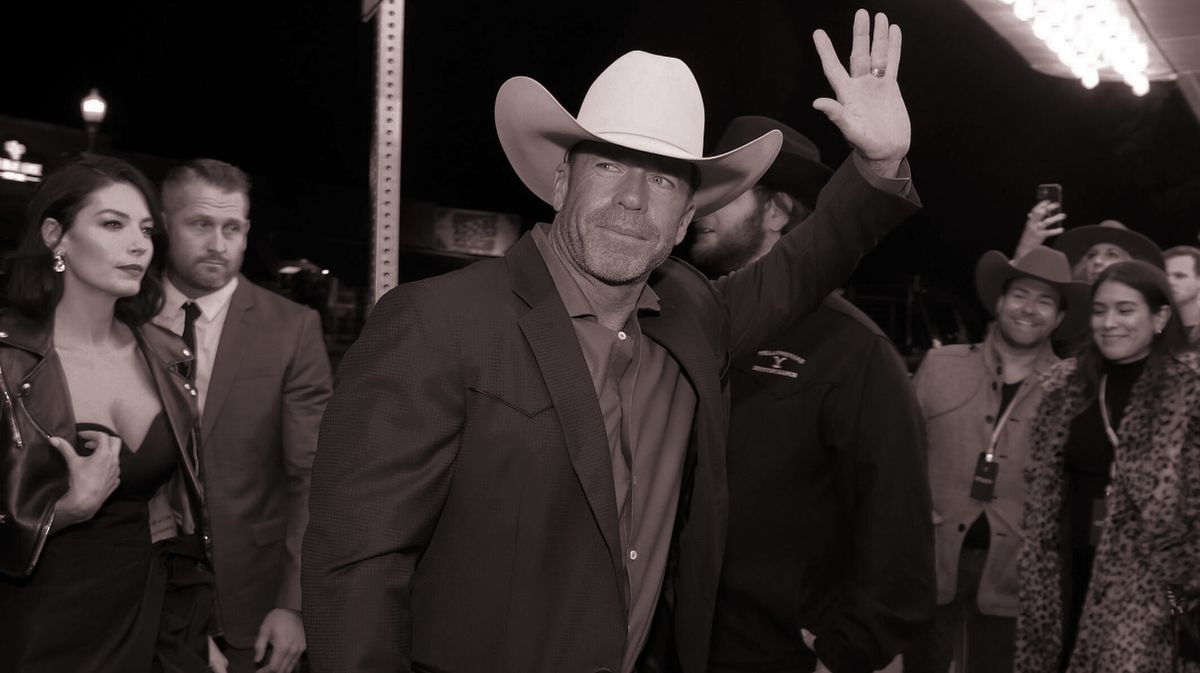
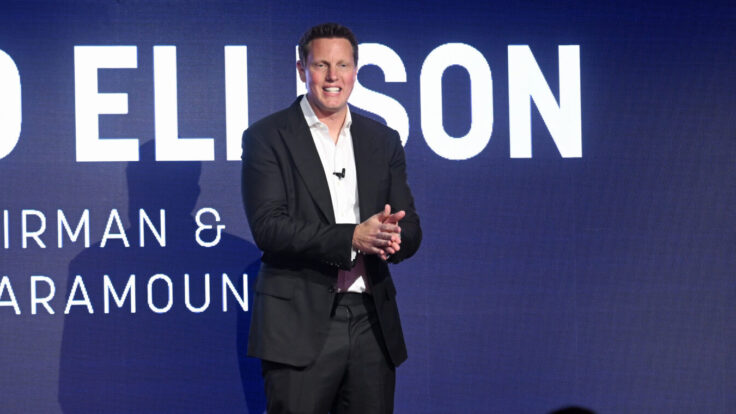
Tonight, some shocking news in the Taylor Sheridan universe, with TV’s top creator abruptly bailing on Paramount for a major rival. It’s a big loss for new owner David Ellison—or is it?—just as he’s gearing up for a fight to take
over Warner Bros. Plus, some thoughts on the industry vibe shift on Ellison.
Programming note: This week on The Town, analyst Peter Supino gave his odds on the various suitors for Warner Bros. Discovery, and film researcher Stephen Follows
revealed data on the rise of standing ovations at film festivals. Subscribe here and here.
Not a Puck member yet? Just click here. Got a news tip or an idea for me? Just reply to this email, text me or message me on Signal at 310-804-3198.
Discussed in this issue: Taylor Sheridan, Donna Langley, Billy Bob Thornton, David Ellison,
Jim Dolan, Jimmy Horowitz, Ari Emanuel, Nicole Kidman, David Zaslav, Brian Roberts, Bill Owens, Shari Redstone, Ted Sarandos, Sam Altman, Matt Stoller, Dick Wolf, Chris
McCarthy, Chris Nolan, Zoe Saldaña, Jim Dolan, Scott Greenberg, Keyes Hill-Edgar, Mike Hopkins, David Glasser, Francis Ford Coppola, Mike Cavanagh, Cindy Holland, and… Cindy the Netherlands.
But first… |
Who Won the Week:
Rahul Purini
|
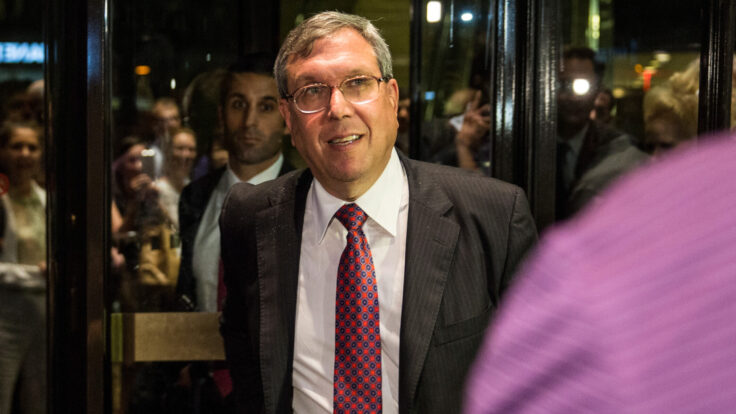
With the $17.3 million domestic debut of Chainsaw Man: The Movie—a title brought in by Sony’s
Tom Rothman, Sanford Panitch, and Steven O’Dell—the Crunchyroll president now has two number one openers in two months (with Demon Slayer: Infinity Castle). The Japanese-owned Hollywood studio proves once again that anime can work in theaters outside of Asia.
Runner-up: Jim Dolan, whose Sphere shares jumped 15 percent on
news that his butchered Wizard of Oz spectacle had sold 1 million tickets and grossed $130 million since its late August debut. (Also, the Knicks are 2-0.)
Some additional candidates in this story… |
|
|
TV’s top creator has just closed a massive deal with rival NBCUniversal for film and TV when
his commitments with Paramount are up. It’s a major move for the Yellowstone and Landman creator, but perhaps an even bigger coup for NBCU’s Donna Langley—and suggests that her company is still playing to win. |
|
|
For a couple months now, I’ve picked up chatter that Taylor Sheridan wasn’t happy with the
new Paramount regime. TV’s top creator, the originator of Yellowstone and its successful spinoffs, and Landman, and Lioness, and a bunch more hit shows on Paramount+, was disappointed when most of the executives he worked with were either fired or marginalized after David Ellison bought the company in August. Some of Sheridan’s budgets have been questioned by incoming streaming chief Cindy Holland, according to sources. And Ellison had
tried to insert Paramount into a separate deal that Sheridan made for an old film script at Warner Bros.
Now comes the big news: Sheridan has decided to leave Paramount when his film and TV commitments are up. He just closed a massive deal with rival NBCUniversal. The nearly eight-year arrangement for film will begin in March. But it’s the five-year TV overall deal that is most lucrative, unique, and potentially game-changing in the streaming business. Sheridan’s current Paramount pact
for TV services runs through 2028, after which he will begin writing and producing shows exclusively for Universal platforms, including Peacock and NBC. David Glasser’s 101 Studios, the production studio for Sheridan’s full slate of shows, will also move over to Universal.
All in, this megadeal represents a major pay increase for Sheridan, but my understanding is the money wasn’t the big factor here. Sheridan’s team informed Ellison of the move about 10 days ago, and
Taylor and David spoke separately. (Paramount, Universal, and reps for Sheridan and 101 Studios declined to comment.)
So, how did this happen? It started with Sheridan’s separate film pact at Paramount, which expires this coming March. Sheridan and his reps (CAA, manager Scott Greenberg, and lawyers Neil Meyer and Emily Downs) began taking meetings earlier this year, with all the usual suspects lining up. Warner Discovery’s David
Zaslav invited Sheridan to his house. Amazon, Netflix, and Apple courted him.
Sheridan also met with Donna Langley, the longtime Universal film chief who recently took over television programming for NBCU. Sheridan is a pretty astute industry observer, and he was intrigued by the creative and lucrative home that Langley has fostered for filmmakers like Steven Spielberg, Chris Nolan, Jordan Peele, and
Chris Meledandri. (Remember, before he was a TV power, Sheridan was a rising filmmaker, earning an Oscar nomination for his script for Hell or High Water.) |
|
|
A MESSAGE FROM OUR SPONSOR |
|
|
At the same time, Sheridan has long admired TV juggernauts like Dick Wolf and Lorne
Michaels, who have produced for NBCU for decades. So as the film talks progressed, Langley inquired about Sheridan’s plans for TV after ’28. He’s said to have seen in Universal a place where he would be treated like an elite filmmaker while also producing the kind of elevated TV serials for which he has become known. Shortly thereafter, Langley and her top dealmaker, Jimmy Horowitz, were hammering out a macro arrangement for all of Sheridan’s output as it
becomes available.
Why would Ellison let his top creator walk out the door like this? After all, he’s praised Sheridan ad nauseam in interviews. “So, I have a really good relationship with Taylor and I think he is literally a singular genius and content creator,” Ellison told CNBC in August, citing his “perfect track record” of hits. “My goal is to have Taylor call Paramount his home for as long as he wants to be telling stories,” Ellison added.
But despite that public
enthusiasm and friendly personal relations, Ellison had not locked Sheridan up for film or moved to extend his TV deal beyond ’28. Ellison and Holland may have felt that Sheridan’s output is too expensive—he works with top stars like Sylvester Stallone, Zoe Saldaña, and Billy Bob Thornton and shoots on-location, mostly in Texas—despite the fact that his shows regularly top the Nielsen charts. Maybe Paramount will have extracted all the value its
new leaders need out of Sheridan by 2028. After all, that’s three years from now; he is said to carry very specific output requirements in his current deal; and every show he makes for Paramount until ’28 will stay with the company long after he is gone. Tulsa King, Mayor of Kingstown, and a reality-competition show called The Road are currently airing. In just the next year, Paramount is slated to air more Landman, the Yellowstone follow-ups
Dutton Ranch and Y: Marshals, more Lioness, and a new show, NOLA King. Even without Sheridan, Ellison can continue to make Yellowstone spinoffs until the Duttons go to outer space or Bari Weiss takes over the writers room. |
I had wondered why Ellison hadn’t thrown Sheridan a splashy new deal when he has dropped $7.7
billion for UFC, another $1.5 billion on Trey Parker and Matt Stone, still more on the Duffers of Stranger Things, and picked up James Mangold and Will Smith. Paramount just put board members Sherry Lansing and Gerry Cardinale on the phone with the Journal for a glowing profile about how much Ellison is spending spending spending on content. Yet behind
the scenes, Sheridan was hearing about how Paramount+ needed to be revamped, and about how expensive his shows had become. (Some, like Lioness and the Yellowstone spinoff 1923, carried budgets in the range of $15 million to $20 million an episode, while others, like Tulsa King and Mayor of Kingstown, cost much less.)
In addition, the Skydance takeover meant the exit of Chris McCarthy and Keyes Hill-Edgar, two
execs who worked closely with Sheridan, and several others who will be swept away in the massive layoffs that will begin this week. Then, when Warners decided to make F.A.S.T., a movie script Sheridan wrote before his Paramount deal, Ellison tried to secure distribution in some markets, annoying Sheridan. Holland
recently bought a new Nicole Kidman show, Discretion, without so much as a heads-up to Sheridan, who already makes Lioness with the actress. He didn’t love that.
On the other side, this is a pretty major talent coup for Langley and the Universal team—if Sheridan delivers. It also speaks to a larger issue. There’s been so much speculation around whether Comcast is a buyer or a seller in the current media M&A wars. Will C.E.O.s Brian
Roberts and Mike Cavanagh make a bid for all or part of Warner Bros. Discovery, or will they sit out as the landscape consolidates without them? I can’t imagine Roberts greenlighting a talent deal like this, which doesn’t even begin for three years, if he doesn’t expect to be in the game long-term. Who knows whether that will mean Sheridan joins a company that owns HBO, or one where Peacock is merely a tile on Prime Video, or whatever the next
few years may bring. But poaching Taylor Sheridan suggests Roberts at least intends to compete at the highest level.
Which was ultimately the appeal for Sheridan, I think. While Ellison is trying to buy all of Warner Discovery and is talking about leveraging his dad’s money and his connections to Trump and the tech industry to create a massive, Netflix-like player in the streaming wars, Sheridan can again become the very big fish in a smaller pond. And while the
major streaming players have moved years in advance to lock in proven properties like the NFL and the Grammys, NBCU is treating Sheridan like its own franchise play. Which, given his track record, he very much is. |
“The only thing I could do was professionally blow myself up to create a blast radius around CBS to get
people’s attention that this was happening.”
—Bill Owens, speaking at Colby College about why he quit CBS News amid editorial pressure from owner Shari Redstone as she was trying to close the Skydance sale.
Runner-up: “Many of my films earn out over time.”
—Francis Ford Coppola, in an
interview promoting an auction of his watches, hilariously insisting that Megalopolis could eventually become profitable. The largely self-financed feature cost more than $120 million and grossed $14.4 million worldwide.
Honorable mention: “Combining Warner Bros. with Paramount or another major studio or streamer would be a
disaster for writers, for consumers, and for competition. The WGAW and WGAE will work with regulators to block the merger.”
—The Writers Guild, becoming the highest-profile Hollywood group to publicly oppose the Ellison family’s takeover attempt of Warner Bros. Discovery.
A little more on this… |
The David Ellison
Resistance Takes Shape
|
“So, do we believe David Ellison this time?” I asked a media analyst last week at the Grill.
Neither of us had a good answer. Do you?
The Oracle heir won Hollywood over with a convincing pitch for buying Paramount: The Ellisons—and pretty much only the Ellisons—would save the studio from being ingested by Sony or Netflix or god knows who and consolidated out of existence. Forget the fact that CBS, a 100-year-old movie library, and the only studio lot in Hollywood proper were unique and valuable assets. Paramount was a dying company—already dead,
basically!—and all the other would-be suitors were either fake money or unapprovable by the government. Shari Redstone should have thanked David for even being interested in paying $8 billion to take this aging clunker off her hands.
It worked. Hardly anyone in town voiced skepticism about Paramount’s wannabe owner or his ultimate intentions. And now, less than three months later, Ellison is laying off about 2,000 employees and making the same
savior arguments about Warner Bros. Discovery. When C.E.O. David Zaslav finally wheeled out the Bat-Signal on Tuesday morning and flashed a “For Sale” sign above Burbank, a letter from Ellison to the WBD board soon leaked to the Times. “We are confident
that we are the best partner for WBD, with a combination of our two companies creating a scaled Hollywood champion to the benefit of both our companies’ shareholders, consumers and the entertainment industry at large,” Ellison wrote (emphasis mine). |
|
|
A MESSAGE FROM OUR SPONSOR |
|
|
This language mirrored the Ellison messaging earlier this month at a Bloomberg event. Don’t despair,
he assured everyone. He wants to make “more movies, more television shows,” not less. Which may be true. My sources insist Ellison does want a future Warner Bros.: A Skydance Corporation to increase its output and release 10 to 15 movies a year in theaters. But… do we believe him? Or, even if that’s Ellison’s intention, plans and circumstances change (just ask David Zaslav), and once a deal is done, all those promises often go bye-bye.
Hollywood stood pretty inert as
20th Century Fox, one of Hollywood’s original studios, was ingested by Disney in 2019. And yet a quiet but growing resistance is already brewing this time around. It’s not just that statement from the WGA—the same WGA that stayed relatively quiet during the Paramount transaction but now wants to block a merger that isn’t even past the thrice rejected-offer stage. That’s despite the argument from Ellison, Zaslav, and a parade of analysts that consolidation is actually necessary
to battle Google, Amazon, and the Big Tech powers that increasingly dominate media.
To many in town, however, that feels like the same old argument trotted out every few years to justify disastrous mergers that result in thousands of layoffs and huge paydays for the executives involved. “That was the argument for AT&T–Warner. How’d that work out?” emailed Matt Stoller, the antitrust activist (and brother of filmmaker/The Studio star Nick
Stoller), who writes a newsletter about monopolies called Big. “Has the Disney-Fox merger inspired a wave of quality, profitable filmmaking? Of course not. The consolidation wave over the last 20 years has driven the crisis in the industry. It’s like, sure, let’s hand over more stuff to the arsonists, they say they know a lot about how to stop fires.”
I’d expect Stoller and the WGA to
be pissed, but in my chats last week with producers and agents and guild people and movie theater people, many seem to want to fight this Warner sale—whether to Netflix or Comcast or Amazon or Paramount. Cinema United, the trade organization for theater owners, has begun conversations both with its own members and others about what the elimination or deconstruction of a major studio would mean for movie theaters. (Their short answer: Almost certainly fewer releases, despite what Ellison
is saying.) They’re likely gonna get involved in regulatory review. As might SAG-AFTRA and the Directors Guild, though sources say both are waiting to take a position until they get more information.
These examples notwithstanding, the resistance is mostly quiet so far, and I keep getting texts and calls asking, Why aren’t big Hollywood people screaming from the top of Runyon about the end of Warner Bros.? It’s early, of course. But, Stoller added, “creatives in Hollywood are
terrified of saying anything for fear of being blacklisted by the increasingly small number of studios.”
I agree on that front; many are scared, both of Ellison and the Trump administration, which continues to escalate its vindictiveness and is now all but formally aligned with the Ellisons in many people’s minds. The Trumpy New York
Post declared last week, via a “senior Trump administration official,” that the future owner of WBD is “very important to the administration,” and everything “points to the Ellisons.” So much is changing so fast in late-stage Hollywood, it’s hard to fully understand the repercussions of it all, or where
to direct anger or attention. “Just because people aren’t shouting doesn’t mean they aren’t weeping,” one industry veteran texted me last week.
Despite all that, I’d argue that the acquisition of Warner Bros. can only be evaluated against its alternatives. That’s partly why so many people in town thought Ellison was a good fit for Paramount: The other potential scenarios—a carve-up, or the collapse of a major studio—were way worse. The same analysis applies here… kinda. Warner Discovery
isn’t in quite the perilous position Paramount was in. But it’s now officially for sale, and what if Ellison doesn’t get it? We know Netflix just wants the library and I.P. to reduce churn on its streaming service. Any remaining theatrical distribution would be nominal, at best, unless Netflix changes its tune—which, yes, has happened, but do you really see Ted Sarandos suddenly wanting to debut The Batman: Part II or the Superman or Minecraft
sequels in 4,000 theaters? As Ted says, that’s not their model.
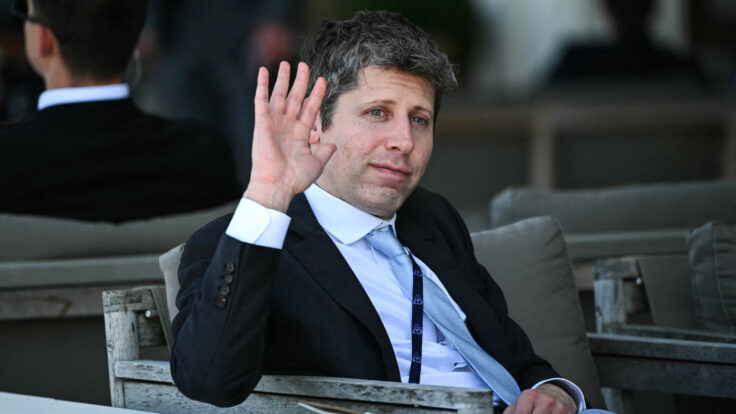
How would the Writers Guild feel about Ellison if the alternative to him was, say, Sam Altman? What’s worse: a merged studio… or one that becomes training data for OpenAI products? We all feel ownership over the legacy Hollywood studios, but it’s been decades since many of them were stand-alone entities that controlled their own destinies. Going all the way back to Gulf and Western’s ownership of Paramount,
or Coca-Cola and Columbia Pictures, or the Japanese and Canadian takeovers of Universal. The corporate history of MGM could fill many Wikipedia pages.
Now, much like with the railroad trusts of the industrial revolution, Big Tech is the unfortunate outcome of the commercialization of the internet. And the fact that these companies now dominate both the stock market and nearly all of the modern media business kinda necessarily means that they will also come to control the filmed
entertainment business. These new oligarchs—and their ambitious sons—are just the natural byproduct of unchecked capitalism.
Maybe if the studios had figured out how to work together on Hulu, as originally intended, they could have built a super-streamer with the content firepower to kneecap Netflix and stand up to Amazon and Google. Or maybe if these FAANG companies hadn’t been allowed to grow so large in the first place, entire industries like Hollywood wouldn’t feel like they
desperately needed to dismantle themselves to compete. But here we are, and it’s becoming really hard for people in Hollywood to figure out who to be mad at. |
Lucas Shaw has a succinct overview of the week that Warner Bros. finally went on sale.
[Screentime]
Analyst Hernan Lopez thinks the Netflix co-C.E.O.s may not agree on whether to buy Warner Bros. [Owl & Co.]
If
you’re shocked and angry that David Zaslav may make $500 million on the sale of his shrinking company, you haven’t been paying attention to Zaslav’s career or the history of Warner Bros. [Semafor]
Bill
Cohan reported that Ellison offered to share his C.E.O. title with Zaslav. Not mentioned: Zaz would be based in the company’s exciting new Hamptons outpost, where his sole duty would be to put his feet up on Jack Warner’s desk. [Puck]
Netflix stock had its worst week since 2022. Why?
[Bloomberg]
More: Lucas Shaw and I discussed the Netflix miss on Kim’s show. [The Business]
Despite it all, Netflix is still
growing faster in streaming than its rivals that disclose numbers. [The Information]
I can’t get enough screenshots of ESPN covering a major sports gambling scandal while simultaneously advertising its own sports gambling business.
[Awful Announcing]
Goldman Sachs is buying a majority stake in Excel Sports Management, home of Caitlin Clark and Tiger Woods, in a $1 billion deal. Hmmmm. Excel has been for sale for years now, and that valuation was far too high for rivals like CAA, UTA, and WME. (There’s also the issue that WME
backer Silver Lake is a sports team owner now.) But Goldman’s asset management division can likely justify it by using Excel to help other clients find investments and opportunities in the sports world. [Financial Times]
The Social Reckoning, the movie Sony has tried to downplay as not having much of a connection to January 6, turned a Vancouver museum
into the U.S. Capitol… to re-create January 6. [Vulture]
The KPop Demon Hunters singers on Jimmy Fallon is now bigger on YouTube than Kimmel’s comeback monologue. Your move, Oscars.
[Late Nighter]
Comic Brooks Wheelan is writing a fun travelogue as he tours the country doing shows. [Substack]
In maybe the most epic copyediting error of the year, the
Journal referred to Paramount’s Cindy Holland as… Cindy the Netherlands. [Twitter/X] |
No column on Thursday so no feedback… |
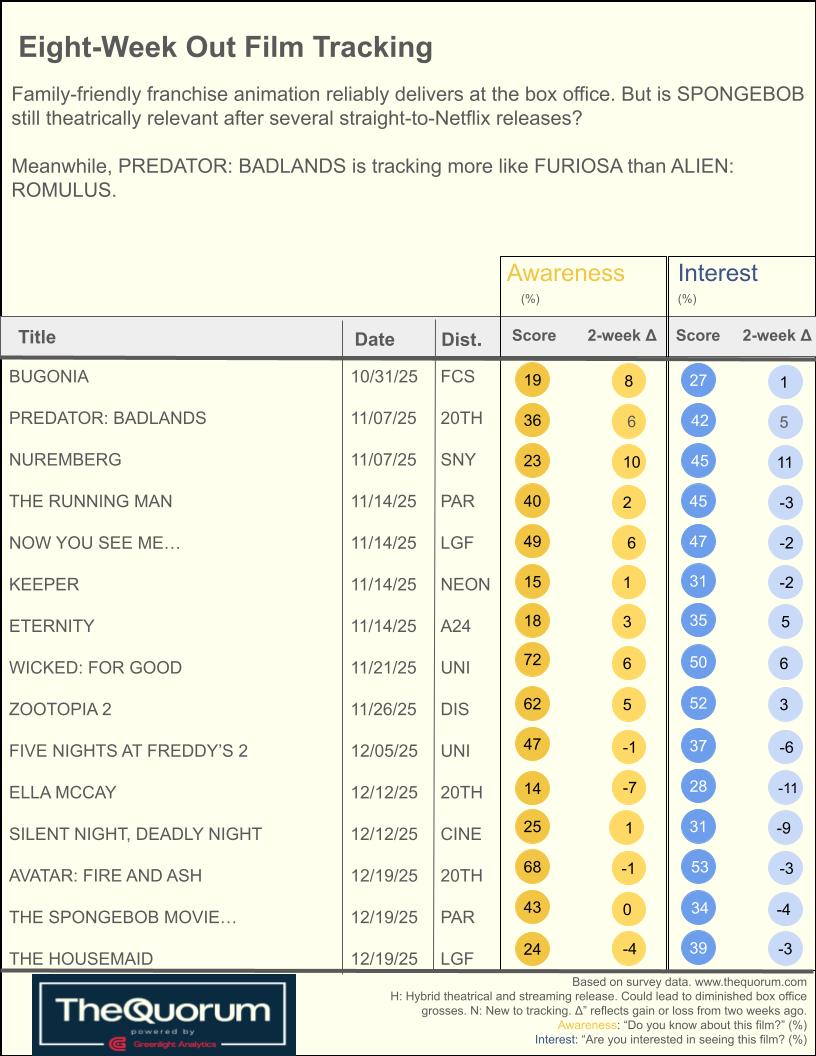
Paramount’s attempt to elevate The SpongeBob Movie: Search for SquarePants into a holiday theatrical
franchise debuts with strong interest and awareness on the latest early tracking chart from The Quorum… |
Have a great week,
Matt
Got a question, comment, complaint, or better ways Comcast can suck up
to Trump than donating to the White House ballroom? Email me at Matt@puck.news or call/text me at 310-804-3198. |
Need help? Review our FAQ page or contact us for assistance. For brand partnerships, email ads@puck.news. You received this email because you signed up to receive emails from Puck, or as part of your Puck account associated with {{customer.email}}. To stop receiving this newsletter and/or manage all your email preferences, click here. |
Puck is published by Heat Media LLC. 107 Greenwich St, New York, NY 10006 |
|
|
|