{{ 'now' | timezone: 'America/New_York' | date: '%b %d, %Y' }} |
|
|
Welcome back to What I’m Hearing, and a big thanks to CBS News editor-in-chief Bari
Weiss, who just got me to watch a full 60 Minutes segment for the first time in a while. Killing a perfectly normal news report only to have it leak online and be watched by millions via CBS’s own Canadian broadcast partner may be the saddest/funniest way to end a wild year at Paramount. And no matter what happens to Bari, 60
Minutes, and/or the First Amendment, we’ll always have the term “Weissand Effect.”
Today, despite her last-minute effort, Bari Weiss is not Hollywood’s Villain of the Year. Competition was that tough in 2025. Scroll down
for this year’s honoree, plus the distinguished runners up, and a few holiday news items.
Programming note: This week on The Town, Lucas Shaw and I awarded the Townies (parts one and two) for the best and worst of 2025, Senator Elizabeth Warren unveiled her plan to stop the Warners sale, and RedBird’s Gerry Cardinale pressed the
Paramount case to WBD shareholders. Subscribe here and here.
PSA: Need a last-minute gift for someone who already has a Bugonia
candle and a subscription to Club Chalamet? Give a Puck membership here! Got a news tip or an idea for me? Just reply to this email or message me on Signal at 310-804-3198.
Mentioned in this
issue: Larry Ellison, Kevin Hart, Adam Aron, Andrew Garfield, Sam Altman, Barry Diller, David Zaslav, Jason Kilar, Brendan Carr, Rupert Murdoch, Bob Iger, Simon Halls, Charlie Kirk, Josh Kushner, Luca Guadagnino, John Malone, Jimmy Kimmel, Ted
Cruz, Allen Grubman, Tim Leiweke, George Clooney, Gunnar Wiedenfels, Brad Pitt, Kathleen Kennedy, Nelson Peltz, Mark Zuckerberg, Ike Perlmutter, and… the QAnon Shaman.
Before we start, some news: |
- Next
moves in World War WBD: Thankfully we’re getting the rest of this week off from Warner Bros. sale news, I’m told. So we’ll need to wait for the next obvious chess moves: The WBD shareholders, knowing that Paramount’s $30 per share offer is not “best and final,” will almost certainly reject the latest bid, even with Larry Ellison’s personal backing. Then, in January, the Ellisons will up their offer just enough to clearly beat Netflix, even if shareholders accept
the higher valuation of the TV networks. Then, Netflix will likely match the offer, and Paramount will have to decide if they’d like to go even higher. Until then, everyone will just talk about Bari Weiss.
- Speaking of…: As someone who has run a news organization, I’d say Weiss has every right to ask for further work on a 60 Minutes story. The big mistake here—if it was a mistake, and not an intervention from outside the building—is doing it at
the last minute, after everything was signed off, and without buy-in from the correspondent involved. Pretty basic newsroom procedure, so this blowup is on David Ellison for empowering someone so inexperienced.
- Lumps of coal at Hartbeat: Kevin Hart may play Santa’s elf in holiday commercials, but his Hartbeat production company just let go of nearly its entire television department. It’s part of a
“restructuring” heading into 2026 and comes about a year after the company fired nearly a quarter of its 80 or so staff. (The C.E.O and other top execs then left.) Hartbeat is hardly the only victim of the content recession—the impact of the pullback is maybe the defining industry story of 2025. But after
recapitalizing a few years ago with $100 million from private equity firm Abry Partners, Hartbeat now has only the highlights show Good Sports (Amazon) and Kimora: Life in the Fab Lane (E!) on the air, with a scripted Barbershop series coming to Amazon and the animated Lil Kev returning to BET+. I’m told the plan is to rebuild and stay in the TV business, but a rep for Hartbeat declined to comment.
|
|
|
A MESSAGE FROM OUR SPONSOR |
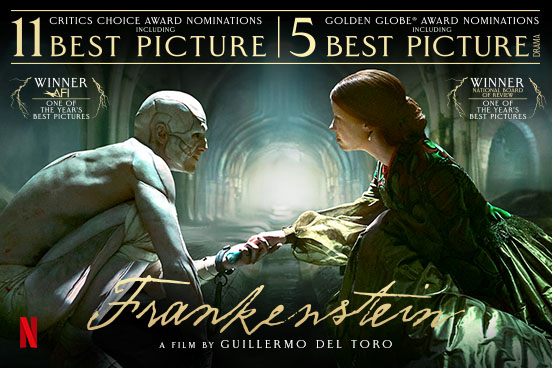
5 Golden Globes® & 11 Critics Choice Awards |
"Will be considered a classic for lifetimes to come." |
Critics Choice and Golden Globe® Award-nominated Director Guillermo del Toro shares his
lifelong passion for bringing FRANKENSTEIN to the screen. He describes the filmmaking process as a deeply personal, almost religious experience, as he delves into themes of grief and the longing for love and belonging, revealing how the heart of the story lies in what it means to become a father after being a son. |
|
|
- Home
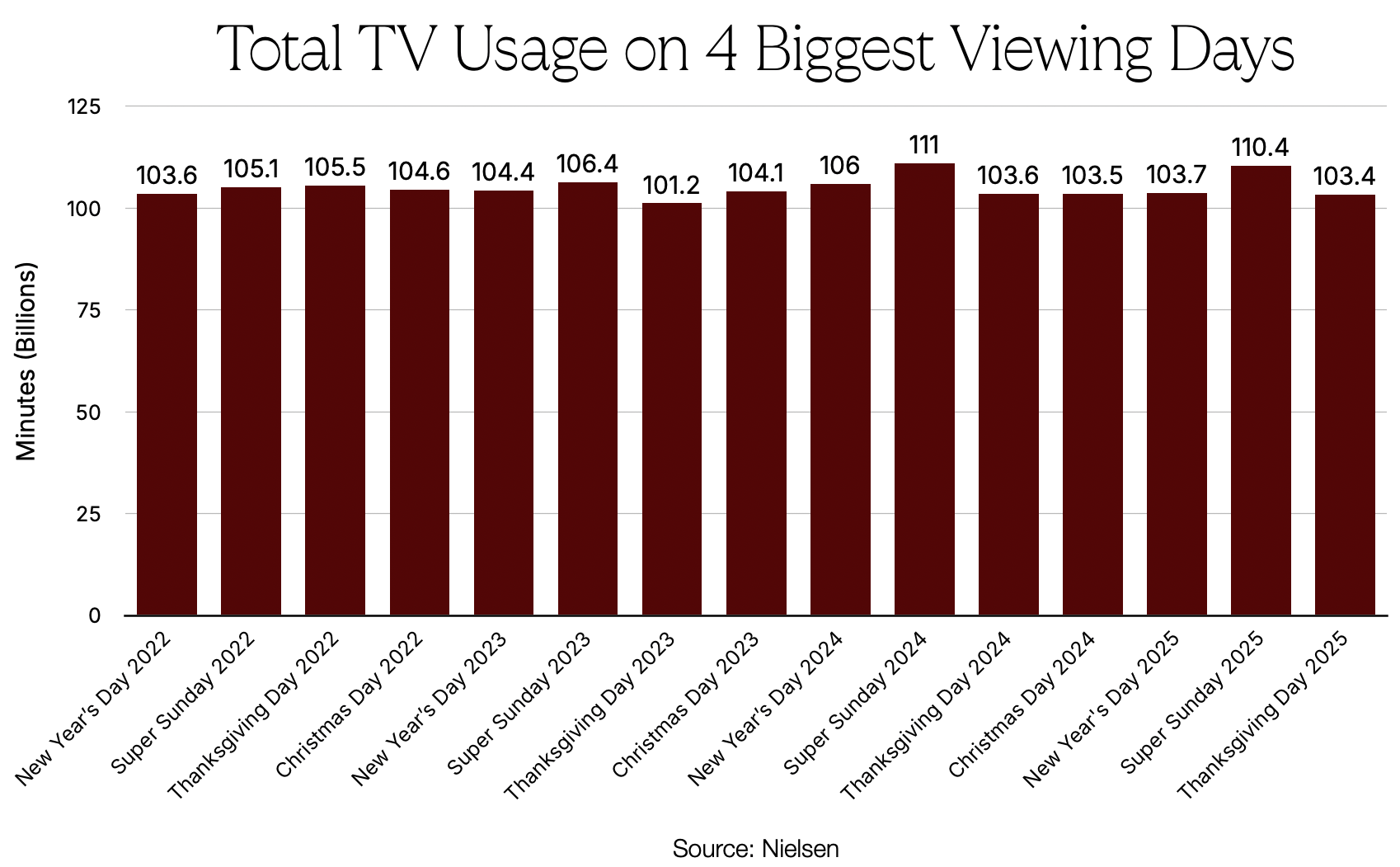
(watching Netflix) for the holidays: Nielsen revealed yesterday that Stranger Things generated 8.4 billion minutes viewed in the U.S. during Thanksgiving week, when the first four episodes of the final season dropped. That’s a record, but overall viewing across TV and streaming on Turkey Day was flat this year. With three new episodes arriving on Christmas, will that juice numbers? Nielsen counts about 80 billion minutes of domestic TV viewing on a typical day. But on the four
biggest holidays for couch potatoes—Thanksgiving, Christmas, New Year’s Day, and Super Bowl Sunday—viewership spikes 25 to 30 percent. Hence why Netflix and others are leaning in with their biggest franchises to complement sports…
|
Now, without further delay, after carefully reviewing qualified contenders from the worlds of politics,
media, tech, and our own entertainment backyard, only one can be crowned Hollywood’s Villain of the Year… |
|
|
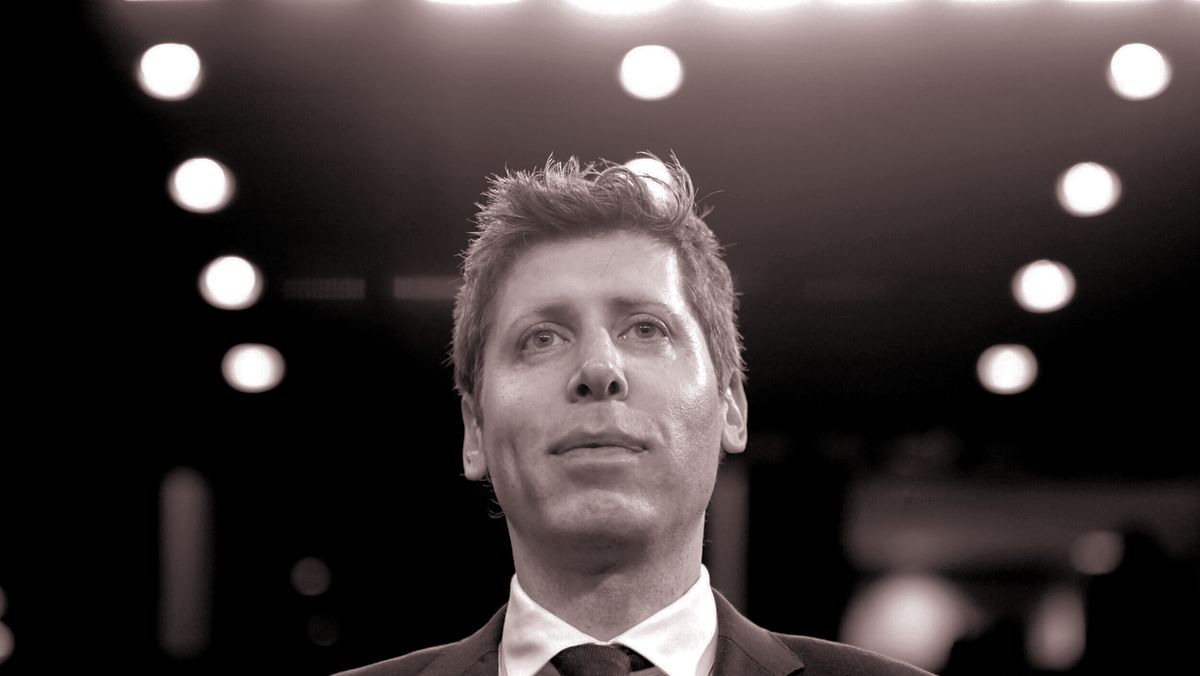
A year before the OpenAI C.E.O. gets the Social Network movie treatment, the
slop-ification of entertainment took a major leap in 2025 thanks to a copyright infringement hub called Sora 2 and Altman’s brazen courtship of Disney. |
|
|
I know… it’s hard to look back at what happened to Hollywood in 2025 and not be alarmed by the swift
acceleration of its years-long decline. One of the original movie studios, Paramount, was finally offloaded to a Silicon Valley oligarch for just $8 billion, a fraction of its worth only five years ago. A second of the five remaining studios, Warner Bros., will either be ingested by its once-dismissed tech rival Netflix in one of the iciest revenge moves in media history—maybe since the ever-spiteful Barry Diller bought People magazine nearly 50 years after it
threatened to out him as gay?—or sold to that same oligarch so he and his son can gleefully fire thousands of people, including many they just inherited from the first studio. With the vast majority of traditional content companies downsizing, signs of the now-familiar “secular decline” are all over town, from the dormant production facilities to the rolling talent agency layoffs to how easy it is to get a 1 p.m. reservation at Nerano or The Grill.
But this didn’t just happen, of
course. The perilous position of Warner Bros. and HBO Max, and their vulnerability to being flipped like a duplex by late-stage cable TV robber barons John Malone and David Zaslav, can be traced all the way back to the failure of the AOL–Time Warner merger in 2001. Paramount’s fire sale came nearly two decades after its fruitless litigation with YouTube, the onetime copyright infringement machine that just bought the Oscars. In one decision after another, the
Hollywood studios bungled, and then doubled down on bungling, the digital revolution.
It’s crazy to think that the studios actually came up with a Netflix killer, Hulu, in the late 2000s—the exact moment when teamwork could have starved the nascent interloper that would eventually grow large enough to swallow Warner Bros. But despite all the advantages, and a leader in Jason Kilar who literally screamed about the coming linear TV apocalypse until he was fired,
the Hulu collaboration proved as doomed as MySpace, which a mid-2000s News Corp. was convinced would solve its digital problems. Instead, while Rupert Murdoch was spending $580 million for clout and posing for the cover of Wired’s print magazine—I just laughed while typing that—Facebook was stealing its users and positioning itself to buy up competitors, regulation-free, thus preventing Mark Zuckerberg from ever getting MySpace-d in the
future.
All of which is to say… it’s happening again. We can all see it: The A.I. revolution is slowly, and now all at once, coming for the video industry. And this year OpenAI and its kinda creepy C.E.O., Sam Altman, took maybe the biggest step yet in that incursion. Not just by launching Sora 2, its A.I.-empowered text-to-video tool: OpenAI and its ChatGPT app, which were first developed with an altruistic mission statement only to be perverted—sorry,
pivoted—into a for-profit media company, have already been the scourge of the professional content industry for years, facing mountains of litigation and the ire of everyone from news publishers to book authors to copyright and trademark holders. And not because OpenAI is particularly unique in its function; there are tons of similar A.I. video products out there, including Google’s Veo and Luma AI. In fact, Google is arguably the more sinister player here.
But Altman
ascends to Villain of the Year status by launching Sora 2 with the backing of tens of billions of dollars from blue-chip investors but without copyright guardrails or effective name-image-likeness protections, and an attitude of dismissive arrogance unique even for a large tech company leader. Opt-out, bitches!, Altman all but screamed to content owners in late September. I added the bitches part, but the move was as brazen a piss-off gesture to the content industry as it has
seen since Napster… or MegaUpload… or the early days of YouTube and “Lazy Sunday.”
Altman backtracked days later, claiming he was “learning quickly” and “taking feedback.” Sure… He had demonstrated Sora 2 to various stakeholders in advance, so he knew exactly what he was doing. He offered no apology, no acknowledgement of the rights he was trampling, only an invitation—an opportunity, as he framed it—for content owners to partner on the new A.I. slop firehose and maybe even make
some money on licensing. It was the classic “break things and beg forgiveness” strategy, an example for all the other OpenAI wannabes who constantly send press releases about their “next-generation” tools. And the depressing thing is how well it worked. |
By the end of ’25, Bob Iger, the C.E.O. of Disney and self-styled Mayor of Hollywood, had
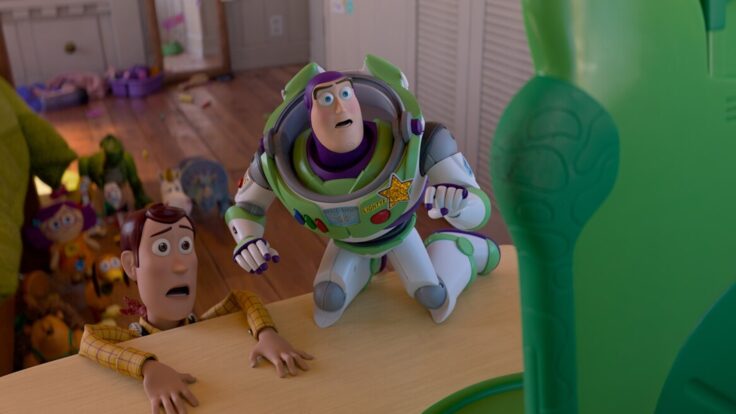
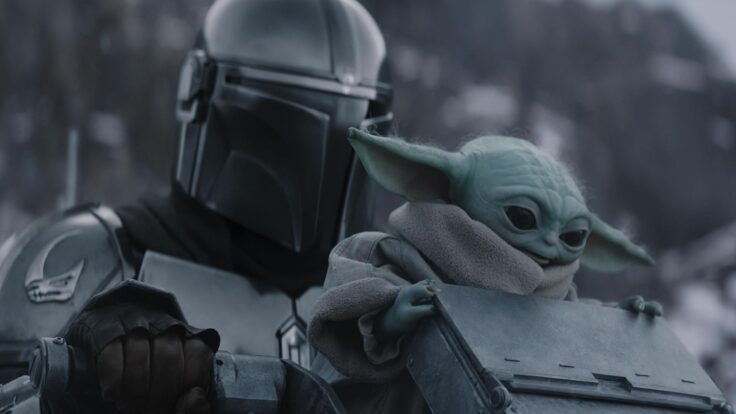
jumped at the opportunity to partner with Altman, handing over more than 200 characters—everything from Frozen’s Anna and Elsa to Toy Story’s Woody and Buzz to Star Wars’s Yoda and Darth Vader—for Sora 2 users to manipulate and share as they please. A.I. is an “important moment for our industry,” Iger declared in a carefully worded statement, “and through this collaboration with OpenAI we will thoughtfully and responsibly extend the reach of our storytelling through
generative AI, while respecting and protecting creators and their works.” He then went on CNBC with Altman to claim the deal “does not in any way represent a threat to the creators at all.” Which, of course, is exactly how he knew it would be received around town. The whole thing sounded like a mix of wishful thinking on Iger’s part and a shrewd flex by Altman, with the balance of power tipped decidedly in OpenAI’s favor.
We can debate why Iger did this deal. My colleagues Ian
Krietzberg and Julia Alexander have thoughts here. I think Iger, whose strength has never been his digital dealmaking (cough Maker Studios… cough cough Club Penguin), likely sees OpenAI as a chance to be perceived as tech-savvy—and maybe give the Disney stock a much-needed bounce—at a time when A.I. investments are driving the economy.
Disney will at least gain a seat at the powerful player’s table as generative A.I. further develops over the next three years; if user-generated content takes off in popularity, Disney will be home to branded UGC, a potential differentiator, just like it’s home to other franchise content like Marvel or Hamilton or Taylor Swift. Sora 2 will also provide a curated stream of user-generated videos for Disney+, if that moves the needle (it likely doesn’t, at least
not in the short term), and Disney gets to use ChatGPT for its internal chatbot, DisneyGPT, which is already in Beta use among some employees. Iger also has a relationship with Josh Kushner, whose Thrive Capital is a big OpenAI backer and who previously employed Iger as a venture partner. Read into that what you’d like. Disney invested $1 billion in OpenAI, acquiring a tiny
stake in a company that could become the next Google. So there’s that, I guess.
But, man, what a dream scenario for Altman—and the worst kind of reward for a guy who has never shown much respect for creative rights, and whose definition of “fair use” would get him laughed out of a Copyright Society meeting. Now he’s gone from Enemy of Hollywood in September to an official partner of the biggest and most influential studio in Hollywood just three months later—with ammunition to go out and
make favorable slop-ification deals with other major rightsholders, which I’m told is happening now. If Sora can leverage Mickey Mouse and the Minions and Charlie Brown to boost downloads and become a mainstream entertainment app, it gets a major leg up in the war for A.I. dominance. Maybe.
And what does Disney get? According to
Bloomberg, the deal was done entirely in stock, so no big windfall licensing fee, at least not at first. (Despite what Iger touted on CNBC.) And the truth is that, despite all the supposed I.P. protections—no talent voices or likenesses, guardrails against inappropriate use, etcetera—Disney has no
idea how its characters will be used and, likely, abused by the general public. I’d guess the chances are pretty high of Homer Simpson all of a sudden spouting Hitler propaganda… or Disney princesses appearing in various states of undress… or Yoda and Moana storming the U.S. Capitol alongside the QAnon Shaman on January 6. |
|
|
A MESSAGE FROM OUR SPONSOR |
5 Golden Globes® & 11 Critics Choice Awards |
"Will be considered a classic for lifetimes to come." |
Critics Choice and Golden Globe® Award-nominated Director Guillermo del Toro shares his
lifelong passion for bringing FRANKENSTEIN to the screen. He describes the filmmaking process as a deeply personal, almost religious experience, as he delves into themes of grief and the longing for love and belonging, revealing how the heart of the story lies in what it means to become a father after being a son. |
|
|
Yes, this already happens on the internet, but it’s never been sanctioned by Disney. In fact, the
company has been next-level aggressive in protecting its characters, often through threats and litigation. (Just ask any middle school that has tried to stage an unlicensed production of The Little Mermaid.) Disney sued Midjourney earlier this year over similar misappropriation issues, the company recently went after Meta over Disney character A.I. bots, and it got the startup Character.AI to take down
similar chatbots. The same day the OpenAI deal was announced, Disney threatened Google, which suggests the overall endgame here is to bring the world’s most powerful tech platform to the table. If so, great. But at what cost?
Regardless, the big winner here is Altman, who starts 2026 with major challenges in the A.I. arms race but the surprise backing of the world’s premier content owner. The generative A.I. revolution is here, and while the outputs of Sora 2 and other tools are currently
very short and minimally competitive with traditional media, it’s still early. The Trump administration seems to want to give A.I. companies carte blanche. A.I. songs are gaining traction, just like Napster hit before YouTube.
This summer I read the script for Artificial, the Luca Guadagnino film that has finished shooting with Andrew
Garfield as Altman and is aiming for release next year via Amazon-MGM—amusing because Amazon invests in Anthropic, an OpenAI rival. If Artificial hits, it could represent a full-on Social Network moment for Altman, who is depicted as a master schemer who manipulates his reluctant colleagues into deploying A.I. for profit and personal benefit at the expense of safety and human civilization. The fact that Disney felt it should jump into bed with this guy while
it chooses to fight with so many other smaller A.I. companies says everything about the current power dynamic in media and technology—and about the diminished state of Hollywood in 2025.
Previous Villains of the Year…
2024: The It Ends With Us publicists
2023:
Nelson Peltz, Ike Perlmutter, and Jay Rasulo
2022: Gunnar Wiedenfels, Warner Bros. Discovery
2021:
Adam Aron, AMC Theatres |
And now, the other nominees for Villain of the Year…
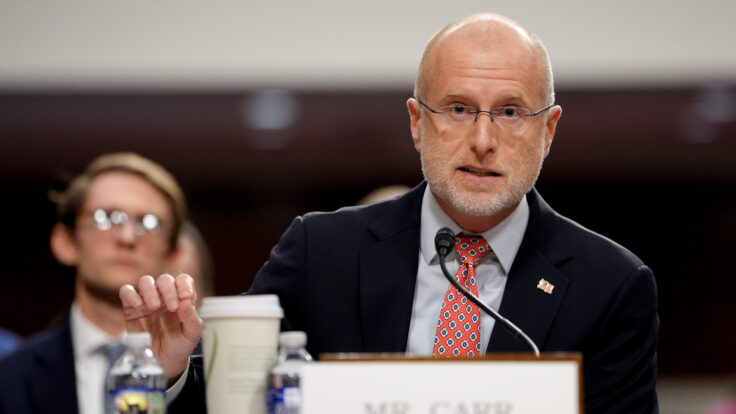
Brendan Carr—Trump’s
loose-jawed F.C.C. marionette ranks a close second, thanks to his general media trolling… and that time when he successfully pressured two TV station groups and, ultimately, The Walt Disney Co. into temporarily dropping Jimmy Kimmel over some fairly benign Charlie Kirk comments. And… also for later backtracking and insisting with a straight face that the stations “made these business decisions on their own” when MAGA influencers and even Ted F-ing
Cruz freaked out over the First Amendment implications.
Bari Weiss—This nomination is less for Weiss’s particular acts as head of CBS News—of course she’s intervening at 60 Minutes to placate Trump; the perception of “balance” is kinda the only reason she’s there. It’s more for Weiss as an empty-vessel avatar of the entire Ellison business strategy: Media M&A via presidential backscratching, all dressed up in thought-leader
drag. The amusing thing is that Weiss seems to believe she and her Free Press are something more than a $150 million lamb shank thrown to a snarling president. Another town hall? Sure, Bari. In a way, it’s adorable.
Allen Grubman—For some reason, David Zaslav’s longtime deal lawyer refuses to sit his client down and explain that he’s already very rich, so maybe it’s a terrible, terrible look to engineer a Warner Bros. Discovery compensation
package that delivers a fake-sounding $600 million payday upon the sale of shrinking media assets—the kind of grotesque profiteering off the work of the creative class that might even cause whispers and side-eyes from the celebrity dinner party crowd he so desperately covets.
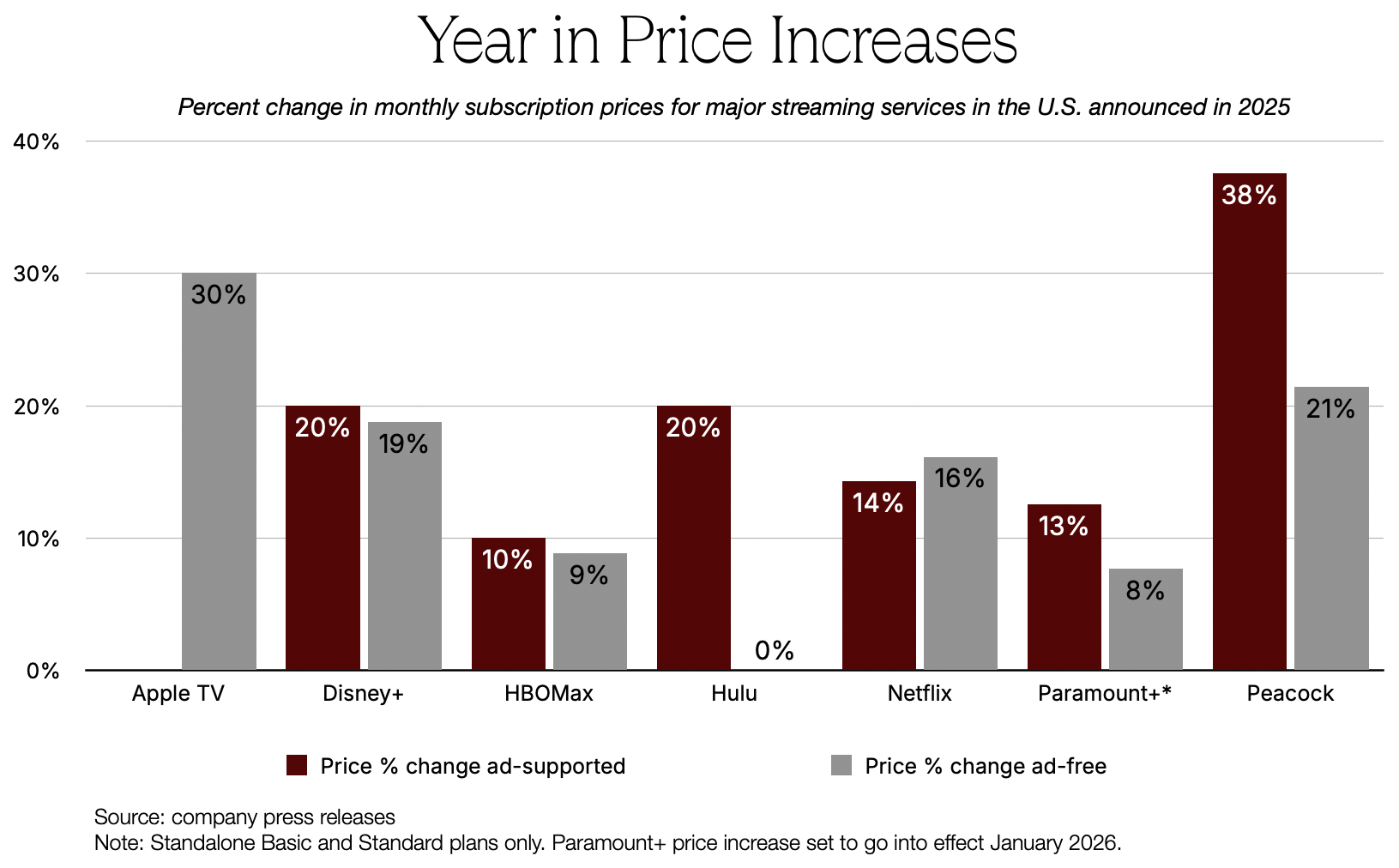
The Price Hikes—What is this, cable TV? At some point, the streaming service price increases will backfire. Unless, of course, the services all consolidate and consumers don’t have a choice…
|
Tim Leiweke—Remember when the Trump administration promised some accountability in the, uh,
legally ambiguous live events business? Instead, the former AEG leader and Irving Azoff partner scored a surprise Trump pardon—bigfooting his own Justice department—for allegedly rigging bids for an arena in Texas. We quickly learned it was only after the pardon was suggested to the president by a former Republican lawmaker following a round of golf.
Simon Halls—The talent publicist probably should have been on the naughty list last year
for advising George Clooney to deny a Times report that he and Brad Pitt were paid $35 million each for Wolfs, a fee that I’ve since confirmed is accurate. Not a good look for Clooney, son of a journalist and arch defender of press freedom, to have one of the shiftiest flacks in town doing his press. But this year, Halls also had client Kathleen Kennedy deny that she’s exiting her role at Lucasfilm, even though a plan has been
in place since last year. And Halls consistently comes up in my conversations with media people as the most awful P.R. person to deal with these days. Villainous, even. |
A24’s Marty Supreme marketing may be very online, but awareness for Sony’s rival Anaconda
is much higher, according to the latest tracking chart from The Quorum… |
Have a great holiday,
Matt
Got a question, comment, complaint, or one wish you would wish this holiday season? Email me at Matt@puck.news or call/text me at 310-804-3198. |
Need help? Review our
FAQ page or contact us for assistance. For brand partnerships, email ads@puck.news.
You received this email because you signed up to receive emails from Puck, or as part of your Puck account associated with {{customer.email}}. To stop receiving this newsletter and/or manage all your email preferences, click here. |
Puck is published by Heat Media LLC. 107 Greenwich St., New York, NY 10006 |
|
|
|


_01KD65T1H12GTNF63TQ03FV33Q.jpg)