Welcome back to What I’m Hearing...
Merry Christmas Eve Eve from rainy L.A. to wherever you’re celebrating.
There’s still time for Santa to make your team’s holiday bright with a membership to Puck, our new media company covering power and influence in Hollywood, Silicon Valley, Washington and Wall Street.
Sponsored by Amazon Prime Video 
Thursday Thoughts (Extended holiday notebook dump edition)…
-Globes vs. Critics Choice buzz: With January events now victims of Omicron, the Critics Choice Awards can’t even try to “replace” the Golden Globes, which caught a break by getting canceled. With no shows, films are now left to generate whatever buzz they can. Everyone is ignoring the Globes and focusing on Critics Choice in marketing (though Disney congratulated its Globes noms on social media, and privately, I’m told, several nominees have thanked the H.F.P.A.). But in the real world? Sprout Social, the media agency, ran an analysis of #goldenglobes and #criticschoiceawards from Nov. 21 to Dec. 21 and found this:
Total Engagements Globes: 3.1 million Critics Choice: 751,538
Positive Sentiment Globes: 82 percent Critics Choice: 64 percent
The takeaway: Even with the diversity scandal, the muted coverage of the Globes noms, and the extra attention on Critics Choice, regular people—the kind who might actually pay to see one of these movies—far prefer the Globes and think more positively about those noms.
-Mickey’s tech-savvy attorney: Disney’s hiring of Spotify’s Horacio Gutierrez to replace Alan Braverman as general counsel is surprising, especially since I know Disney was down the road with Uber’s top lawyer, Tony West, and Gutierrez is a vocal critic of Apple, a big Disney partner. Interesting that Chapek wanted a tech person, especially since Braverman was a career Disney/ABC guy. Now lawyers all over L.A. are on the prowl because a new studio G.C. opens the door for law firms to score a coveted client. I remember that happened when John Rogovin replaced John Schulman at Warner Bros. Many millions in billable hours are at stake.
-L.A. D.A.’s Hollywood earful: Producer Jamie Patricof has restarted his “Lunch with Jamie” gatherings, and I’m told the group really laid into guest speaker George Gascon, L.A.’s controversial district attorney, on the recent Zoom. Maybe Gascon thought the showbiz group—including actress-activist Alyssa Milano, former Machinima C.E.O. Chad Gutstein, and h.wood co-founder John Terzian—would embrace his progressive agenda. But with rising homicides, including the recent murder of Jackie Avant, Ted Sarandos’ mother-in-law, and soaring thefts and robberies, Gascon faced a slew of hostile questions. “It was ugly,” one participant told me.
-Succession “scandal” postscript: Jeremy Strong’s team is deciding whether he should do any press during the upcoming Emmy season. After that infamous New Yorker profile sparked ridiculous “defenses” of Strong’s work process from the likes of Aaron Sorkin and Adam McKay, Strong canceled a planned Vanity Fair interview after the finale aired. (Fun fact: The Succession cast was set for a V.F. cover pre-Season 3. But show producer Frank Rich, who also writes for New York, re-directed that first cover story to his own outlet, leaving V.F. scorned.) I’m on record saying that Strong is already a shoo-in for another Emmy, so, in Kendall Roy’s words, the baller move would be to ghost the awards press.
And now, after much consideration, and many, many candidates, I present Hollywood’s Villain of the Year…
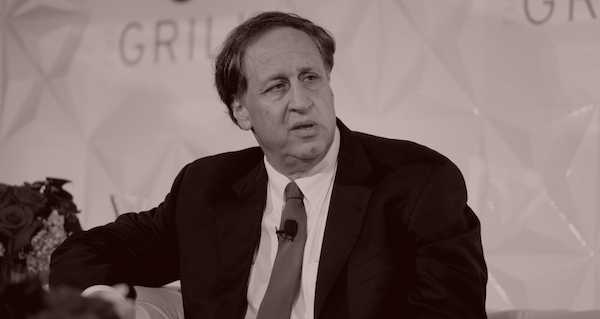
AMC Entertainment’s “Ape” C.E.O. was caught with his pants down (once, literally), until a bunch of meme traders gave him an extraordinary lifeline—which he used to benefit himself, mostly. To best understand the bold daylight heist that has been committed at AMC Entertainment, let’s go back to August 2019. That’s when C.E.O. Adam Aron announced layoffs and a restructuring, even as global box office was headed for a record $42.5 billion year. Investors, along with any semi-coherent person, saw the Netflix revolution as probably a bad thing, long-term, for movie theaters, and that AMC, as the world’s largest chain, would be hit the hardest. The company’s stock floundered. And that was before the pandemic.
Cut to March 2020, and we all know the story: AMC shut down its 10,000 or so screens and laid off or furloughed most of its roughly 30,000 employees. Various hail marys ensued: Aron raised $500 million from the bond market and renegotiated leases, but it wasn’t nearly enough. Burning through $100 million a month, with $6 billion in debt, AMC felt heat from Apollo, one of its biggest creditors, to declare bankruptcy, just as smaller chains like Alamo Drafthouse and Pacific Theaters (owner of Arclight) had done. Aron refused, no doubt suspecting Chapter 11 might result in his ouster. Instead, he resorted to two unusual “at-the-market” equity offerings, where a company sells new shares at market prices to any random investor. In January 2021, AMC raised a surprising $917 million, despite a stock price around $2. “Today, the sun is shining on AMC,” Aron declared.
But with Covid raging, studios delaying titles and Warner Bros. and Disney going day-and-date for big movies, institutional investors weren’t feeling the warmth. The theatrical window, sacrosanct for a century, was forever shattered. Depressing stuff, if your entire business depends on that window.
Then something miraculous happened. Two days after the raise, AMC got memed. Retail investors, banding together on Reddit, decided they’d like to stick it to the hedge funds, first with GameStop and then with a doomed movie theater outfit. In 72 hours, AMC stock soared nearly 500 percent. By the end of January, it was at $20. Millions of self-described “AMC Apes” (as in Rise of the Planet of the…) had decided on social media, for no rational reason whatsoever, to pour billions into the company. By the middle of the year, the stock had hit $72 and the Apes owned 80 percent of AMC, with many vowing to never sell. A company whose last major innovation was the cupholder armrest in 1981 was suddenly trading like the hottest fin-tech I.P.O.. It made no sense.
ADVERTISEMENT
Prime Video presents the Amazon Original comedy series HARLEM, following four stylish and ambitious best girlfriends in Harlem, New York City, the mecca of Black culture in America. Together, they level up from their 20s into the next phase of their careers, relationships, and big city dreams. 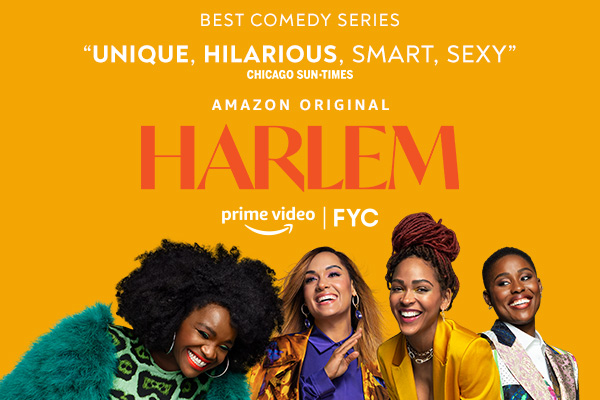
HARLEM is awards eligible and available for guild members at ConsiderAmazon.com.
So what did Aron do with this unearned, lightning strike of good luck? I’d love to say he invested heavily in the AMC product, using the windfall to revamp the theatrical experience, innovate on flexible pricing, create more ways to welcome people back to moviegoing. After all, the state of exhibition has become a sad joke in Hollywood. Studio film budgets have soared, yet filmmakers often feel like Michelin-starred chefs whose delicacies are presented by minimum-wage servers on dirty, chipped plates. Worse, they have no control over any of it.
Theater owners pocket about half the cost of a movie ticket (and every cent of that $8 popcorn), yet, with notable exceptions, most mass-market theaters suck. You know this if you’ve visited one outside Los Angeles or New York, which you probably haven’t. Aron could have used the Apes cash and the pandemic shutdown to do something about it, maybe even working with the studios on this issue. You know, safeguarding the future of a 101-year old company and the industry in which it operates—ostensibly the job of its C.E.O.
Instead, Aron mostly lined his own pockets. In November, he sold $25 million worth of stock, citing “estate planning” (he’s 67), and pointedly not saying that the stock was trading at 100 times what any reasonable person would say it is worth. Aron had never before sold any AMC stock since joining the company as C.E.O. in 2016. Then on Dec. 7, he dumped another $9.65 million, and indicated he’s planning on selling a lot more.
Aron isn’t alone in cashing out, of course. Private equity firm Silver Lake, AMC’s second-largest shareholder, sold its entire holding for $713 million in January, right when the stock went through the roof. Dalian Wanda, the Chinese company that had controlled AMC since 2012, did the same, cashing out almost entirely by May. Silver Lake and Wanda must feel like they dodged a huge bullet, Matrix-style.
Aron’s C-suite is also in on the hustle. AMC C.F.O. Sean Goodman has sold all of his available shares, netting about $565,000. He’s still got 600,000 that haven’t vested, and I picture he and the others at the Kansas headquarters, crossing off each day on an oversized novelty calendar until they can dump more. Overall, AMC’s top executives and board members have sold more than $80 million in stock this year. Not a single exec has made a stock purchase outside of grants as part of their compensation, according to Bloomberg. (AMC’s spokesperson Ryan Noonan did not respond to my request for comment.)
None of this is illegal, of course, though perhaps it should be regulated more thoroughly. Executives dump shares all the time, and more are doing so these days ahead of proposed tax law changes. But Adam Aron ain’t Mark Zuckerberg. To say he leaned into the meme is an understatement. By summer, Aron had largely transformed into a carnival barker for the Apes. He cheerleads the stock with Ape memes on Twitter, including a Godfather parody with his face as “The Apefather.” He declared that AMC would accept Dogecoin and show UFC fights and launch a popcorn business, three Ape requests. He references Subreddit threads on earnings calls and donated to a gorilla charity. And he appears in videos with Ape YouTubers, including a bizarre exchange in June with “Trey’s Trades,” during which he revealed himself to be pantsless. None of this, of course, has anything to do with AMC’s actual business, which is still in terrible shape.
Yes, I know, the Apes are now AMC’s shareholders, and Aron works for them. He did warn in June not to buy the stock “unless you are prepared to incur the risk of losing all or a substantial portion of your investment.” He’s also not only taking money out of the company. He raised $2 billion in liquidity for growth, and he wanted more but was shot down by the Apes, who didn’t want their shares diluted. AMC has taken over theaters, including many of the shuttered Pacific locations, and closed underperformers. But that’s also not great for Hollywood, especially smaller distributors, which fear AMC will use its Ape windfall to all but monopolize the theater business. “Say goodbye to your 50 percent film rental,” one distribution veteran emailed me earlier this year. “25 percent will be the new normal.”
Aron also spent millions on that odd branding campaign with Nicole Kidman. It’s not a bad idea to promote AMC and moviegoing, but these lame ads have mostly served two functions: Requiring moviegoers to now sit through two AMC promos before every feature, and reminding everyone that Kidman’s new movie, Being the Ricardos, is available for free online to Amazon Prime subscribers. That’s the definition of a facepalm.
ADVERTISEMENT 
I’m not one of those people who automatically bemoan C.E.O. stock sales or compensation packages, especially when shareholders are benefitting from the leadership. If Netflix wants to pay co-C.E.O. Ted Sarandos $40 million next year as reward for performance, go for it. But this is not that. This is shitty. AMC’s C.E.O. is on social media cheerleading the stock as all these unsophisticated investors turn over their savings, all while cashing out personally. And when some of them called him on it, he tweeted, “I STILL HAVE WELL OVER 2 MILLION OWNED/GRANTED AMC SHARES. I believe in AMC.” Sure, OK, but many of those haven’t vested, and he also presumably knows the stock is insanely overvalued. Many investors “were caught off-guard by the extent to which Aron sold shares between early November and mid-December,” Alicia Reese, an analyst at Wedbush, told CNBC. Of course they were. Why would the Ape-father ever sell them out?
Meanwhile, the AMC stock is falling back to earth. It’s now at about $28, down from that $72 high in June. But it’s still way above pre-Ape lows, and about 30 times next year’s estimated adjusted EBITDA, according to analyst Eric Handler. Plenty of the Apes have lost money, and more will almost certainly lose everything when the meme party ends, all while Aron and Co. are getting rich. “They’re walking a fine line by cashing in on the elevated share price while the retail shareholders have committed to holding at all costs,” Reese added. Rich Greenfield, the streaming-first analyst who has been a target of Ape harassment, is even more blunt. “In my 27 years covering the media industry, I have never seen a C.E.O. mislead investors this badly for their own personal financial benefit, and that includes Viacom’s Philippe Dauman,” he told me today. Ouch.
Why isn’t Hollywood talking more about this? Maybe Chris Nolan, Steven Spielberg and other Michelin-starred filmmakers prefer to believe everyone can just call up IMAX and pop over to Playa Vista for an afternoon screening, like they can. But this situation at AMC is a ticking time bomb, and it impacts the entire filmmaking ecosystem. Anyone who cares about movies in theaters should be angry about what’s going on. I know I am.
Bonus! Hollywood’s 5 Biggest Bungles of the Year
Behold my first annual, wholly unscientific, entirely subjective assessment of opportunities lost, bad judgment and colossal mismanagement.
The Knives Out Heist—As a general rule, C.E.O.s try not to say false things on earnings calls. Yet there was Lionsgate’s Jon Feltheimer in February, delighting shareholders with news that the studio was moving forward with a sequel to Knives Out, Rian Johnson’s $311 million-grossing whodunit. Feltheimer and producer MRC thought the right to make a first-and-last offer would secure the project. But welcome to 2021, guys, where a month later, Netflix swooped in and bought two sequels from Johnson and partner Ram Bergman for a cool $469 million. A strong contender for embarrassment of the year.
The Scarlett Johansson Statement—Ask a Rogers & Cowan intern whether it’s good PR for a Fortune 500 company to salary-shame one of the most famous actresses in the world and cite her “callous disregard” for the Covid pandemic. You’ll probably get a different answer than what Disney decided to do in response to Johansson’s lawsuit over her Black Widow pay. I know there was dissent at the top over whether to issue such a fiery missive. But whoever pulled the trigger—the buck stops at C.E.O. Bob Chapek—must now know it cemented the industry sentiment that Disney’s reputation as a talent-first company is in serious peril.
The Michael Eisner Baseball Blowup—It’s been awhile since Hollywood cared about former Disney C.E.O. Eisner, but everyone loves a good failure story. And it’s hard to match what happened to Topps, the sports card company co-owned by Eisner’s Tornante and Madison Dearborn. After 70 years, Major League Baseball abruptly bailed on Topps in August for Michael Rubin’s Fanatics, despite Eisner downplaying such risk. “We are really partners with them … our brand is inextricably tied with their brand,” he was said to have told investors of MLB. Turns out, not so much. A planned $1.3 billion Topps IPO via a Mudrick Capital-backed SPAC was soon scrapped, costing Eisner a potential $600 payday. Strike three.
The AT&T Era in Hollywood—This one was easy. When AT&T announced this week that it is offloading its advertising business Xandr to Microsoft for $1 billion, it ended a truly remarkable retreat from a business everyone always knew the phone company shouldn’t have been in: Entertainment. WarnerMedia (to Discovery) and DirecTV (to a new entity with TPG) are already spun off, the value destruction complete. And remarkably, with AT&T stock down another 15 percent this year after a 25 percent drop in 2020, C.E.O. John Stankey still has a job.
The Oscars—No explanation needed.
Honorable Mentions: The Time’s Up implosion, The Last Duel, the Ted Sarandos Chappelle email, the Mike Richards vetting process, the Alec Baldwin TV interview, the Jim Gianopulos leak, the Chris Cuomo scandal, the Deadline promotion of Saudi Arabia’s Red Sea International Film Festival, and, last but not least, all those “return to the office by Labor Day” plans.
See you Sunday for Hollywood’s Hero of the Year, Matt
FOUR STORIES WE'RE TALKING ABOUT 
What to watch, read, gift, drink, and fantasize as we enter 2022. THE EDITORS 
Joe Biden's staggering unpopularity among younger voters suggests that Democrats don't have any idea what matters to their kids. PETER HAMBY 
Notes on Silicon Valley's Biden beef, the latest tech industry gossip, fundraising, and political power plays. TEDDY SCHLEIFER 
The C.E.O. of Morgan Stanley dishes on Goldman and succession, among other topics, over bespoke sushi. WILLIAM D. COHAN 
You received this message because you signed up to receive emails from Puck.
Was this email forwarded to you?
Sent to {{customer.email}}
Puck is published by Heat Media LLC.
For support, just reply to this e-mail. For brand partnerships, email ads@puck.news |


SHARE