Welcome back to What I’m Hearing...
Happy Thursday, and a friendly reminder: tomorrow is April Fool’s Day.
Speaking of fools, my Oscar viewership prediction (14.5 million) proved too low, as did the guesses of hundreds of Hollywood professionals who entered the WIH reader contest. Our winner is… Deven Damji, a student at Northwestern University, who guessed 16.4 million viewers, just under the actual total of 16.6 million. Congrats to Deven, who will be taking all of our jobs shortly!
Sponsored by WWE’s WrestleMania this Saturday, April 2 and Sunday, April 3 on Peacock 
Thursday Thoughts…
I promised myself I wouldn’t write about the Oscars again, but the Academy always seems to make a bad situation worse, so…

Did Oscars execs really ask Smith to leave? Inside the wild, emergency board of governors meeting in the aftermath of the slap fiasco—and who’s ultimately to blame. In conversation after conversation with Academy members this week, everything keeps coming back to one word. Well, one word besides grotesque and embarrassing. It’s enablement.
Remember the #MeToo movement? It wasn’t just the rapists and harassers, we all proclaimed, it was the enablers—everyone around them, who saw objectively wrong behavior and did nothing. That all changed in 2017, we declared. No more rewarding bad actors or turning a blind eye. Except it wasn’t true, of course. The obvious abusers were purged, but enablement thrives in this town, and enablement just bit the motion picture Academy in the ass.
So let’s not start at Sunday’s Oscars debasement, where a movie star who has been coddled for more than 30 years decided he could hijack the show and attack a fellow performer, then pretend nothing happened, and receive hugs from his peers, and make it all better with a speech that invoked his co-stars and family to justify the behavior—and generate a standing ovation from many of the enablers (er, attendees) in the audience.
No, let’s cut right to yesterday’s emergency board of governors meeting. It was wild, according to two people I spoke to who were on the call. Emotional. Adversarial, at times. The 54-member group that oversees a non-profit worth $1.4 billion, and its Oscars ceremony, was ostensibly gathered to rubber-stamp a “review” of Will Smith’s on-stage assault of Chris Rock. But the board also wanted to know how the hell this happened. There was open rage directed at Smith, who several governors decried as having “ruined” the Oscars. There was criticism of telecast producer Will Packer, on whose watch it all went down. And there were tough questions about how the Academy’s own leaders handled The Slap, the ugliest incident in the show’s 94-year history.
Ava Duvernay, one of three director members, was among many who pressed for specifics regarding the chain of events that led to Rock’s joke about Jada Pinkett Smith, and those 30 or so incredibly awkward minutes between The Slap and The Speech. Rita Wilson, representing the actors branch, was emotional—saying in one of her long comments that she had trouble sleeping over the past three nights. The VFX governors were predictably meticulous and logical in their queries. Why, many wondered, wasn’t Smith immediately removed from the event after striking Rock?
That’s the question, right? During her presentation, Dawn Hudson, the Academy C.E.O., dropped a bombshell: Actually, she said, she and president David Rubin had asked Smith to leave, but he refused to go. Really?, one board member responded. If that’s accurate, why wasn’t that information made public? (I’m paraphrasing here based on conversations with those two sources in the meeting.)
It’s a good point. If true, that nugget of information, which Hudson had actually mentioned to the leadership in a previous meeting, was a big deal. It meant that the Academy may have been unnecessarily taking it on the chin from many constituents—the press, the membership, and even two of the show’s co-hosts, Wanda Sykes and Amy Schumer—for seemingly condoning Smith’s behavior by leaving him out there. It also served to cover Hudson and Rubin’s own asses, a fact that didn’t go unnoticed by several governors. It wasn’t our fault, they seemed to be saying, we tried our very best to get him out and we couldn’t. One could argue that Smith should have been forcibly removed if he refused to leave. But, as I discussed on Monday, there’s logic in avoiding a potential brawl between security guards and one of the biggest movie stars in the world on live television. Hudson and Rubin’s hands were tied, they suggested.
But were they? Many governors were skeptical of the claim in the meeting, I’m told, while others wanted to go public with the detail, and within an hour, the line “Mr. Smith was asked to leave the ceremony and refused” was part of a press release announcing the investigation. Instantly, the headlines began flying, launching another news cycle and taking the focus away from the disciplinary proceeding and what Smith actually did to Rock. If the goal was to vindicate the Academy, quiet the media storm, and put the focus back on Smith, it seems to have backfired.
ADVERTISEMENT 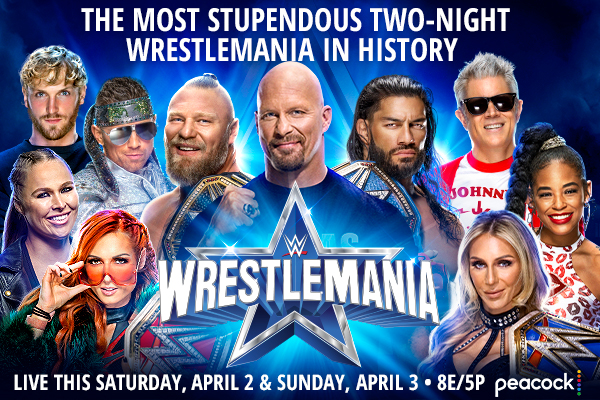
Prepare for the most thrilling, the most action-packed, the most stupendous two-night WrestleMania in history! Headlined by the Winner Take All Champion Unification Match between Roman Reigns and Brock Lesnar, WrestleMania comes to you live from AT&T Stadium in Dallas on April 2nd and 3rd at 8 PM ET on Peacock.
To me, the claim seemed overstated from the outset. Those of us who were in the Dolby Theatre on Sunday knew that neither Hudson nor Rubin—the duo with ultimate responsibility for the show—were seen communicating directly with Smith. Only Packer was spotted conversing with Smith. Though Packer, in an ABC News interview set to run tomorrow on GMA, is denying that he talked to Smith. (Packer, by the way, booked that interview with the Academy’s own TV partner without telling anyone at the Academy. Classy move.)
Predictably, Smith’s team began to push back, leading to a battle of semantics and a TMZ headline with “Academy Lied” in it. According to four sources involved in the show, however, both sides are kinda right and kinda wrong. Backstage, Hudson and Rubin did tell Smith’s publicist, Meredith O’Sullivan Wasson, as well as Packer and ABC executives, that they wanted Smith to leave. Wasson then went to Smith at his seat next to Jada and communicated the wishes. When she returned, Wasson informed the group that Smith didn’t want to exit and would think about the request.
Is that the same as “asking” Smith to leave and him “refusing”? Hudson and Rubin believe it is; Team Smith says the request wasn’t a mandate. What do you think? Regardless, it’s not exactly leadership on the part of the Academy. No disrespect, but if you are in charge, you just gotta have that conversation with Smith yourself. First of all, Wasson is a fantastic publicist and a savvy communicator, but she works for Smith. She’s his chief enabler, and she’s had that job for years. She can be expected to serve only the wishes of her client, not the Academy.
I know it’s common for executives to use publicists and other reps as conduits for tough-to-swallow information, and Wasson is said to have volunteered to deliver the message to her client. But this wasn’t like asking Smith to re-shoot his Bad Boys 3 international one-sheet. This was serious. She shouldn’t have been charged with carrying out a task that required the gravitas and authority of the persons in charge. That’s the Academy’s job, and Hudson made nearly $1 million in compensation in 2020 to have those tough conversations.
Complicating matters further, according to two sources, Packer was telling the group that Rock had actually told him that he wanted Smith to stay in his seat and accept his Oscar as planned. That, in addition to Rock’s insistence that he not file a police report, was evidence, Packer is said to have argued, that Smith should remain. Problem is, I’ve got it on good authority that Rock never said that, and he only told the LAPD backstage that he didn’t want this to become a criminal matter. Packer declined to talk to me, so I’m hoping GMA producers ask him whether he invoked Rock’s wishes to enable Smith to stay in the room—and if so, why?
There’s that word again: Enable. All that confusion and conflict backstage served to enable Smith to ride out the clock and give that Best Actor speech that he’s been waiting all of awards season—and his entire career—to give. He was further enabled by Denzel Washington, Bradley Cooper, Nicole Kidman and all those typically virtuous stars who embraced him within view of the TV cameras; and by the section of the crowd (it wasn’t everyone, not even close) that gave him that ovation. Think about it: If you’re Smith, you probably saw the standing O and believed your speech had won everyone over. I’m told Wasson advised him not to go to the Vanity Fair party, but he went anyway. (She declined to comment.) And no wonder—Smith has been insulated and enabled for so long that he likely thought the problem was solved.
The partying after the show is what seems to bug Academy members most, because it suggests Smith had no remorse, and wanted to do zero soul-searching after such a violent act. Smith posted a great apology statement the next day, presumably written by Wasson, but I gotta think that if Smith really wanted to apologize, he would have done it in a video posted to his channels, on which he is usually very active. Or donated publicly to an anti-violence charity. Or made it known that he reached out to Rock personally. He still hasn’t called Chris, I’m told. Instead, he Zoomed privately with Hudson and Rubin for a few minutes on Tuesday to apologize—and, perhaps, to implicitly try to smooth things over in advance of the board meeting on his accountability.
The enablers weren’t just in the building, either. Think of the statement that could have been made by Vanity Fair, whose new incarnation constantly touts its progressive worldview, by denying entrance to a star whose behavior that night wasn’t worthy of the event. Instead, there was Smith, dancing for celebrity onlookers to his own music, as the journalists and luxury brand C.M.O.s that now populate that party cheered and took videos for their personal Instagrams. Notably, I have noticed that some people who posted those pics and videos have since taken them down. They probably feel dirty, as they should.
So, what should the punishment be? That’s not for me to decide, of course. I know that some very prominent Academy members want Smith expelled, which could very well happen. I’m guessing he will get a one-year suspension, making him ineligible to present at next year’s Oscars, as per the tradition. He might also be banned from consideration for Emancipation, the slave drama that Apple was set to release later this year—not that anyone would vote for him now, anyway. Smith will still work; I’m sure CAA’s Richard Lovett, his longtime agent, is already strategizing a path back. (By the way, where was Lovett on Sunday night? CAA didn’t respond to that question.) But this episode will forever be part of the Will Smith Persona, and it may limit his roles and box office.
After all, post-Oprah’s couch, Tom Cruise still had the Mission: Impossible franchise to guide him back to stardom. After his anti-Semitic meltdown, Mel Gibson did behind-the-scenes work with groups like the ADL to rehab himself. Gibson was a talented director and still works as an actor, but he never recaptured the star power of his pre-meltdown career. Smith wasn’t particularly great to people on the way up, and those people tend to fall faster on the way down. But I don’t think this is fatal.
Is it fatal for the Oscars? The show’s many problems are well-documented, by me and others. Now add National Laughingstock and Bad Role Model to the list. It’s easy to crap all over Hudson and Rubin, as many are doing. But as usual, the Academy is bearing the brunt of an industry wide problem: decades of enablement that led Smith to think he was justified in acting this way, and everyone else to be afraid of angering him.
ADVERTISEMENT 
Bonus: The Best Will Smith Takes
Kareem Abdul-Jabbar: “One of the main talking points from those supporting the systemic racism in America is characterizing Blacks as more prone to violence and less able to control their emotions. Smith just gave comfort to the enemy…” [Substack]
James Surowiecki: Rock “was someone who had been assigned, and was playing, the role not just of comedian, but of court jester. And that makes — or should have made — all the difference.” [Medium]
Roxanne Gay: “When you are constantly a target—of jokes, insults, incivility and worse—as most Black women are, the skin we’ve spent a lifetime thickening can come apart.” [NYT]
Soria Nadia McDonald: “A person can see himself, as Will Smith does, as a “protector” of other people and still be profoundly self-absorbed.” [Andscape]
Wesley Morris: “To witness intense emotional and psychological frailty (call it narcissism if you must) is to be left with as many questions about who we are as about who, Sunday night, Will Smith became.” [NYT]
The Worst Will Smith Takes
Sid Ganis, former Academy president: “I think those are two men who had a real disagreement and it’s up to them, not to the Academy, not to any of us.” [THR]
Tiffany Haddish: The Slap was “the most beautiful thing I’ve ever seen because it made me believe that there are still men out there that love and care about their women, their wives.” [People]
Let’s just say “All of Twitter.” If you don’t have to be there, I advise you stay away.
See you Sunday, Matt
Got a question, comment, complaint, or a take in response to the take in response to the take? Email me at Matt@puck.news or call/text me at 310-804-3198. 
You received this message because you signed up to receive emails from Puck.
Was this email forwarded to you?
Sent to {{customer.email}}
Interested in exploring our newsletter offerings?
Puck is published by Heat Media LLC.
For support, just reply to this e-mail. For brand partnerships, email ads@puck.news |


SHARE