Welcome back to What I’m Hearing...
Greetings from sunny Palm Springs (sorry, snowbound East Coasters). A reminder to get the most out of your Puck membership with authors like Russia/Putin expert Julia Ioffe and cultural critic Baratunde Thurston, both of whom you’ve probably seen on MSNBC. You can get direct emails from them by clicking here and here.
Discussed in today’s email: Donna Langley, Chris Meledandri, Dwayne Johnson, Emma Stone, Shonda Rhimes, Reed Hastings, Tom Cruise, Joe Rogan, Bob Iger, and an electric pick-up truck.
Sponsored by 
Who Won the Week: Roger Goodell
You don’t need me to tell you that the NFL is a big deal for television. But the commissioner’s power is perhaps at its apex as football lures 40 million viewers to playoff games in a shrinking TV universe, and streamers are poised to pounce. His stature has only been amplified by the fact that the league enjoyed perhaps the most exciting consecutive weekends in years.
Quote of the Week
“I woke up one day and thought, ‘We are basically selling nuclear weapons technology to a third world country, and now they are using it against us.’” –Bob Iger, the ex-Disney C.E.O., lamenting the company’s decision to license content for years to Netflix in a candid interview with Kara Swisher.
Runner up: “What Netflix’s results have shown us recently is something more fundamentally scary for Hollywood: streaming television is going to make less money—maybe a lot less money—for entertainment companies than cable did.” –Financial Times media reporter Anna Nicolaou, analyzing the industry-wide fallout of the Netflix growth slowdown.
Second runner up: “Our business could be adversely impacted by costs and challenges associated with strategic acquisitions and investments.” –A sentence in Netflix’s annual report, filed with the S.E.C., that has been nitpicked by investors, and caused some M&A bankers to salivate
Spotify’s Two-Step on Joe Rogan
Ted Sarandos should send Daniel Ek a fruit basket. Spotify is having the equivalent of Netflix’s Chappelle moment, with Neil Young and Joni Mitchell pulling music over the Covid misinformation purveyed by its biggest podcast star, Joe Rogan. Like Sarandos, Ek is standing by his talent, instead announcing today a series of guidelines for Covid content and efforts to curb misinformation.
That’s probably the right move. As was the calculation with Chappelle’s trans-phobic special, taking down or censoring Rogan would likely prolong the issue for Spotify. Such moves could also lead to content guardrails that ultimately hurt all artists. Spotify wants to be considered a passive host, while artists like Young and Mitchell rightly note that the company actually chooses to pay Rogan hundreds of millions of dollars to host his show exclusively. But Ek doesn’t need to care about two 70-something Canadian folk singers, unless they spark a boycott among artists he does need to care about. That hasn’t happened yet.
Plus, these days, it’s hard to find the moral high ground. Young, for instance, has been plugging Amazon Music as an alternative streamer for his fans. But when I checked today, the sixth top-selling non-fiction book on Amazon is The Real Anthony Fauci, by none other than noted anti-vaxxer Robert F. Kennedy, Jr.
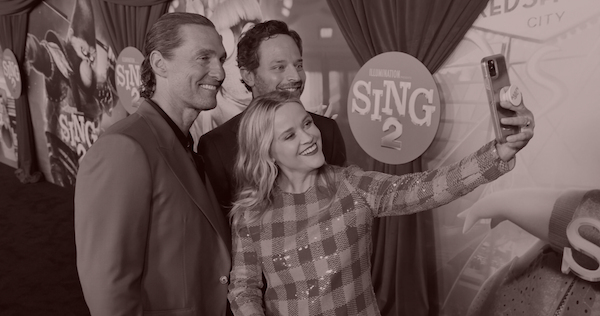
Hollywood’s new and diminished definition of success doesn’t actually require a film to be wildly profitable so long as its franchise can continue. Of course, how to define and create one in the streaming era is perhaps the most difficult and debated question of all. Stop me if this sounds familiar: In the lead-up to the late December release of Sing 2, Universal Pictures faced a predicament. Omicron was spreading, fears of family moviegoers were spiking, and, during internal discussions, some thought it made sense to either delay the film again (the sequel to the animated American Idol with farm animals had already been pushed a year), or ship it directly to streaming, or do some kind of hybrid release. A version of this debate has taken place almost daily on studio Zoom calls for two years now. It’s depressing.
NBC Universal C.E.O. Jeff Shell and film chief Donna Langley decided to keep the theatrical exclusive, then drop the film on premium video on demand 17 days after its release, for a higher-than-normal $25 rental charge. That strategy would potentially kneecap the box office of a film whose 2016 predecessor grossed $634 million worldwide, though films available at home recently have held up O.K. in theaters. I’m told it also meant cutting mid seven-figure checks to the voices of those farm animals—Matthew McConaughey, Reese Witherspoon and Scarlett Johansson, with smaller payouts for the rest of the main cast—to buy out their box office bonuses.
The buyouts weren’t necessarily required; Sing 2, after all, was getting an exclusive theatrical window, and Universal’s deal with theater owners allows an expedited P.V.O.D release for films that open to less than $50 million (with theaters getting a small cut of that at-home revenue). But given the Covid climate, the stars knew that if the film wasn’t pushed, their bonuses likely weren’t happening, and the last thing Universal wanted was an acrimonious, Black Widow-esque situation over the lost pay, especially involving the star of Black Widow. Disney C.E.O. Bob Chapek learned in the ScarJo litigation how quickly the town can turn on you when you piss off top talent.
More importantly, Universal needed those stars to enthusiastically promote the film, to make Sing 2 feel like a big theatrical blockbuster, even if its numbers wouldn’t ultimately get it there. Above all, Langley and Illumination C.E.O. Chris Meledandri, who made the film with writer-director Garth Jennings, were concerned not only with Sing 2 but also with Sing 3 and Sing 4 and potential spinoffs and origin stories–the Sing franchise, future installments of which presumably can play in theaters, if that business still exists by the time they are released.
So this particular $85 million-budgeted installment will probably top out at about half the gross of the original—a franchise killer under usual rules—but it’s doing fine within the lowered expectations of pandemic-era Hollywood. Sing 2 is at $268 million worldwide as of today, with a strong week-to-week hold and a big U.K. opening this weekend as Omicron fades. And sources say it’s Universal’s second-biggest P.V.O.D. movie, behind the early-pandemic hit Trolls: World Tour, which the studio said grossed $100 million at home. My 5-year-old loved it; we saw it at our local AMC and, a couple weeks later, my wife awoke to an email from Amazon Prime informing her that someone using her account had rented Sing 2 at 6:30 am that morning. (This introduced us to the “parental control” function on Amazon.)
Universal considers Sing 2 a success in this weird moment not because it is particularly profitable—it will make money, though a lot less than initially planned—but because the studio can make another Sing, and plans are afoot, I’m told. “Highest grossing animated feature since the pandemic began. Yes, I’d qualify that as a success,” responded Exhibitor Relations analyst Jeff Bock when I asked him what he thought of Sing 2’s performance. “Obviously, different box office barometers are in play specific to genre, and especially regarding family films.” So it’s a flop and a hit, which pretty much sums up Hollywood in 2022. Langley and the other modern studio heads are essentially franchise managers, and these days, franchise management has morphed into franchise survivalism. This sequel far underperformed the original, but the franchise will live on, so mission (sorta) accomplished.
ADVERTISEMENT IN THE SAME BREATH recounts the origin and spread of the novel coronavirus from the earliest days of the outbreak in Wuhan to its rampage across the United States. Directed with a deeply personal approach by Nanfu Wang, who was born in China and now lives in the United States, the film explores the parallel campaigns of misinformation waged by leadership and the devastating impact on citizens of both countries.
Award-winning documentarian Nanfu Wang is one of the boldest storytellers working today. Her singular voice is instantly recognizable, and her incisive perspective sheds light on authoritarianism and pierces through propaganda to reveal shocking truths. Following her acclaimed 2016 debut HOOLIGAN SPARROW about artist and activist Ye Haiyan, and 2019’s Sundance Grand Jury prizewinner ONE CHILD NATION, an expose of the staggering human costs of the One Child Policy – Wang is back with Oscar-shortlisted IN THE SAME BREATH.
Use code YJjspaKz2Df6 (case-sensitive) at HBOfyc.com to Watch Now 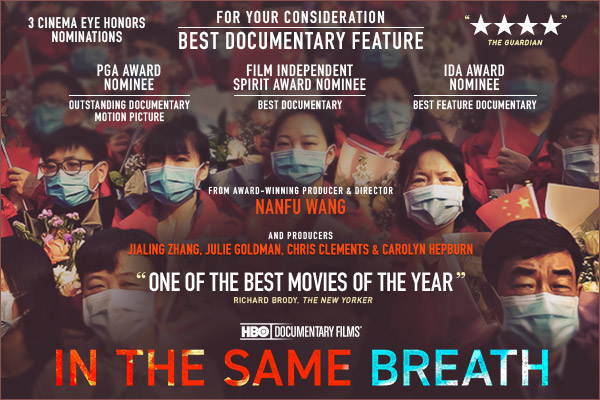
What is a theatrical franchise and how can studios create and grow them when most movies are going direct to streaming? That has become perhaps the most difficult and debated question in Hollywood. We’ve all seen the studies showing that audiences don’t create emotional attachments to streamed movies like they do when they go to a theater. There’s no mindshare, is how I’ve heard it described. Taking that affirmative step to go to a theater ends up meaning something to consumers, even if it’s a pain in the ass to do so. Without event-izing movies via huge marketing spends and opening-weekend box office headlines, the films feel smaller—and that smallness reverberates all the way to whether a sequel is something to get excited about. Despite all those billions of minutes viewed, Netflix and the others have yet to show that they can launch a movie that people care about enough to follow through the traditional flywheel of consumer products, live experiences, sequels and spinoffs that capture the public zeitgeist.
At the same time, we all know fewer and fewer movies will be deemed theater-worthy. Look at this past weekend: Zero big releases in the U.S. Box office for the top 10 was an anemic $31 million. January was a desert, and not just because Sony’s Morbius moved to April. In recent years, the studios released between 110 and 130 movies. So far, there are 89 films scheduled for wide release in 2022. Even with some expected additions, that’s a big slide.
Fewer releases means fewer chances to create new franchises. Can you name an original movie that has launched a theatrical franchise since March 2020? I’d say Ryan Reynolds’ Free Guy is the only one. Disney would probably argue for Cruella and Jungle Cruise, both of which have sequels in development. But those seem like probable direct-to-Disney+ plays, and both are based on strong Disney I.P. Maybe Encanto, which was event-ized by an exclusive 30-day theatrical window, even if most people are watching it on Disney+ now. It’ll be interesting to see the trajectories of Free Guy vs. Reynolds’ other 2021 franchise-starter, Netflix’s Red Notice. Both are getting sequels; which one will audiences actually care about?
My Reading List
ADVERTISEMENT 
The Feedback
My Thursday email on Netflix’s pay package predicament really brought out the company’s haters. Personal insults won’t get you mentioned here, but there were some thoughtful comments:
“Netflix's business model guaranteed a major reckoning. The math never worked out—it's basically a reverse Ponzi scheme. Their entire formula is premised on spending and spending and spending some more; on content, on personnel, on marketing, on subscriber acquisition and even on buying awards. For years they basically had a bottomless money pit, no need to show a profit, and none of their investors calling in their chits. The first crack was when IP owners stopped licensing to them. Now they've made an all or nothing bet that they can either pick or buy enough originals that work well enough to grow subscriptions and stall churn. The problem now, of course, is that all the VCs, major shareholders and debt lenders will hold them to a different standard going forward than one that requires only subscriber growth, and no one in Hollywood history has been able to consistently pick winners better than everyone else. At some point, early investors will want to cash out, the lenders will want their money back, and Netflix won't be able to spend $15 billion a year on content. They also have no diversified "flywheel," and their first mover advantage is no more. One day soon, they'll have to complete on roughly the same terms as everyone else, and it's going to be very messy for them.” –An executive
“You nailed the feeling right now. The stock appreciation was what kept a lot of people from joining the Great Resignation. Now?” –A Netflix executive
“I’m sure you saw Reed [Hastings] bought $20 million in stock as a sign of confidence. Don’t be fooled, this is the guy who sold hundreds of millions of his own shares when the price was $500 and above.” –A lawyer [Note: Per Netflix policy, Hastings must sell a chunk of stock each year or else he loses it.]
I also got good feedback on producer David Friendly’s recent guest column on the demise of the power lunch, so I asked what he thought of the Kevin Mayer-Tom Staggs media venture and all the sky-high production company valuations. His anxiety-riddled answer is a new guest column treat…
Where’s My Megadeal? A Hollywood Producer’s New Anxiety An outbreak of 9-figure deals is fueling a new arms race—and serious FOMO from producers like me. Ironically, the very thing that makes these companies so successful may also be a curse that spins them out.
Not long ago, before the streaming revolution engulfed this town like a creative tsunami, status for top producers was fairly straightforward. An invite to the Allen & Co. conference; 100 hours on a G4; or, better yet, the highly-coveted first-dollar gross deal. These were the perks that confirmed power, wealth, and prestige.
But now, as they say on the green felt, the price of poker has gone up. Way, way up. Day after day, stories tumble forward about the latest megadeal, and the numbers make you re-read the lede. Reese Witherspoon’s Hello Sunshine sold for $900 million? Greg Berlanti pocketed $400 million through his Warner Bros. TV deal? Bridgerton added even more cash to the nine-figure deal Shonda Rimes made with Netflix? What is happening here?
As a producer, this is all making me anxious. Let’s get one thing out of the way: Of course, yes, I’m envious. Every trade story on the subject immediately makes me think I too could have been a (bigger) contender. But there’s more to it than that. I don’t want to see our best talent sidetracked or obsessed over who made the fattest deal. Particularly on the small screen, we are in a golden age for content and just like in sports, we need our starters focused on the game, not the deal...
Finally…
Some new tracking: The Lost City, a Romancing the Stone-esque rom-com with Sandra Bullock and Channing Tatum, debuts on the Quorum awareness and interest chart this week. Paramount’s March release looks like it could be a rare non-tentpole that brings women to theaters. 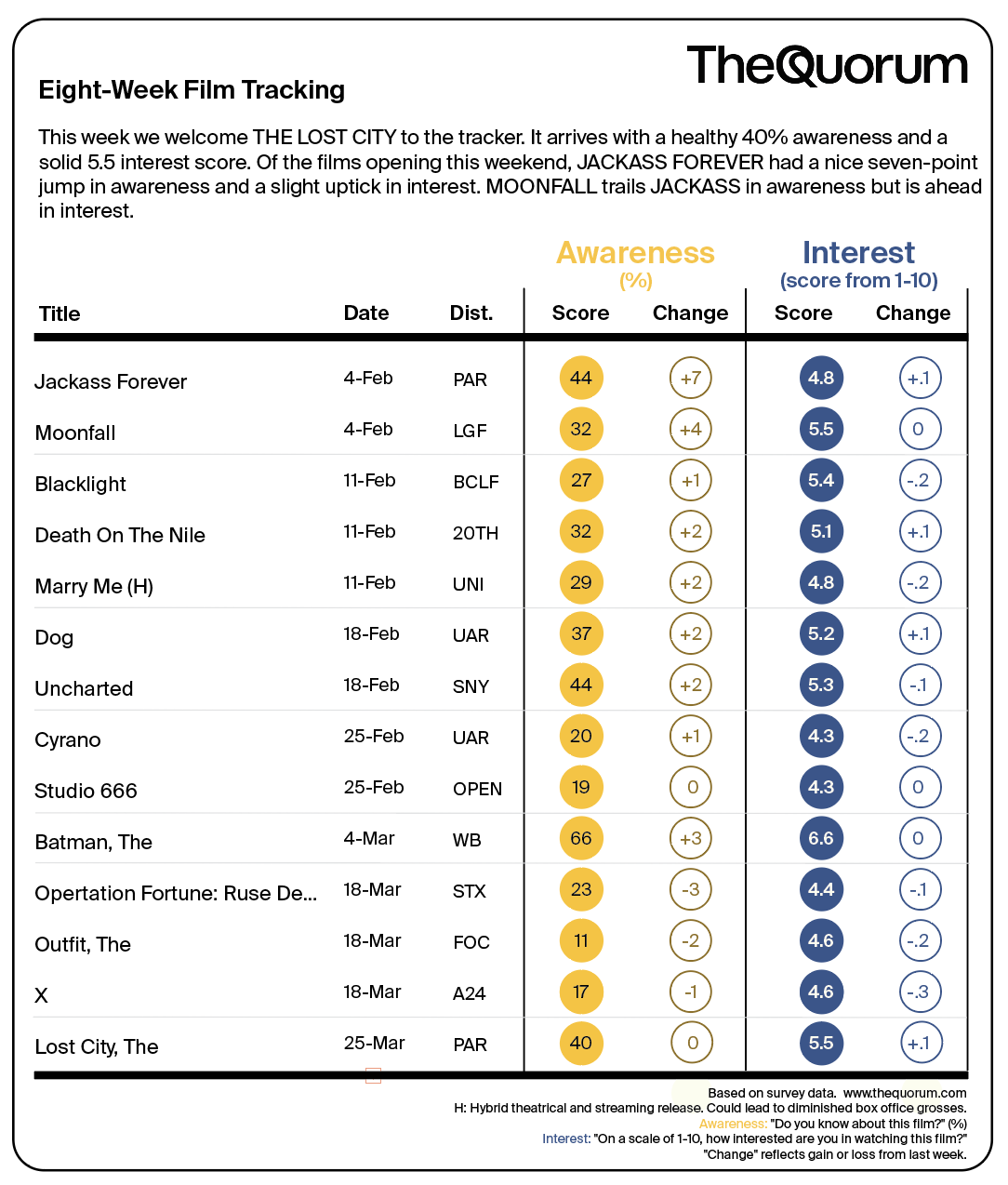
Have a great week, Matt
Got a question, comment or complaint? Email me at Matt@puck.news or call/text me at 310-804-3198.
FOUR STORIES WE'RE TALKING ABOUT 
Executives are verklempt. But could a lower valuation return some competitive normalcy to the rest of the entertainment industry? MATTHEW BELLONI 
A conversation with Fiona Hill about the Russia-Ukraine crisis, Putin's next move, and where the White House goes from here. JULIA IOFFE 
Ari Emanuel has now negotiated a fifth hour for Joe & Mika, and helped Stephanie Ruhle take over for BriWi. What's next? DYLAN BYERS 
The inside conversation on Wall Street about Pershing’s new investment thesis, and JPMorgan in the penalty box. WILLIAM D. COHAN 
You received this message because you signed up to receive emails from Puck.
Was this email forwarded to you?
Sent to {{customer.email}}
Puck is published by Heat Media LLC.
For support, just reply to this e-mail. For brand partnerships, email ads@puck.news |


SHARE