Welcome back to The Varsity on the first day of the NCAA tourney. My
bracket is filled with chalk this year—a nod to the idea that N.I.L. and the transfer portal have combined to quash any upsets. I hope I’m wrong. (Arizona beating Duke in the final, in case you’re wondering…)
First, some news: The Varsity has added Los Angeles to the growing list of markets that carry our vodcast. Starting with yesterday’s show, Spectrum SportsNet will carry the hourlong pod twice a week. (Our bet on the future of regional sports networks continues to gain
steam...)
Pod alert: From retooling the Sports Broadcasting Act to the migration of NFL games to streaming—a ton of sports media stories are winding their way through D.C. these days. Which is why I asked Curtis LeGeyt to join The Varsity this weekend. Curtis is the president of the National Association of Broadcasters and knows how this town really works. Also, make sure to listen to
yesterday’s pod, wherein ESPN’s Mike Foss dished on McAfee, Stephen A., S.V.P., and more.
As always, this issue was created with contributions from Curtis Rowser.
Mentioned in this issue: Curtis LeGeyt, Mike
Foss, Terri Carmichael Jackson, Roger Goodell, Mike “F’in” Florio, Brian Rolapp, Andrew Ross Sorkin, Jimmy Pitaro, Randy Scott, Gary Striewski, Scott Van Pelt, Kevin Negandhi, Christine Williamson, Shohei Ohtani, Mike Trout, Aaron Judge, Derek
Jeter, Wilyer Abreu, Rob Manfred, Evan Drellich, and more…
|
Player of the Week: Terri Carmichael Jackson
|
Congrats to Jackson, the executive director of the Women’s National Basketball Players
Association, who secured an overwhelmingly player-friendly collective bargaining agreement, and still left just enough leeway for the season to start on time. The salary cap will move to $7 million, up from $1.5 million; new supermax contracts will start at $1.4 million, up from just over $249,000; and the average player salary will be around $600,000, up from $120,000. |
Down to the J.V.: Roger Goodell
|
Okay, let me get this straight. The NFL is about to double the amount of media revenue it generates
every year. Its sponsorships and ticket sales are setting records. But the league commissioner and his owners can’t find enough money to pay the league’s referees? That’s according to Mike “F’in” Florio, who this week broke the story that the league has started to look for
replacement officials should its ongoing talks with the refs’ union stall. The league took the same tack in 2012, when it last butted heads with the referees’ union, and used the subs through Week 3—giving us the notorious “Fail Mary” game. |
- The MLS sprint schedule: We finally have confirmation on how the one-off MLS “sprint season” will look, as the league rearranges its schedule to better align with its European peers. The 14-game season (down from a 34-match regular slate) starts in February and runs through the MLS Cup in May. MLS will then start its next season in July, to follow the summer-to-spring schedule used in other markets. What I’m most interested in is the knock-on effects of the
decision, particularly as it pertains to the NWSL, which is keeping its March–November calendar… at least for now.
- The coming NFL tsunami: There are only a handful of people who understand the NFL’s media strategy more intimately than PGA Tour C.E.O. Brian Rolapp, who—as you all surely know—ran the NFL’s media business for most of his 22-year stint at the Shield. That’s why my ears perk up anytime Rolapp addresses the
media rights business, which he did this morning on CNBC.
When Andrew Ross Sorkin asked Rolapp about his most unpleasant surprise since leaving the NFL for the Tour last June, he spoke pretty candidly about the outsize influence of his former employer—which is, of course, currently in the process of further juicing its media partners’ content budgets and causing distress for other leagues. “The issue is the U.S. sports market, which is the biggest market on Earth—rights
fees are about $30 billion,” Rolapp said. “The NFL is $12 billion of that a year, and they’ve been on record saying they want to double it. If that’s true, that just doesn’t leave a lot of money for everyone else, given the pressures on media companies who are now transitioning from linear to streaming.” - SportsCenter 2030?: The first episode of SportsCenter aired in 1979, debuting simultaneously with the launch of ESPN and immediately
establishing it as the network’s flagship show. The program has undergone myriad evolutions over the years, but as the sports media landscape fragments and sports highlights become more ubiquitous, what will SportsCenter look like in the next five years?
Naturally, I posed this question to ESPN’s senior vice president Mike Foss on today’s episode of The Varsity. “In the pre-Jimmy Pitaro era, there was resistance to D.T.C., streaming, social, and all of
those buzzwords 10 years ago that are now commonplace in every conversation that anyone has about media,” Mike told me. “We are really leaning into the personalities of our talent to tell stories across the board—through their interviews, through their interactions with analysts, through highlight packages, through monologues. … A Randy Scott–Gary Striewski SportsCenter is going to feel different than a Scott Van Pelt
SportsCenter, which will feel different than a Kevin Negandhi–Christine Williamson SportsCenter—and that’s a good thing. Each episode of SportsCenter should reach a different audience.”
|
And now for the main event… |
|
|
|
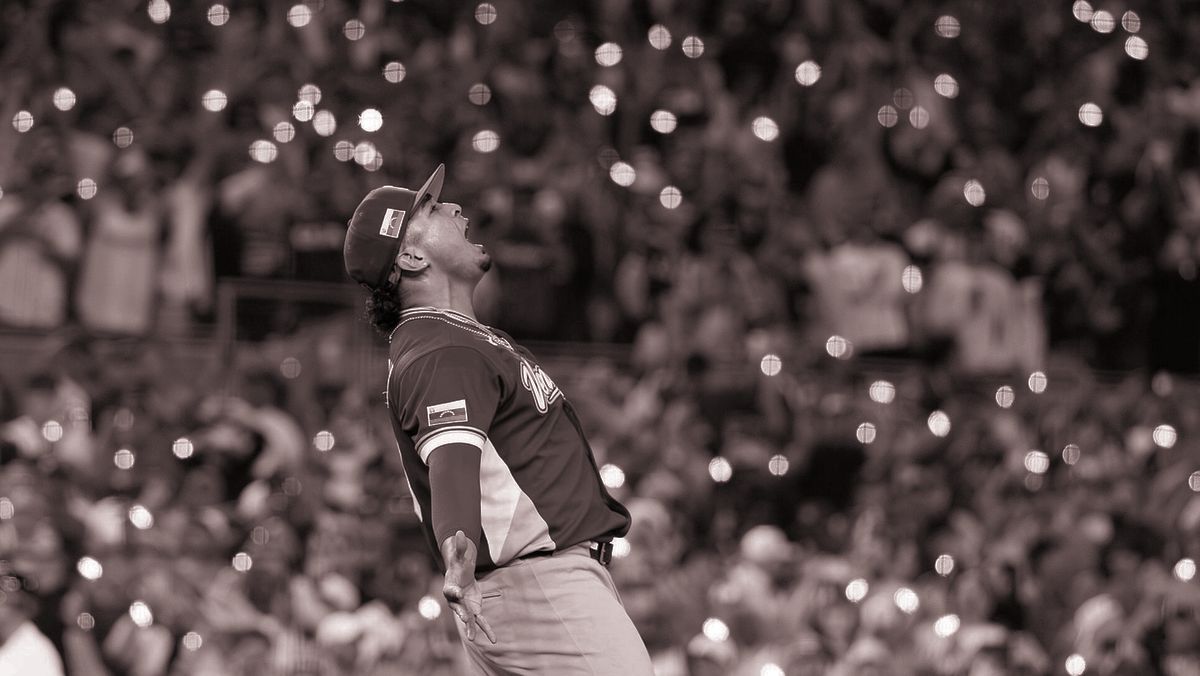
Tuesday’s U.S.–Venezuela blockbuster affirmed the World Baseball Classic as a
sports and ratings powerhouse, with an audience equal to some World Series games. Now that the tournament is living up to its name, how can baseball make the most of it? |
|
|
|

| John Ourand
|
|
|
|
I was in New York on Tuesday night, meeting a source in Midtown for a burger and a beer. The two
TVs behind the bar were showing the Knicks crushing the Pacers at MSG, but around 8 p.m., something strange happened. The bar’s manager switched both TVs over to the first pitch of the World Baseball Classic’s championship game between the U.S. and Venezuela. Stranger still: No one complained.
The World Baseball Classic has been around since 2006—first concocted as a preseason tournament of glorified exhibition games featuring MLB athletes playing their way back into shape under
the banners of their countries of origin. Some big names inevitably opted out, and all pitchers were on strict pitch counts to avoid serious injury with the real 162-game season just over the horizon. Ratings were mid at best.
Despite those humble origins, the tournament survived, steadily earning a little more respectability with each iteration. Then, three years ago, it fully entered the American sports zeitgeist. When Shohei Ohtani struck out his
Anaheim Angels teammate Mike Trout in the final at bat of the 2023 tournament, it was clear that the WBC would never be the same.
Coming on the heels of the Winter Olympics and recent hockey and basketball all-star formats that have shamelessly tapped into viewers’ feeling of national pride, this year’s WBC clicked. More than 1.6 million fans attended this year’s games, a 24 percent jump from the last tournament in 2023. Attendees packed stadiums in Miami, Houston, Tokyo,
and San Juan and sprinkled social media with game-related content. The atmosphere even had an excitable Team U.S.A. captain Aaron Judge comparing it to the World Series. (Derek Jeter, ever the stoic, begged to differ on the Fox broadcast.) The final, a geopolitically loaded contest between the U.S. and Venezuela had world-class pitching throughout, and a ninth-inning, walk-off double from Eugenio Suárez, who currently plays for the Reds. What’s
more, it was a bona fide TV draw, finishing with 10.784 million viewers, comparable to some World Series games. Even more notable: Audiences had been tuning in all along. Sunday’s U.S.–Dominican Republic matchup drew more than 7 million viewers in the U.S.—even though it was carried on Fox’s cable channels FS1 and Fox Deportes and competed directly against the Academy Awards. That semifinal marked FS1’s biggest audience in the past seven years, and the WBC’s biggest-ever single-game audience—a
record broken two days later. |
As the tournament has gone from global curiosity to big deal, the league and its various
partners have started to see the possibilities for greater revenue opportunities ahead. In other words, it’s time to start messing with it. Media executives have discussed the possibility of holding the tournament more frequently—every other year, for instance, rather than every three years, as it’s been slated since 2017. Organizers could end up moving the tournament to the all-star break, as the NHL’s 4 Nations Face-Off did last year. In an AP interview right after the tournament, MLB
commissioner Rob Manfred seemed to suggest that such a move could happen.
There are reasons for doubt, however. A two-year timeframe would place the next WBC just before the Olympics—and Manfred has been optimistic that MLB players would participate in the 2028 Games, which are being hosted by Los Angeles. A midseason move seems just as unlikely—it would take a lot for MLB to accommodate a two-week midseason break for the WBC. But the mere fact that these ideas
have been floated shows how big an event the WBC has become.
That growth is coming at the perfect time for MLB, which is going to market with all of its media rights in 2028. Streamers and networks alike have made it clear that they are looking to invest in major events that cut through the content clutter, and baseball, almost by accident, now has such a product on its hands—though not without some caveats.
The World Baseball Classic is jointly owned by MLB and the players’
association, and it’s still an open question whether it will be folded into other packages that MLB wants to sell, or be sold on its own. The incumbent rights-holder, Fox, will likely want to hold on to it. (The broadcaster only bought the rights to this year’s WBC last October.) Then again, the WBC certainly fits into Netflix’s current sports strategy, which is centered on picking off big events, like the NFL Christmas games or one-off boxing matches. The rights fee for this year’s event hasn’t
leaked yet, but considering Netflix paid more than $100 million for the WBC rights in Japan, you can bet the MLB made the most of the domestic rights as well. Of course, MLB and the MLBPA split most of the revenue, while global baseball organizations also take a small cut. And thanks largely to that Netflix deal, participating teams have seen their payouts more than double since 2023. Players on both the Venezuelan and U.S. teams each received $100,000 for making the championship, per a report
from The Athletic’s Evan Drellich.
As almost every sports league looks to expand abroad, having a compelling global competition is key. In fact, the success of this year’s tournament follows a trend that can be seen in other U.S. leagues with international play. The final of the NHL’s 2025 4 Nations tournament drew 9.3 million U.S. viewers on ESPN and 5.7 million in Canada on Sportsnet—shockingly big numbers for hockey. The NBA’s USA vs. World all-star format resulted in
an 87 percent viewership jump from last season. The 8.8 million viewers marked the All-Star Game’s biggest audience in 15 years.
Now that the WBC has shown its true potential—in two consecutive and very different tournaments, three years apart—the sports media world is naturally clamoring for more. So the first question league, media, and sponsor executives have is: When is more coming? |
On Stephen A.’s texting prowess: “Mike Foss was a great podcast guest. There was nothing
better in that episode than learning that Stephen A. texts the same way he speaks.” —A fellow Terp
On the Netflix MLB deal in Japan: “I absolutely loved your story on Netflix’s ambitions in Japan. I hope to hear more about the sport-driven international streaming market.” —A Varsity subscriber
On the tournament: “If David Ellison is smart and divests many of the cable outlets, let’s say that Versant scoops them up. Might we see in 2027 or 2028
the first game in Round 1 of the NCAA tourney have a tip time of 11:45 a.m. Eastern?” —A Varsity subscriber |
Have a great weekend. See you Monday.
John |
|
|
|
Join Puck’s chief political columnist, John Heilemann, as he roams the corridors of power and influence in America on
this twice-weekly interview show, taking you beyond the headlines with the people who shape our culture: icons and up-and-comers, incumbents and insurgents, moguls and machers in the overlapping worlds of politics, entertainment, tech, business, sports, media, and beyond. The conversations are rich and revealing, unrehearsed and unexpected… and reliably impolitic. A Puck-Audacy joint, new episodes drop every Wednesday and Friday. |
|
|
|
An essential, insider-friendly Hollywood tip sheet from Matthew Belloni, who spent 14 years in the trenches at
The Hollywood Reporter and five before that practicing entertainment law. What I’m Hearing also features veteran Hollywood journalist Kim Masters, as well as a special companion email from Eriq Gardner, focused on entertainment law, and weekly box office analysis from Scott Mendelson. |
|
|
|
Need help? Review our FAQ page or contact us for assistance. For brand partnerships, email ads@puck.news. You received this email because you
signed up to receive emails from Puck, or as part of your Puck account associated with {{customer.email}}. To stop receiving this newsletter and/or manage all your email preferences, click here. |
Puck is published by Heat Media LLC. 107 Greenwich St., New York, NY 10006 |
|
|
|
|