 |
|
Welcome back to The Varsity, my twice-weekly private email on the heroes and villains of the sports business. I’m John Ourand, still coming to you from Puck’s beautiful Costa Rican bureau. After spending several days in the rainforest, this email hails from the coastal town of Puntarenas, which is near the better known Manuel Antonio Beach. I’m sorry to report, dear reader, that I have not been able to uncover any fútbol rights battles down here…
Tonight, I’ve got an in-depth interview with billionaire Ted Leonsis on the transformation of sports ownership economics. After generations of mushrooming media deals, change is afoot. After all, Mark Cuban sold a majority of his stake in the Dallas Mavericks to the Adelson family because the next wave of revenue generation will coalesce around real estate and entertainment. I was eager to get Leonsis’ perspective on that, considering his background in tech.
Also: One final reminder to stop forwarding this email or else I’ll send you Marchand’s Fifty Shades of Grey fan fiction.
Let’s get to it…
|
| Player of the Week: Art Rooney II |
|
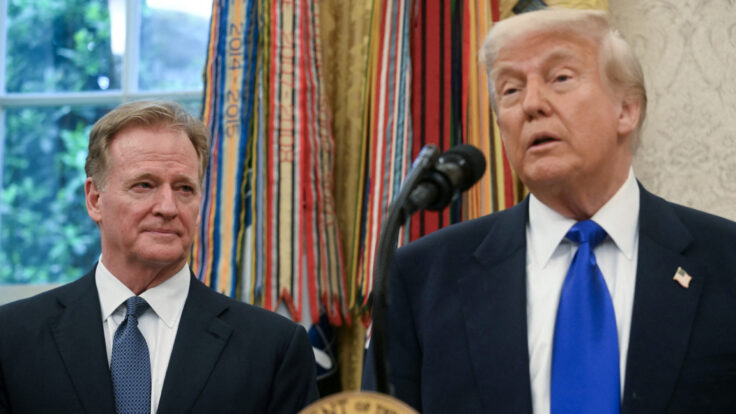
| It’s become such a big deal to host the NFL Draft that the league now announces its venues years ahead of time. So congratulations to Art Rooney II, the Steelers owner, whose hometown of Pittsburgh was revealed yesterday as the site of the 2026 Draft. Last month, some 700,000 people attended the draft in Detroit, turning what was once a droll event into a three-day celebration of the sport. Green Bay hosts next year’s event. |
| Down to the J.V.: Dave Roberts |
|
| The blame for ESPN’s lopsided coverage of Sunday’s Knicks-Pacers playoff game has got to land on Roberts, the network’s head of event and studio production. Look, some bias is inevitable, but Roberts is the executive who should have prevented the broadcast from turning into a de facto home team cheerleading squad for the Knicks. (I guess that’s what happens when you’ve got Stephen A. Smith on the ground in MSG while the rest of the crew is back in Burbank.) I don’t have much to add from what’s already been said, but I will point you to this Dan Patrick clip and this rant from Dan Le Batard: “Sports fans care about perceived disrespect, and this was disrespectful.” |
| The Starting Five: Costa Rica Edition |
|
- NBA rights update: I was in the middle of a hike through the Monteverde Cloud Forest Reserve yesterday when my phone started buzzing with reports that Warner Bros. Discovery was out of the running for an NBA package. Much to the consternation of my family, I made a few quick calls and discovered that not much has changed since last week.
As I reported one week ago, WBD’s David Zaslav told the league that he will try to exercise his company’s matching rights. But Zaz can’t match theoretical bids, only real ones. That means he has to wait until the NBA has signed contracts with Disney, Amazon, and, yes, NBC. As my partner Dylan Byers reported last night, once those deals are signed, Zaz has five days to match them.
I know everyone has been writing off WBD in these negotiations. But it really comes down to Zaz, and nobody knows what he’s going to do. He could match. He could walk. If I were a betting man, I’d put my money on the NBA moving back to NBC. But this story is not over yet.
- Matt has more on this coming tonight: If you don’t already, you need to sign up for my partner Matt Belloni’s genre-defining entertainment newsletter, What I’m Hearing. Matt has some more news coming tonight on the Zaz-Adam Silver dynamic. Sign up here.
- WBD’s CFP deal: In the meantime, it’s worth noting that WBD’s decision to sublicense a handful of CFP games from ESPN is not a sign at all that it has moved on from the NBA. Former work wife Marchand reported that ESPN had valued the first-round games at $25 million apiece, so it’s likely that WBD is paying more for its two first-round games per year for the next five years, plus two quarterfinal games starting in 2026. Obviously, those amounts are a far cry from the $2.5 billion a year that NBC has offered for the NBA.
After all, this type of deal fully comports with WBD’s strategy of adding sports rights to maintain the value of its cable business. In the past couple of years, WBD has picked up rights to the NHL, NASCAR, and U.S. soccer. If Zaz decides not to trigger those matching rights, you can expect WBD to invest a large portion of its $2.5 billion-plus of dry powder into other sports rights deals.
- McManus bats lead-off: Former CBS Sports chief Sean McManus will be the first witness to testify in the much-anticipated Sunday Ticket antitrust trial, per a court filing. The complaint essentially comes down to whether the NFL is committing antitrust violations by only offering its out-of-market Sunday package with every NFL game, rather than allowing customers to buy, say, just games involving their favorite team. The two sides agreed to allow McManus to testify June 18, “due to his limited availability to appear at trial.” Attorneys for the NFL will question McManus first, followed by the plaintiffs.
It is unusual for this type of class-action suit to go to trial, but the NFL has been unable to get it dismissed. (The league convinced a judge to toss the case, but a federal appeals court reversed the decision.) If the NFL loses, it could owe billions of dollars to the plaintiffs. But if that happens, you can be sure that this case will be tied up in appeals for years.
- Diamond moves: Diamond Sports signed a deal yesterday to keep its Bally Sports regional sports network on FuboTV. But don’t expect that deal to put pressure on Comcast to work something out in this endless glide path versus cliff path grinfuckfest (drink!). Diamond and Comcast are no closer to a deal than they were on May 1, when the R.S.N.s went dark on Xfinity systems. Industry consensus has been that Diamond needs to get Comcast to agree to migrate its R.S.N.s to a digital tier over time—the glide path approach—if it wants to emerge from bankruptcy. Diamond has now completed renewal deals with Charter, Cox, DirecTV, and FuboTV.
|
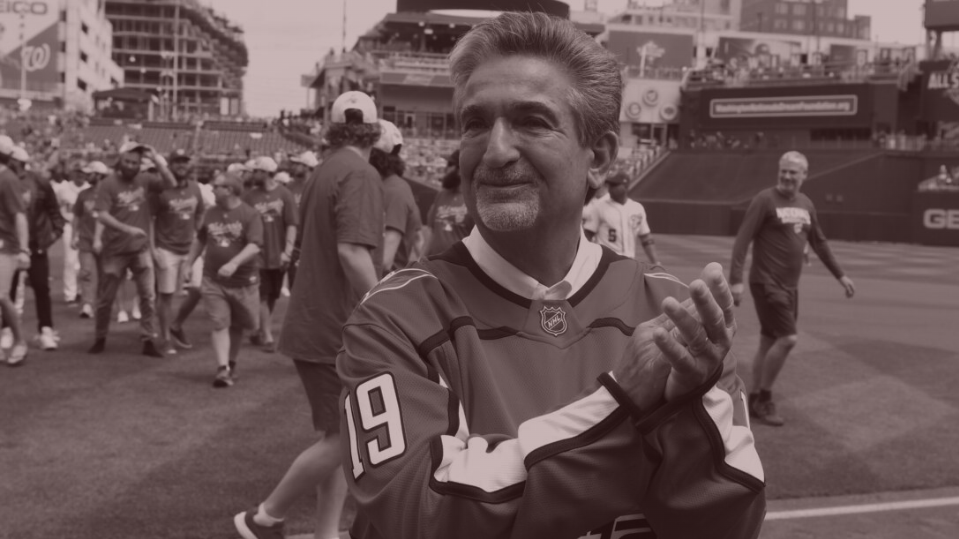 |
| Kings of Leonsis |
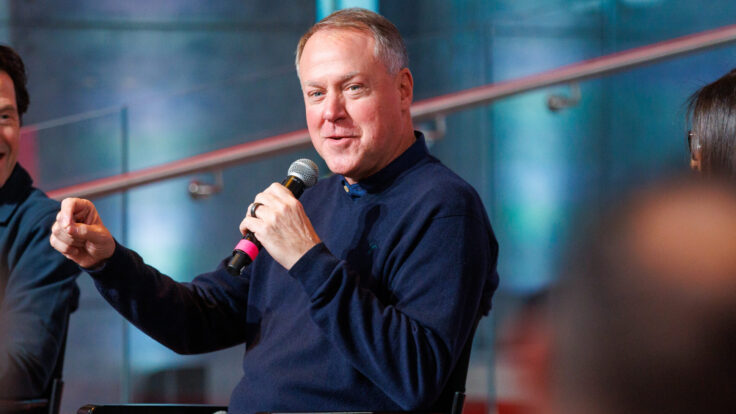
| As team valuations skyrocket, I sat down with D.C. sports magnate Ted Leonsis to get his candid take on why Cuban sold the Mavs, the future of R.S.N..s, and how Ballmer changed the game. |
|
|
|
| Owning a sports franchise—the most exclusive item in the billionaire trophy case—has become a vastly more profitable enterprise in recent years. Private equity firms, sovereign wealth funds, and celebrities are all fighting for ownership stakes. What was once a vanity asset is now a massive, global business that promises enviable tax-advantaged returns and fabulous rent-seeking economics. Mark Cuban, who just sold his majority stake in the Mavericks for $4.5 billion, netted a nearly 1,500 percent return on his $285 million investment. Dan Snyder, who paid $800 million for Washington’s NFL team in 1999 and spent the next two decades running the franchise into the ground, offloaded the team to a group led by Josh Harris for over $6 billion.
Of course, there are few owners as successful as Ted Leonsis, the billionaire former AOL executive turned D.C. sports impresario who owns the Capitals, Mystics, Wizards, and the Capital One Arena (oh, and he recently said he’s going to make another run at the Washington Nationals, too). When he joined the NBA ownership ranks, in 1999, alongside Cuban, teams were just beginning to view media as the biggest growth area. Now, real estate is starting to come back in vogue, as Cuban noted when he sold the Mavs.
But Leonsis still believes that media rights present the greatest growth opportunity. In 2022, he put his money where his mouth is, buying the remainder of the NBC Sports Washington regional sports network from Comcast in an undisclosed deal. Last week, I sat down with Leonsis to get his thoughts on how ownership changes are affecting league strategies, the Ballmer effect, the R.S.N. crisis, and much more. The following has been lightly edited for clarity. |
|
|
| John Ourand: Let’s start with Cuban. I know you saw his comments about why he sold his stake in the Mavericks. One of Cuban’s points is that he sees less growth in media and more opportunity in real estate and entertainment. You made your bones in the media business. Do you agree?
Ted Leonsis: Mark came into the league the same year that I did, the 1999-2000 season. We were a generation of new owners, along with Paul Allen, who bought the Blazers in 1988. Paul, God rest his soul, came from Microsoft and was really wealthy. He scared everybody because the traditional owners at that time had been real estate people.
We were people who made their wealth in technology and media, and when we came in, we saw the business differently. I bought the team for fun and for competitiveness. I wanted to win championships. I still do! But as I got through the due diligence, I saw that this was the most undervalued, misunderstood business and business model.
I came from AOL, a business based on subscriptions. You built a big audience and then you sold inventory and space to advertisers and sponsors, then you used that platform to launch other businesses in different industries. Subscription revenue was gold. And when you add 3 or 4 percent annual increases to that, you get a business with 70 to 80 percent recurring revenues.
I view my season tickets as subscription revenue. The low end is 80 percent renewals, but I have many years where I’m at 95 percent renewals even with increases. We did a naming rights deal that runs 10 to 15 years. We used to do local media deals with the biggest media company in the world in Comcast that would run for 15 years. We could predict revenues and increases going out for 15 years.
It was all theory until Steve Ballmer. Originally, he wanted to buy Sacramento and move the team to Seattle. I was on the relocation committee, and we said, You can’t do that. We just don’t move teams. I don’t think Steve Ballmer had heard no in a long time! Then he said he’d like to buy an expansion team. And we said we can't do an expansion team now because we’re negotiating the new media deal; so we have to wait. And then in 2014, the issue in Los Angeles happened with the Clippers, and he paid what looked like to other people an above-market price.
He paid $2 billion for the Clippers in 2014. It seemed like a preposterous amount at the time.
But Steve would buy software company after software company after software company at Microsoft under the same kinds of multiples with companies that weren’t a 10th as powerful or nearly as good as the brands and durability of the business as an NBA team. So now he is a genius. He was forward-thinking. That propelled private equity people to start coming in. So there’s a group of us that are from media and tech. Now you get into venture capital and private equity, and you’re seeing the world through those prisms. They want to know you have a growth mindset.
Where are we seeing this play out?
Most of the teams play as a tenant in a building owned by somebody else. Stever Ballmer was a tenant in his arena. He didn’t want to do that anymore. He wanted to own his own arena and program it with his team—the most important asset—front and center. When you are downtown, you activate your building like a portal. But everyone else benefits.
Teams bring in 2 to 3 million people, and they have no problem monetizing those fans inside the building. But outside the building, there’s an entertainment district with hotels and music venues and movie theaters and office buildings. Mark’s right in saying that real estate now is kind of back in vogue. I’ve already figured out how to monetize the inside. I don’t monetize any of the outside.
We own the teams and the arena, but we didn’t own the real estate around it in downtown D.C. I only have 20,000 seats. I only have so much inventory. All I can do is raise my prices. But what if my team isn’t as good, and we don’t make the playoffs? The real estate side of it is really just another vector of growth, and it really makes sense if you’re going to be a platform company.
I have to ask you about Monumental Sports Network, formerly NBC Sports Washington, which you bought from Comcast at a time when the R.S.N. world is imploding. It’s clear you still see media as the biggest growth engine for your teams. Why?
We bought the network to reclaim our I.P. I saw that Diamond Sports was not valuing the brands and the I.P., they were kind of holding them hostage—and I dodged all of that. They weren’t making investments to become digital-first companies. When we bought our R.S.N., I was shocked. I wanted to know who our customers were. They said, “It’s men aged 18-54.” That’s bullshit, right? I spent six years building an unbelievably sophisticated database with 5 million names in it. I know who bought a ticket. I know if they came or if they resold it, I know if they’re married, if they have kids.
Welcome to linear TV.
Now we have freedom to do more digitally. We spent $50 million to build the most advanced digital studio. And we can do a lot of things with it now because we own the I.P. We can go direct-to-consumer. We can syndicate. We can do a local deal with Amazon or Apple or another network. If we buy another team, we could put its games onto that network. It’s not just real estate. It’s this integrated platform that’s digital-first.
So it’s a good business, then?
If you want to be in a big market, you have to have scale. You have to have a growth mindset so that you can raise your revenues. You already give half the revenues to the league and the players. The other half, you’re putting back into the teams so that you can be competitive and try to win championships. This is a world where you have to be focused on winning, but you have to be focused on What is the underpinning business? to continue to fund that. |
|
|
| On the new boss at CBS Sports: “I really enjoyed your Berson interview. He truly is one of the better people I’ve been around in this industry. I’ve loved working for him, and I have no doubt he’ll succeed in the new role.” —A CBS Sports staffer
On MLB’s Roku deal: “You never told us how many games are in the Roku Package vs. the ESPN package so it’s impossible to determine from your article if ESPN has legitimate beef or not.” —A digital media executive
On my Costa Rican vacation: “Did you do the crazy zip lining??? If you have the chance, hike the Mistico Arenal Hanging Bridges trail. The Hanging Bridges are scarier than any zip lining we did in Costa Rica.” —A sports agency executive
[Ed note: We hiked the Hanging Bridges, and they were, indeed, terrifying!] |
|
|
See you Monday,
John |
|
|
|
| FOUR STORIES WE’RE TALKING ABOUT |
|
|
|
|
|
 |
|
|
|
Need help? Review our FAQs
page or contact
us for assistance. For brand partnerships, email ads@puck.news.
|
|
You received this email because you signed up to receive emails from Puck, or as part of your Puck account associated with . To stop receiving this newsletter and/or manage all your email preferences, click here.
|
|
Puck is published by Heat Media LLC. 227 W 17th St New York, NY 10011.
|
|
|
|