 |
| Happy Monday, I’m Eriq Gardner. |
| Welcome back to The Rainmaker, a private email about money, power, fame, and, most of all, the law.
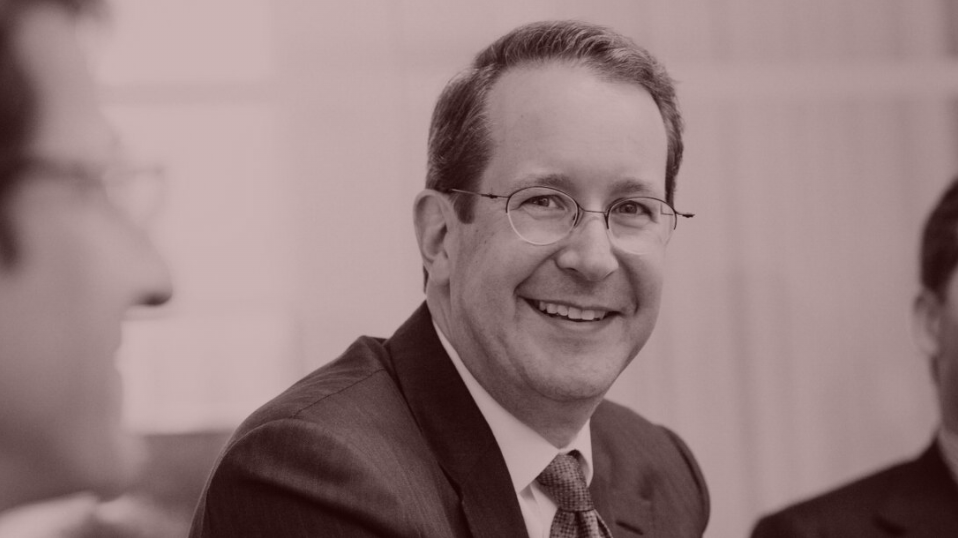
In today’s edition, I talk with Christopher Bogart, the former media executive turned litigation finance pioneer. At Burford Capital, he’s often operating in the background, but I got him on the record for a rare conversation about working with David Zaslav, the hundreds of lawsuits Burford is funding, the legal landscape under Biden, a developing beef with Speaker Mike Johnson, and perhaps most newsworthy, how A.I. is helping game out which companies get sued.
Plus, how Donald Trump got thousands of men sued last week and why Changpeng Zhao had prosecutors working on Thanksgiving.
First up… |
|
|
- CZ’s Whereabouts: The criminal case against Binance C.E.O. Changpeng Zhao kept Seattle-based federal prosecutors busy over the holiday weekend as they worked hard to avoid losing the Chinese crypto billionaire.A week ago, C.Z. was charged with violating a banking law designed to curb money laundering. The unexpected twist was his cooperation. While he likely surrendered himself to avoid more serious charges, C.Z. could have avoided prosecution altogether since he lived in the United Arab Emirates, which doesn’t have an extradition agreement. At a bail hearing, C.Z. told a judge he wished to take responsibility and not be protected. “I don’t want to use favors in that way,” he stated.
Of course, he also wants to go back to the U.A.E., to be with his family until sentencing. A magistrate judge credited his voluntary surrender and agreed to the request, but prosecutors became alarmed by the possibility that their big fish would escape and never return. So on Thanksgiving, a day when there is almost never any court activity, prosecutors asked a district judge to review the situation. They highlighted that while C.Z. faces up to a “brief” 18 months in jail under sentencing guidelines, the government might nevertheless press for a sentence as long as 10 years. Consequently, the government argues that he currently poses a “flight risk” and shouldn’t be allowed to return to a “safe haven.” A very weird predicament. Expect a decision shortly. In the meantime, the judge has said he must remain in the country.
- Another Trump Effect: Last week, thousands of men faced court summonses over allegations of sexual abuse, a list that included prominent figures like Jamie Foxx, Jimmy Iovine, Andrew Cuomo, Eric Adams, Axl Rose, and—more than once—Sean Combs. I think one can draw a straight line between these lawsuits and Donald Trump.You see, victims of sexual abuse typically have only a limited window to bring their cases. Which is why, up until late last year, writer E. Jean Carroll had been merely pursuing a defamation claim against Trump for denying a rape in the mid-1990s, as opposed to a claim over the rape itself. Then, not totally coincidentally, New York lawmakers passed the Adult Survivors Act, allowing victims of long-ago sexual abuse a fresh one-year window to sue their abusers. Capitalizing on this new opportunity, Carroll’s attorney Roberta Kaplan promptly filed a second suit against Trump. That case swiftly went to trial after Trump’s unsuccessful argument against the constitutionality of the A.S.A., resulting in a $5 million verdict for Carroll. It’s in the footsteps of these events that these new cases against other men emerged.
Interestingly, just as a rush of women filed their own suits to beat the deadline, Trump himself submitted his opening appellate brief in the Carroll case to the Second Circuit Court of Appeals (read here). Notably, Trump is no longer arguing that the A.S.A. infringes on his due process rights. Instead, he’s seeking to overturn the verdict on different grounds, including the judge’s decision to allow the jury to hear from other alleged victims and the notorious Access Hollywood tape, while restricting him from revealing that Carroll’s case was covertly financed by LinkedIn co-founder and Democratic party megadonor Reid Hoffman.
|
|
|
| Burford Capital C.E.O. Christopher Bogart maintains a unique vantage point on international law. His pioneering investment firm has billions tied to the outcome of lawsuits and arbitrations around the globe, which means he follows legal developments as closely as Wall Street traders watch interest rates and quarterly earnings.It certainly is a most interesting time to quietly fund cases. While the public might associate such activity to politically and socially motivated individuals like Peter Thiel and Reid Hoffman, Bogart has shown there’s quite a lot of money to be made in buying a portion of winnings on a legal claim and then hiring some of the industry’s best lawyers to make the bet pay off. That became clear from Burford’s massive $16 billion post-trial win against the government of Argentina a few months ago, while the New York-based firm’s quarterly results attest to ongoing successes elsewhere. While much of the firm’s portfolio remains confidential, some cases have become public, including price-fixing claims against major poultry and beef producers. Burford’s investments are also frequently the target of discovery efforts, revealing other financial positions such as a stake in a major ongoing patent case against Netflix over streaming technology. Overall, litigation funding has drawn the suspicion of everyone from the Chamber of Commerce to House Speaker Mike Johnson, but this is capitalism, pure and simple.
I connected with Bogart recently, and we had a fun conversation that touched upon recent political developments impacting the legal realm. He also gave me some predictions for what’s ahead and talked about the transformative nature of artificial intelligence, which is now assisting Burford in choosing its targets. |
|
|
| Eriq Gardner: It’s a little odd to start out on the topic of Argentina, but wow, I’ve recently become obsessed by those incredible videos of newly elected president Javier Milei dancing. The anarcho-capitalist libertarian is quite a character. But he owes you $16 billion, so I’m very curious about your take.Christopher Bogart: Well, I will tell you he spoke before the election about our case. Basically, he said, “Argentina has to pay its debts.” And, you know, this is one of the debts it has to pay, and it’s got to figure out how to do that. Yeah, I think it’s a positive development. We’re looking forward to working with the government.
Okay, well I guess the rise of “El Loco” is surprising to me. Tell me something that surprises you.
You know, I think the thing that surprises me the most is the failure by the legal profession to embrace, on a widespread basis, non-lawyer equity ownership. Florida and New York have both been sort of negative about that [possibility]. For the life of me, I don’t understand the logic. The fact that I’m their principal capital provider is nice for me, but it’s sort of nuts for the industry.
A friend of mine started a law firm 20 years ago. It’s been successful. It’s built real equity value, and he’s now pushing 60. And so you look around and you say, okay, so what does he do with that? In any other line of business, he’d cash out. And what do we do in law? Nothing, right? Nothing at all. We say, “Thanks for your service. Have a nice day.”
What other opportunities in the market are you seeing these days?
I think the biggest opportunity is just where people are prepared to spend their money. Companies are coming out of several years of liquidity concerns caused by Covid. And there’s concerns about the economy more broadly. Companies don’t want to spend money on lawyers. They want to spend money on business, and they want to find different ways of financing [lawsuits]. So I think [corporate executives] are looking for a solution to pay legal fees. And we’re offering that solution. Its popularity is growing.
Tell me about a recent development that’s been causing you to put your money in a particular spot.
There’s a correlation, obviously, between having Democrats in the White House and more active antitrust enforcement. We’re doing more antitrust work as a result.
Why is that?
It’s pretty difficult for a private antitrust case to get off the ground just on its own. Whereas if the Department of Justice says, “Oh yeah, I’ve seen those Semafor and those Puck guys in the corner together. Let’s go and take a look at what their emails all say.”
That’s how a lot of antitrust litigation begins. The follow-on civil litigation comes on the back of whatever the D.O.J. has done. And so if you’ve got a more aggressive enforcer in the D.O.J. and the F.T.C., which you clearly have today, you’re gonna get more civil antitrust litigation flowing out.
What do you think about Speaker Mike Johnson’s proposal to ban sovereign wealth funds and foreign governments from financing litigation, directly or indirectly, and his desire to require disclosure when litigation financiers such as yourself take foreign money.
I guess the concern is that there’s gonna be manipulation of our courts. And well, you and I both know how far-fetched that is, right? I think the conspiracy theory is that China is going to come and invest in a litigation funding firm, and that litigation funding firm is going to fund a piece of technology litigation, and thereafter pass technology secrets back to the Chinese. Like, come on! Obviously, courts put out protective orders all the time about that sort of stuff. We don’t get the information, and we don’t share it with our investors. The whole thing is just preposterous. If the Chinese want to engage in industrial espionage, they’re not gonna do it this way. |
| Musk’s Fixer & LitigationGPT |
|
| Give me a couple of bold predictions for next year.Because it won’t be clear what’s going to happen in the election in November, I think you’re going to see the Democrats use the next 12 months to really try to maximize the gains that they’ve already made, especially in the technology, antitrust, and competition areas. So I think you’ll see more activity there. I think the pace of technological development is such that you will continue to see a rise in intellectual property litigation.
Who is someone in the legal world we should keep our eyes on?
I'm always curious about Alex. What’s his last name? Musk’s lawyer at Quinn?
Alex Spiro?
Yeah. Quinn Emanuel is a firm that is interesting to me because it’s going through a generational transformation. John Quinn, the eponymous founder, is stepping back from leadership, and the new generation will step up. And it’s worth following because it’s the largest litigation-only firm in the world. So Alex? They also got Bill Burck there. It’s going to be interesting to see how they take it forward.
You also think the future favors the boutique firms over the massively big ones, don’t you?
Yes, I think the rise of the litigation boutique is a real trend. There are a couple reasons for that, but one is technology. In the good ol’ days, complex cases required a lot of manual work where you’d have an army of lawyers sitting in a conference room. Technology has made it more efficient, whereby you no longer need 50 lawyers on a case. Meanwhile, a lot of these firms have grown large and amassed a lot of conflicts, whether ethical or business interfering with the ability to litigate. And so, you’re seeing a lot of boutiques now doing a lot of high-quality work.
Have you guys experimented with A.I.?
Yes. So we’ve actually been investing in the quantitative analytics side of litigation for some years now. And it’s fascinating. I was a lawyer for a bunch of time, including at Time Warner, but then I flipped and I ran Time Warner’s advanced technology business. And then I ran a technology venture capital firm. And so I love this stuff. And so we started building machine learning capability and data analytics capability. And whenever we do investments, obviously, we have lawyers who come in and look at the law and so on. But we also have a whole team of pure data scientists. We’re using all these data tools, and it’s made a significant difference in our investment quality. It’s an important part of what we do.
Is it impacting the types of cases you invest in and the resolutions?
Certainly. In a couple of ways. There are cases where the actual qualitative outcome is different from the conventional wisdom. And so by crunching data, you can take views in a way that’s different from lawyers reading cases. Also, I don’t do this kind of work particularly, but if you look at what’s happening in the injury and mass tort space, there’s a lot of data work in trying to figure out, “Okay, so what drug is going to be the subject of the next mass tort campaign? And how can we, the plaintiff’s lawyers, find that really fast?”
How about for you? Has A.I. convinced you to put your bucks behind a case where you might not have initially seen the wisdom of doing so?
Yes. Also, it’s important not only in the analysis of the merits of a case, but also on the damages end because there are a lot of cases we look at that are fine on the merits but seem to fail on damages. So now we can have analysis around historical outcomes. We have a huge proprietary dataset now that we’ve been doing this for 15 years—thousands of these things every year. And in many cases, we’re able to figure out the resolutions [ahead of time].
One of the challenges with litigation data has been that a majority of cases settle; they don’t go to trial, and the settlements are usually confidential, and so you’re missing data about the average resolution. And that’s been an analytical problem because all the public data sort of overweights the extreme examples. Whereas now, we have a sufficiently large data set that we can analyze the core. We know how cases are resolving confidentially, and we can use that information in future investment decisions. |
|
|
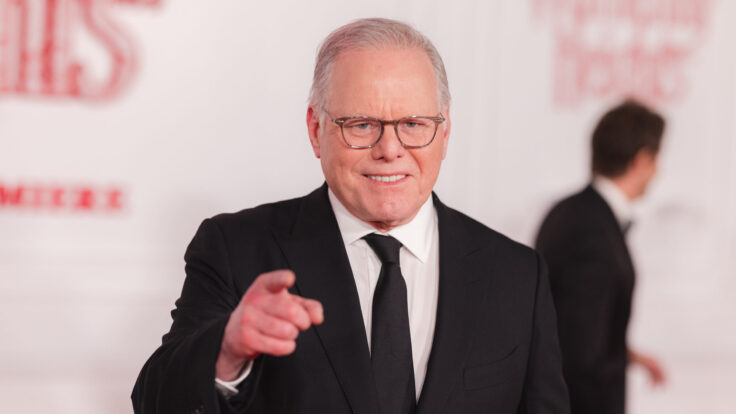
| This being Puck, it’s a rule that I ask a David Zaslav question. You come from the Time Warner Cinematic Universe. So what’s your opinion on entertainment these days and what Warner Bros. Discovery, in particular, is going through?You know, I knew him way back before he became the Hollywood mogul. I think he’s a smart and talented guy. But gosh, he’s got challenges. He’s got just a huge amount of debt on that business, which forces him to behave in certain ways that are probably alienating to some of the constituents that he needs. Hollywood doesn’t like cost-cutting. But even beyond that, it’s not just jobs. It’s figuring out the new business model for television and video entertainment. The bundled cable model was an awfully profitable model for a very long time, and it’s now going away. It’s not being replaced with something that is as profitable and as ubiquitous.
You see any litigation opportunities for entertainment companies?
Well, I think entertainment companies fight with each other all the time, right? Like, you know, when I was at Time Warner, we had one of the largest legal departments in the world because every single person in that industry has a contract and they regularly fight about them.
Certainly kept me employed all these years.
Actually, I think fragmentation has reduced many of the monopoly and competition dynamics that used to be in play like 25 years ago. MTV and ESPN are no longer monopolists. If you don’t like what they’re doing, there are a whole bunch of options. |
|
|
| That’s all for today. As always, reply with any comments and tips. |
|
|
|
| FOUR STORIES WE’RE TALKING ABOUT |
 |
|
 |
| House Turmoil |
| Are MAGA knives out for Speaker Johnson? |
| TINA NGUYEN |
|
 |
|
 |
|
|
|
|
|
 |
|
|
| Need help? Review our FAQs
page or contact
us for assistance. For brand partnerships, email ads@puck.news. |
| You received this email because you signed up to receive emails from Puck, or as part of your Puck account associated with . To stop receiving this newsletter and/or manage all your email preferences, click here. |
| Puck is published by Heat Media LLC. 227 W 17th St New York, NY 10011. |
|
|
|