 |
|
Happy Monday, I’m Eriq Gardner.
|
|
Welcome back to The Rainmaker, a private email about money, power, fame, and who is suing whom.
This week, the fascinating case of the I.R.S. contractor who revealed how much Donald Trump was really paying in federal taxes. And that’s not all he did! Now, he’s about to learn his punishment while the Biden administration deals with the fallout. And perhaps there’s one or two reasons the media should be following this leak saga, too.
P.S. If someone else forwarded you this email, and you’d like to continue receiving this newsletter, click this link.
But first…
|
|
|
- Trump’s Legal Roadshow: Apologies to the intrepid reporters who have braved the tundra in Iowa and New Hampshire, but the last few days have proven that the courts, not the caucuses, will generate the real excitement this election cycle. Take the second E. Jean Carroll defamation trial, where Trump has been wholly unable to restrain himself, muttering to his lawyers so loudly during Carroll’s testimony that Judge Lewis Kaplan threatened to remove him—to which Trump responded, “I would love it. I would love it.” By the weekend, Carroll’s attorney Roberta Kaplan (no relation to the honorable judge) was requesting she be allowed to urge the jury to factor in Trump’s ongoing defamatory campaigning when deciding punitive damages. Just imagine what’s in store once the criminal trials kick off.
And the Insurrection Question: Meanwhile, the drama at the Supreme Court is no less provocative. With the justices reviewing the Colorado decision to disqualify Trump from the state’s primary ballot, a flurry of amicus briefs from lawmakers, law professors, and public interest coalitions are pouring in. One standout comes from a group featuring longtime conservative elections lawyer Ben Ginsberg, whose brief imagines a scenario in which Trump wins an electoral majority but is then disqualified during Congress’s vote-certification process. In short, Ginsberg is warning the justices that by punting the question of whether Trump can run for president as an insurrectionist, they’d only be setting up the nation for more chaos down the road. No word yet on whether Trump will be at the February 8 hearing.
|
- MPA Headaches: The Motion Picture Association is renowned for hosting lavish parties in Washington and premiering new movies for the city’s political elite. But on March 4, the MPA will be involved in a different sort of spectacle: a jury trial. Chonté Long, an administrative assistant who organized those glitzy events, claims that her dismissal in 2017 was not due to the MPA’s relocation to Eye Street, as the trade group claims, but was instead rooted in gender bias. Now, thanks to U.S. District Court Judge Christopher Cooper’s decision to reject a summary judgment bid, Long will try to convince a jury that the relocation did not eliminate the need for essential assistants to manage vendors, prepare event schedules, and work with movie prints. While the MPA didn’t escape a trial, it did convince the judge this past week to bar any mention of its former general counsel, Steve Fabrizio, who was arrested five years ago and subsequently disbarred after blackmailing a woman he met online into having sex.
|
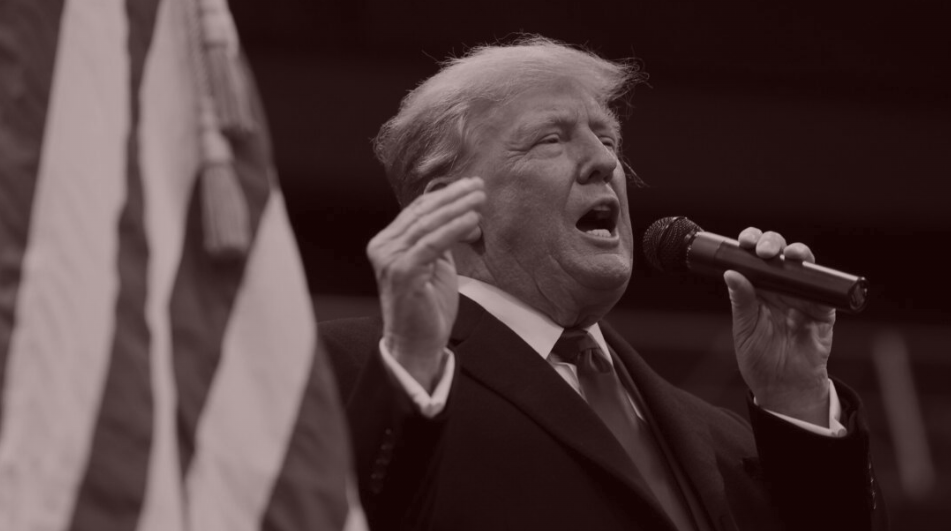 |
| A ‘Times’ Leak Saga for Our Times |
| Anticipating the legal denouement of a vexing legal soap opera featuring Trump, Ken Griffin, a modern Snowden, and The New York Times. |
|
|
|
| Back in 2016, when Donald Trump defied convention (yet again) by refusing to release his tax returns, a St. Louis systems analyst named Charles “Chaz” Littlejohn decided to take matters into his own hands. At the time, pretty much every political reporter in America was searching for those returns (if they weren’t already looking for the Apprentice tapes), but Littlejohn had a different idea. He rejoined Booz Allen Hamilton, the government contractor he had quit a few years earlier (back when Edward Snowden was still there) so that he could consult once again for the Internal Revenue Service. He then worked his way into the agency’s most sensitive database, where he collected Trump’s returns in a manner that he hoped would cover his tracks.
For about six months, Littlejohn stored his bombshell material in the hard drive of his customized Apple iPod, until he finally delivered the goods to The New York Times, in August 2019. He then stole more of Trump’s tax information and gave that to the paper, too. But he wasn’t quite done. Eventually, he went back to the database and absconded with tax information associated with thousands of the country’s wealthiest individuals. Six weeks before the 2020 election, the Littlejohn-sourced material became a cornerstone of the Times’ landmark report detailing the Trump Organization’s stunning losses and byzantine tax-avoidance schemes. Around this time, he also contacted ProPublica and anonymously provided the material for an exposé on the ultra-affluent—including Elon Musk, Jeff Bezos, and Warren Buffett—paying little and sometimes nothing in taxes, too.
In September, after a Treasury Department probe identified Littlejohn as the source of this leak, he pleaded guilty to a single count of disclosing tax information. At the arraignment, Trump’s attorney Alina Habba showed up to theorize that Littlejohn wasn’t working alone and to complain that this leak “probably cost my client thousands of votes and was all by design.”
Now, as a D.C. federal judge deliberates over his sentencing, Littlejohn is seizing the opportunity to express his personal motivations. This past week, he filed a sentencing memorandum (read here) that not only delves into his upbringing and the particulars of his illicit activities, but also opines on the history of taxation, engages in arcane debate about whether tax records should be public, and quotes the late legendary Washington Post publisher Katharine Graham regarding the freedom of the press. While Littlejohn acknowledges his responsibility and readiness to accept a prison term slightly surpassing the recommended four to 10 months, his attorney Lisa Manning has nonetheless strategically positioned her client as someone whose heart was in the right place.
Prosecutors, on the other hand, have emphasized that the crime wasn’t the result of passion but premeditation, orchestrated by a man who took the law into his own hands rather than wait for Congress to release Trump’s taxes—which, as the government notes (read here), eventually happened. Seeking a five-years prison sentence, prosecutors write, “He executed his disclosure scheme over the course of multiple years, plotting and calculating carefully at each step to minimize the risk of detection and maximize the impact of his disclosures.” |
| The Kingdom and the Leaker |
|
| The New York Times covered the saga when Littlejohn was charged in September, but since that initial story, the paper has basically ignored their source and his predicament. That editorial decision stands in stark contrast to the considerable attention the Times devoted over the years to Snowden, who became a cause célèbre in its op-ed pages (e.g., “Pardon Edward Snowden,” “Snowden Does Not Deserve the Threat He Faces,” “Edward Snowden, Whistle-Blower”). The discrepancy is even more glaring when considering how closely Littlejohn worked with the paper to help deliver its exclusive, triple-bylined, multi-part scoop.
Remarkably, as detailed in Littlejohn’s sentencing memo, prior to relinquishing Trump’s tax information, he engaged in months of discussions with the Times about security protocols and reporting strategies. The extensive dialogue included in-person meetings, with one of the reporters writing to Littlejohn in June 2019:
“[I]t was great meeting you last night. That was a (really) big step, and we respect the courage it took. I hope we land on a good path forward. I completely respect your concerns and want you to feel right about any decision / decisions you make… I can’t help but reflect that it’s something the three of us ended up together last night because a certain person won’t disclose information that people absolutely need to see and have for decades. I appreciate you share this concern and recognize one person can make a difference.”
In short, the Times encouraged him. I’m also struck by a notable detail mentioned in passing in the government’s sentencing memo—that after furnishing the Times with a copy of Trump’s tax records, yet prior to publication, Littlejohn stole additional tax information about Trump and related individuals and entities. Whatever prompted him to do this is not yet clear.
While I doubt the paper faces legal exposure for its interactions with Littlejohn, legal precedents around leaks are changing. One recent development concerns Project Veritas, which is facing an F.B.I. investigation into the theft of a diary belonging to President Joe Biden’s daughter, Ashley. In 2021, law enforcement raided the homes of James O’Keefe, Spencer Meads, and Eric Cochran, all associated with Project Veritas, seizing thousands of their documents related to the aforementioned diary. Since then, Project Veritas has staunchly insisted that the F.B.I. investigators shouldn’t have access to these files. Their argument, among other points, leans heavily on the 2001 Supreme Court opinion in Bartnicki v. Vopper, the landmark ruling that upholds the principle that reporters are permitted to publish lawfully obtained information, even if the sources themselves were involved in the theft.
In March of last year, a Special Master tasked with screening the seized Veritas materials recommended that federal agents be granted access. The rationale behind this recommendation was that Bartnicki doesn’t protect journalists who unlawfully acquire information. This prompted several interested and concerned third parties, spearheaded by the A.C.L.U., to interject with an amicus brief that cautioned against opening any door that would criminalize a reporter’s right to receive and possess stolen materials. But on December 21, a New York federal judge endorsed the Special Master’s recommendations, arguing that Project Veritas participated in the theft of the diary. The judge explicitly stated, “Bartnicki does not protect such conduct.”
I presume the Times believes Bartnicki safeguards its own involvement in the dissemination of Trump’s tax information, and I’m equally confident that most First Amendment lawyers would agree. Nevertheless, the intricacies surrounding a journalist’s association with criminal conduct may become the subject of heightened legal scrutiny in the near future—which is extremely relevant if Trump wins re-election and tries to exert his influence on the Justice Department. Notably, Meads’ attorney tells me he’ll soon be taking this Project Veritas situation to the 2nd Circuit Court of Appeals. |
|
|
| One interesting coda: Ken Griffin, the pugnacious founder of the hedge fund Citadel, was one of the ultra-high net worth individuals whose tax journey was mentioned in the ProPublica piece. (The publication reported that Griffin paid a relatively high tax rate of 29.2 percent, unlike many other wealthy elites.) He’s now suing the I.R.S. in Miami to force the agency to adopt a new data security plan.
Initially, when Griffin filed his case, he had no idea who perpetrated the leak. Now, with Littlejohn’s misdeeds revealed, the situation has grown more complex. The law permits citizens to sue the government when one of its officers or employees discloses tax information, but if an external party does it, the government enjoys immunity. So how does a contractor fit in? A contentious debate is now unfolding over this very wrinkle. The government insists that Griffin’s sole recourse is suing Littlejohn, while Griffin’s attorneys posit that Littlejohn was indeed an employee since the I.R.S. exercised day-to-day control over him.
Griffin has a fallback position, alleging in an amended complaint that Littlejohn likely worked with other I.R.S. agents in exploiting security vulnerabilities. The government ridicules this fresh allegation, likening it to the Warren Commission’s search for a second shooter. However, just before the new year, a judge indicated that he’s affording Griffin the opportunity to conduct discovery to scrutinize the circumstances surrounding Littlejohn’s theft and leak of tax data. This suggests that while Littlejohn’s criminal case may quickly end after his imminent sentencing, this scandal is not going away anytime soon. It’s one thing to piss off Trump, it’s quite another to inflame a real billionaire. |
|
|
| Before wrapping up this week’s issue, there’s one more particularly amusing sentencing memorandum I have to share: the case of Terry Jon Martin, a seasoned thief who, lured by the fantasy of “one last score,” set his sights on the iconic ruby red slippers worn by Judy Garland in The Wizard of Oz. Having just completed a stint in prison, Martin decided to purloin the shoes from a museum’s display case, extract the rubies, and offload them on the black market.
What makes this tale especially amusing is Martin’s lack of appreciation for the 1939 classic: He remained blissfully unaware that the gemstones adorning the slippers weren’t genuine rubies! The full legal saga, which you can find in last week’s filing, delves into Martin’s arguments for why he should receive no jail time. |
|
|
| Okay, that’s all for now. As always, feel free to reply with any comments about today’s email. Your notes and tips go directly to my inbox.
Eriq |
|
|
|
| FOUR STORIES WE’RE TALKING ABOUT |
 |
| Goldman’s Inside Man |
| Notes on the hottest topics swirling among the Maidstone crowd. |
| WILLIAM D. COHAN |
|
 |
|
 |
|
 |
|
|
|
|
|
 |
|
|
|
Need help? Review our FAQs
page or contact
us for assistance. For brand partnerships, email ads@puck.news.
|
|
You received this email because you signed up to receive emails from Puck, or as part of your Puck account associated with . To stop receiving this newsletter and/or manage all your email preferences, click here.
|
|
Puck is published by Heat Media LLC. 227 W 17th St New York, NY 10011.
|
|
|
|