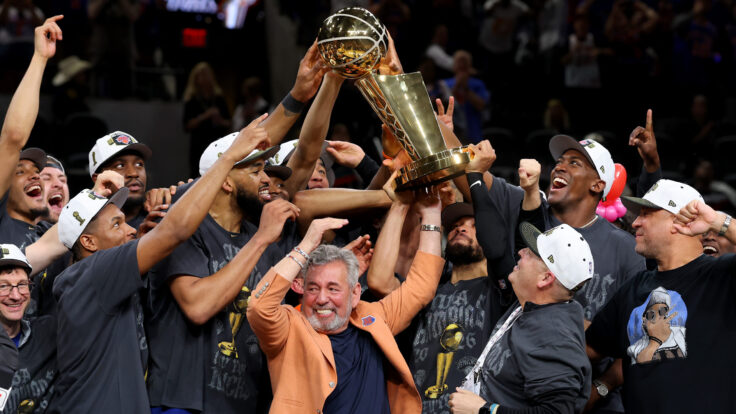
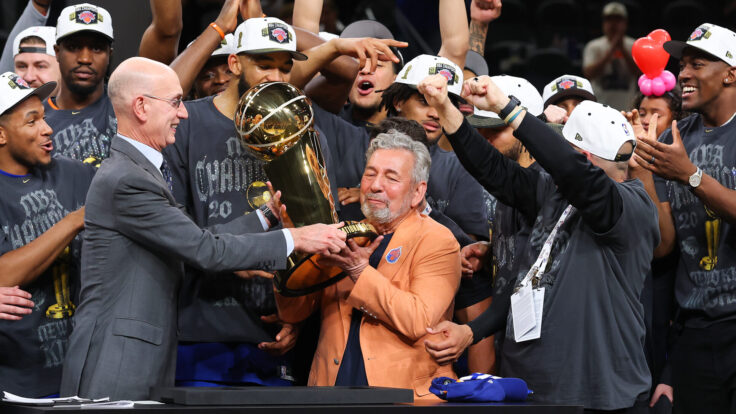
Welcome back to The Varsity, live from a Manhattan that I’ve never before experienced—one whose
denizens are awash in Knicks gear.
R.I.P. Stacey King: The sudden death of the three-time NBA champ has genuinely affected many of my friends who live in the Windy City and listened to, and laughed along with, the Bulls TV analyst every winter. Joe Cowley wrote a nice appreciation.
Pod
alert: LightShed Partners’ Rich Greenfield joins the pod this week to handicap the NFL media deals and the streamers’ divergent sports strategies. Also, make sure to download yesterday’s pod: Puck’s legal guru Eriq Gardner explained why sports has become Topic A in the courts—and on Capitol Hill—before addressing the latest on the Sunday Ticket
time bomb.
In today’s issue: Okay, so it looks like Brendan Sorsby can play for Texas Tech this fall, after all. But he’s still involved in a thorny legal case that could throw player contracts across all of college sports into a state of even greater disarray. Also, Rep. Jim Jordan released a blistering report about how the NFL has run afoul of the Sports Broadcasting Act; Fox and the NFL signed a new deal in Mexico; and the reason why
lifelong Knicks fans like Jimmy Pitaro, Burke Magnus, and Rita Ferro are pulling for the Spurs tonight.
Also mentioned in this issue: Jeffrey Kessler, Charles Barkley, Shaquille O’Neal, Clay Travis, Victor Wembanyama, Curtis LeGeyt, Jalen Brunson, Joseph Braun, Rita Ferro, and
more. |
Brady Meter
NBA Finals Game 2
Knicks vs. Spurs
105–104
Grade: A
|
As Game 2 entered halftime on Friday night, Charles Barkley offered some pointed criticism
of San Antonio second-year phenom Victor Wembanyama, who had struggled mightily up to that point in the game. In the process, Chuck reminded viewers why Inside the NBA remains one of the best studio shows of its generation. “It’s probably been a long time since he got his ass kicked like this,” Barkley said. Shaquille O’Neal immediately disagreed. ESPN then gave the two Hall of Famers six full minutes—an eternity for a live
broadcast—to wax lyrical about the biggest young star in the game. It was great TV.
In its inaugural year on ESPN, the Inside crew has been uneven. Even ESPN content chief Burke Magnus admitted to me on the Varsity podcast last week that he’d like to spread the shows over more of the regular season. But Chuck, Shaq, and the gang have clearly hit
their stride during these Finals and validated Jimmy Pitaro’s decision to bring the studio show over from TNT. |
- Sacked
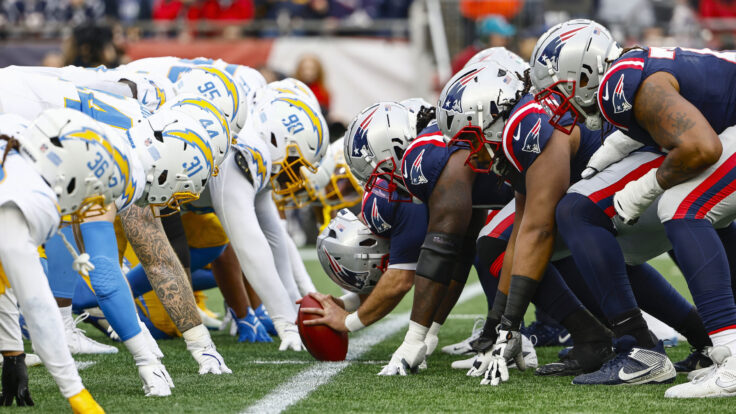
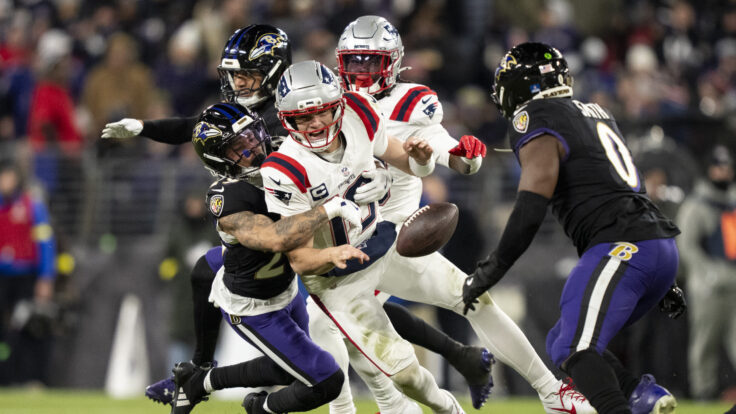
for a loss: In advance of a planned hearing on Wednesday, the House Judiciary Committee released a blistering report this morning accusing the NFL of running afoul of the Sports Broadcasting Act of 1961. “The NFL’s entire television rights structure and the revenues that come from it is a house of cards built on an overstretched antitrust exemption,” noted the artfully titled report, “The Sports Broadcasting Act: A Special-Interest Antitrust Exemption Gone Awry.” Fox News personality
Clay Travis, late of OutKick, and National Association of Broadcasters president and C.E.O. Curtis LeGeyt are both scheduled to testify later this week.
It was striking to see how the report pushed back on most of the NFL’s talking points, like the claim that 87 percent of all games are on broadcast. (“In fact, significantly less than half of the games are actually available to a consumer on broadcast television, depending on the week and geographic
area,” the report countered.) It’s way too early to determine whether this foray has any teeth or is merely some motivated witch hunt that will further lubricate the lobbying industry and benefit its favorite downtown D.C. expense-account pavilions. It’s also unclear whether the league might need to make any concessions to vaporize this nuisance. More soon… - The “Knicks in 7” superfans: ESPN chairman Jimmy Pitaro grew up a Knicks fan—a
huge one. So did content chief Burke Magnus, who spent at least five minutes before we taped the Varsity podcast last week walking me through Jalen Brunson’s assist-to-turnover ratio. Disney ad sales president Rita Ferro is in the same camp—a lifelong, die-hard Knicks fan.
Yet all three are
almost certainly pulling for the Spurs tonight in order to extend the series and boost ESPN’s chances of turning a profit. Four-game sweeps are poison to ESPN’s NBA economics, especially in Bristol’s $2.5 billion-a-year-rights era. Generally speaking, a network breaks even with a five-game series, and only begins turning a profit on Game 6. Game 7, of course, delivers the windfall. Anyway, only a trio of long-suffering Knicks fans could unearth the downside in the franchise’s most
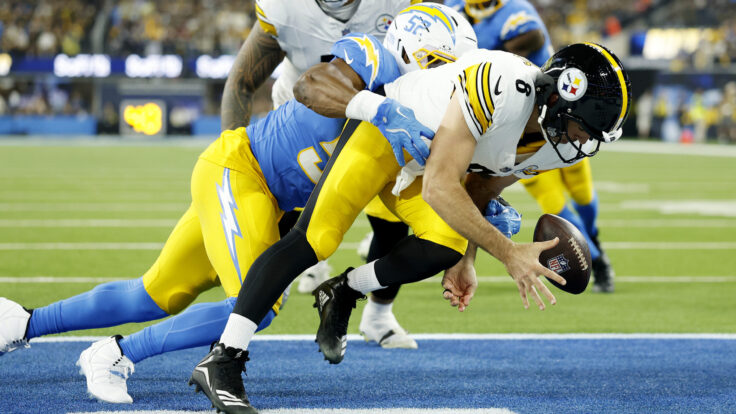
promising title run in a half-century. - Murdoch’s Mexican War, part two: You’ve all seen the reports that the relationship between Fox and the NFL is kind of strained right now, and you’ve certainly read Eriq Gardner’s recent deep dive on the trademark war that the broadcaster is fighting in Mexico against its former local partner. So, this morning, I was surprised to get a press release announcing a multiyear deal between Fox and the Shield in… Mexico. Starting this fall, Fox will carry Thursday Night Football, Sunday regular-season games, Thanksgiving games, NFC playoff games, the Super Bowl, and the Pro Bowl in the country. The network is also committed
to producing four weekly shows, including two devoted to fantasy football.
|
|
|
|
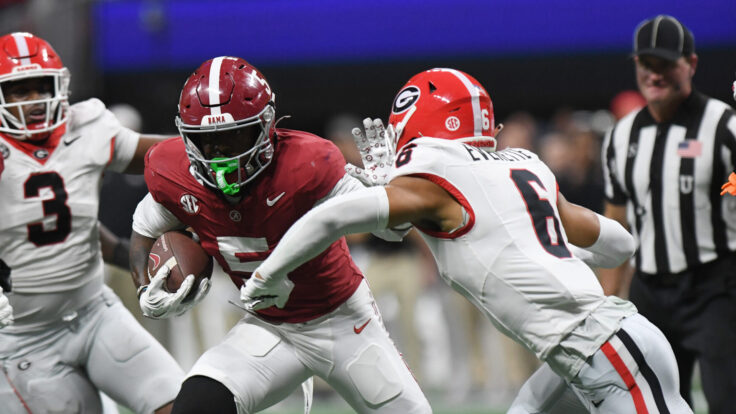
The University of Cincinnati is suing to collect $1 million in N.I.L. damages after Sorsby
defected to Texas Tech—a ticking time bomb case that could imperil player contracts across all of college sports. |
|
|
|
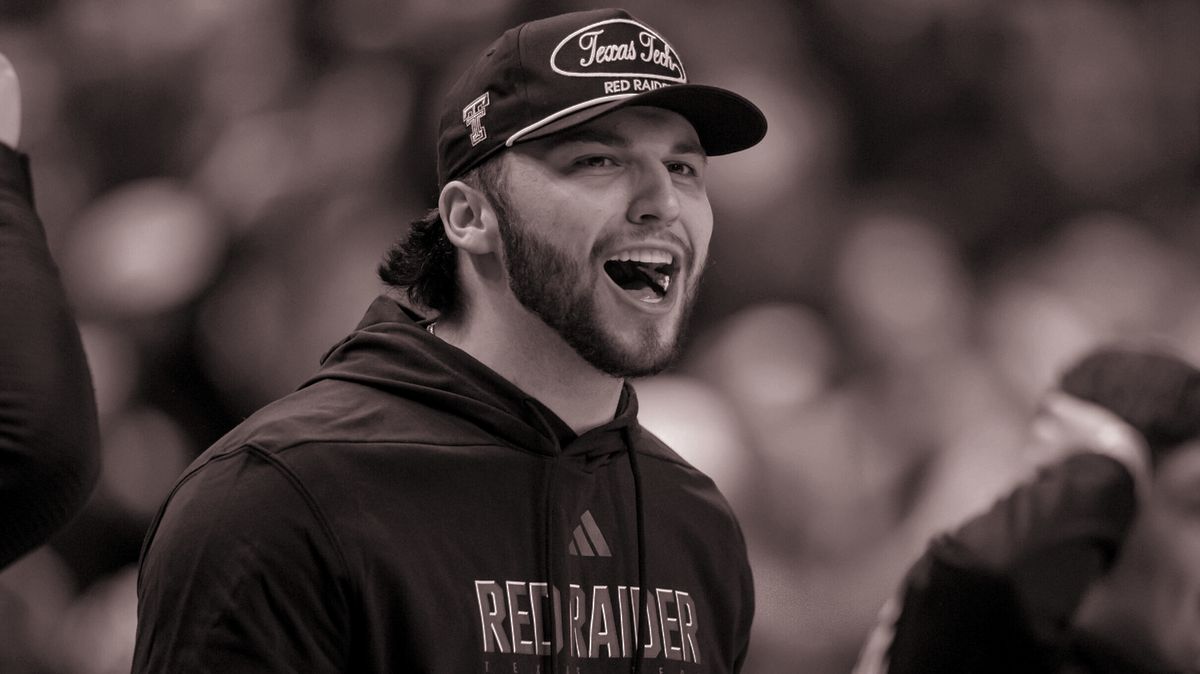
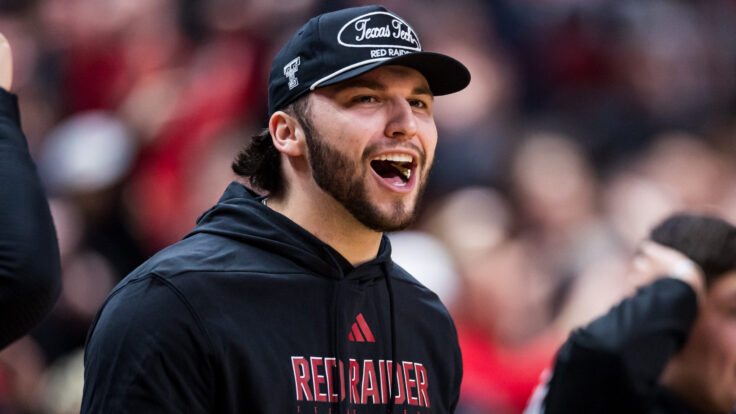
Plenty of eyes are on Brendan Sorsby, the Texas Tech quarterback who scored a significant
legal victory today. Represented by the nearly omnipresent Jeffrey Kessler, Sorsby persuaded a Texas judge to restore his college eligibility after the NCAA suspended him for wagering on everything from Romanian soccer matches and the Nathan’s Famous Hot Dog Eating Contest to games involving his old team, the Indiana Hoosiers. The
collegiate journeyman quarterback had argued that he was suffering from a gambling addiction and that the NCAA’s response was both punitive and hypocritical, given college sports’ deep entanglement with the betting ecosystem. A judge agreed, ruling that Sorsby would suffer irreparable injury and ordering just a two-game suspension instead.
Sorsby’s eligibility fight is compelling. But there’s a potentially far more consequential lawsuit involving him that has attracted less attention: The
University of Cincinnati is attempting to collect $1 million in liquidated damages under Sorsby’s N.I.L. agreement after he transferred to Texas Tech in January. The university has argued that his departure deprived the institution of the ability to deploy one of its star athletes as a promotional asset. Sorsby’s lawyer, Joseph Braun, calls Cincinnati’s position a “legal fiction.” The dispute may determine whether schools can use N.I.L. contracts to discourage transfers and
effectively re-create the restrictions—including, maybe, on gambling—that courts have spent years dismantling.
Cincinnati filed its lawsuit in February. Now a federal judge is deciding whether it will survive a motion to dismiss. The fight has become a proxy war over a fundamental question: What are N.I.L. agreements actually buying? Under Ohio law, the liquidated-damages provision in a contract is enforceable only if it reasonably and proportionately compensates the nonbreaching
party for a genuine loss. If the amount is deemed grossly unconscionable, the provision risks being voided as an unlawful penalty.
So what exactly was Cincinnati purchasing when the university sat down with Sorsby’s agent in June 2025 and agreed to pay him $875,800? Was the school acquiring valuable name, image, and likeness rights? Or was the agreement really premised on something else?
The N.I.L. rights, Braun has argued, have little independent value to the university,
particularly because the license was nonexclusive and expressly excluded broadcast uses. Strip away the paperwork, he contended, and the arrangement is obvious: Cincinnati paid Sorsby to play quarterback, which he did for two seasons.
That argument wanders into sensitive territory. Cincinnati’s response leaned heavily on the landmark House settlement that formalized pathways for schools to compensate athletes. Under that framework, universities can pay players for legitimate
N.I.L. uses, promotional appearances, and licensing rights. What they cannot do—at least officially—is engage in outright pay-for-play. Accordingly, Cincinnati has insisted this was not an employment arrangement. As for the $1 million liquidated-damages provision, the university argued that the amount was reasonable, pointing to reports that Texas Tech offered Sorsby between $4 million and $6 million after he entered the transfer portal.
At a minimum, the university
argued, these are factual disputes that cannot be resolved at the pleading stage. I suspect that Barnes & Thornburg, Cincinnati’s counsel, would be perfectly happy dragging this case out and making it more expensive for Sorsby to keep fighting. |
In many ways, the case turns on the wink-and-nod nature of modern college athletics. Sorsby is attempting to
force into the open what many people in the industry privately acknowledge but few say out loud: N.I.L. rights themselves are often incidental to the real transaction. He has insisted that he has an “inalienable right” to transfer, and alleged that the school is trying to punish him and “selectively send a chilling message to other student-athletes.” After he informed the school he would be leaving, he alleged, Cincinnati even offered to waive the $1 million penalty if he entered the NFL Draft
rather than take Texas Tech’s money. He refused.
If Sorsby succeeds in persuading a court that N.I.L. deals are, in substance, pay-for-play dressed up in licensing language, the implications could call into question a growing number of contracts across college sports, and potentially undermine the legal architecture that has emerged in the wake of the NCAA’s various defeats in court. Conversely, if Cincinnati prevails, it may be able to use contract language to restrain athletes’
rights.
The Texas judge in Sorsby’s other lawsuit, the headline-grabbing eligibility case, was forced to rule quickly, thanks to the looming June 22 deadline to declare for the NFL supplemental draft. The University of Cincinnati case runs on a different clock. The Ohio federal judge can take his time. In the long run, that may make it the more consequential dispute—one whose reverberations at the increasingly blurry intersection of amateur competition, employment, and free agency could
change the terrain for thousands of athletes who follow him. |
Thanks, Eriq. See you all tomorrow.
John |
|
|
|
Puck founding partner Matt Belloni takes you inside the business of Hollywood, using exclusive reporting and insight to explain
the backstories on everything from Marvel movies to the streaming wars. |
|
|
|
Unique and privileged insight into the private conversations taking place inside boardrooms and corner offices up and down Wall
Street, relayed by best-selling author, journalist, and former M&A senior banker William D. Cohan. |
|
|
|
Need help? Review our
FAQ page or contact us for assistance. For brand partnerships, email ads@puck.news.
You received this email because you signed up to receive emails from Puck, or as part of your Puck account associated with {{customer.email}}. To stop receiving this newsletter and/or manage all your email preferences, click here. |
Puck is published by Heat Media LLC. 107 Greenwich St., New York, NY 10006 |
|
|
|
|