|
|
Happy Monday, I’m Eriq Gardner.
|
|
Welcome back to The Rainmaker, my private newsletter focused on the legal maneuvering inside Hollywood, Silicon Valley, Washington, and Wall Street.
This week, I look at how the former head of Universal Studios pushed to make an O.J. Simpson movie that purports the former football star was framed for murder—a movie that has since become a head-spinning legal drama itself. Plus, news on an unreported subpoena to Donald Trump’s new company; wins for Netflix, Bob Dylan, and Lifetime TV; and a Disney lawyer still rocking it at 85.
But first…
|
|
|
| I’m not surprised whatsoever that Nicholas Sandmann’s libel suit against various media outlets got tossed this past week on summary judgment. Nevertheless, when discussing the MAGA hat-wearing Kentucky teenager who briefly found himself the talk of social media for allegedly having “blocked” activist Nathan Phillips at a Native American protest, I want to make one observation.
Kentucky federal judge William Bertelsman initially rejected Sandmann’s lawsuit back in 2019 on various grounds including how the statement that Phillips was “blocked” was incapable of being proven objectively incorrect. Then, the judge reconsidered and allowed the libel claims. Now, Bertelsman has once again come to the conclusion that the statement at issue is unverifiable and, thus, unactionable opinion. OK, so tell me again why it was necessary to authorize more than two-and-a-half years of discovery? If this was a matter of law rather than a question of fact, what the hell was the purpose of all those depositions and all that document production? Bertelsman meekly defends himself from potential naysayers like yours truly by saying he believed “some development of the context of this incident may be helpful.”
Say what? Let’s call out bullshit for what it is. Deep in the heart of Kentucky, the 86-year-old judge wanted to indulge the teenager who had become a right-wing darling.
Frankly, if I’m CNN, I’m a little pissed. Unlike ABC, CBS, The New York Times, Gannett, and Rolling Stone, CNN decided to settle Sandmann’s claim. The notice of CNN’s deal came in early 2020, a few months after the reconsideration order, and while the amount that CNN was paying to get out of trouble was never made public, some on the right seized upon the deal as evidence of media corruption. My guess is that CNN, along with its insurers, did the math and figured that settlement would be less costly than defending the case no matter the outcome. Two years of legal bills is certainly something, but now there’s no trial, and CNN looks like a media world coward. |
|
|
- Here’s something on the libel front that escaped attention but caught my eye last week: Ryan Lizza, now writing for Politico and still defending his old work from the litigious (some might say vexatious) grasps of former California congressman Devin Nunes, has filed an action (see here) in Florida to enforce a civil subpoena against Trump Media & Technology Group, the social media company that Donald Trump hopes will disrupt Twitter. Trump’s company tapped Nunes as its C.E.O., so Lizza wants to know: What was that hiring process like? Nunes, who surprised many in the political establishment by abandoning his congressional seat for the Trump job, claims Lizza caused him $75 million in reputational harm after writing about him, so the writer sees the recruitment as relevant.
- It took nearly ten years—and three amicus briefs from the Motion Picture Association—but Lifetime Television has finally choked the life out of a lawsuit from a serial killer. A scheduled airing in 2013 of Romeo Killer: The Christopher Porco Story was briefly halted upon the allegation of a “substantially fictionalized account,” but an injunction was lifted, and last year, a New York appeals court wrote Romeo Killer “presents a broadly accurate depiction of the crime, the ensuing criminal investigation and the trial that are matters of public interest.” Now, New York’s highest appeals court has refused to entertain any of Porco’s further arguments.
- Rockmond Dunbar isn’t the only individual who has objected to a Covid vaccine mandate on religious grounds, but the former 9-1-1 actor may be the only one so far to go to court as an adherent of the Church of Universal Wisdom. What’s that religion? A federal judge wants to know more, too. Dismissing a religious discrimination claim against The Walt Disney Company (but with an opportunity for Dunbar to try again), the judge writes the actor “points to no other Universal Wisdom followers who have been adversely affected by Defendants’ vaccination policy.” Here’s the ruling.
|
|
|
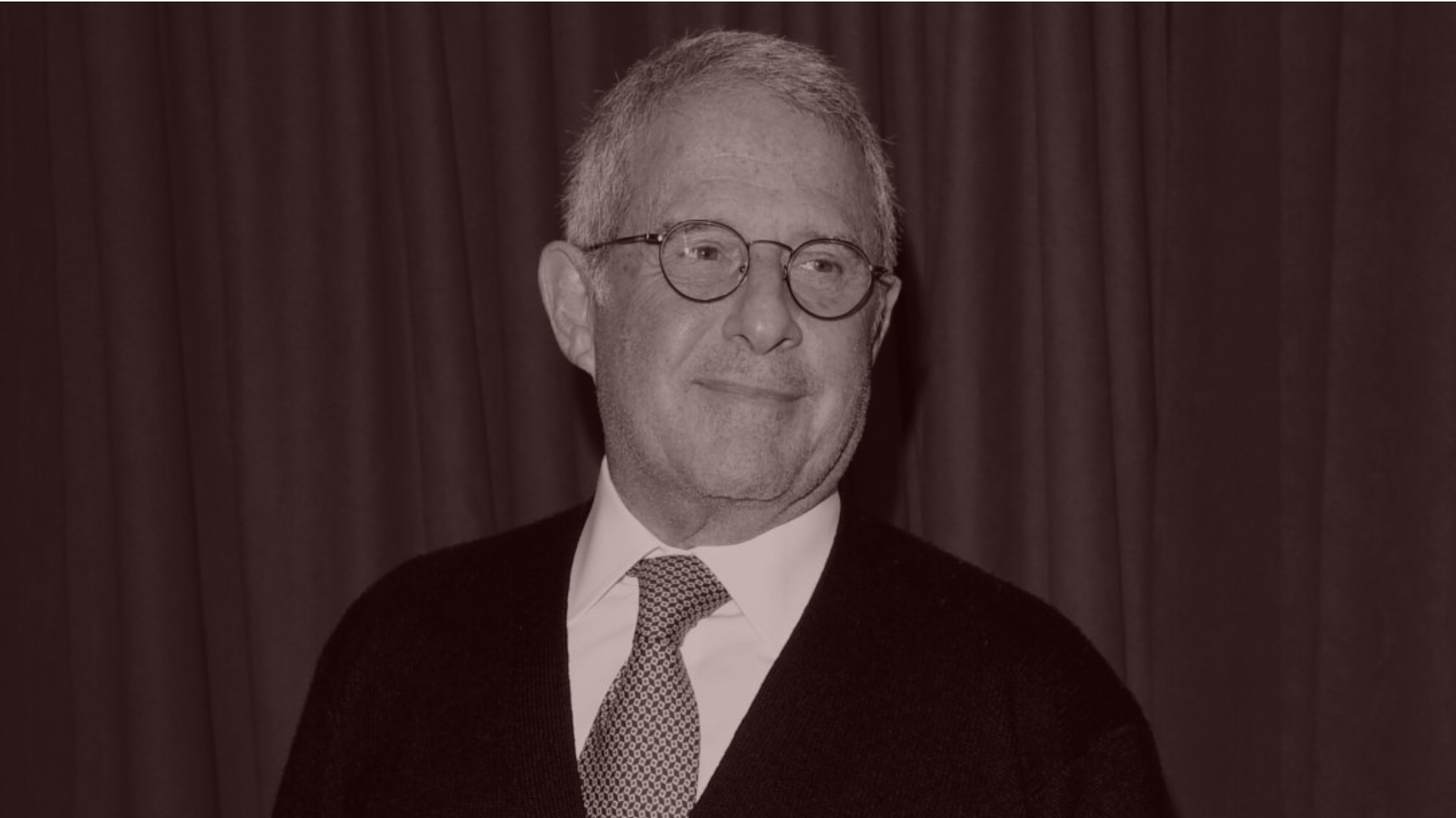
| Right now, in some lawyer’s office, there is a 2017 audio recording of one of the most powerful Hollywood executives of the past half century saying of O.J. Simpson, “I always thought he was guilty until I read Josh’s script… Let’s make this movie before this guy gets out of prison… We’ll find ways to get this movie financed and distributed.” The voice on that recording allegedly belongs to Ron Meyer, the legendary CAA co-founder, Universal Studios president, and vice chairman at NBCUniversal, who, two years after exiting amid a scandal involving his affair with actress Charlotte Kirk, is now at the center of a $150 million lawsuit almost as unbelievable as the notion that O.J. isn’t a murderer.
On one level, that audio tape—which Meyer’s lawyer, Danya Perry, suggests may violate California’s criminal law against eavesdropping—is a remnant from l'affaire Kirk. She’s the actress who claimed she was coerced into sex with several Hollywood executives and then fought to lift a gag order that had kept her silent. Both Meyer and Kevin Tsujihara, the former Warner Bros. C.E.O. who also stepped down over a Kirk affair, have denied anything but brief, consensual relationships with her. But both were alleged to have sought acting roles for Kirk. One such role was Nicole Brown Simpson in Nicole & O.J., a $65 million film directed by Joshua Newton that purports Simpson was framed for double-murder, based on Newton’s own reexamination of the evidence.
Newton, yet another former boyfriend of Kirk, now sees something sinister in what Meyer allegedly said on that recorded call about his O.J. movie, and Meyer’s close attention to his project now forms the basis of litigation against NBCUniversal and its former executive. This past week, both Meyer and NBCU separately moved to dismiss the claims. These latest court papers, as well as a podcast interview that Meyer gave a few weeks ago, provide fresh perspectives on one of the most sordid episodes in modern Hollywood. |
|
|
| Back in 2016, Kirk, who had met Meyer at a film festival, introduced Newton to Meyer, then one of the most powerful figures in entertainment. Despite Newton having only a few minor credits, Meyer read his scripts, invited him to his office at Universal, and allegedly assured him that his films would be made. “You’re the new Stanley Kubrick,” Meyer told Newton, according to his lawsuit, in which Kirk is identified only as “Jane Doe.”
Meyer claims he was merely offering advice to Kirk’s boyfriend and was surprised by what later happened. “I tried to be helpful to him… all of a sudden, I got a letter from him and his lawyer trying to sue me for not giving him good advice, or whatever you want to call it,” Meyer recently told a podcaster.
What Newton would call it, however, is a promise. The director says Meyer acted on behalf of Universal and held himself out as his talent agent. Meyer allegedly arranged to have filmmaker Brett Ratner (Rush Hour, Red Dragon), another figure involved in the Kirk scandal, fully finance Nicole & O.J at $20 million, or at least attach his name as co-producer so that other financiers would see the project as credible. Newton says he later came to realize that Ratner’s offer “was part of a fraudulent scheme” to manipulate Kirk into thinking she’d be getting a starring role and thus forgo a lawsuit.
In August 2017, according to Newton, Kirk had retained lawyers to pursue sexual misconduct claims against Tsujihara, Ratner, Australian billionaire James Packer, and top indie film producer Avi Lerner, when a mediation session occurred. The director says he attended the mediation as a “support person” for Kirk. “At the mediation, the participants of the mediation pressured Newton to agree to incorporate into Jane Doe’s Settlement Agreement an obligation to enter into a separate film financing agreement on terms which were considerably less favorable than what Ratner had offered and Newton, on the advice of Meyer, had accepted at the Beverly Hills Hotel meeting on August 7, 2017,” states an amended complaint. “During the mediation, Ratner leaped at Newton and threatened to punch him in the face if he didn’t sign the Settlement Agreement.”
Newton says he never even got the money under the “seriously diluted financing and production arrangements accepted under duress,” both because of the nature of the project—Meyer, on the aforementioned recorded phone call, said Ratner worried about the Jewish community’s reaction to the film since Ronald Goldman was Jewish—and because of sexual harassment allegations that would soon surface against Ratner.
Nevertheless, in several phone calls and emails in late 2017, Meyer remained committed. “Let’s get this closed and move on to positive things, especially making your film,” he is alleged to have said. “We’ll find ways to get this movie financed and distributed” is another quote. Also: “I want my company to see it.”
Newton was able to wrangle some money to film a few scenes for Nicole & O.J, which Meyer allegedly encouraged him to take to the Cannes Film Festival to promote. Then, the Kirk stuff got out—first in chatter (Lerner allegedly told Sylvester Stallone) and later, in the media. In particular, my old publication, The Hollywood Reporter, published several prominent stories in March 2018 about Tsujihara’s affair and all the backroom dealmaking. The scandal exploded, and Newton says the damage was “immediate and potentially career-ending.” Just as THR was writing about Kirk, which led to the resignation of Tsujihara, the Nicole & O.J. material was being screened for Jason Blum, head of Blumhouse, in which Universal is an investor. Blum passed, as did others. The project fell into purgatory, and when Kirk pursued new legal claims, alleging that Meyer had been secretly inserted into the settlement deal without her knowledge, Meyer allegedly told Newton, “That fucking cunt, I did nothing wrong. All I did was fuck her a couple of times.” When Newton told Kirk of the conversation, Meyer allegedly stopped taking his calls. Then came the $150 million lawsuit. |
|
|
| A moral evaluation of Meyer’s behavior aside, did he do anything legally wrong here? Newton is now represented by the Nesenoff Miltenberg firm and alleges that the executive should have disclosed conflicts of interest. The lawsuit (see the full amended complaint here) claims that Meyer, instead, breached fiduciary duties, made misrepresentations, and committed promissory fraud.
In a just-filed motion to dismiss the suit (read here), Meyer attacks Newton for suing over an “informal, never-memorialized, chimerical relationship,” and that far from being Newton’s agent, Meyer “owed fiduciary duties to NBCU and not to Plaintiff.”
The relationship between Newton and Meyer seems strange enough that I wouldn’t presume to know how the judge will respond, but Meyer’s other big argument about the lawsuit is pretty convincing. In saying stuff like “We’ll find ways to get this movie financed and distributed,” Meyer contends that vague statements of future intention don’t represent much of a promise.
NBCU also wants to get out of this case, telling the judge that Meyer’s affair was outside the scope of his employment. Per the company’s memorandum: “NBCU had nothing to do with Mr. Meyer’s relationship with Ms. Doe, nothing to do with his ensuing entanglement with Ms. Doe and her boyfriends, and nothing to do with any film projects Mr. Newton may have discussed with Mr. Meyer.”
NBCU is represented by Daniel Petrocelli, who once represented Ron Goldman’s family in the successful civil suit against O.J. over those murders. He’s now in court seeking to get a client out of a legal entanglement concerning an O.J. movie. To quote Shakespeare, “Misery acquaints a man with strange bedfellows.” |
|
|
| Judges matter, and getting a bad one sure sucks if you’re a litigant. Just ask the assistant U.S. attorney who argued before Texas federal judge Lynn Hughes only to hear back, “It was [a] lot simpler when you guys wore dark suits, white shirts and navy ties… We didn’t let girls do it in the old days.” Hughes later banned this female prosecutor from his courtroom, an exclusion order which the Fifth Circuit Court of Appeals vacated this past week.
Elsewhere in Texas, there’s a Waco judge named Alan Albright who has developed a reputation for being very plaintiff-friendly and has solicited the filing of patent cases in his district. As a result, so-called patent trolls flock to Waco. More than a thousand patent suits were filed there last year, representing about a quarter of all such litigation. This concentration caused Republican Senator Thom Tillis and Democratic Senator Patrick Leahy to express concern about the “appearance of impropriety” to Supreme Court Chief Justice John Roberts, who responded by identifying the issue as one of his top three agenda items to start the year.
Message received. On July 25, the Western District of Texas announced that all subsequent patent cases will now be randomly assigned among the 12 judges there. That’s potentially a break for many companies forced to defend their technology before such an unfriendly judge—and it wasn’t the only piece of forum-shopping news either.
Just as that was happening, Netflix scored a victory against Realtime Adaptive Streaming, a litigious patent-holding entity that’s no stranger to trying cases in Waco. This time, Realtime tried to beat Netflix in Delaware. That is, until Realtime was headed for a loss there (and the ineligibility of its patents), at which point Realtime dropped the case and started fresh in California. Netflix demanded that the case be sent back to Delaware, and the Stranger Things giant wanted its attorney fees awarded, too. Realtime dropped the case again. Netflix pushed for its fees nevertheless, and won $409,000. That decision has now been affirmed by the U.S. Court for the Federal Circuit, laying down the hammer on what it calls “blatant gamesmanship.” See the full opinion here. |
|
|
- The U.S. government’s attempt to block the Random House-Simon & Schuster merger got underway today as both sides delivered opening statements in a case that could aid antitrust regulators as they measure the labor impact of corporate consolidation. Although this is an important trial, U.S. District Court Judge Florence Pan has decided against streaming it and is also requiring social distancing in the gallery, the wearing of N-95 or KN-94 masks, and daily negative Covid antigen tests for participants. That could limit attendance, and thus publicity, although expect a full house (or as much as three feet of distance will allow) when author Stephen King testifies as a government witness.
- Apple’s challenge to Chicago’s 9 percent surcharge on streaming has ended. The tech giant has been in court since 2018 on the claim that the city’s special amusement tax violated the commerce and due process clauses of the Constitution as well as the federal Internet Tax Freedom Act, but the dispute has apparently been settled.
- Bob Dylan has prevailed over a lawsuit accusing him of sexually abusing a minor back in the 1960s. The plaintiff dropped the case after Dylan’s attorneys at Gibson Dunn accused her of destroying evidence.
- Another victory for Britney Spears as a judge has refused her father’s bid to depose her as part of a post-conservatorship examination about his actions.
- Netflix is pursuing copyright and trademark claims against the songwriters behind the Grammy-winning Unofficial Bridgerton Musical. The songwriters attempted to stage a live show and sell their own merchandise, and Netflix says they don’t have that right. Here’s the complaint.
- A judge has given final approval to a $92 million deal for TikTok to resolve privacy claims. Based on the judge’s write-up, the plaintiffs’ lawyers, who are taking a third of the settlement pot, may owe just a small degree of thanks to the Trump administration, whose own pursuit of China’s TikTok may have motivated this settlement. Subtracting $30.6 million for the lawyers and another $4 million in expenses, the rest will go to the 1.2 million people who submitted valid claims after notice of the deal was sent out.
- The “Wagatha Christie” case, which riveted the United Kingdom since it involved the wives of two of the biggest soccer stars there, has resulted in a judgment in favor of the defendant, Coleen Rooney, who was accused in social media posts of leaking gossip to the press about Rebekah Vardy.
- Speaking of Britain, we welcome citizens there to the 21st Century as TV cameras can now film criminal sentencing. It’s not full transparency, but in the repressive land of the super-injunctions, it’s a start. Then again, see the Random House trial above. American judges can be publicity-shy, too.
|
| Charging Ahead at Any Age |
|
| This past week saw the launch of two major antitrust lawsuits. The first comes from the Federal Trade Commission, now firmly under the thumb of 33-year-old superstar Lina Khan after Democrats in the Senate confirmed a majority for her. She’s now flexing her authority by launching a lawsuit aimed at blocking Meta’s acquisition of Within Unlimited, which develops fitness apps for V.R. devices.
Frankly, I never heard of this exercise company until this past week, and I’m sure I’m not alone. That’s part of the reason why this antitrust case is so intriguing. It’s rare to see regulators go after an acquisition so small in a market that’s very much undeveloped. Khan’s aggressive move will have legal observers watching how the F.T.C. defines the relevant antitrust market, of course, but will also prompt venture capitalists to potentially think twice about their exit strategy if the government puts the kibosh on acquisitions by any of the FAANGs. My colleague, Bill Cohan, has further thoughts here.
This case should move rather swiftly as the F.T.C. is seeking a temporary restraining order. A hearing may come this week in San Francisco to discuss who’s likely to prevail and the prospect of irreparable harm in allowing the transaction to move forward. Also, interestingly, Meta is represented by Weil partner Mike Moiseyev, who worked at the F.T.C. for more than three decades and once led the agency unit which blessed Facebook’s acquisition of Instagram. His former employer is looking to unwind that merger in a separate case.
The second huge antitrust suit occurred literally minutes before the weekend began when The Walt Disney Company sued Visa and Mastercard over how these two credit companies have allegedly been coordinating with each other. Of course, merchants have been complaining about credit card fees for many years, and this has also been the subject of much litigation this century. Disney itself opted out of a $5.5 billion class action settlement back in 2019.
This lawsuit nevertheless comes as somewhat of a surprise as there was no advance warning it was coming and it’s rare to see one of the nation’s largest corporations pursuing antitrust claims. Here’s the complaint, which comes from 85-year-old legal all-star Sanford Litvack, who served as the antitrust chief during the Carter administration before spending a couple years as general counsel at Disney. Remarkably, he’s the only attorney listed on the complaint. Contrast that to the F.T.C.’s latest against Meta, which lists 14 lawyers. |
|
|
|
| FOUR STORIES WE'RE TALKING ABOUT |
 |
| Zaz's Tween Gamble |
| WBD is betting on a surprising new content strategy to take on its rivals. |
| JULIA ALEXANDER |
|
 |
| WSJ Follies & NFL+ |
| Teddy and Jon discuss the Musk-Shanahan-Sergey imbroglio at the Journal and the NFL’s streaming ambitions. |
| TEDDY SCHLEIFER |
|
 |
| The Carried Interest Wars |
| Notes on Lina Khan’s antitrust trial balloon & the "end" of the carried interest loophole. |
| WILLIAM D. COHAN |
|
 |
| Stallone's War on Rocky |
| The 76-year-old is fighting for a financial stake in his signature property. |
| MATTHEW BELLONI |
|
|
|

|
|
|
| You received this message because you signed up to receive emails from Puck
Was this email forwarded to you?
Sign up for Puck here
Sent to
Unsubscribe
Interested in exploring our newsletter offerings?
Manage your preferences
Puck is published by Heat Media LLC
227 W 17th St
New York, NY 10011
For support, just reply to this e-mail
For brand partnerships, email ads@puck.news |
|
|