 |
|
Happy Monday, I’m Eriq Gardner.
|
|
Welcome back to The Rainmaker, a private email about money, power, fame, and, most of all, the law.
In today’s edition, some classified information connecting eBay and… the C.I.A. (Yes, really.) Also, the end of the Hollywood actors strike, fresh Barbie legal fallout, Argentina’s $16 billion bill, the fate of De Niro’s frequent flyer miles, and more. (If someone else let you in on the secret of this newsletter, click this link to continue receiving it.)
Let’s begin…
|
| Meet Hollywood’s Hottest Actor: James Dean |
|
| So SAG-AFTRA has finally reached a deal with producers to end the actors’ four-month strike. About damn time! Still, one thing about the final agreement makes me wonder whether the guild missed the mark.
Throughout the negotiations, SAG-AFTRA—led by Fran Drescher and Duncan Crabtree-Ireland—was hyper-focused on granting actors more control and compensation when studios used A.I. to replicate their performances. Alas, as my colleague Jonathan Handel reported last night, the final deal reflects the importance of obtaining consent for “digital replicas” and specifies the circumstances in which performers are entitled to pay, from daily salaries to residuals, for such uses of A.I.
Those seem like solid achievements, but it’s important to recognize that SAG-AFTRA could have shot for something different. For example, it might have sought to impose boundaries by requiring live actors in certain situations. Should actors have demanded that? I’m not sure. As Jonathan noted, some of the issues bleed into use of C.G.I. technology, and it may be wishful thinking to imagine the guild could have blocked the technology altogether. That said, Hollywood lawyers have been expressing to me their concern that by making consent a requirement, studios might be motivated to secure whatever rights they can when hiring actors. If studios condition employment on A.I. consent, most actors will be left with little to no say in the matter.
I also don’t quite get why the deal directs producers to obtain consent for the A.I. replication of deceased performers. This so-called “zombie provision” ended up being one of the final points of contention. However, SAG-AFTRA does not represent dead actors (who really can never consent) nor their estates. So why prioritize the heirs of James Dean, Marlon Brando, and Marilyn Monroe over living actors eager to audition for roles?
Perhaps the union envisions instances where estates will veto the use of dead actors—a right these heirs arguably don’t have under current law—but this runs the risk of sanctioning a market for dead actors. (Perhaps a cheaper one too, considering the other A.I. compensation provisions.) The same goes for the No Fakes Act, a union-pushed bill co-sponsored by Senator Amy Klobuchar that, among other things, would make digital replication rights inheritable and licensable. Shouldn’t the union see A.I. as a job threat? It almost seems as though guild leaders have been so focused on the issue of consent that they left an opening for studios to eliminate jobs for their own members. If James Dean suddenly becomes the hottest actor in Hollywood, the union may shoulder some blame. |
|
|
- Mattel’s Broken Promise: The incredible box office success of Barbie has Mattel in hot water with the University of California system. For decades, the Barbie owner has been a benefactor of U.C.L.A. Mattel Children’s Hospital. In 2017, Mattel agreed to give another $50 million to expand the facility’s pediatric care—and keep its name on the building. Just a year later, Mattel suspended the payments, citing the company’s economic struggles.
But its fortunes have since reversed: Barbie has grossed more than $1.4 billion worldwide, and Mattel reportedly gets 5 percent of box office revenue, as well as a share of profits, amounting to around $100 million. Now, the stewards of U.C.L.A. are suing, arguing that Mattel no longer has any excuse to abandon its $50 million commitment. Represented by Orrick lawyers, the university insists that “injustice can only be avoided by enforcing Mattel’s promise.”
- Killers of the Flyer Miles: As you’ve no doubt heard, a jury recently found Robert De Niro’s company liable for gender discrimination and inflicted a $1.3 million punishment in the actor’s battle with his ex-assistant Graham Chase Robinson. But what about his legal claim that Robinson stole 5 million frequent flyer miles? Laugh if you will, but those Delta SkyMiles are what led De Niro to sue in the first place, as he explained in a deposition. The jury shrugged them off. Sure, they might not be worth quite as much as the actor thought, but really?! Bring on the appeal.
- Don’t Cry for Me: Argentina is seeking to appeal after a federal judge in New York ordered the cash-strapped country to pay $16 billion for its decision to forcibly renationalize its oil sector—a years-long case that was funded by Burford Capital, a London-based firm that specializes in financing mega-lawsuits. (Burford bought a majority stake in the legal claim for just $15 million, surely one of the best bets in financial history.)
Of course, Argentina claims it can’t afford the $16 billion bond it needs to appeal, and that even if it could, the government lacks the legal authority to set aside that much money. So the country’s Sullivan & Cromwell lawyers are pleading with the federal judge to temporarily halt enforcement of the judgment pending appeal without the need of a bond. The Burford-backed plaintiffs are protesting that Argentina has a history of evading debts. Something to watch.
|
 |
| A Spy in Silicon Valley |
| Jim Baugh, the former C.I.A. operative convicted of orchestrating a bizarre scheme to silence two eBay critics, blames the company for its toxic culture—and says he was still working as a spy. Now, the Justice Department is claiming that Baugh’s explosive allegations are classified. |
|
|
|
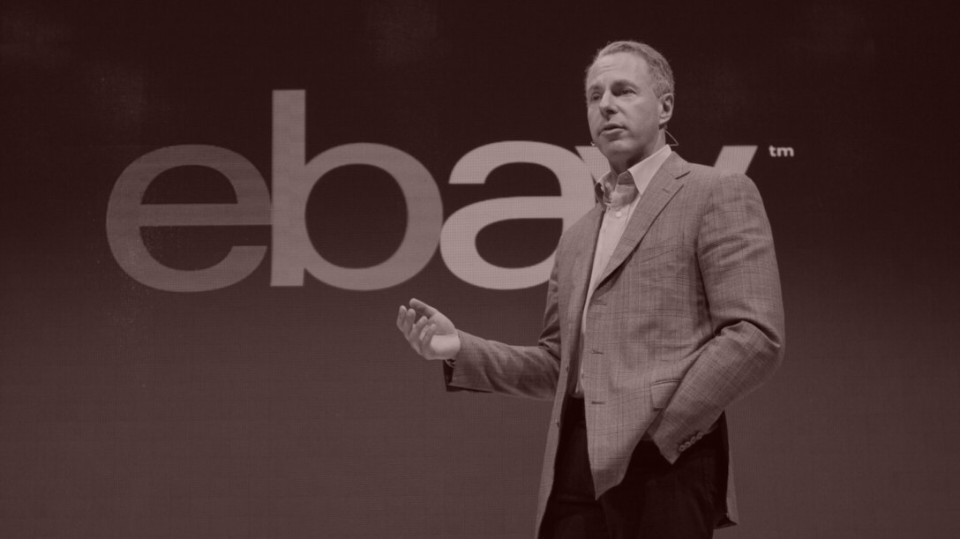
| Has the Central Intelligence Agency infiltrated corporate America, and even enlisted executives for espionage? It would appear so, at least judging by the Justice Department’s unusual intervention in a civil case brought by a pair of married journalists who were harassed by eBay executives including Jim Baugh, a former C.I.A. operative whose security firm once contracted with the likes of Apple, Amazon, and even the Oscars (he provided a protection detail for Joe Biden at the 2016 show).
The harassment case was undoubtedly one of the more bizarre episodes in recent Silicon Valley history. One day in 2019, David and Ina Steiner, who had spent two decades running a small trade publication for online resellers, began receiving threats on Twitter. The situation rapidly escalated, with the couple receiving disturbing mail packages including live spiders, cockroaches, a bloody pig mask, a funeral wreath, and a book entitled Grief Diaries: Surviving Loss of a Spouse. At another point, their neighbors started getting issues of Hustler: Barely Legal in David’s name; the couple also found that they had been mysteriously registered as potential franchise owners of Adam & Eve, an “adult toy” store.
As it turned out, the Steiners had made an enemy of eBay, allegedly due to their unflattering coverage of the ecommerce giant. At the time, however, the Steiners were baffled and terrified. Fearing for their lives, they froze their credit cards, installed security cameras around their home, and repeatedly called the police. Eventually, they uncovered the truth, thanks to payment records from a peculiar 4:30 a.m. pizza delivery and the license plate of a rental car that David managed to capture on film: Shockingly, it turned out executives at eBay had been surreptitiously surveilling them.
In the end, seven members of eBay’s Global Intelligence Center, including Baugh, faced prosecution on charges of conspiracy to commit cyberstalking and tampering with witnesses. Baugh was sentenced in September 2022 to nearly five years in prison for masterminding the harassment campaign.
The cases were covered by The New York Times and 60 Minutes, among others. But it seems nobody has been paying attention to more recent legal developments, starting with an explosive letter that Baugh wrote to the judge on the eve of his sentencing last year. In it, Baugh detailed how, after leaving the C.I.A., he was re-enlisted to recruit private sector colleagues—“even a C.E.O.,” he boasted—to spy on foreign leaders and report back on important international meetings. “I felt honored to be trusted with such sensitive information and to be able to provide security assistance to our government,” wrote Baugh, no doubt hoping the judge would be lenient in punishing him. |
|
|
| In an extraordinary step, the Justice Department had Baugh’s letter sealed, insisting that it contained classified national security secrets. (It remains publicly available through various court monitoring services, where I found it last week.) It’s unusual for the government to involve itself in civil cases. Indeed, in searching court records, I couldn’t find a single other instance in which the Justice Department had gotten involved in a civil case over alleged classified information. Then again, this whole legal situation is undeniably wild—and an absolute mess.
The Steiners’ lawsuit, after all, is essentially a racketeering case that builds upon the substantial public record from the criminal proceedings. They allege that they were targeted because of their unflattering coverage of eBay, including stories about then-C.E.O. Devin Wenig’s exorbitant salary and reckless spending. (He built a replica of Walker’s, a popular Manhattan bar, on the company’s Silicon Valley campus.) Their argument is bolstered by a text from Wenig to eBay’s then-chief communications officer, Steve Wymer, following a story Ina Steiner wrote about a legal dispute between eBay and Amazon in August 2019. “[Ina] is out with a hot piece on the litigation,” Wenig wrote. “If we are ever going to take her down… now is the time.” Wymer responded, “on it.” He then messaged Baugh: “she is a biased troll who needs to get BURNED DOWN.”
Baugh, in his letter to the judge, expressed profound remorse for how he handled the matter, and said he was under the influence of alcohol at the time. He also mentioned the intense pressure he faced at eBay to silence the Steiners. “I only saw in the Steiners what the company wanted me to see,” he wrote. “I was a seasoned professional in my field, fully capable of identifying credible risk and threats, but in this instance, I completely failed to see what was real and what was not.”
Wenig, for his part, clearly wants to put the responsibility back on Baugh. In a pending motion to dismiss—filed with the help of Abbe Lowell, the politically connected attorney who is currently representing Hunter Biden and Senator Robert Menendez—Wenig also criticizes the Steiners for relying on a “decontextualized text” and “implausible inferences.” Alas, the entire case has now been complicated by the government inserting itself into the mix, which could impact discovery. |
|
|
| The Justice Department is pushing for a pretty broad protective order in Steiner v. eBay that would prevent the parties from delving into classified secrets and exploring the relationship between co-defendants and the U.S. government. What’s more, the D.O.J. is seeking the authority to review discovery materials before their public release and participate in depositions and potentially a trial. Through negotiations, the government’s demands have been somewhat narrowed after Wenig and eBay expressed their concerns, but the Steiners are still voicing objections.
Indeed, the Steiners are adamant about unsealing Baugh’s letter and argue that the government has misconstrued the importance of Baugh’s ties to the C.I.A., which they argue speak to eBay’s negligent hiring and supervision. In short, they want to know if eBay specifically employed Baugh for his experience in covert ops. Those sorts of details might also undermine the contention that Baugh was merely a rogue employee.
Speaking of Baugh, he is currently serving his sentence at the minimum-security prison at the Maxwell Air Force Base in Alabama—the same facility that once held Enron’s Jeffrey Skilling, Studio 54 founder Steve Rubell, and numerous figures tied to the Watergate scandal. While Baugh couldn’t be reached for comment, court filings from his criminal case highlight why the Steiners are eager to talk with him free of constraints. As Baugh’s sentencing memorandum puts it, “Indeed, reflecting a toxic culture that goes to the top of many powerful technology companies, senior eBay executives hired Mr. Baugh precisely because of his prior experience as a government security professional with a demonstrated ability to solve difficult problems through unconventional means.” |
|
|
- Was the California magazine story that inspired the original Top Gun script a work of “new journalism”? Yes, at least according to this motion aimed at confirming a copyright termination that could cost Paramount millions. The writer’s heirs are no doubt contesting Paramount’s position that the story is just a bunch of uncopyrightable facts. Still, it’s funny to think of Top Gun being put on the same literary plane as Norman Mailer and Truman Capote.
- Having been told that journalist’s privilege doesn’t apply, ex-Fox News reporter Catherine Herridge is still refusing to identify her source(s) regarding a series of stories in 2017. Herridge is now facing a contempt motion, but she’s no pushover. In fact, while many mistakenly think Gretchen Carlson was the first to take on Roger Ailes over his treatment of women, it was actually Herridge.
- The Supreme Court last year threw a big wrench into the gears of the administrative state by endorsing the “major questions doctrine,” but the S.E.C. thinks it has a major answer (read here) to why it may still pursue Binance for fraud.
- I only skimmed it, but if you care about WeWork, here’s the key declaration from its first day of Chapter 11.
- Finally, I’m mourning the fact that the Supreme Court probably won’t take up MLB’s antitrust exemption after Commissioner Rob Manfred wimped out and settled with minor league teams, but the Northwestern-educated sports law nut in me has a new obsession: University of Michigan vs. The Big Ten Conference over football coach Jim Harbaugh’s suspension for sign stealing. Here’s the complaint.
|
| That’s it for today. Assuming the Company lets me, I’ll be back next week. |
|
|
|
| FOUR STORIES WE’RE TALKING ABOUT |
 |
|
 |
|
 |
| SAG’s New Deal |
| A close look at what the actors achieved. |
| JONATHAN HANDEL |
|
 |
|
|
|
|
|
 |
|
|
|
Need help? Review our FAQs
page or contact
us for assistance. For brand partnerships, email ads@puck.news.
|
|
You received this email because you signed up to receive emails from Puck, or as part of your Puck account associated with . To stop receiving this newsletter and/or manage all your email preferences, click here.
|
|
Puck is published by Heat Media LLC. 227 W 17th St New York, NY 10011.
|
|
|
|