 |
|
Welcome back to What I’m Hearing+, coming to you once again from Brooklyn, which is experiencing its annual jump from comfortable spring to sweltering summer in the span of one week.
In tonight’s edition, a deep dive into Disney’s new Hulu strategy, as C.E.O. Bob Iger teases expanding its general entertainment platform and integrating it into Disney+ as a one-stop super app. In February, Iger sounded iffy on the upside. I’ll explain why (and how) I think it can work.
|
 |
| The Iger-Hulu Flip-Flop |
| When Bob Iger first ushered Disney into the streaming era, he prioritized the company’s historic brand over growth at all costs. Well, now it’s time for growth at all costs. |
|
|
|
| What’s going on these days between Disney and Hulu is sort of baffling. Back in February, C.E.O. Bob Iger sounded like he had soured on a deal to acquire Comcast’s one-third stake in the platform, valued at some $9 billion. “We are intent on reducing our debt,” Iger told CNBC. “I’m not going to speculate if we’re a buyer or a seller of it. But I’m concerned about undifferentiated general entertainment.” Less than a month later, at a Morgan Stanley conference, he sounded even less confident in Hulu’s value. It’s “very tricky” to pin down, he said, describing streaming as a “nascent business.”
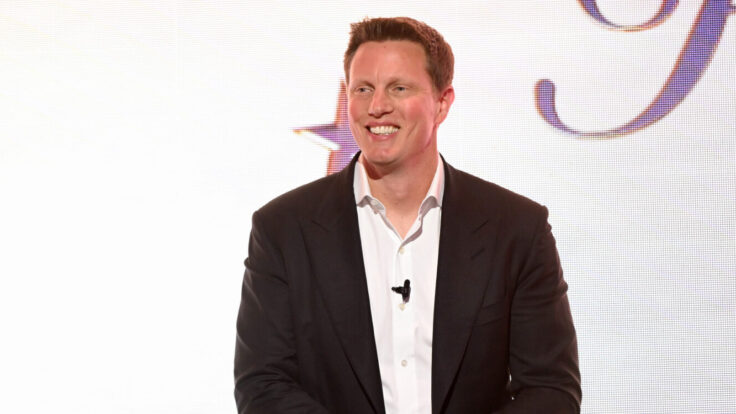
But on last week’s earnings call, Iger sounded like he’d had a change of heart. “Cordial” and “constructive” talks with Comcast C.E.O. Brian Roberts had begun, he said. Three months of study had led him to the conclusion that “a combination of the content that’s on Disney+ with general entertainment is a very strong combination, from a subscriber perspective, from a customer acquisition and retention perspective, and also from an advertiser’s perspective.”
Regardless of whether Iger had been pouring cold water on an acquisition in order to lower the deal price, or if he was genuinely concerned about the long-term value of folding Hulu into Disney+, he now appears to be persuaded by David Zaslav’s thesis behind combining HBO Max and Discovery+ into one, ahem, undifferentiated general entertainment mega-platform. On the earnings call, Iger said that Hulu content would soon be available in a “one-app experience” through Disney+, presumably the first step toward a more holistic integration of Disney/Fox entertainment assets with Hulu originals. Ousted C.E.O. Bob Chapek had alluded to this when he was leading the company.
There are still plenty of reasons to doubt the wisdom of a Disney-Hulu deal: Hulu’s subscriber growth is slowing, Disney is saddled with debt, and there are real questions about redundancies between the two platforms. But many of those same doubts also articulate the deal logic for combining the companies: A unified app would likely improve the value of the bundle, beef up advertising on D+, raise average revenue per user (ARPU), and widen a support web for Disney’s big tentpole series and films. Disney+ needs a longer chain of engagement and consumption beyond the initial title that brings people in. Consumers who tune in for The Mandalorian should be enticed by Hulu shows to stay in the app rather than heading back to Netflix.
Yes, there are questions internally about how it will all work. But as Iger intimated, “If, ultimately, Hulu is that solution, then we’re bullish about that.” This is even more true if Disney has trouble licensing out its general entertainment content amid a new flood of competition there. If Disney can’t make money off licensing, then housing it on Hulu can entice new audiences within its ecosystem.
Herewith, an exploration of the strategic benefits—and potential downsides—of the Disney+/Hulu marriage that Iger has been studying. |
|
|
| Last week, I wrote about how streaming has an object permanence problem: If you can’t track down a piece of programming, does it really exist? Combining various apps into a single service would theoretically solve this issue. Consider Disney+, where the core attractions are Marvel and Star Wars. New Star Wars and Marvel series regularly appear on Nielsen’s weekly Top 10 list, as do major films. None of the general entertainment content exclusive to Disney+ has.
Star Wars and Marvel are incredible properties, of course, but they only get Disney so far. After all, D+ added more subscribers in the United States and Canada in its first 13 months (36.3M subs by January 2021) than in the two-plus years that followed (an additional 10 million). On one hand, this was expected; Star Wars and Marvel fans immediately stormed the platform. (Also, Iger set up a smart partnership with Verizon.) Plus, growth naturally slows down as adoption happens—and it happened quickly for Disney+. On the other hand, having six Star Wars shows is not that much different than having three Star Wars shows. After a while, they don’t lead to a significant bump in subscriber acquisition or retention, which forces Disney to spend more on marketing other content. And there isn’t enough intriguing content outside of those franchises for consumers who are already well sated by Netflix and the rest.
This isn’t an issue if the Marvel and Star Wars audiences are growing significantly year after year… but they’re not. Disney+ has either added minimal subscribers or lost subscribers, domestically, over the past three quarters. (In 2022, Disney+ had the second lowest share of net new SVOD subscriptions among all premium streamers, according to Antenna.) And while Disney+ has the third highest share of total premium subscribers in the U.S., also according to Antenna, it’s growing more slowly, on a percentage basis, than Peacock, Paramount+, and HBO Max. Meanwhile, Disney is facing a franchise identity crisis: CinemaScore averages have declined alongside box office for recent Marvel films. Andor, one of the best-reviewed new Star Wars series, was also one of the least watched.
Luckily, there are early indications that the Hulu integration strategy can turn things around. The audience demand for Disney+ originals has fallen year over year, relative to other streamers, according to data from Parrot Analytics, where I work as strategy director. But on-platform demand (meaning everything available on the platform, including licensed content or catalog content) has actually increased with the recent arrival of series like Black-ish (originally on ABC), The Orville (originally on Fox and Hulu), Dancing with the Stars (ABC), and Glee (Fox). These might be “generalized” entertainment products, but they’re clearly moving the needle just enough—and Disney needs much more of them to acquire, retain, and boost overall engagement. Especially when you consider that the mega-hit, globally licensed kids series Bluey, is one of Disney’s biggest competitors to Netflix’s Cocomelon—but was the sixth most-viewed acquired streaming series in 2022 compared to Cocomelon’s third, according to Nielsen. There’s more competition for every single part of Disney’s audience attention, across premium, kids, and generalized content. |
| The Hulu Difference Maker |
|
| Back in 2019, Iger was openly wary of introducing too much general entertainment to Disney+—concerned that it would harm the “family brand” that distinguishes Disney from its competitors. But staying in the “family” lane is not an avenue for consistent growth or strong retention. In order to win the ARPU game, Iger needs increased consumption and a broader audience profile. And this is where properly-executed general entertainment can be valuable.
As Iger noted a couple quarters ago, investing in general entertainment that’s not fully differentiated from the competitors, in the interest of scale, won’t accomplish much. This is the same faulty logic behind hoarding everything exclusively on one app. If those series or films are not being consumed, and aren’t acquiring or retaining high-value customers, then there’s more value in licensing them out for cash.
This is the reality for Iger: He needs general entertainment to support his valuable I.P., and to generate meaningful ad revenue while making sure consumption grows. He also, in Hulu, has a streaming service on his hands that he may not necessarily want. But right now, the best hope for Disney streaming as a whole is integrating Hulu into one unified app. If streaming is basically becoming cable—I don’t fully agree with this sentiment, but let’s run with it—then individual series and film franchises operate almost like networks. NBC might program a Law & Order block to keep audiences engaged for three hours, and then follow it up with a variety late night program, the news, or reruns of a sitcom. The network is programmed title-to-title to stop audiences from changing the channel, but it’s more limited. With streaming, understanding how to use data to examine audiences that over- or under-index, what’s acquiring customers and what they’re watching (to completion) after that initial title across a wider array of content, helps to build a better content pipeline for more customers. The generalized entertainment on Hulu provides more access points.
The last part of this equation is the willingness to pay for those new access points. Theoretically, if standalone Disney+ subscribers are incentivized to sign up for the bundle—and specifically the ad-supported bundle, because of new in-app discovery—is that a net positive for Disney? Potentially—if those subscribers likely weren’t going to sign up for Hulu, because they weren’t interested in another service or were unaware of the content. Now, however, it’s literally served to them through the app; hurdles to access, and thus payment, are removed. Similarly, if bundle customers who don’t engage with Hulu content are suddenly increasing their time spent in the app, or the number of times they open the app because the friction is removed, that’s a net positive for Disney and its advertising partners.
Of course, it’s still an open question whether this is the most financially viable option for Disney. The standalone Hulu app will still exist, and if audiences are pivoting to the unified experience, how much will that impact consumption on the standalone? Are these audiences so different that maintaining two separate apps won’t lead to massive cannibalization and ad weakness? Or will the rollup crash the value of one platform, build up the other, and leave executives flailing to figure out what to do with each? It’s perhaps a Catch-22 for Disney. |
|
|
| Subscriptions are the result of curiosity driving intent driving action. Something catches your eye, you investigate, you make a decision, and you sign up. It could be someone sending you this Puck article. Or, it could be a new series you heard about at work that you then seek out. In a linear world, that intent came with fewer hurdles. If a show was on ABC, you’d just have to remember to flip to the channel. As entertainment becomes more siloed (and moves behind paywalls and remains oversaturated and largely undifferentiated), the reason to subscribe evolves.
The New York Times is a perfect example. It takes its revenue and invests in journalism, but that revenue is not coming strictly from core journalistic businesses. The daily habits that drive its success go well beyond content. The Times became a gaming company (Wordle, Crossword), shopping portal (Wirecutter), sports betting manual (The Athletic) and recipe archive (Cooking). Now, you can enjoy the Times without ever reading a news article. But it’s also more likely that if you open your app every day for the Spelling Bee, you will also get more of your news from the Times than from The Atlantic or The Washington Post, for obvious reasons: you’re there. Similarly, you may have joined Disney+ for The Mandalorian, but now you’re more likely to peruse and stream Hulu’s The Kardashians because it’s all in one app.
Hulu is a $9 billion problem for Iger, but it’s also a bandaid. It’s a necessity to ensure Disney+ continues growing with strong advertising to create strong margins in its most important territory. It needs to tell the story that investors and the Street want to hear. But Disney’s long term growth in streaming won’t come from generalized content that simply supports Marvel, Star Wars, or its next big I.P. It must find new ways to capitalize on people’s attention and time outside of passively watching a program. That could be shopping, something the company is already doing. It could be gaming, a notion Iger once resisted but now may find a necessity. It’s not going to come from spending more on marketing more generalized content in a heavily competitive market.
As you think about Disney+ and Hulu together, ask yourself not what you might be able to stream on it, but rather what else could it offer that would keep you sitting there for an hour longer? Or get you to open the app four days a week instead of once or twice? Disney+ doesn’t just need Hulu. The Bear and Modern Family are great, but increasingly, it seems like the company needs its Wordle. Considering that Disney+ is already experimenting with eCommerce and parks perks, don’t be surprised if further incentivization programs for opening the app for more often—maybe limited merchandise drops or Disney-themed puzzles—start appearing. |
|
|
|
| FOUR STORIES WE’RE TALKING ABOUT |
 |
|
 |
| Tea at Tiffany’s |
| Inside a rift two years into the Tiffany-LVMH marriage. |
| LAUREN SHERMAN |
|
 |
|
 |
|
|
|
|
|
 |
|
|
|
Need help? Review our FAQs
page or contact
us for assistance. For brand partnerships, email ads@puck.news.
|
|
|
|
Puck is published by Heat Media LLC. 227 W 17th St New York, NY 10011.
|
|
|
|