Welcome back to The Varsity, our thrice-weekly private email on all the news, trends,
and deals that make the sports business tick. Happy Fourth of July week to all: My itinerary includes a Wednesday night trip to D.C.’s Audi Field to watch the USWNT play a friendly against Canada. Let Marchand know if you’ll be around, and he’ll find us some time.
I didn’t venture out to see F1, the movie, this weekend, but I clocked that it’s Apple’s most successful theatrical film to date—taking in $144 million globally, including $56 million from the U.S. and
Canada. By all accounts, the opening was better than expected. My partner Matt Belloni has more on the topic on his excellent podcast, The Town, and will offer some fresh perspective in tonight’s issue of What
I’m Hearing.
🚨🚨 Pod alert: Axios’s Sara Fischer is back from France, eager to tell us what she learned in Cannes on this week’s upcoming Varsity podcast. Also, make sure you listen to yesterday’s dish session with Jon Wertheim, America’s foremost tennis sage, who opined on exactly what he would do if he were
appointed Tennis Czar for a day. Listen here and here.
🚨 Programming note: The Varsity will go dark for the rest of the week, but I’ll be back in your inboxes on Monday. |
- Pro sports’s gambling problem: More than a decade ago, as you may recall, NBA commissioner Adam Silver took to the opinion pages of The New York Times to call for legalized gambling. “Sports betting should be brought out of the underground, and into the sunlight,
where it can be appropriately monitored and regulated,” he wrote. Last April, the NBA banned Jontay Porter for life after confirming that the Raptors power forward was making prop bets on himself. Federal investigators are currently looking into other players, including Pistons guard Malik Beasley, for gambling on games, including prop bets.
While legalized gambling might seem to exacerbate the problem of players getting in on the fix, wagering proponents
insist that industry professionalization has surfaced market irregularities and bad actors. I asked one of the biggest investors in the space why sports fans should feel reassured by the federal investigations. “There’s always going to be some teething as you transition,” he said. “The question is: What was happening years ago, when all this stuff was illegal? Betting was still happening, but it wasn’t being monitored, or taxed. There were no licensing requirements. All of that’s now in place,
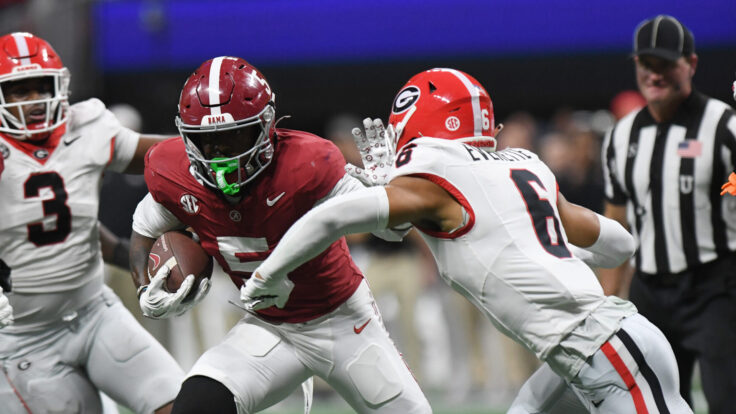
and you’re going to have more awareness about things.” He brought up an incident, in 2023, when sports books stopped taking bets on an Alabama baseball game because of suspicious activity. The Crimson Tide coach was eventually
implicated.
My source viewed this as an encouraging sign that the system is working. “They were caught instantaneously,” he said. “The thing to me that’s so exciting is that the ability to catch problem people is so much better. That still doesn’t mean there aren’t going to be people who are doing stuff that
they shouldn’t be doing, but just because it’s happening doesn’t mean you created this problem.” - The new NBA TV: Starting in October, the NBA will take over production of NBA TV from TNT Sports, which has run the channel for the past 17 years, and move its operations from Atlanta to New Jersey. While the channel has suffered through the same cord-cutting frenzy that has afflicted the rest of the linear TV business, the NBA is nevertheless committed to
keeping the channel up and running.
Of course, the channel’s programming strategy will have to change. The new media deals signed by ESPN, NBC, and Amazon, which hold exclusive rights to primetime windows most nights of the week, will result in NBA TV having fewer live regular season games on its schedule. But the league still plans to prioritize as much live programming as it can, including international games that involve both NBA and WNBA prospects. The league was emboldened by the
performance of French professional league games that it carried, a couple of years ago, when Victor Wembanyama was still an NBA prospect.
Viewers should expect to see more behind-the-scenes content from practices and walk-throughs. The NBA shot the content used in the Michael Jordan documentary The Last Dance and believes it can find an audience for that type of documentary footage, too. - The Tennis
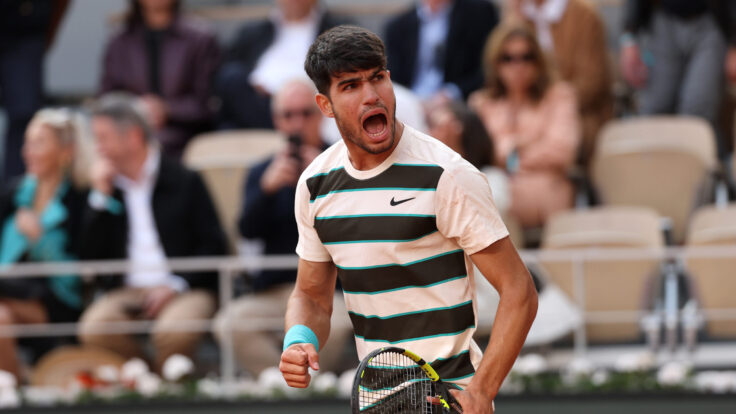
Czar: You might think that tennis would be in recovery mode after the retirement of legends Roger Federer and Rafael Nadal, and the winding down of Novak Djokovic’s career. But it has renewed energy following the Carlos Alcaraz–Jannik Sinner French Open final that begat a new tennis rivalry. I asked Sports Illustrated scribe Jon Wertheim about how the sport can take advantage of
this momentum.
First, Wertheim made the familiar and well-heeded point that the men’s and women’s tours need to combine and go to market as one entity, and figure out how to divide the revenues appropriately. “It needs to be simplified and streamlined,” he told me. “And the fact that men and women are playing together like no other sport should be, like, line 1A on any agenda.” He also brought up the perils of being a global sport. Coverage of the French Open
final, after all, started at 4 a.m. in Los Angeles. Wimbledon won’t be much better. “That’s a problem,” he said. “Having a global sports product is great. There are a lot of leagues, there are a lot of athletes, there are a lot of teams that would kill for tennis’s global reach. But there are some real challenges that come with it.” Check out the rest on the Varsity pod. - WNBA expansion: When I talked to WNBA commissioner Cathy Engelbert last fall, she told me that Adam Silver was fielding calls from NBA owners looking to add a WNBA team to their market. “Especially after our historic draft [in 2024], so many people called
the ensuing couple of weeks,” she said. Which made today’s announcement of three new teams—Cleveland in 2028, Detroit in 2029, and Philly in 2030—somewhat unsurprising. But the $250 million expansion fee for each team is jaw-dropping, especially when compared to the $50 million expansion fee Joe Lacob paid last year for the Golden State Valkyries.
For the record, the expansion franchises all went to people with NBA ties. Dan Gilbert’s
Rock Entertainment Group will own the Cleveland team, Pistons owner Tom Gores will head up the ownership group for the Detroit team, and 76ers owners Harris Blitzer Sports & Entertainment will own the one in Philly. Eight more cities have put in bids to launch teams. - People news: Washington Spirit owner Michele Kang was
named president of the French soccer club Olympique Lyonnais. Kang, of course, owns the women’s soccer team in Lyon, OL Lyonnes, as well as the NWSL’s Spirit. … Damon Phillips resigned as senior vice president of NBC Sports digital and emerging businesses. Phillips,
who recently interviewed for Maryland’s athletic director job, did not say where he was headed, noting only in an email, “Exciting things lie ahead!” NBC hired Phillips back in 2017 to run the D.C.-based regional sports network. Before that, he spent a decade at ESPN. … New York Times sports business reporter Ken Belson is writing a book called Every Day Is Sunday, which carries the tagline: “How Jerry Jones, Robert Kraft
and Roger Goodell turned the NFL into a cultural & economic juggernaut.” Grand Central Publishing will release the book in October. … The Athletic opted not to renew the contract of the well-respected Ben Standig, who covered the Commanders for the brand over the past six years. Standig made the announcement on X
|
And now, on to the media rights circus… |
|
|
Sports may be the last remaining jewel of live TV, but the era of the 10-figure
rights deals is a thing of the past for everyone besides the NFL and NBA. The current marketplace tells the story. |
|
|
Shortly after the ink dried on the NBA’s astonishing $76 billion, decade-plus media rights deals
last year, my best sources wondered what fate might befall the next crop of leagues heading out to test the market. Yes, yes, everyone expects the NFL to pursue an out in its current contracts to renegotiate terms in 2029, and use the NBA’s recent success as leverage for what’s sure to be an utterly gobsmacking, market-defying number. But between now and then, many whispered, the industry was likely to face a stagnant market, at best, for less sexy leagues—F1, the Mountain West,
the Pac-12, and even a post-ESPN-divorce MLB—and fewer (and more cash-conscious) bidders.
The Peak TV era, the decade-plus when streamers and networks forked over billions to grow and maintain their platforms, is now a relic of the past in the general entertainment industry. And the sports media market appears to be following a similar trajectory. Netflix, Amazon, and YouTube have turned out to be unsurprisingly savvy trade partners—keenly aware of what they need to enhance their LTV
metrics and seduce advertisers, which often skews niche or eventized over tonnage, formerly the mother’s milk of the trade. And the cable players, like the newly established Versant and GunnarCo, are less certain participants than ever before.
In fact, multiple sources have described the current sports rights marketplace as the toughest that they’ve ever seen. To be clear, it’s not a market crash or a bursting bubble—there are still plenty of companies coveting sports
rights. But the huge fee increases that have been a hallmark of the past two decades are becoming much tougher to negotiate. For instance, several media companies have expressed interest in F1, which has been looking for an increase over the $90 million per year that ESPN currently pays for U.S. rights. The racing series went to market earlier this year, looking to up that deal to $150 million–$180 million. F1 executives took a lot of meetings, but it looks like they’ve had to recalibrate their
expectations. F1 will get a U.S. deal done—it’s reengaged with ESPN and has the ear of several streamers. But it doesn’t look like the sport will secure the massive bump it once hoped for.
There is also a looming fear, in particular, that the market will become even tighter during the next three or four years, when some of the biggest rights packages come to market: MLB’s national deals with Fox and TNT Sports are up after the 2028 season; ditto the NHL’s agreements with ESPN and TNT
Sports. And then there’s the NFL, the following year, which threatens to suck the oxygen out of the room for everyone else. |
Meanwhile, I’m hearing the jury is still out on Major League Baseball’s fortunes. Most believe that
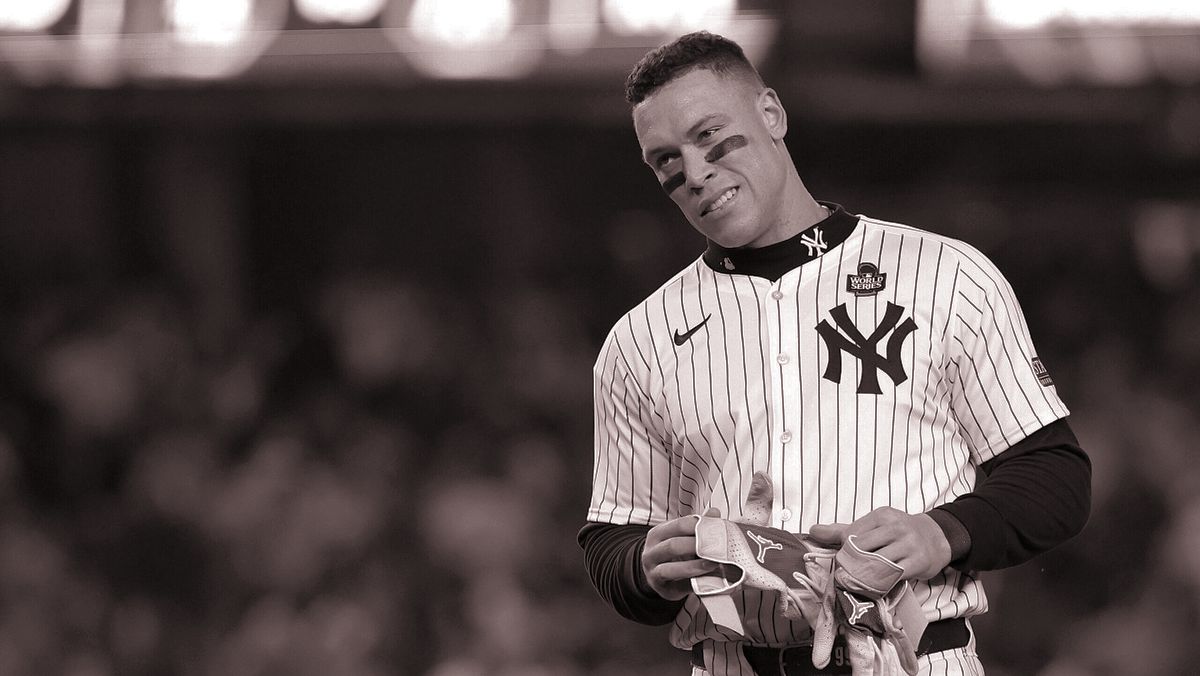
the MLB will be fine—the league dominates primetime in October, via the playoffs, and features some of the country’s (world’s) most popular brands in the Dodgers, Yankees, and Cubs.
But there are premonitions that the league could face a brutal negotiation. To wit: The Athletic reported today that MLB is back in discussions with ESPN about the package of games and events—Sunday Night Baseball, the Home Run Derby, and the wild card playoff round—that it relinquished earlier this
year. Apple, NBC, and Fox have also shown interest in the package, but none of the talks so far has approached the $550 million per year that ESPN was paying.
In some respects, MLB’s negotiations this summer don’t matter all that much. MLB commissioner Rob Manfred has signaled that he’s working on a larger roll-up of all his national game and local team rights to take to the broader market in 2028. Manfred’s grand plan is strategic and estimable, but
potentially unrealistic. Will the commissioner be able to seduce the Yankees and Dodgers, among the league’s top local earners, to follow along and play nice? Will the streamers, who have already signaled their preference for quality over quantity, meet his price? What if they’re licking their lips, at least financially, for a shot at, say, the CBS NFL package the subsequent year?
As I’ve mentioned before, the popularization of American sports has progressed by leveraging the dominant
media platforms of each era. Baseball, with its long duration and stops in play, grew to prominence during the dawn of radio nearly a century ago. Football, which fit neatly into a rectangular boob tube, skyrocketed into the culture as Americans brought home color TVs en masse in the postwar years. The NBA blossomed with younger audiences on cable. There’s going to be an inevitable reshuffling as the industry countenances streaming. All we know is that the past won’t necessarily be prologue.
|
On Amazon’s demos: “Amazon Prime makes more than $44 billion in subscription revenue,
probably over 1,000x what they make in NASCAR ad sales. It’s preposterous to suggest there’s a meaningful difference in ARPU between over 55s and under 55s when all the revenue is subscription-based. The aggressively ageist attitude Amazon takes toward the oldest and most loyal fans of NASCAR (and the NFL) is embarrassing.” —A media executive
On NFL collusion: “You wrote that the story doesn’t seem to have legs. Maybe that’s because the reporters who are beholden to the
NFL are abdicating their duty to advance it…” —An NFL commentator
On my social calendar: “Since you seem comfortable hanging around The End (a.k.a. Montauk, a.k.a. the Hamptons), can I count on being your plus-one for the White Party, or does Marchand’s severance agreement lock him in, as long as he’s pouring the Sancerre?” —A cable guy
[Ed. note: Thanks for asking. But if Marchand doesn’t join me, who will hold
my sun umbrella?]
Speaking of Marchand: “I, for one, would be delighted if you dropped the Marchand jokes. I love the newsletter, but I scan any paragraph for ‘Marchand’ and skip reading it if I see the term within.” —A perceptive Varsity subscriber
[Ed. note: Blame Marchand, he writes them!] |
Have a great Fourth. See you next week,
John |
|
|
Finally, a media podcast about what’s actually happening in the media—not the oversanitized,
legal-and-standards-approved version you read online. Join Dylan Byers, Puck’s veteran media reporter, as he sits down with TV personalities, moguls, pundits, and industry executives for raw, honest, sometimes salacious conversations about the business of media and its biggest egos. New episodes publish every Tuesday and Friday. |
|
|
Unique and privileged insight into the private conversations taking place inside boardrooms and corner offices up and
down Wall Street, relayed by best-selling author, journalist, and former M&A senior banker William D. Cohan. |
|
|
Need help? Review our FAQ page or contact us for assistance. For brand partnerships, email ads@puck.news. You received this email because you signed up to receive emails from Puck, or as part of your Puck account associated with {{customer.email}}. To stop receiving this newsletter and/or manage all your email preferences, click here. |
Puck is published by Heat Media LLC. 107 Greenwich St, New York, NY 10006
|
|
|
|