 |
|
Greetings from Brooklyn, and welcome back to What I’m Hearing+, my weekly dispatch focused on the streaming industry and the analytics behind it all. If this email was forwarded to you, click here to subscribe.
Tonight, some thoughts on how the ’90s nostalgia-fueled success of Disney+’s Hocus Pocus 2, which bypassed a theatrical release, has reignited the high-stakes debate over how Hollywood writ large should approach the streaming vs. theatrical riddle.
But first…
|
|
|
- Disney+ sub numbers grow, but at what cost? Disney smashed Wall Street expectations by reporting 12.1 million net new Disney+ customers last quarter, and the Street… couldn’t care less. In fact, the stock dropped 7 percent in after-hours trading. The bigger story, after all, is whether Disney is making money from those subscribers. With a decrease in direct-to-consumer revenue ($4.9 billion vs $5.1 billion in the quarter prior) and an increase in operational costs ($1.5 billion vs $1.1 billion in the quarter prior), Disney doesn’t seem to have escaped the industry-wide trends that are buffeting its competitors, even if its subscriber growth is much more robust.
The good news is that C.E.O. Bob Chapek says this is the peak for direct-to-consumer costs. Disney+ is still on track to be profitable by fiscal year 2023 (so this time next year). The bad news? All of that is dependent on macroeconomic headwinds (take a shot!) not getting worse. Disney+ is running out of new international markets, meaning that subscriber growth may inevitably slow down as the total number of customers hits a ceiling. Everything becomes about how much revenue those customers are generating, and the cost to keep those customers happy (see: paying). The ad-supported tier rolling out next month should help, but the Street’s gloomy response is telling the same story we’ve heard over the last few quarters.
- Can Monster be Netflix’s Horror Story? It’s hardly a surprise that Netflix has renewed Ryan Murphy’s Monster anthology series for two new installments after the inelegantly titled first season, Dahmer – Monster: The Jeffrey Dahmer Story became a massive global hit. The show is sitting at 961 million hours watched, and is on path to surpass 1 billion, the equivalent of about 113 million completed views. It’s not quite Stranger Things territory (1.35 billion hours watched), but it’s still pretty incredible considering that, until about three months ago, Murphy’s nine-figure overall deal had looked like an albatross. Now Dahmer is the third-most watched Netflix series of all time.
Netflix is hoping that Monster can replicate Murphy’s popular FX franchises, American Horror Story and American Crime Story, by producing new installments based on other notorious serial killers, such as John Wayne Gacy, say, or Ted Bundy. The question, of course, is whether the concept can sustain interest over time. The first season of American Crime Story, subtitled The People v. O.J. Simpson, was a blockbuster for FX with 7.5 million viewers on average over the show’s run, but linear viewership declined for the next installment, The Assassination of Gianni Versace, and dropped by another 47 percent for last year’s Impeachment, despite the interest in the Lewinsky-Clinton relationship. Viewership for AHS has started to decline as well, but its fifth and sixth seasons were still averaging close to 5 million viewers per episode on linear alone. Add in a streaming audience seeking out the series, and that number grows.
The first season of Monster technically may have reached 11.3 million viewers per episode globally (if we break the completed views number down into per-episode figures), which means about 5.5 million viewers in the U.S. if we assume 50 percent of the audience was domestic. Unlike American Horror Story which gets a boost from linear to streaming, it’s unclear if Netflix can sustain that level of interest and grow the viewership for a second and third season, given the gory and potentially off-putting material, and the potentially less infamous subjects.
|
 |
| Bob Chapek’s New Streaming Moneyball |
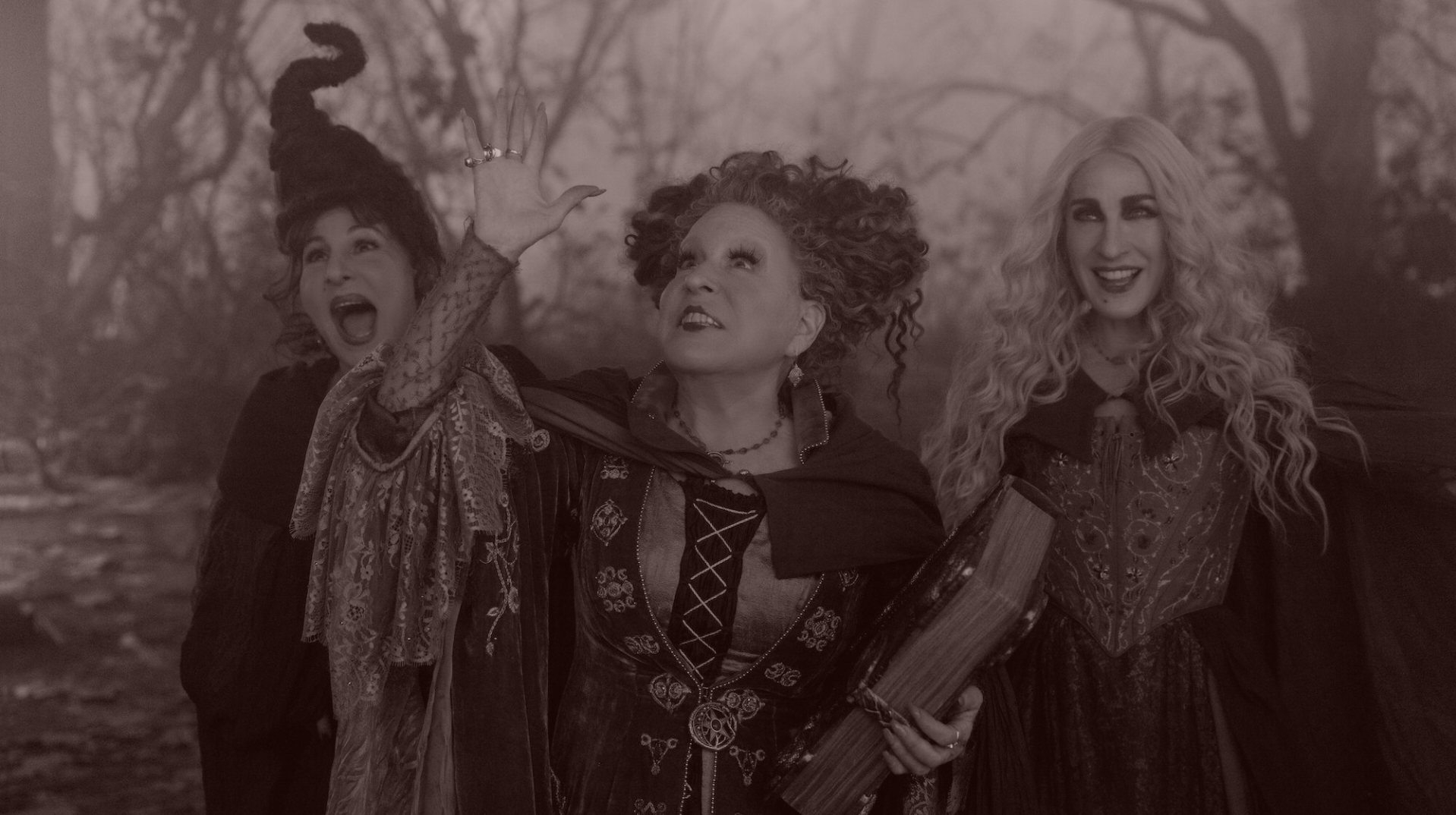
| ‘Hocus Pocus 2’ has become perhaps the quintessential title for understanding modern Hollywood’s identity crisis. If a movie this successful on streaming isn’t going to theaters, what does that mean for other films coming down the pipeline at Disney? |
|
|
|
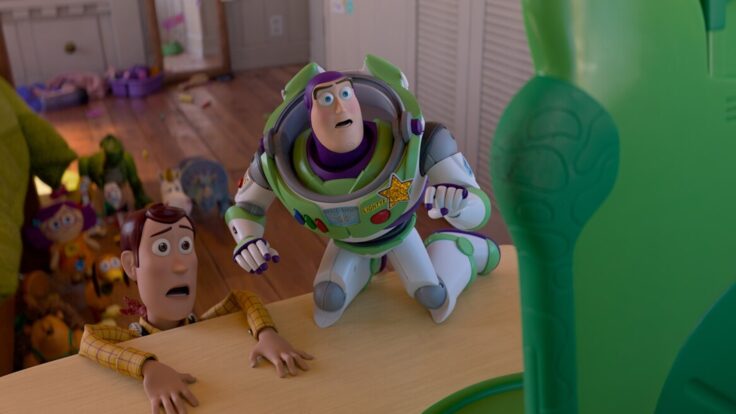
| Hocus Pocus 2 has astounded the town with its opening weekend Nielsen numbers on Disney+—in particular, more than 2.7 billion minutes watched, or the equivalent of some 26 million completed views. But this being Hollywood in 2022, analysts and executives and critics couldn’t help but simultaneously count the tens of millions of dollars in revenue that was forfeited by not sending the movie to theaters first. In many ways, Hocus Pocus 2 has become perhaps the quintessential title for understanding much of the anxiety in the industry. If a movie this successful on streaming isn’t going to theaters, what does that mean for other films in the pipeline at Disney?
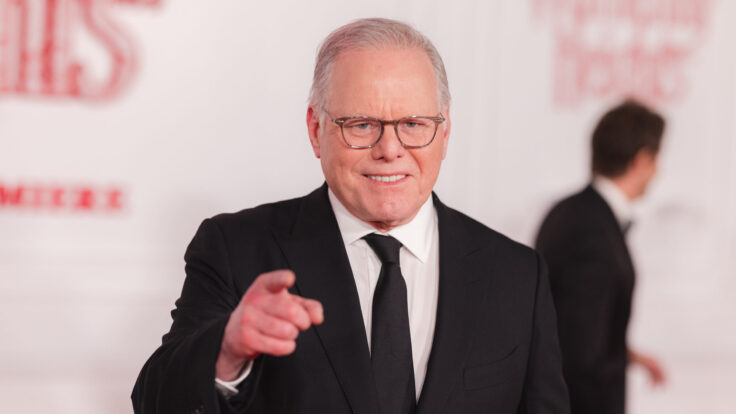
Streaming versus theatrical is, of course, the debate at the center of Hollywood’s ongoing identity crisis. On one side there is Warner Bros. Discovery C.E.O. David Zaslav, who doesn’t believe there’s a reason to bypass theaters, especially when films can be monetized on HBO Max after only 45 days. On the other side is Netflix co-C.E.O. Ted Sarandos, who is expectedly adamant that movie franchises can be born out of streaming, and has only recently begun to test limited theatrical runs. NBCUniversal C.E.O. Jeff Shell is somewhere in the middle—open to experimenting, as he did with the Halloween franchise, which has been simultaneously released in both theaters and on Peacock.
Disney+, which was late to the streaming game but is now the second-largest platform, also lands somewhere in the middle of this spectrum. Most of its movies now go to theaters first, but select titles, like Hocus Pocus 2, debut on Disney+ exclusively and globally. HP2 not only became the most watched movie on Disney+ in its opening weekend, but it was also the most watched streaming film that Nielsen has captured since it started covering streaming platforms. HP2 also had a score of 50.2x the average demand of all films in the U.S. during its opening weekend, which puts it in the top 0.2 percent of all titles, according to Parrot Analytics, where I work. (Disclosure: Disney is a client of Parrot Analytics.) For comparison, Pixar’s Turning Red, the platform’s second-biggest debut, had 36.2x in its opening weekend.
The vast majority of films should get theatrical releases—all data points to titles generally performing better on streaming when they go to theaters first. There are some titles, however, that do feel more valuable as streaming-only titles when considering global audience demand, perceived value of a theatrical outing, and goal of the film. HP2 falls squarely into that category. |
|
|
| Consider that Disney maintains a global theatrical business, run by a team that is extremely aware of what will likely work in theaters and what won’t. Also consider how audiences may interact with a movie like Hocus Pocus 2 versus a new live-action Disney movie based on bankable pre-existing I.P. or part of an ongoing franchise, and then consider the importance of growing Disney+ from both a subscriber and—just as important—an engagement perspective.
Superhero movies aren’t the only titles that can play theatrically, but Disney’s theatrical strategy is all about global releases. And Hocus Pocus 2 isn’t likely to perform at the level the Mouse House would expect. There’s strong nostalgia for the original 1993 film in the U.S., making it an easy sell for families, but that nostalgia doesn’t travel as well outside of the domestic market. Demand for Hocus Pocus 2 outside the U.S. sits at around 9 percent, according to Parrot. Compare that to Turning Red, which sees an average of 20 percent outside its home market. Big theatrical titles, like Black Adam, can see an average of closer to 30 percent.
Sure, there’s an argument that Disney could have released Hocus Pocus 2 in theaters in early September and moved it to Disney+ just in time for the Halloween weekend, which is where I expect we’ll see a bump in viewership again from Nielsen. There also wasn’t much competition at the box office for family movies: Lyle, Lyle, Crocodile has failed to cross $65 million globally. So assuming that audience interest in HP2 would have translated to spending $15 on a ticket, Disney could have generated some revenue on a relatively limited marketing spend, at least in the domestic market.
But I think the calculation here was a little different: if Disney isn’t going to take a movie to theaters in every market, why risk a potential theatrical loss when the audience on Disney+ is all but guaranteed? The domestic box office is still down 34.5 percent compared to 2019 and, while it’s up more than 100 percent compared to 2021, the return to theaters outside of major blockbusters and scary movies is still sluggish. Also, Disney has already prioritized Disney+ for certain films. Lady and the Tramp moved to Disney+ ahead of the streaming platform’s launch, Pinocchio became a Disney+ exclusive, while Cruella saw a simultaneous day-and-date release. Disney, like its rivals, used Covid to accelerate into the D.T.C. space, but this wasn’t a rash decision.
Disney, especially under C.E.O. Bob Chapek’s prioritization of Disney+, is looking for titles that can work for both streaming audiences and draw viewers into theaters. When looking at the past track record of other live-action sequels that were released in a healthier theatrical market—Maleficent: Mistress of Evil and Alice Through the Looking Glass both saw 40 percent drop-offs in box office revenue compared to the originals; Christopher Robin reportedly lost $40 million in theaters, and The Nutcracker and the Four Realms about $65 million—it starts to become clearer why the team picked a streaming-first release. Success at the box office wasn’t guaranteed, even domestically, but the value of having a sought-after title on Disney+ is an easy win.
Hocus Pocus 2 drove massive viewership on Disney+ in the U.S. because it’s a familiar title that families can throw on at home. The less-than-stellar audience reviews on Rotten Tomatoes may have hindered people going to theaters, but it lends itself to multiple repeat viewings in the run-up to Halloween. Engagement with Disney+ increases; therefore the perceived value of the subscription—heading into the Dec. 8 price hike—also increases.
Hocus Pocus 2 probably hasn’t had a huge impact on subscriber growth domestically. The audience for a Hocus Pocus sequel likely already has Disney+. But engaging Disney+ subscribers who don’t watch very often or convincing someone to stay subscribed is probably more valuable to Disney than a small return at the box office that isn’t as guaranteed. |
| Finally, About That Netflix Ad Tier… |
|
| Netflix rolled out its long-anticipated ad-supported streaming tier last week and the reaction has been… surprisingly quiet. No moans and groans, no applause or cheering. It simply arrived one day without fanfare, allowing users to opt into the new $6.99-a-month tier. Some of the muted response, of course, may be due to the fact that early customers are still navigating the dual-tier system and trying to determine what each one does and doesn’t give them access to. So let’s examine what we know so far.
Of the 326 movies and series that ad-tier customers can’t watch, 82 percent are licensed content, according to Kasey Moore, the Netflix analyst and owner of What’s On Netflix. Netflix’s overall library in the U.S. (about 6,300 titles) is pretty evenly split between original programming (52 percent) and licensed titles (48 percent). As Moore notes, some of the key studios and networks whose titles aren’t available on the ad tier include NBCUniversal, Telemundo, Sony Pictures, Lionsgate, 20th Century Studios and 20th TV, MGM, and Entertainment One.
All in all, there’s only about 5.2 percent of the total Netflix library that ad-tier subscribers can’t access, but that segment includes some of the most popular content on the platform. There’s no New Girl, Friday Night Lights, or Peaky Blinders, for instance, nor can $6.99-paying members watch the Arrested Development reboot. A lot of kids fare has also been excluded, including The Boss Baby projects (which Netflix worked on with Universal) and Vampires vs. the Bronx.
Still, the exclusion of only one of every 20 titles isn’t horrendous. Consider, for example, that Peacock has 2,890 titles on its ad-supported tier and just over 3,500 titles on its premium, ad-free tier. That’s about 20 percent of titles that are unavailable on the ad-supported tier.
The difference between Netflix and Peacock, of course, is in what customers expect out of their subscription. HBO Max notified customers that new movies are unavailable to watch on the ad version when it launched day-and-date titles. But Netflix, until now, hasn’t had to contend with this problem. A “Netflix original” like Arrested Development or House of Cards might be expected in the ad-supported tier, despite being owned by 20th TV and MRC, respectively. One show may not make or break a subscription, but take away enough favorites and the perceived value of a Netflix subscription may diminish.
For years, Netflix executives have wondered about the perfect mix of original versus licensed content to satisfy subscribers. The ad-supported tier may provide them precious data that gets them closer to an answer. |
|
|
|
| FOUR STORIES WE’RE TALKING ABOUT |
 |
|
 |
| The CW’s Undertaker |
| Brad Schwartz is taking over the broadcast network, which is now little more than a linear money pit. |
| MATTHEW BELLONI |
|
 |
| Elon’s Blue-Check Folly |
| Notes on Silicon Valley’s deep freeze, JayPow’s hidden message, and the WBD mess. |
| WILLIAM D. COHAN |
|
 |
| Kamala’s L.A. Battle |
| Given the high-stakes midterms, why are top Dems so infatuated with the L.A. mayoral race? |
| TARA PALMERI & PETER HAMBY |
|
|
|
|
|
 |
|
|
|
Need help? Review our FAQs page or contact us for assistance. For brand partnerships, email ads@puck.news.
|
|
|
|
Puck is published by Heat Media LLC. 227 W 17th St New York, NY 10011.
|
|
|
|