Welcome back to The Varsity. Tonight, a special conversation with my Puck partner
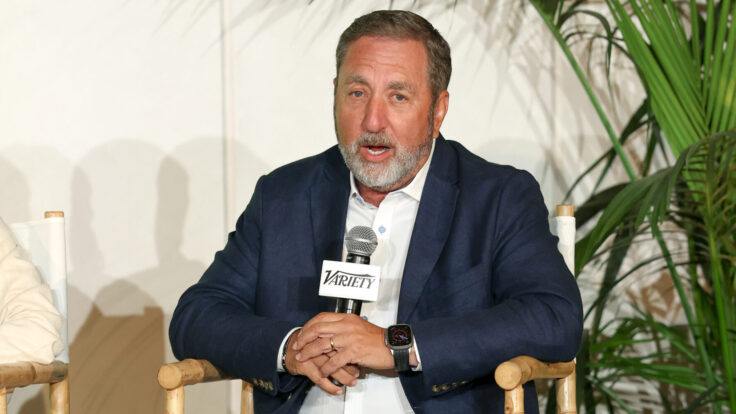
Eriq Gardner about the biggest legal challenges facing the biggest sports leagues. If you must know, Eriq and I developed this idea while hanging out in the owner’s box at a Wizards game. Also, as always, thanks to Curtis Rowser for helping assemble this issue.
Pod alert: It seems like every couple of weeks a new sports betting controversy crops up, which is why I reached out to Danny Funt to appear on the Varsity
podcast this weekend. Danny, whose Everybody Loses: The Tumultuous Rise of American Sports Gambling was published this week by Simon & Schuster, will offer a clear-eyed view of where the sports betting business in the U.S. is headed.
Before we begin: I saw lots of headlines today about ESPN drawing its largest-ever audience when
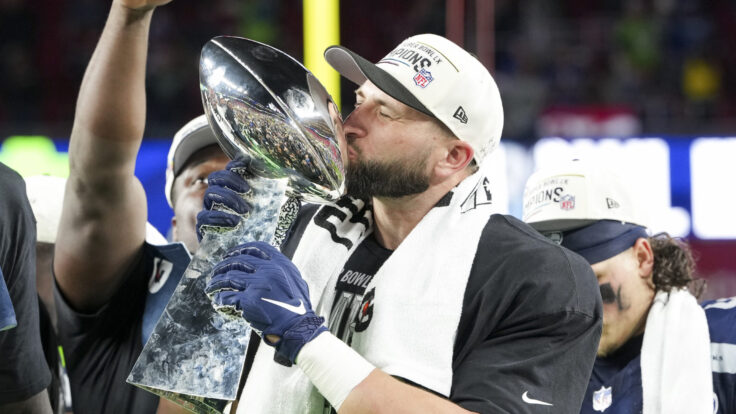
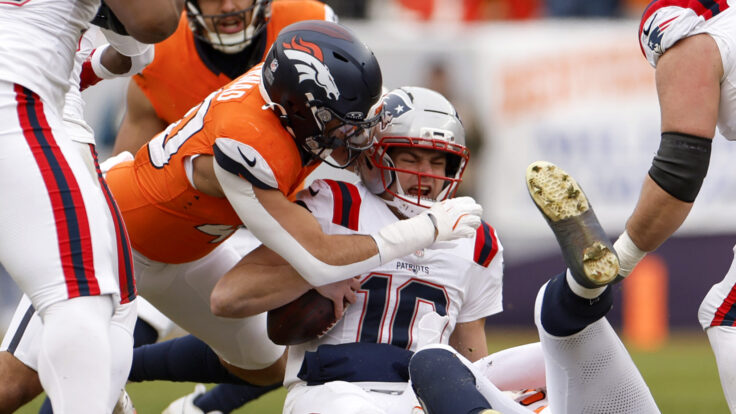
37.9 million viewers watched the Texans-Patriots playoff game. The truth is that ABC—a good old-fashioned broadcast TV network—accounted for 70 percent of that audience. ABC logged 25.4 million viewers, and ESPN had 12.5 million. Give Disney credit for figuring out how to leverage the ESPN brand as well as it has. But the real story to me is the continued strength of broadcast TV to drive mass audiences more consistently than all other platforms. |
Player of the Week: Scott Dolson
|
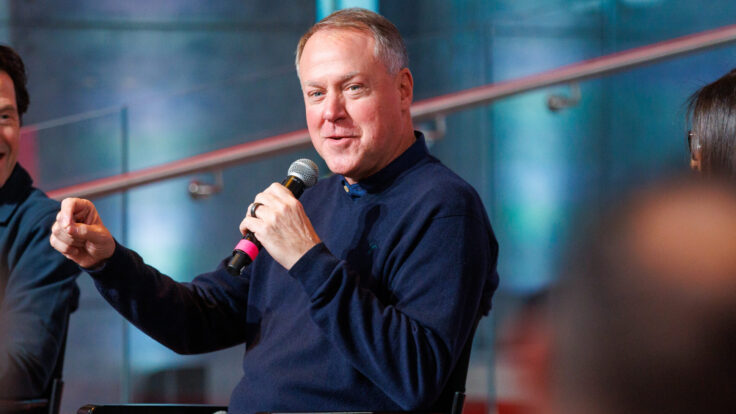
Scott Dolson, the athletic director of Indiana University, has been on a great run: He hired
Curt Cignetti, gave him the budget to field a competitive team, and then locked him into a long-term deal midway through his second season. Now he has well-heeled alums like Mark Cuban opening their check books, and the opportunity to turn a former safety school for northeastern goods with mediocre SAT scores into a legit blue blood. |
Down to the J.V.: ESPN’s Tennis Coverage
|
Tennis fans are not happy with ESPN’s Australian Open programming after the network made some of
the tourney’s best matches available only on its new ESPN Unlimited streaming app. Those matches used to be available on ESPN+, but this year were moved to the more expensive tier. It’s a time-honored growth scheme, to be fair, but ESPN’s misstep was in failing to communicate the switch to fans, who have been very vocal. |
- Cap chat: Talk of an MLB salary cap is back thanks to the Dodgers’ $240 million Kyle Tucker deal. Evan Drellich reported that owners are “raging” and that a future salary cap is “a 100 percent certainty.” Naturally, this was a main topic when I
spoke with Drellich earlier this week. “If you do bring in a cap, you’re still going to have some delta between the top-spending and lowest-spending teams,” he told me. “The Dodgers would still spend at the top of that band, and the Pirates would still spend at the bottom.” He added, “How many more playoff appearances is it really going to mean for a team like the Reds or the
Pirates or the Rays or the Marlins?”
Drellich helped articulate a point that is obvious in business circles and yet vilified in Major League locker rooms. The purpose of a salary cap isn’t to punish certain organizations or deny the rights of high-achieving players to earn their keep. Yes, a cap might help level the playing field for some small-market teams, but it will also allow team owners the opportunity to diversify their investments into infrastructure and services that
will enhance franchise valuations and ladder up to overall league value—which can be monetized through media rights, more sponsorship, and partnerships. And, of course, MLB’s ability to capture this accretion will allow the league to continue to increase the cap and spread the wealth around to the very players who reflexively reject it. Despite the battle scars of past white-knuckle negotiations, the league and owners aren’t trying to nuke their players—instead, they are trying
to align their incentives with them. This is how it works not only in all the other successful leagues, but in high-achieving organizations, too. - Cup fill: The Guardian has bolstered its sports desk with a trio of hires ahead of the North America–hosted World Cup. I’m told that they brought on board Pablo Iglesias Maurer and Jeff Rueter from The Athletic, and Ella Brockway from
The Washington Post. Maurer and Rueter will lead coverage of the U.S. men’s and women’s national teams and domestic leagues, in addition to helping with Premier League and European soccer coverage. Brockway will become assistant U.S. sports editor, helping manage expanded U.S.-based soccer coverage and contributing reporting.
- Mr. Swift’s TV future: On yesterday’s
episode of The Varsity, Marchand surprised me when I asked him to identify the NFL analyst most likely to take over when the next premier booth job opens up. I floated names like J.J. Watt, who had a spectacular sophomore season with CBS, and Greg Olsen, who called a Super Bowl for Fox three years ago,
before Tom Brady took over the network’s marquee games. Marchand didn’t hesitate: “Even before Taylor Swift, Travis Kelce is a guy who’s on any list you put together. … He’s gonna get big money.”
|
And now for the main event… |
|
|
Assessing Duke’s epic lawsuit and a full slate of other football-related cases
approaching their day in court with Eriq Gardner, Puck’s resident legal expert. |
|
|
It’s boom days for football in America. Then again, when is it not? No matter which metric you
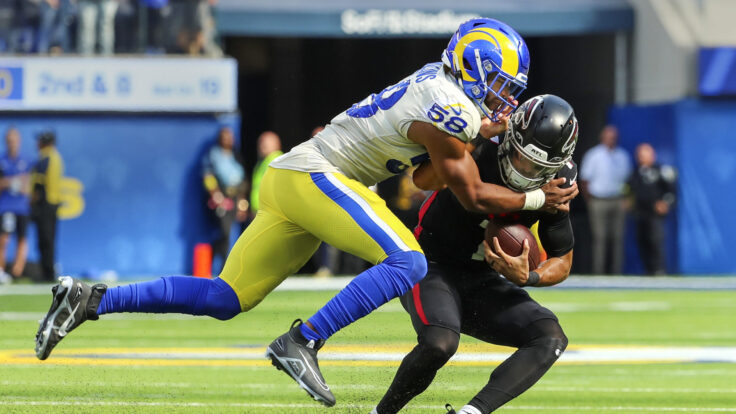
use—viewership, sponsorship, ticket sales, apparel—college and pro football are by far the two most popular sports properties in the U.S. But even as the NFL’s season hurtles through its annual ratings bonanza in the weeks ahead of the Super Bowl, and the college game basks in the afterglow of another expanded playoff season, some of the most competitive action in the coming weeks and months will occur in the courtroom rather than on the field or in the owner’s box.
There’s a
litany of lawsuits currently working their way through the legal system that could affect everything from the availability of the ever-popular Sunday Ticket and head-coach hiring at the professional level to the viability of the always-controversial transfer portal. Ahead of conference championship weekend, I called up Puck’s resident legal expert, Eriq Gardner, for a discussion of the cases that we all need to watch and where they all stand. |
John: Before we get into the NFL’s legal issues, let’s talk
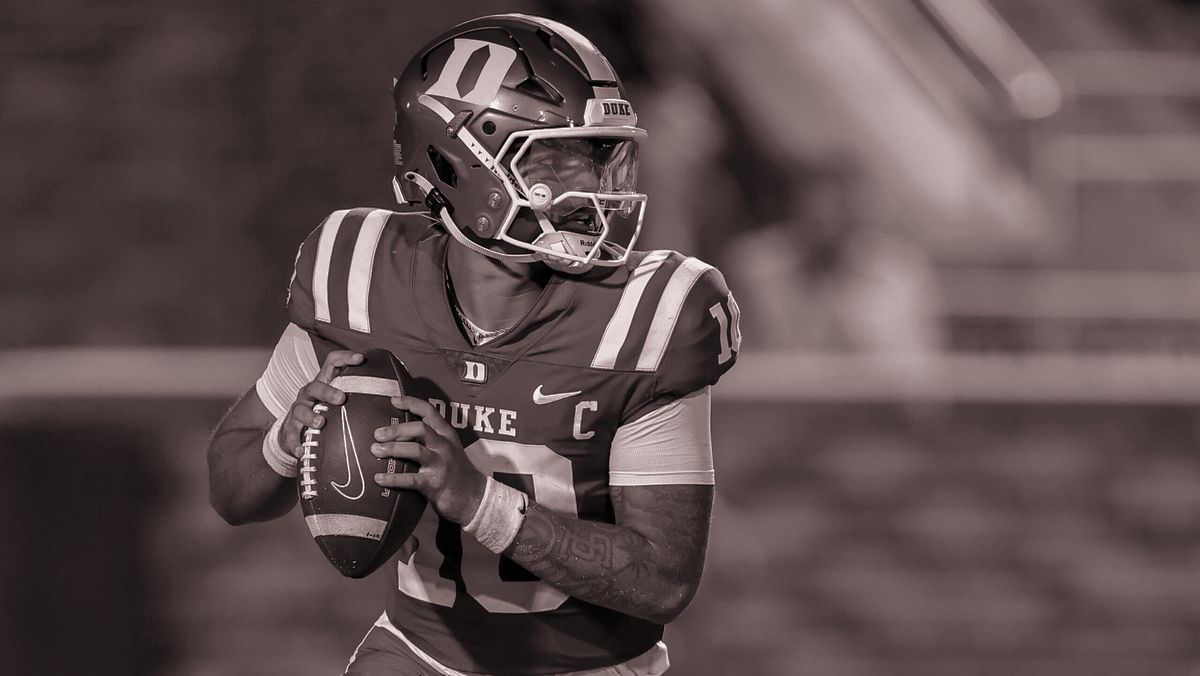
about the lawsuit that Duke filed this week to keep its quarterback, Darian Mensah, from entering the transfer portal. Yesterday, a judge allowed him to enter the portal but kept him from signing with another college just yet. Duke’s complaint is essentially that Mensah signed an N.I.L. deal to stay at the school through the end of this year. According to Mensah’s contract, any dispute has to move through an arbitration process, and the school wants to see that process
through to the end.
Eriq: We’re long past the debate over whether student-athletes should be compensated, but we’re still nowhere near a settled set of rules governing how the system should work. The Duke case is a particularly fascinating one, with a lot of layers. As much as this looks like a straightforward contract dispute—whether Mensah is bound to honor the N.I.L. deal he signed—it’s really about leverage. Can Duke turn N.I.L. into a retention tool rather than just
a compensation mechanism? Can it deploy an arbitration clause to effectively slow or block a transfer?
As for Mensah’s response, regardless of whether college athletics is formally deemed “employment,” the university is trying to enforce something that looks an awful lot like a non-compete against a 20-year-old “independent contractor.” How will that sit with a judge? We’re about to see many more cases like this. This is that Wild West interregnum between the
start of the gold rush and the moment when everyone finally settles down with a workable set of rules.
John: Everyone from NCAA executives to college administrators has been calling on Congress or the courts to help create a level playing field, to establish actual rules when it comes to the transfer portal and N.I.L. And they see this as the type of case that can enable that to happen. Is it?
Eriq: Well, invoking Congress is one way forward,
although if it happened this second, I don’t know if it’d be favorable to the athletes. And I don’t think anyone should count on lawmakers these days. Let me also point out that this isn’t the only solution. One could imagine a players union being stood up that collectively negotiates rules—like what happens professionally—but, of course, the NCAA has resisted that.
|
John: Okay, let’s get to the NFL. I can’t believe that we’re
still talking about the Sunday Ticket suit. The class action alleges that the NFL ran afoul of antitrust laws by pooling their out-of-market telecasting rights and selling them at an artificially high price. The suit was first filed in 2015 and dismissed and then reinstated. A year and a half ago, a jury awarded plaintiffs $4.6 billion. Then another judge overturned that decision. Where do things stand now?
Eriq: The trial judge’s stunning reversal of the jury’s
verdict is now set to be argued before the Ninth Circuit in San Francisco on March 9—coincidentally, the exact moment free agency opens. Plaintiffs’ class-action lawyers are contending that the now-retired federal judge, Philip Gutierrez, had no business overturning the verdict. If the appellate panel agrees, several paths open up: The full award could be reinstated, damages could be recalibrated, or the case could be sent back for a retrial—perhaps limited solely to damages.
The NFL, for its part, doesn’t think this should have ever reached a jury.
John: I know executives with the leagues and networks believe this case has little chance of succeeding and everyone’s worst-case scenarios will not play out. Should they be so optimistic?
Eriq: They may want to steel themselves. Remember, this is the same appellate circuit that revived the case a few years ago and sent it to trial in the first place. Something similar could
indeed happen again. In fact, it’s one of my 2026 predictions that this will happen—right before the Supreme Court takes the case. I’ll save you a seat.
John: Any kind of loss here certainly would be a worst-case scenario for the NFL, particularly as the league is about to break the bank on its next round of media rights this year or
next. There’s a scenario where the NFL would have to allow individual teams to work out their own media rights deals, which would be great for nationally popular teams like the Cowboys, Chiefs, and Bears, but it would put the media strategies of smaller-market clubs, like Jacksonville and Tennessee, in peril.
Eriq: Well, the AFC South might be able to sell a media rights package. If these teams would truly struggle, then there
might be pro-competitive justification to allowing the division to team up, akin to the SEC.
John: I know you’re also closely monitoring Brian Flores’s potential Supreme Court case. In 2022, the current Minnesota Vikings defensive coordinator brought a lawsuit alleging racial discrimination against the league and several teams in their hiring practices for head coach positions. What’s most interesting—and what the Supreme Court is
being asked to review—is whether the NFL can arbitrate this case internally, or if it should be decided in the courts.
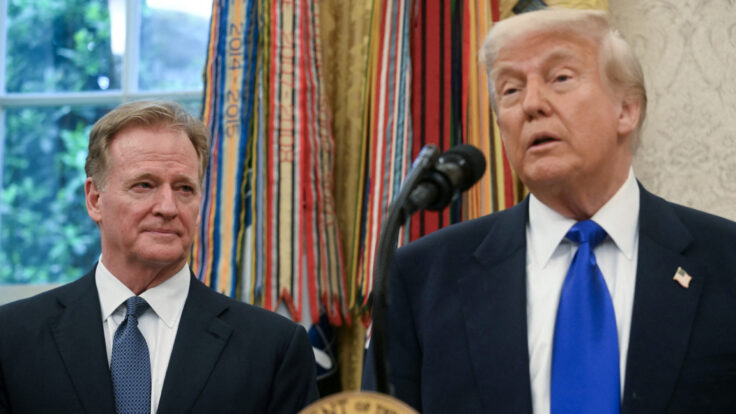
Eriq: The question of whether Roger Goodell can sit as an arbitrator in a dispute where he arguably has a vested interest is catnip for legal commentators and sports talk radio alike, but I don’t think the Supreme Court is going to take this case. It actually reminds me of Live Nation’s failed attempt last year to entice the justices into
reviewing a consumer class action. In that fight, the Ticketmaster parent tried to shove ticket buyers into arbitration—and not just any arbitration forum, but one heavily engineered to its own procedural advantage. Lower courts weren’t buying it, and neither was the Supreme Court, which declined to step in.
I suspect it’ll be the same outcome here. And paradoxically, that may be a blessing in disguise for the league. The antitrust fight over NFL Sunday Ticket carries far higher stakes,
in my opinion, and if the league is going to need the justices’ attention anytime soon, that’s the case where it really matters.
|
The
Gruden of Good and Evil
|
John: Maybe I’m wrong, but I feel like you don’t seem to think the case brought by
another coach, Jon Gruden, who alleges the league conspired to sabotage his career, could be a bombshell for the NFL. Personally embarrassing for some top execs, maybe. But not industry changing.
Eriq: I think it’s similar to the Flores situation, and is likewise frozen by appellate maneuvering. Call it a hunch, but I’d be surprised if the league lets either case get to trial. Once the arbitration-versus-court questions are resolved, and maybe after a
touch of discovery, don’t be shocked if settlements follow. Especially since both coaches remain active. Ultimately, I think the incentives align to make this go away.
John: What other NFL legal cases are on your radar?
Eriq: Heather McPhee’s lawsuit against the NFLPA should be on everyone’s radar. McPhee was a longtime lawyer for the union who, according to her complaint, cooperated with federal investigators probing OneTeam
Partners, the multibillion-dollar licensing joint venture involving several players unions. Her concerns centered on equity payments flowing to leadership and the obvious conflicts of interest. Last year, she apparently testified before a grand jury convened in Brooklyn. Not long after, she says, the retaliation began: She was sidelined from meetings, cut off from player communications, and ultimately pushed out.
What hasn’t really been reported is that the year ended with McPhee being
outright fired—and the NFLPA appears to have launched an internal leak investigation in the aftermath. That’s where things get especially interesting. Remember Pablo Torre’s reporting on the arbitration ruling over whether NFL owners colluded to suppress salaries of star quarterbacks like Lamar Jackson and Kyler Murray—and how the NFLPA helped bury the outcome? That episode makes a pointed appearance in McPhee’s complaint. And wouldn’t you know
it? The union is now scrambling to figure out how that information escaped.
Here’s the kicker: After firing McPhee, the NFLPA raced into court asking a judge to seal her complaint, arguing that she improperly disclosed attorney-client privileged material. Yes—the union is trying to put the toothpaste back in the tube by sealing a lawsuit that has already been reported on. McPhee is pushing back. If I were placing bets, I’d wager this case produces far more consequential revelations than
the Gruden saga. |
On the college basketball betting scandal: “It didn’t involve any Power Four schools. But
DePaul and Georgetown are known D-1 schools. I remember them specifically because my Georgetown Hoyas still almost lost to DePaul after the Blue Demons purposely tanked in the first half.” —A Varsity subscriber
On the J-E-T-S Jets! Jets! Jets!: “Just want to expand on your point that it’s been 15 years since we’ve had an AFC Championship Game without the Patriots or the Chiefs. It has been 17 years since we’ve had an AFC Championship Game without the Chiefs,
Pats, and/or J-E-T-S.” —A communications and consulting executive
On CBS Evening News’ ratings in Dayton: “It’s interesting to me how Dayton’s CBS affiliate, WHIO, continues to pull such a massive share in an increasingly fragmented TV and information era. I come from a household where I was practically trained to watch local legend Jim Baldridge on NewsCenter 7 at 6:00 p.m., followed by Dan Rather in the 1990s. Could the
Varsity video podcast take over the 11:35 p.m. ET slot after The Late Show concludes? I hear Paramount pays big bucks for content nowadays.” —A loyal Ohio viewer |
Have a great weekend. See you Monday,
John |
|
|
Puck fashion correspondent Lauren Sherman and a rotating cast of industry insiders take you deep behind the scenes of
this multitrillion-dollar biz, from creative director switcheroos to M&A drama, D.T.C. downfalls, and magazine mishaps. Fashion People is an extension of Line Sheet, Lauren’s private email for Puck, where she tracks what’s happening beyond the press releases in fashion, beauty, and media. New episodes publish every Tuesday and Friday. |
|
|
An essential, insider-friendly Hollywood tip sheet from Matthew Belloni, who spent 14 years in the trenches at
The Hollywood Reporter and five before that practicing entertainment law. What I’m Hearing also features veteran Hollywood journalist Kim Masters, as well as a special companion email from Eriq Gardner, focused on entertainment law, and weekly box office analysis from Scott Mendelson. |
|
|
Need help? Review our FAQ page or contact us for assistance. For brand partnerships, email ads@puck.news. You received this email because you
signed up to receive emails from Puck, or as part of your Puck account associated with {{customer.email}}. To stop receiving this newsletter and/or manage all your email preferences, click here. |
Puck is published by Heat Media LLC. 107 Greenwich St., New York, NY 10006 |
|
|
|