|
Welcome back to The Varsity, our thrice-weekly private email on the money, power, influence, and egos that prop up the sports business. I’m trying to get this to you before tonight’s tip-off. If you listen closely, you can hear Jimmy Pitaro and Rita Ferro cheering that the NBA Finals are guaranteed to go to at least six games. The old saw about ad sales still rings true: Networks only start to make money on Game 6, and Game 7 represents the true ad sales windfall.
Pod alert: CNBC media reporter Alex Sherman joins The Varsity tomorrow to solve all the problems in sports media these days, from WBD’s divorce to the current state of various rights negotiations.
|
|
|
|
A MESSAGE FROM OUR SPONSOR
|
PERFORMANCE UNLEASHED
Agile, powerful, iconic. The Range Rover Sport is a dynamic SUV with a distinct
take on sporting luxury.
EXPLORE
|
|
|
- Rising women’s sports valuations: Twenty years ago, Ted Leonsis bought the WNBA’s Washington Mystics for about $10 million. Last month, the New York Liberty reached a valuation of $450 million after its owners sold a roughly 15 percent stake in the team. So is Leonsis, who made his fortune during the first internet boom, looking for another liquidity event? “I’m not selling the team,” he said during a Zoom call this afternoon. “We want to be a part of something that has great value in the next 20 years, not right now. And I’m hoping that we don’t get caught up in the exits or the valuations, because it’s not that meaningful right now.”Leonsis, who also owns the Wizards and the Capitals, hosted the call to announce that his Monumental Sports & Entertainment group was investing in the female sports media platform The IX. He also elaborated on his early investment in the WNBA, saying that he views it as a long-term play that will age well, especially as the WNBA continues to attract a more sophisticated ownership base. “We can be shining examples of building a startup league that can really become one of the major sports leagues,” he said. “The WNBA has the opportunity to do that, but we’ve got a lot of growth still ahead of us, and we don’t know what we don’t know yet.” What’s not in question, of course, is how
Caitlin Clark continues to sizzle on WNBA highlight reels, most recently on Saturday, in her return after missing five games due to injury, when she drained three consecutive 3-pointers from practically half court on her way to 32 points and a Fever win over the defending champion New York Liberty.
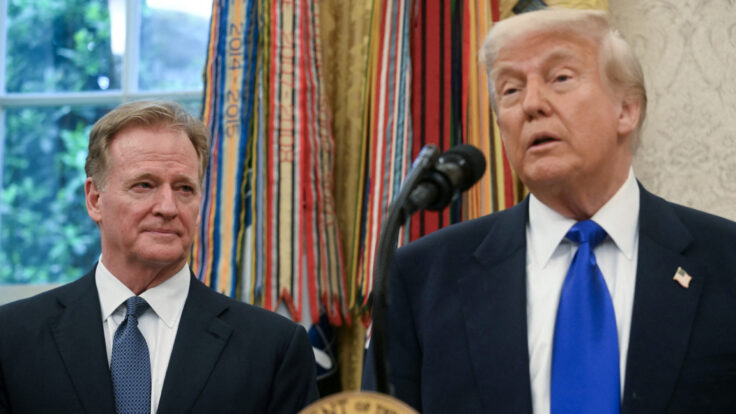
- Rolapp’s replacement: Conventional wisdom suggests that Roger Goodell will look internally to replace his outgoing chief business officer, Brian Rolapp, who announced last week that he is leaving the Shield to become the next C.E.O. of the PGA Tour. The current most likely scenario, as I understand it, is to divide Rolapp’s responsibilities between two senior executives who reported to Rolapp: chief revenue officer Renie Anderson on the sponsorship side, and executive vice president of media distribution Hans Schroeder. Rolapp’s other direct reports (senior vice president of NFL Media David Jurenka, senior vice president of business development and strategic investments Dhruv Prasad, and NFL Films executive Ross Ketover) could see some added responsibilities.Still, as SBJ’s Ben Fischer pointed out, Goodell has not been shy about bringing in top executives from outside the NFL’s ranks. Two years ago, he hired C.F.O. Christine Dorfler from NBCUniversal, and, as general counsel, Ted Ullyot, Bill Barr’s partner at the D.C. law firm Torridon Group. But that does not appear to be where he’s headed to replace Rolapp.
As for Rolapp, it’s assumed he’ll consolidate power and be in a position to replace PGA Tour commissioner Jay Monahan when his contract ends next year. Golf.com’s James Colgan reports that Monahan might be departing as soon as December.
- Gold Cup freak out: The U.S. men’s national team’s 5-0 victory over Trinidad and Tobago drew an “underwhelming crowd” on Sunday in San Jose, according to the San Francisco Chronicle. Indeed, 12,610 people attended the game at the 18,000-seat PayPal Park. Fox carried the match, and those ratings, which will be released tomorrow, should offer a more conclusive story about the excitement around U.S. men’s soccer less than one year before the World Cup comes to North America.Soccer business types candidly believe that the sheer number of big tournaments on U.S. soil this summer has confused casual fans. The U.S. men are playing in the Gold Cup on Fox, while the Club World Cup is being carried by DAZN, with TNT Sports simulcasting some matches. Plus, the MLS and NWSL are in the middle of their seasons, not to mention the forthcoming Leagues Cup and the U.S. Open Cup. “These games are all competing with each other,” one executive told me. “All these tournaments and leagues are fighting with each other for every dollar and every viewer.”
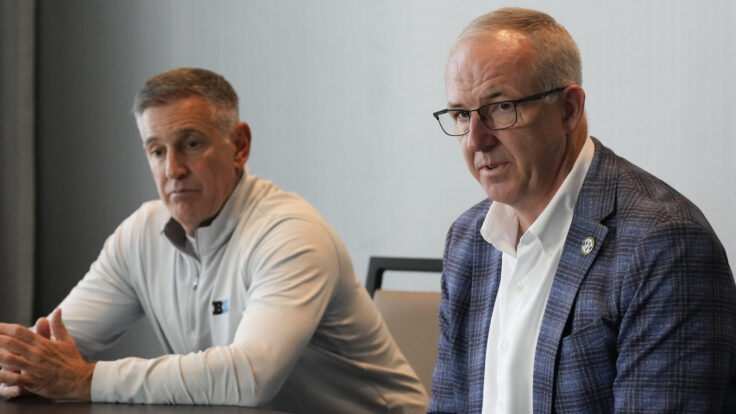
- Another A.D. opening: As Varsity subscribers know well, the professionalization of college sports—the onslaught of N.I.L., conference realignment, playoff restructuring, and inevitable privatization—has remade almost every job in the industry. The role of the athletic director, in particular, is currently undergoing transformation. I recently noted that the University of Maryland, my alma mater, hired a former Braves executive as A.D. The latest victim of the trend is Jim Knowlton, who announced his resignation today from Cal.Knowlton’s departure is hardly a surprise, as his role was being neutered. In addition to all the obvious secular forces, the school recently hired former NFL coach Ron Rivera as general manager of the football program—a trendy, quasi-professionalized role that Andrew Luck sort of pioneered across the Bay at Stanford a few months ago. Rivera reports directly to the school’s chancellor, Rich Lyons, rather than the athletic director. And the head coach, Justin Wilcox, reports to Rivera.
In our recent podcast discussion, TurnkeyZRG founder Len Perna predicted that college athletic departments would pursue one of two models. The first, which Clemson just adopted, sets up a private company that oversees the athletic department’s I.P., sponsorship, ticketing, licensing, and merchandise operations in parallel with the athletic department. Michael Drake, the C.E.O. of Clemson Ventures, operates as a peer to the school’s A.D., Graham Neff.
The other model will feature an athletic director who oversees coaches and compliance but reports in to a C.E.O. of athletics, who “would be like a C.E.O. or president of a pro sports team, who has a commercial background and is really focused on all the commercial monetization of all the assets that they have at their institution,” Perna said. Cal already seems to have moved its football program outside the athletic department, so it’ll be interesting to see what they do next.
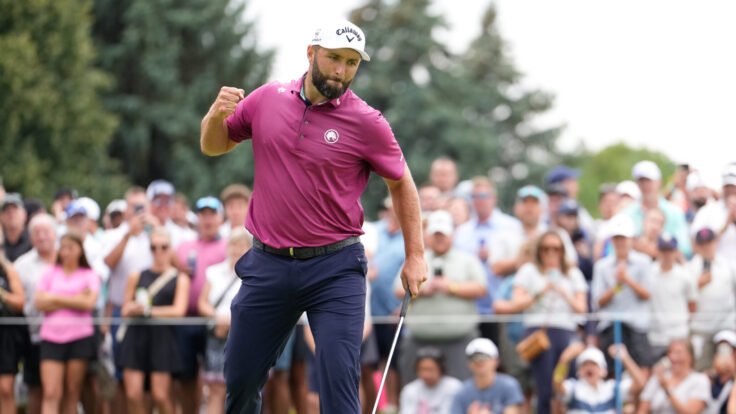
- Required reading: There’s a lot of great stuff out there, but WaPo’s Sally Jenkins went there with LIV. “The sample size is significant enough now to say it with certainty: LIV is bad for golf, not just the game of golf in general, but specifically your golf, Brooks Koepka, and your golf, Bryson DeChambeau, and your golf, Dustin Johnson, and your golf too, Jon Rahm.” (Washington Post)
|
|
|
|
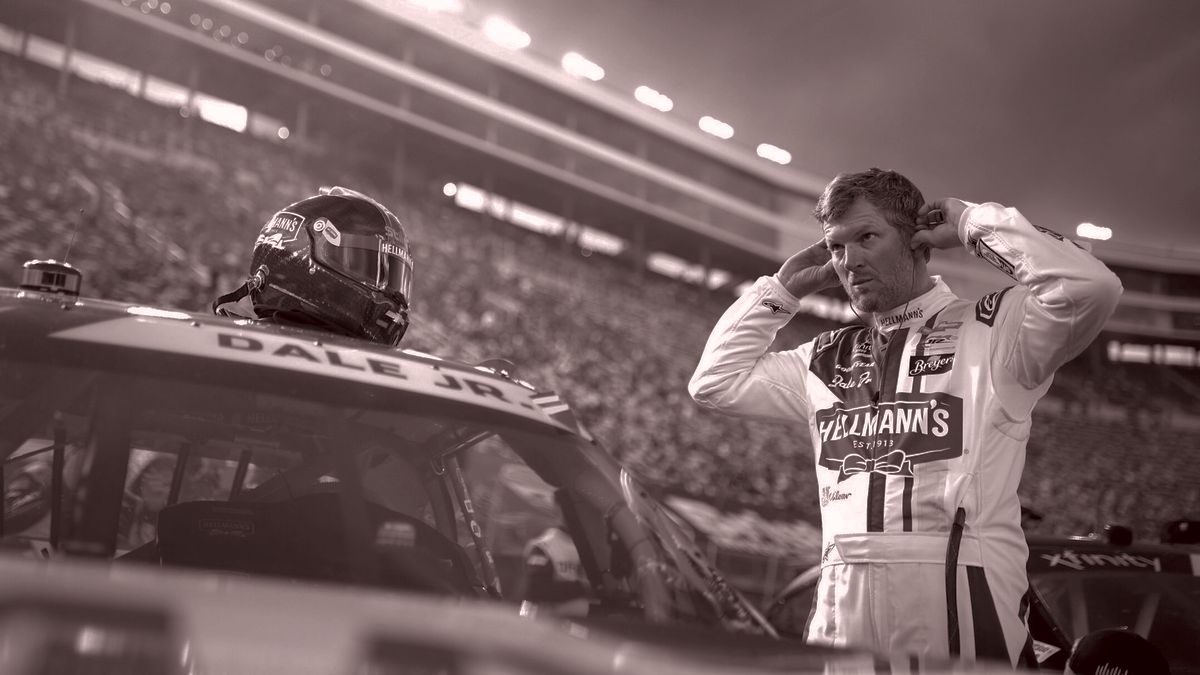
Racing legend Dale Earnhardt Jr. candidly discusses NASCAR’s post-pandemic blues, the lessons from F1, and the on-track value structure.
|
|
|
When NASCAR legend Dale Earnhardt Jr. took in his first F1 race last month, he was impressed with everything that was going on off the track—from the sponsors’ lavish hospitality areas to concerts and parties thrown by companies that had no connection to the race. To him, the event had the type of festival atmosphere that NASCAR used to do so well but pulled back from during the pandemic.
NASCAR has been aggressive in trying to expand to new markets and grow its fan base, which is why it held a race in Mexico City last weekend and returns to Chicago next month. But Dale Jr. believes NASCAR’s growth depends on bringing back the corporate tailgating vibes with three days of racing, concerts, and parties. We recently chatted candidly about what the racing organizations can learn from one another on my Varsity podcast. What follows is a lightly edited excerpt of that conversation. (You can listen to the full episode here.)
|
|
John Ourand: You attended your first F1 race in Miami last month. What were your initial impressions?
Dale Earnhardt Jr.: First of all, the race was fun to watch, and the product on the racetrack was entertaining. But it was the build-out of all of the hospitality that was wild to me. When F1 comes to your area, it is massive. It affects everything. The footprint, and how it expands out beyond the race itself, was really impressive.
Red Bull built a three- or four-story hospitality structure just for that one event. Then they tear it all down and move it to the next race. All of the surrounding properties around the race—even ones that weren’t related to the racetrack or the event—had their own concerts and events to draw fans.
What can NASCAR learn from F1?
It’s money. F1 has so much support from sponsorship and partnerships that allow them all that creativity. Really, the sky’s the limit in terms of how big they make the event feel. And that’s really NASCAR’s challenge. But it’s NASCAR’s goal as well. That’s why we’re in Mexico City, and why we went to Chicago. That’s why you hear the rumors about races going to San Diego and Brazil and Canada. NASCAR has an intentional effort to really expand its reach and create new fans outside of its traditional geographical footprint. And that will draw in interest from new partners.
Is it working?
We’re seeing that already on the broadcasting side, with new partners like Amazon Prime and TNT Sports coming in. There’s a long process of gaining momentum, then building on that momentum. I feel like NASCAR is in a growth stage. We really went through some challenging times over the last couple of decades. We had a very impressive peak back in the early 2000s, and a lot of people will look back to that as where we need to try to get back to. I honestly feel like we’re headed in that direction.
|
|
|
|
A MESSAGE FROM OUR SPONSOR
|
PERFORMANCE UNLEASHED
Agile, powerful, iconic. The Range Rover Sport is a dynamic SUV with a distinct
take on sporting luxury.
EXPLORE
|
|
|
|
What does NASCAR do better than F1 right now?
There’s a little more accessibility in NASCAR. I was impressed with some of the accessibility at F1. I could walk down pit road and get right up on top of the vehicles and look at the race cars. It had more access than I expected. But I still feel like NASCAR sets the standard there.
At the core, the most valuable thing to motorsports, or any kind of a series, is really what the product on the racetrack looks like. And that’s what you stand on. I really like our on-track product better. I enjoy the product that we put on the racetrack better than anything else in motorsports in the world—the passing and the battles and all of that stuff, is much more entertaining and interesting to me. We can always make some things better. We talk about that relentlessly throughout the year. We’re trying to figure out how to get the cars to do some things differently at certain racetracks, but across the board, NASCAR racing, in my opinion, is the most exciting.
|
Post-Pandemic Course Correction
|
|
Where would a casual fan see that growth surge that you’re talking about?
There’s obviously a lot more people here than maybe three or four years ago. NASCAR is selling out events. Pocono is coming up in a couple of weeks. There’s thousands of camping spots in that area that are all sold out. That is different from where we were four or five years ago. We’re seeing grandstands selling out. We were in Michigan this past weekend. There was an incredible crowd there just for the truck race the day before—on a Saturday.
I honestly think that there’s some opportunity for NASCAR to seize on that. We used to have a really robust weekend, where if you went to the race, and you wanted to be there the entire weekend camping, or staying in a hotel nearby, there was on-track activity on Friday and Saturday, as well as the race on Sunday. NASCAR had a lot of things at the track, concerts on Fridays and Saturdays. You could really justify that investment for the weekend, because it’s very expensive for a family to do this.
Why did NASCAR get away from that?
When the pandemic came, NASCAR found ways to still compete at the racetrack. But it had to really strip away a lot of the robust part of the weekend to be able to continue to compete under whatever the restrictions may be per state. Nobody practiced. There were no fans in the grandstands. We would literally show up, unload the cars, line them up, throw the green flag, run the race, interview the winner, and everybody would leave. Trying to recover from that has been a struggle. We’re slowly getting back to really building out these weekends, to where they’re a lure and an interest to a fan that might want to come be there.
The last hurdle for us is really to get back to putting cars on the racetrack on Friday, on Saturday, as well as that race on Sunday. We have to continue to add to their experience when they come to the racetrack—with race cars on the racetracks, and garages teeming with mechanics, and people preparing their cars for the race weekend.
|
|
On the next NFL commissioner: “Early NFL presidents and commissioners, like Joseph Carr, were legally savvy and helped establish formal infrastructure for a fledgling league that desperately needed guidance. Bart Bell helped establish anti-corruption protections that helped scale the early organization. Pete Rozelle was a P.R. wiz who rebranded the league and helped familiarize American audiences with mainstream football. Paul Tagliabue and Roger Goodell have overseen aggressive expansion and revenue growth that maximized earnings and exposure potential. What will be the defining goal, challenge, and skill set of the next commish?” —A Varsity subscriber
On streaming the NBA Finals: “I have ESPN+, Disney+, Hulu, and Sling, and I cannot stream the Finals at home without a big Sling upgrade or signing up for Fubo. (Fubo??) Something’s wrong here.” —A Varsity subscriber
[Ed. note: I’ll text you Marchand’s YouTube TV password.]
On Amazon Prime’s Dale Earnhardt doc: “It’s well done, but its only flaw is that it doesn’t get into the mess between Dale’s widow and his children after his death. It really felt like the producers short-armed that part of the story.” —A journalist
|
|
|
|
Finally, a media podcast about what’s actually happening in the media—not the oversanitized, legal-and-standards-approved version you read online. Join Dylan Byers, Puck’s veteran media reporter, as he sits down with TV personalities, moguls, pundits, and industry executives for raw, honest, sometimes salacious conversations about the business of media and its biggest egos. New episodes publish every Tuesday and Friday.
|
|
|
|
An essential, insider-friendly Hollywood tip sheet from Matthew Belloni, who spent 14 years in the trenches at The Hollywood Reporter and five before that practicing entertainment law. What I’m Hearing also features veteran Hollywood journalist Kim Masters, as well as a special companion email from Eriq Gardner, focused on entertainment law, and weekly box office analysis from Scott Mendelson.
|
|
|
Need help? Review our FAQ page or contact us for assistance. For brand partnerships, email ads@puck.news.
You received this email because you signed up to receive emails from Puck, or as part of your Puck account associated with . To stop receiving this newsletter and/or manage all your email preferences, click here.
|
|
Puck is published by Heat Media LLC. 107 Greenwich St, New York, NY 10006
|
|
|
|