 |
|
Happy Monday, I’m Eriq Gardner.
|
|
Welcome back to The Rainmaker, a private email about money, power, fame, and, most of all, the law. (Puck just celebrated its second anniversary, so share this link with a friend to get them 25% off.)
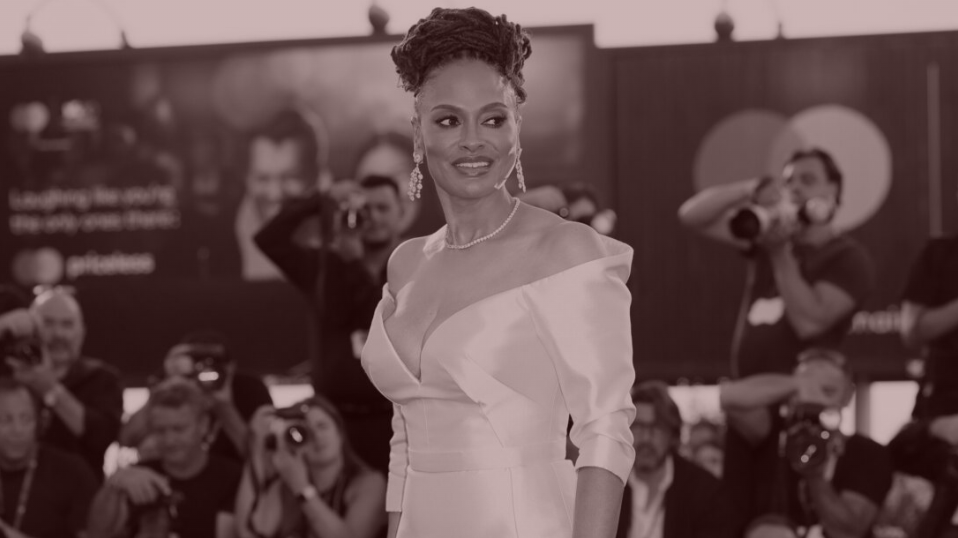
In today’s edition, a monumental legal setback for Netflix as the streamer faces a first-of-its-kind trial and a provocative question: Does Hollywood have an Ava DuVernay problem?
Also this week: Michael Rubin, Rupert Murdoch, Sophie Turner, David Boies, Jeffrey Kessler, Robert Kindler, and whether Kevin McCarthy will be the guy who delays the Sam Bankman-Fried trial.
But first…
|
| Here Come the Video Game Strikes… |
|
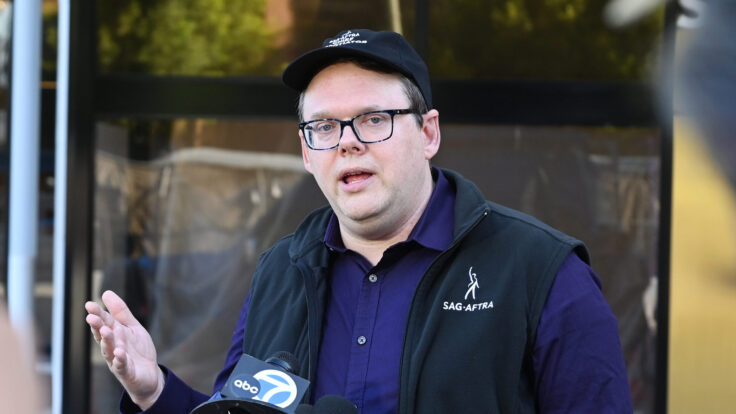
| While the WGA has a tentative deal with the studio-streamers, there’s more labor strife on the horizon. For decades, workers in the video game industry have contended with grueling work hours, substantial wage disparities, pervasive sexual harassment, and overwhelming stress. Historically, there hasn’t been much union representation to address these issues (although Hollywood’s actors union is set to take a strike authorization vote this coming week against video game studios), in part because development jobs are scattered across S.F., L.A., Austin, and Seattle—not to mention Tokyo, London, Montreal, etcetera.
But change may be arriving. That’s the message in a provocative amicus brief submitted to a federal appeals court on Sept. 13 by the Communication Workers of America and the AFL-CIO, weighing in on the F.T.C.’s ongoing efforts to thwart Microsoft’s $69 billion acquisition of Activision.
You might assume that Big Labor would vehemently oppose such a merger, as unions typically resist consolidation. Guess again. The CWA and AFL-CIO are offering soft support for the Microsoft-Activision deal, in part thanks to a labor neutrality agreement between Microsoft and the CWA, wherein Microsoft has pledged not to obstruct unionization efforts at Activision once the deal clears. Microsoft made a similar commitment when it acquired ZeniMax in 2021, resulting in that studio’s employees joining the CWA. The unions are now presenting this as “a worthy blueprint for future mergers involving labor market concerns.”
If more consolidation is the trade-off needed to ignite a more active union presence in the video game industry, perhaps it’s a logical step. After all, collective bargaining has thrived in Hollywood in part because there are so few major studios. While the industry might not acknowledge it, the robust influence of the guilds owes something to consolidation. There’s a reason it’s often referred to as a Company Town. |
|
|
- Boies v. Rubin: Anyone wondering how Michael Rubin manages to attract so many A-list celebrities to his annual “white party” in the Hamptons (Beyoncé, Jay-Z, Tom Brady, Kim Kardashian) should remember his title: As C.E.O. of Fanatics, the sports collectibles merchandiser, it’s literally Rubin’s job to collect stars and leagues for big licensing deals. And he’s exceptionally good at it.
Of course, Rubin’s prodigious talent is also creating major legal headaches. David Boies is now leading an antitrust suit representing Panini, the Italian rival of Fanatics, alleging that Rubin’s company is monopolizing the trading card market by poaching employees, interfering with exclusive agreements, and disseminating false information. Nonsense, retorts Fanatics, represented by all-stars at Latham & Watkins, as well as Quinn Emanuel. “Panini is not an antitrust victim. It is an entrenched incumbent,” they respond. “If Panini is a victim of anything, it is a victim of competition.”
The blast radius is expanding: Last week, Panini and the WWE also filed suits against each other, after the WWE signed up with Rubin and subsequently terminated its Panini deal (on the basis that the Italians haven’t done enough to sell cards featuring wrestlers). At a hearing this morning in New York, the WWE sought a restraining order to prevent the merchandiser from using its trademarks. At this rate, it wouldn’t be surprising if these lawyers end up having their own set of trading cards.
|
 |
| The Ava DuVernay/Netflix Suit No One Talks About |
| Inside the complex libel fight over the portrayal of Linda Fairstein, the prosecutor-turned-novelist, in the acclaimed Central Park Five film, ‘When They See Us.’ Could this impact the streamers’ risk tolerance, and the future of docudramas? |
|
|
|
| You’d think that in the wake of the Dominion lawsuit, which cost Fox News $787 million, Hollywood would be more sensitive to high-stakes libel showdowns. And yet, this past week, hardly anyone seemed bothered by a federal judge ordering Netflix to trial over Ava DuVernay’s When They See Us, a 2019 docudrama about the notorious Central Park jogger case. Astonishingly, the defamation case barely made a blip on the radar, perhaps as B-matter amid the concluding labor unrest, and the few news outlets that did report on it treated it as nothing out of the ordinary.
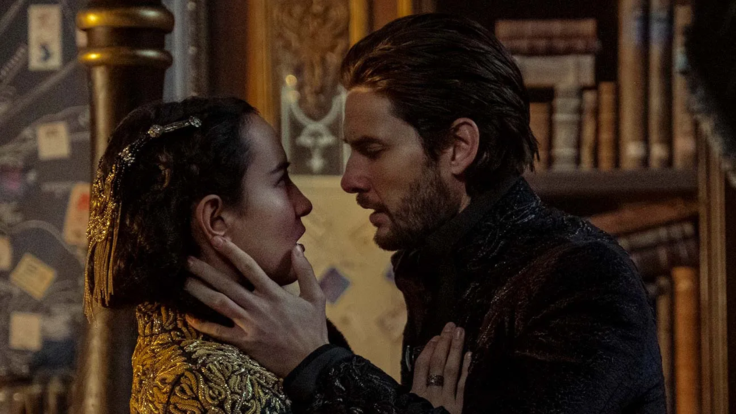
But this is a huge deal for Netflix, for overall deals, and for DuVernay, a luminary in the entertainment industry whose previous work includes the civil rights biopic Selma and mass incarceration documentary 13th, both nominated for Academy Awards. After directing A Wrinkle in Time for Disney, DuVernay returned to those themes with When They See Us, portraying the harrowing ordeal of the five New York teenagers who were coerced into confessing to assault and rape in 1989, only to be exonerated over a decade later when someone else admitted to the crime. The four-part dramatic series was nominated for more than a dozen Emmys.
But the series is also a showcase in unsubtle filmmaking, particularly in its portrayal of the antagonists, specifically Linda Fairstein, who once enjoyed a distinguished career as a prosecutor before becoming a mystery novelist and cable news legal commentator. In the series, Fairstein is played by Felicity Huffman, and is portrayed as being obsessively biased against the Black and Latino teens, calling them “animals” and overlooking inconsistencies in their confessions.
The issue, as highlighted in the defamation lawsuit she filed after being dropped by her book publisher, is that while Fairstein did lead the Manhattan District Attorney’s sex crimes unit during that period, she didn’t personally prosecute the case. Nevertheless, the docudrama depicted her instructing reluctant NYPD cops to detain “young Black males” in Harlem, advising against using “kid gloves” during interrogations, and constructing a much-criticized timeline for how the rape occurred. As U.S. District Judge Kevin Castel put it, the producers of When They See Us “reverse-engineered plot points to attribute actions, responsibilities and viewpoints to Fairstein that were not hers.”
While it’s notable that Judge Castel doesn’t see the DuVernay series as merely a subjective interpretation of a historical event (an echo of what he previously ruled two years ago while allowing this case to progress to the discovery phase), that’s not quite the reason why the latest ruling is an absolute blockbuster. What truly sets it apart is how the judge assesses the amassed evidence of actual malice—the critical threshold in libel cases involving public figures.
As everyone knows, the bar for defamation is exceptionally high. Naturally, Netflix expected to defeat this case by asserting itself as a mere film distributor and publisher relying on experienced Hollywood producers and writers. Could Fairstein demonstrate the streaming giant knowingly spread falsehoods or was recklessly indifferent to the truth?
Well, in a decision that’s bound to reverberate, the judge concluded that there’s enough specific evidence pointing to Netflix’s active involvement to potentially fault the streamer. Consequently, Netflix now finds itself awaiting a jury trial with a date yet to be scheduled—an impending event that could be as momentous as Dominion v. Fox. The clash has the potential to impact the filmmakers involved with the series and maybe even raise fundamental questions about the future of the popular docudrama genre. |
|
|
| Why hasn’t Fairstein’s lawsuit garnered more interest? One possible explanation is that she isn’t the most sympathetic plaintiff, fitting the profile instead of a rich, entitled white woman asserting her privilege. She also reportedly consulted for Harvey Weinstein a few years ago, just as The New York Times was readying its exposé about his sexual misconduct. Then there’s the perception that public figures are always griping about how they’re portrayed, from Jerry West demanding an apology for HBO’s Winning Time to Nancy Kerrigan panning I, Tonya, to Ken Griffin threatening Sony Pictures’ Dumb Money.
Regardless of the reason, I anticipate this libel drama will eventually capture significantly more attention in the media. After all, very few prior legal disputes have advanced beyond an initial dismissal motion, and none in recent memory has made it to trial. A case concerning a VH1 biopic of the ’90s R&B group TLC almost did, but that lawsuit was settled just before trial. I’ve asked around and no one can recall a docudrama libel case ever making it to a jury, although someone did point my attention to Time Inc. v. Hill, which concerned a magazine blurb about a theatrical and film adaptation of a real-life hostage incident, which—fun fact—was argued by Richard Nixon at the Supreme Court shortly before he became president. Long story short, it’s safe to assume that prickly famous people will be citing Fairstein’s success as precedent.
The controversy also offers a unique glimpse into the inner workings of Netflix. Foreshadowing what will be featured at trial, Castel rejected the streamer’s summary judgment motion based on evidence suggesting that Netflix executives proposed alterations to the script to magnify Fairstein’s negative depiction. (Read the decision here.) Indeed, the partially sealed record contains everything from Netflix’s internal correspondence over how its P.R. team prepared for an Oprah Winfrey interview to how the company responded to pressure from Fairstein herself. For instance, when Tribeca C.E.O. Jane Rosenthal, one of the producers of the series, expressed concern about the prosecutor character, Netflix’s director of original series, Alison Engel, responded, “It’s impossible for me to find her position defensible.” This happened while another Netflix employee watched a 20/20 documentary about the Central Park jogger case and expressed alarm at the conspicuous absence of their series’ antagonist.
This libel dispute also delves into racial dynamics, always a cultural flashpoint but especially heightened following the tragic murder of George Floyd and the subsequent backlash against perceived wokeism. The infamous case at the heart of When They See Us offered ample material for reflection, given hasty judgment by law enforcement, the media, and a still-unrepentant Donald Trump. It’s safe to say that DuVernay had a point to convey. In her deposition, she was asked if she had any evidence that Fairstein actually led the investigation into the Central Park jogger case. DuVernay said she couldn’t recall, but added, “What she represents at large to me are the injustices that took place in the investigation and prosecution that she led.”
Is that fair? There’s already been a significant legal battle over the injustice of imprisoning five youths for a crime they didn’t commit: a civil rights suit against New York City that was contested vigorously by the Bloomberg administration for over a decade before being settled by Bill de Blasio’s team in 2014, for $40 million. Now, history appears to be repeating itself in the courtroom, with the error in judgment now alleged to come from the filmmakers who essentially convicted a white prosecutor for actions she insists she did not commit. |
|
|
| Of course, filmmakers don’t always have the cooperation of their subjects, and so they rely on the First Amendment to tell their stories. Just look at some of the movies nominated for Oscars over the past few years: Elvis, King Richard, The Trial of the Chicago 7, Ford v. Ferrari, Vice, Bohemian Rhapsody… Each of these movies balances a historical account, entertainment, and larger societal messages. And many are upfront about their creative embellishments. “Based on actual events… [but] changed for dramatic purposes” is a common disclaimer to caution audiences that what they’re seeing isn’t entirely accurate.
When They See Us also featured a disclaimer, albeit during the credit sequence, which is frequently skipped by Netflix viewers. Interestingly, in his opinion, Castel highlights Netflix’s decision to move a “fictionalized dramatization” disclaimer to the beginning of each episode of The Crown in response to controversy over its portrayal of the British royal family—suggesting that the absence of a similar move in the Fairstein case is a point in her favor.
However, by now, most viewers are likely sophisticated enough to recognize that docudramas are not documentaries. During the trial, one can anticipate that Netflix, currently represented by the Dentons firm, will argue that few people would interpret When They See Us as a totally faithful recreation of historical events. Jurors may even be warned that the future of dramatizations hangs in the balance.
Fairstein’s legal team, led by Andrew Miltenberg, may seek to differentiate When They See Us from typical docudramas. I imagine he might try to achieve this by presenting the Netflix series as an endeavor in social justice activism. Indeed, the plaintiff’s court papers explicitly reference how the writers intended to cancel Fairstein. At trial, Miltenberg might emphasize this narrative by highlighting evidence like how Engel, after a “culture summit” at Netflix, jotted down the note, “Linda Fairstein— think of this as a reckoning for her prosecutorial misconduct.” The plaintiff’s side may also underscore how, as the series was being released, DuVernay texted Attica Locke, one of the co-writers of the series, who has been quite vocal about Fairstein on social media, with the message, “She ‘bout to feel it all.”
Of course, there’s certainly a reasonable chance that Netflix opts to settle this case. As I’ve previously noted, the streamer is no stranger to libel litigation, having faced more of these cases in the past decade than CNN, The New York Times, and even Fox News. Given the potential for precedent as well as the public spectacle of dragging executives through the mud, Netflix could decide that throwing cash at the problem is best. While Fairstein hasn’t specified the damages she seeks, it’s evident that she has considerable leverage due to the advanced posture of this case. That raises a sticky issue: What sort of ruckus might ensue if she collects more than the five wrongfully convicted men in their own settlements?
That said, it doesn’t seem like there’s currently a plan to settle, at least not yet. This week, I asked Netflix about whether it still had confidence in DuVernay. Given how some future plaintiff might argue that it now would be reckless to trust her, I said, does Netflix have any qualms about working with her in the future? A spokesperson responded, “We are proud of When They See Us and fully support the incredible team behind the series including Ava DuVernay, Attica Locke, and our colleagues at Netflix. We look forward to presenting our defense to the jury.” |
|
|
- Once Kevin McCarthy stumbles and the government shuts down, the U.S. judiciary can keep operating for two weeks, according to estimates. There will apparently be a push to keep the gears of our judiciary grinding even longer so that active cases may at least be resolved, so you can bet your bottom bitcoin that the six-week Sam Bankman-Fried trial goes forward.
- The NCAA struggled mightily at a class certification hearing last Thursday in House v. NCAA, a case spearheaded by Jeffrey Kessler targeting the NCAA’s broadcasting revenue on antitrust grounds. Surprisingly, just one day after the hearing, U.S. District Court Judge Claudia Wilken granted the athletes’ motion for certification. You can find the order here. (You could joke that the NCAA should have enlisted Deion Sanders, but it appears that Coach Prime didn’t have the best week either.)
- Rupert Murdoch is retiring—well, sorta—but the shareholder lawsuits over that Dominion mess survive. Now comes my favorite part of shareholder litigation: the jockeying to lead a consolidated action. The best shit-talker gets to depose Murdoch one final time. The battle is on.
- If Joe Jonas doesn’t return his kids’ passports, he’s in violation of the Hague Convention. Or so Sophie Turner claims. What a tragic Game of Thrones twist.
- A very deep-cut Suits reference, but is investment banking the major leagues and lawyering the minors? Or is it the other way around? Remind me to ask Robert Kindler, the former top M&A banker at Morgan Stanley who, at the ripe age of 69, is returning to practice law at Paul Weiss. Kudos to Bloomberg for the first interview.
|
|
|
| That’s all for today. And if Tom Hardy doesn’t play me in the movie about Puck, I’m suing! |
|
|
|
| FOUR STORIES WE’RE TALKING ABOUT |
 |
| The I.P.O.-looza |
| Plus, Iger’s $60B gamble and Murdoch’s legacy. |
| WILLIAM D. COHAN |
|
 |
|
 |
| Lachlan’s Dowry |
| Lachlan is the last Murdoch standing. What now? |
| DYLAN BYERS |
|
 |
|
|
|
|
|
 |
|
|
|
Need help? Review our FAQs
page or contact
us for assistance. For brand partnerships, email ads@puck.news.
|
|
You received this email because you signed up to receive emails from Puck, or as part of your Puck account associated with . To stop receiving this newsletter and/or manage all your email preferences, click here.
|
|
Puck is published by Heat Media LLC. 227 W 17th St New York, NY 10011.
|
|
|
|