Welcome back to The Varsity. I’m John Ourand, celebrating the
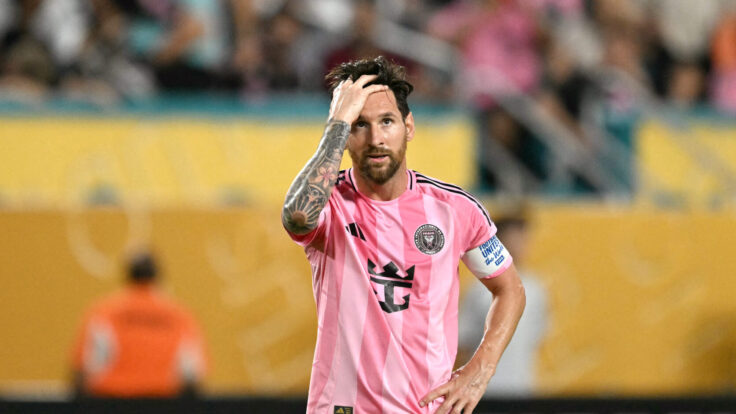
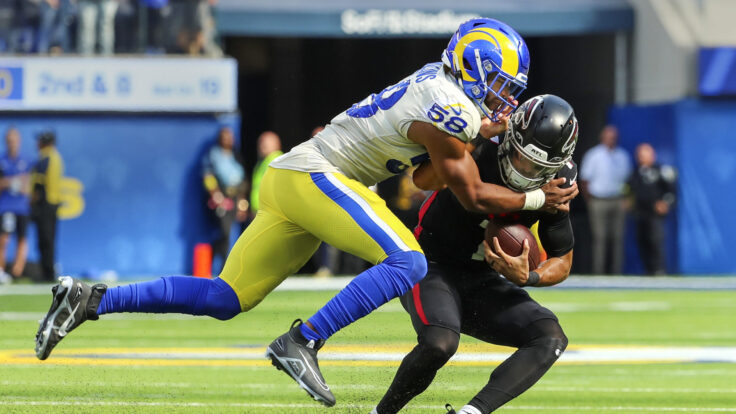
only sports equinox of 2025—a rare night when all five major U.S. leagues are in action. We’ve got Monday Night Football on ESPN, the World Series on Fox, the debut of Peacock NBA Monday, the NHL on ESPN+, and the MLS playoffs on FS1. On a more personal note, I figured I’d share that my mother passed away peacefully a few days ago after a long battle with Parkinson’s and dementia. As I shared recently on
Instagram, her passion for journalism and politics inspired me to pursue this career I love.
In tonight’s issue, news and notes on the record-setting NBA-NBC reunion, yet another YouTube TV carriage dispute, the looming WNBA collective bargaining deadline, American soccer’s shining moment, and an update on David Ellison’s WBD fantasy. For the main event, an
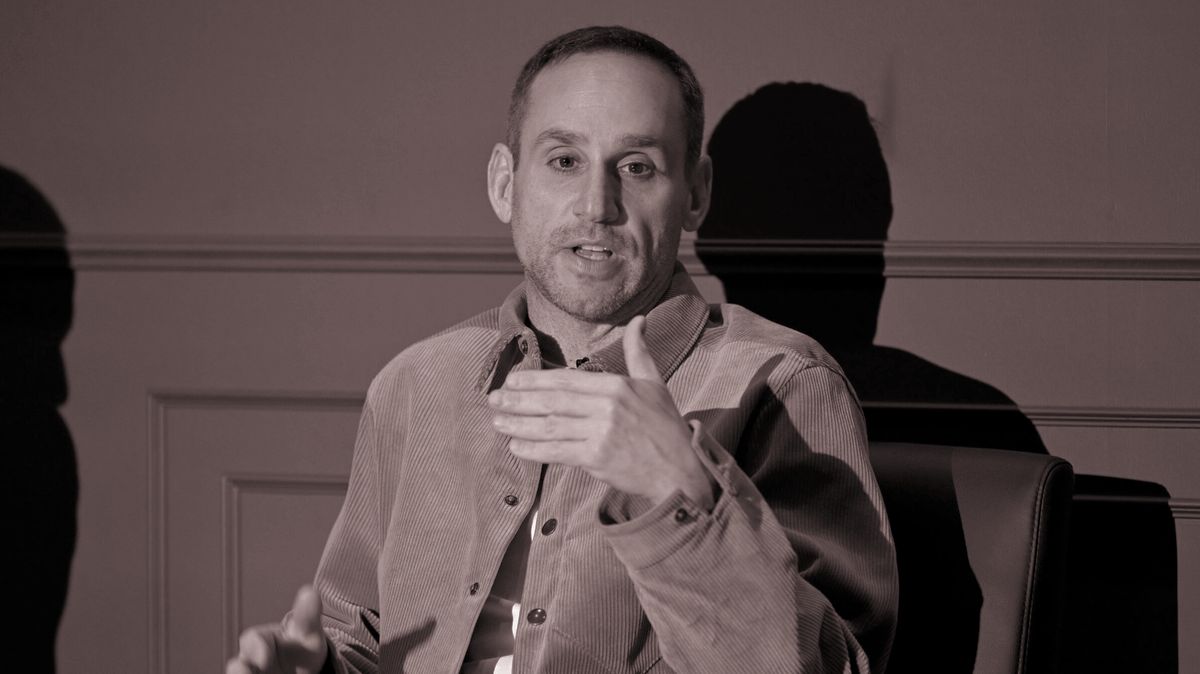
excerpt from my partner Bill Cohan and Michael Nathanson’s rollicking conversation with Fanatics founder and C.E.O. Michael Rubin from our In the Arena event. You can listen to the conversation in its entirety here.
Okay, let’s get to it…
|
- NBA and NBC, together again: There was no shortage of storylines heading into this NBA season: the increasing globalization of the league (epitomized by the record-setting 135 international players on opening day rosters), the Clippers’ alleged salary cap circumvention, LeBron James embarking on
his 23rd season, etcetera. Chief among the headlines, of course, was the NBA entering its new 11-year, $77 billion media rights deal, which included a reunion with NBC for the first time since the Shaq- and Kobe-led Lakers swept the New Jersey (!) Nets in the 2002 Finals. Naturally, the sports world has been eager to see how the league and network would make up for lost time.Last week, NBC announced that Tuesday’s opening night bill—Thunder–Rockets and a
LeBron-less Warriors–Lakers—delivered the largest audience for an “NBA Tip-Off” doubleheader since 2010, with an average of 5.6 million viewers across NBC and Peacock. That’s a 90 percent jump from TNT’s event last year. And remember when Adam Silver recently (and jarringly) admitted that the NBA has become a “highlight-based sport”? According to NBC, their NBA
Tip-Off games drove more social engagements than any other programming on Tuesday. Unfortunately for the league, the sordid betting scandal has distracted from the early promise.
- YouTube vs. Disney: For the fourth time in three months, YouTube TV has found itself in a high-stakes carriage dispute—this
time with Disney. The two companies’ contract is set to expire at the end of the month, and both have begun warning customers about the potential loss of channels, including ESPN and ABC. YouTube’s prior three conflicts—with NBCUniversal, Fox, and Paramount—were ultimately resolved, but this one carries outsize implications given the volume of live sports involved. In a
statement, Disney said, “If we don’t reach a fair deal soon, YouTube TV customers will lose access to ESPN and ABC, and all our marquee programming—including the NFL, college football, NBA, and NHL seasons—and so much more.”YouTube, for its part, says, “We’ve been working in good faith to negotiate a deal with Disney that pays them fairly for their content on YouTube TV. Unfortunately, Disney is proposing costly economic terms that would raise prices on YouTube TV customers and give our
customers fewer choices, while benefiting Disney’s own live TV products—like Hulu + Live TV and, soon, Fubo.” For all the weight YouTube tends to carry, Disney has the leverage here. It’s safe to assume a resolution is in the works and will manifest relatively soon. But YouTube will continue to garner leverage in every negotiation as the secular trends of the industry play in its favor.
- WNBA players post up: We can expect the chatter surrounding
the WNBA’s ongoing negotiations over a collective bargaining agreement to intensify as the October 31 deadline approaches. With the league’s current C.B.A. set to expire on Friday—and in the wake of the WNBA’s $2.2 billion media rights deal with Disney, Amazon, and NBCUniversal—tensions between players and owners are mounting over a familiar slate of issues: the league’s salary cap, and the broader question of how much economic value the players themselves are creating in this period of rapid
growth.On Friday, the players’ case gained a notable boost. More than 70 elected officials, including Socialist Republic of New York City mayoral candidate Zohran Mamdani, sent a letter to WNBA commissioner Cathy Engelbert and NBA commissioner Adam Silver urging the league “to bargain in good faith to reach a fair [Collective Bargaining Agreement] in a timely manner,” according to The Athletic. The move adds political weight to the already fraught
process. The WNBA’s historic viewership growth, and the rising star power of players like A’ja Wilson, Paige Bueckers, and Caitlin Clark, have heightened expectations for compensation reform. (As it currently stands, the minimum salary for a WNBA player is about $67,000, less than the Jontay Porter parlay. The league’s top earner, Jackie Young, has a salary of around $250,000.) Despite public support, insiders
say a labor impasse remains possible, if not likely. The coming days will reveal whether the league’s newfound popularity can translate into a deal that satisfies both its business ambitions and its players’ demands.
- Women’s soccer’s breakthrough moment: At our recent In the Arena sports media conference, my partner Dylan Byers moderated a thoughtful panel with NWSL’s Sarah Jones Simmer, MLS’s Seth
Bacon, and Sixth Street’s Russell Wolff to discuss the tectonic shifts reshaping global soccer. With the World Cup returning to U.S. soil for the first time since 1994, the commercialization opportunities are vast—and multiplying. We’re about to live through one of the most consequential moments in the history of American soccer.Here’s what Sarah had to say on the subject: “I think the Men’s World Cup being on U.S. soil in 2026 is going to be the single
biggest catalyst we have ever seen. But what’s equally exciting is that there’s a drumbeat after that. There’s a Women’s World Cup in Brazil in ’27, there’s L.A. [Olympics] ’28, and there’s the Women’s World Cup on U.S. soil in 2031. So what we’re about to step into, in terms of the global soccer narrative, is just incredible.”Sarah continued: “We’re thinking deeply about the new audience of fans who are coming to this for the first time. They’re coming because they like jersey culture,
they like the vibes. They may be finally interested because they’re seeing penalty kicks on TikTok, not because they’ve been fans generationally. We need to be able to message and communicate and storytell to that audience in the same way that we do for the folks who have been following the U.S. women’s national team religiously since 1999, and could tell you how many goals Marta scored last year with her left foot.”
- Zaz plan B?: In
the latest issue of What I’m Hearing, my Puck partner Matt Belloni’s can’t-miss private email, he added another beat to David Ellison’s enduring pursuit of David Zaslav’s Warner Bros. Discovery. He wrote: “The Trumpy New York Post declared last week, via a ‘senior Trump administration official,’ that the future owner of WBD is
‘very important to the administration,’ and everything ‘points to the Ellisons.’ So much is changing so fast in late-stage Hollywood, it’s hard to fully understand the repercussions of it all, or where to direct anger or attention.”Matt continued: “Despite all that, I’d argue that the acquisition of Warner Bros. can only be evaluated against its alternatives. That’s partly why so many people in town thought Ellison was a good fit for Paramount: The other potential scenarios—a carve-up,
or the collapse of a major studio—were way worse. The same analysis applies here… kinda. Warner Discovery isn’t in quite the perilous position Paramount was in. But it’s now officially for sale, and what if Ellison doesn’t get it? … How would the Writers Guild feel about Ellison if the alternative to him was, say, Sam Altman? What’s worse: a merged studio… or one that becomes training data for OpenAI products?”
|
|
|
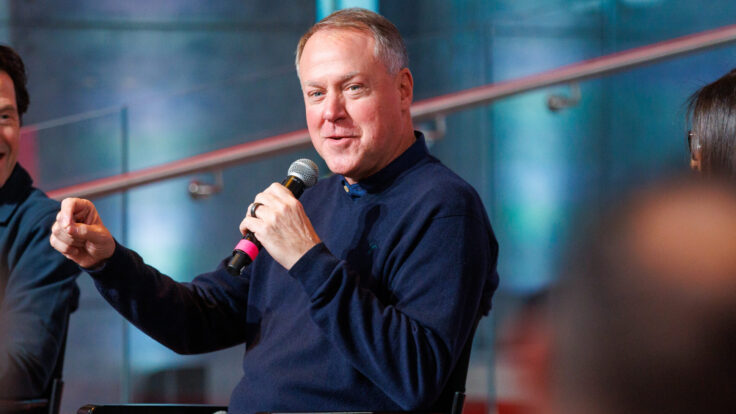
Michael Rubin explains how his $31 billion company evolved from an e-commerce
merchandiser into the third-largest sportsbook in the U.S., and why he’s in “no rush” for an exit.
|
|
|
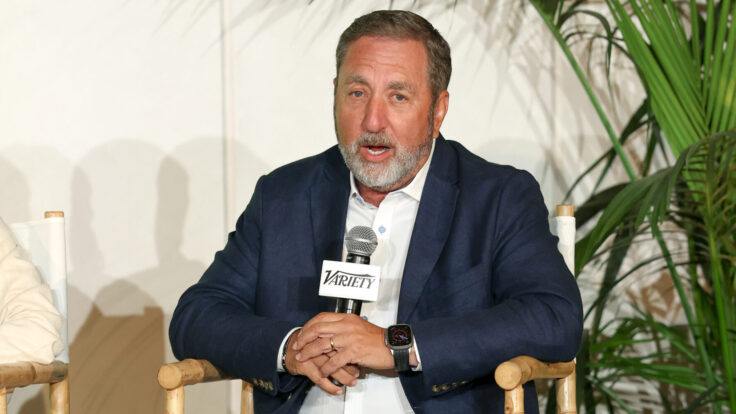
A few weeks ago, at Puck’s In the Arena sports conference at The Spiral in New York City, Fanatics
founder and C.E.O. Michael Rubin joined Michael Nathanson and me for a candid conversation about his $31 billion digital sports juggernaut and the next frontier of the business. Rubin reflected on how he reinvented the fan merchandise industry, expanded into collectibles and sports betting, and why he’s going all in on live events, from Fanatics Fest to teaming up with Tom Brady for the Fanatics Flag Football Classic in Saudi Arabia. He also
addressed the competition with DraftKings and FanDuel, and why “you’re not smart” if you gamble on sports anywhere besides Fanatics. And of course, I asked him about the long-rumored Fanatics I.P.O. As always, this conversation has been slightly edited for length and clarity.
|
On
the DraftKings-FanDuel Battle
|
Bill Cohan: Let’s talk about sports betting. Last time we talked,
you were losing something like $500 million on that business. Where does it stand now? How’s that competition going?
Michael Rubin: Gambling is a great business. Now the question is: Does it fit for us, with a big brand and a big customer base? I think we were probably the most logical person to get in the business. DraftKings spent over $7 billion to get to profitability. FanDuel spent $6 billion to get to profitability. We’re in it for about $1.5 billion, and
we think we’ll invest another $200 million to $300 million before we make money in the next fourth quarter. What’s been really fun is, when we decided to get into this business, everyone said, Great business, you’re nuts. There’s a duopoly between FanDuel and DraftKings, you can’t do this. It’s the same dumb shit people told me when I was getting in the merchandise business. My love words are “You can’t do this.” Tell me I can’t do something that I want to do, and that’s very
motivating to me.
Cohan: It wrecked your P&L for a period of time.
You think it wrecked my P&L. To me, it was an educated investment. As a decent-size, private company with a good balance sheet, it was easy for us to do it, and a no-brainer. This year, we’ll have about $25 billion in bets placed, and we’ll do close to $1 billion in revenue. And next year, we think we’ll double again. We are the
fastest-growing sports book in the country. If you gamble on sports, you’re not smart if you don’t do it with us, because our value prop is better. Every time you bet, win or lose, we give you FanCash to Fanatics, with which you can make more bets, get merchandise, get tickets, get trading cards, go to our marketplace, etcetera.
The other thing is, if your player gets hurt in the first half of a game, we insure it for you. Now, the whole industry is following us because we made it better
for our customers. Two years ago, people were saying we’re gonna lose all our money and die. Now, everyone’s saying we’re a strong third. But no one wants to be third. We want to figure out how to be number one, and that’s what we’re gonna focus on.
Cohan: Equity markets are at an all-time high. Last time I checked, animal spirits have been released. Is it time for the Fanatics I.P.O.?
There are times when
I don’t look at the stock market for weeks at a time. I don’t care. I have a good balance sheet, and I’ve been fortunate personally. So there’s no one that has any liquidity needs. Might we eventually go public? I think that’s a real possibility. There’s no rush right now. What I need to do first is prove the two of you wrong about sports betting, and make money. I need to finish integrating the rights with the NFL, which will now be done in April. And I just want the business to progress.
There’s no real pressure right now.
Cohan: Your private equity investors are cool with that?
They have the perspective that if we go public, we kind of force them to distribute and, ultimately, sell. We believe we can be the most important company in sports over the next five or 10 years, the most valuable company in sports. So that almost hurts them if we go public, because it kind of forces them to
decide what they want to do. They want us to keep building. But again, do I think we’ll get there? I think it’s more likely than not.
|
The
Fanatics Fest of It All…
|
Michael Nathanson: Walk us through what you saw that others
didn’t about reinventing licensed merchandise, and why that was necessary.
When we looked at the business 15 years ago, we thought it had an enormous opportunity, but that sports fans weren’t being served well. We thought there was an opportunity to reinvent fan gear merchandise, because that’s where it all started. Obviously, the business has expanded a lot since then, but we thought there was a real opportunity to take
the traditional business and reinvent the supply chain and create great agility. There were so many things we could do to super-serve the fans. And you’ve seen it work incredibly well, and every day, we find new ways to do it well.
Nathanson: At what point did you say to yourselves that you need to diversify into other verticals?
It wasn’t until 2019 that we thought we had really constructed the business
the right way, and that we were really servicing fans in a way that would allow us to think about what’s next. By 2019, I think we had about 20 million cumulative customers. That led us to reinvent the company in 2020, to be a digital sports platform. Today, it’s made up of three businesses: Fanatics Commerce, which we started in 2011 and is about a $7 billion business; our Collectibles business, which will be over $3 billion in revenue next year; and our Betting and Gaming business, which is
the most interesting business because people said we had no chance of being successful in it. We’re now the third player, having only been in it two years and spent a fraction of what DraftKings and FanDuel have spent. This is the thing people don’t get about Fanatics: We’ll be approaching $13 billion in revenue next year, we have 22,000 people, and I feel like we’re a startup. We’re just getting going.
Nathanson: You’re moving into live events—Fanatics
Fest, the Tokyo Series, flag football, etcetera. What are you thinking about live events? How does that help you? Does that lead to more content?
Live events are really hard. Fanatics Fest is the hardest thing Fanatics does all year, and it’s not even 1 percent of our revenue. But what it does for our brand is incredible. I used to think about how I could make Fanatics a big company; now, I think about how we become the most beloved company by
sports fans. Fanatics Fest helps us be beloved in such a big way.
Why are we doing the flag football game in Saudi Arabia with Tom Brady? Because for us to get the biggest stars together, to have it be the Fanatics flag football game, that’s an amazing opportunity for us to build our brand. By the way, it’s really hard, and that’s the reason we don’t do more of it.
|
No Cheap Seats today. I’ll be back tomorrow with Julia Alexander.
John
This issue was assembled with the help of Curtis Rowser.
|
|
|
Ace media reporter Dylan Byers brings readers into the C-suite as he chronicles the biggest stories in the industry:
the future of cable news in the streaming era, the transformation of legacy publishers, the tech giants remaking the market, and all the egos involved.
|
|
|
Puck fashion correspondent Lauren Sherman and a rotating cast of industry insiders take you deep behind the scenes of
this multitrillion-dollar biz, from creative director switcheroos to M&A drama, D.T.C. downfalls, and magazine mishaps. Fashion People is an extension of Line Sheet, Lauren’s private email for Puck, where she tracks what’s happening beyond the press releases in fashion, beauty, and media. New episodes publish every Tuesday and Friday.
|
|
|
Need help? Review our FAQ page or contact us for assistance. For brand partnerships, email ads@puck.news.
You received this email because you signed up to receive emails from Puck, or as part of your Puck account associated with {{customer.email}}. To stop receiving this newsletter and/or manage all your email preferences, click here.
|
Puck is published by Heat Media LLC. 107 Greenwich St, New York, NY 10006
|
|
|
|