|
|
Happy Monday, I’m Eriq Gardner.
|
|
Welcome back to The Rainmaker, my new private email focused on the legal underbelly of Hollywood, Silicon Valley, Washington, and Wall Street.
In today’s column, I break down why Robin Williams’ heirs are now being accused of participating in an antitrust conspiracy. It’s a case that could transform the comedy business. Plus a few updates on Netflix’s displeased shareholders and Florida’s angry taxpayers.
As a reminder, The Rainmaker will be free for the next few weeks before it becomes for members only. If you're not already a Puck subscriber, you can sign up here.
But first…
|
|
|
Everyone is still talking about Politico’s earth-shaking scoop that the Supreme Court may be on the verge of overturning Roe v. Wade and any constitutional right to an abortion. Just how did Politico get its hands on Justice Samuel Alito’s draft opinion? A popular D.C. parlor game at the moment is guessing the identity of the leaker. The most popular theories point to one of the 37 law clerks currently serving the nine justices. But I’ve heard the reasoning—everything from the presence of staple holes indicating printouts to the evolving cultural attitudes of Millennials—and I’m not convinced. So let me just offer four reasons the “leak” might have come from outside the building.
1. This would be a career-ender for a law clerk. And potentially criminal theft for anyone else working at SCOTUS not authorized to access a draft opinion. Remember that law clerks aren’t typical 30-somethings. These are extraordinarily ambitious, mostly Ivy League-educated high-achievers. They know the rules backwards and forwards; they’ve been trained to maintain confidentiality; and perhaps most importantly, they’re on the cusp of an elite career in which they can use their legal studies to advance their political and social views.
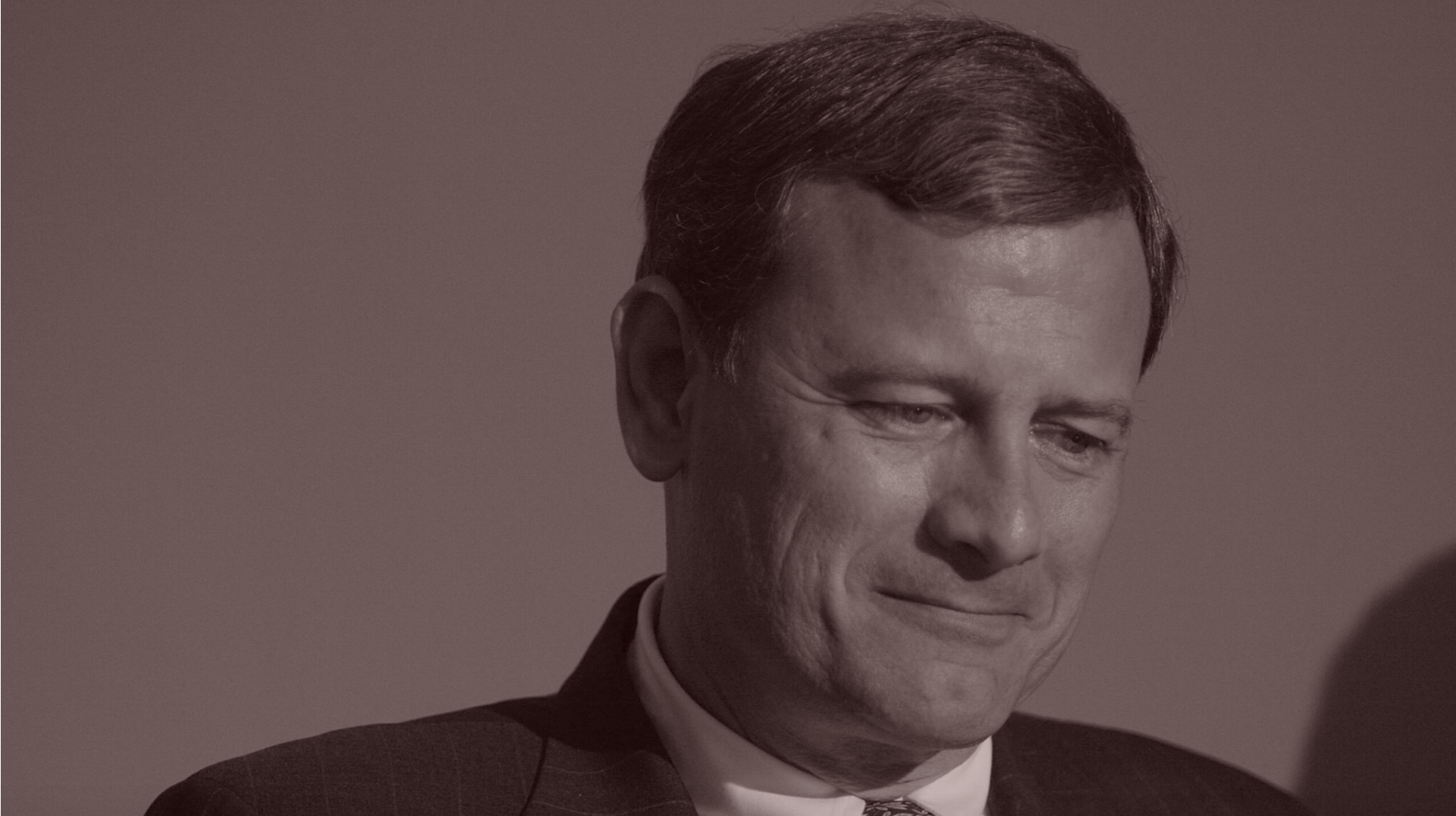
2. The strategic upside to leaking isn’t obvious. Conservatives think that a liberal leaked it to influence the outcome. Liberals believe a conservative might have done it to sway a colleague or reset expectations. These theories are certainly plausible, but well short of being self-evident. That means that whomever is taking the risk, there’s no clear-cut payoff. Take the speculation by NPR’s Nina Totenberg that a clerk for one of the conservative justices leaked the draft with the intention of ensuring a majority for overturning Roe. This theory posits 1) that the leaker feared Chief Justice John Roberts would pull a colleague towards his more moderate position, and 2) that this person believed leaking the draft would compel the conservative wing—not wanting to be perceived as bending to public pressure—to hold strong. Sure, this theory of gamesmanship is possible but it also ascribes quite a lot of psychological prowess on the part of that clerk in understanding how a superior would react to a leak. Such a gambit could easily backfire, especially if the source and motivation got out.
3. This business about authentication. Upon publication of the story, Politico executive editor Dafna Linzer stated: “After an extensive review process, we are confident of the authenticity of the draft.” Here’s a quick thought exercise: If Alito had leaked the draft himself, would Politico have needed to investigate the authenticity at all? No, of course not. How about an Alito clerk? Maybe, but probably not an extensive review. In other words, the reliability of the source is inversely related to the lengths one goes to vouch that these are the real goods. Politico’s statement suggests suspect origins.
4. The co-byline. I won’t be the first to point out that Alexander Ward is a national security reporter at Politico. How did he get his name on a scoop of a lifetime? Maybe he played some role in wiping metadata, but given journalistic norms, it’s probably more likely he reeled in the fish. As for Josh Gerstein, he’s a Harvard-educated veteran of the legal beat, a reporter I know who delivers solid analysis of judicial happenings. He’s also an expert at government leaks, per his bio at the Reporters Committee for Freedom of the Press. That said, I’ve never known him to be particularly close to any of the justices. Not an inside player like Nina Totenberg, anyhow. Also, I find it possibly relevant that in tweets and elsewhere, Gerstein has repeatedly been using the word “disclosure” instead of “leak.” It seems a deliberate choice from someone accustomed to the linguistic nuance of law.
So if it wasn’t an inside job, where would it come from? That I can’t answer, although the involvement of a national security reporter raises intriguing possibilities. And even if this isn’t a matter of national security, it could be a friend, spouse, or family member of a Supreme Court justice, as one individual who took an almost forensic look at the document itself theorized. Also, please go see Joel and Ethan Coen’s Burn After Reading. The source might be more silly than we all imagine!
All that said, it could be an internal leak. (Feel free to send me your best theories at eriq@puck.news.) At the very least, it’s being widely interpreted to be an inside job, which brings me to…
|
| This Could Be Bad for Julian Assange |
|
The leak, er, disclosure of the draft opinion has prompted many in the media law community to note that Politico faces no credible legal threat for publication of Alito’s missive, thanks to two favorite precedents. Namely the Pentagon Papers case and especially Bartnicki v. Vopper, a 2001 Supreme Court decision which dealt with a radio broadcaster airing intercepted cell phone conversations on a public affairs program. The conclusion of many First Amendment defenders is the same as it has been in the past on the question of publishing Sony hack materials, or Donald Trump’s taxes, or Project Veritas legal memos: that so long as something is obtained lawfully by the reporter, even if ascertained unlawfully by the source, the publication is protected free speech.
Perhaps true, but the danger is not that Josh Gerstein is thrown behind bars but rather that a seething Supreme Court, in some future case, walks back Bartnicki, a precedent that’s hardly old enough to drink—perhaps by making it problematic to publish anything that’s been plainly pilfered. One appellate judge in 2006 attempted to do just that, in another dispute over an intercepted cell phone conversation (this one involving a conference of Congressmen). “The difference between this case and Bartnicki is plain to see,” he wrote. “It is the difference between someone who discovers a bag containing a diamond ring on the sidewalk and someone who accepts the same bag from a thief, knowing the ring inside to have been stolen.” The decision was later vacated, but suggested a way that future courts might rein in any intrepid reporters obtaining and disclosing state and corporate secrets, a fearsome possibility that would chill much investigative journalism.
Julian Assange is a good candidate to take the blowback for what’s unfolded this past week. Currently in the United Kingdom, he’s nearing the end of the road in his attempts through legal and political channels to avoid extradition to the United States over criminal charges relating to how Wikileaks obtained and disclosed classified files. Assange faces the possibility of up to 180 years in jail for allegedly helping Chelsea Manning crack a password to hack into a government computer.
Before the case even gets to trial, Assange has been rallying around the First Amendment flag. He’s getting some press advocates to take up his cause—especially those who are concerned about the chilling effect on future unauthorized disclosures of State Department cables or Defense Department information. The background noise portends a high-stakes battle that could easily make waves in the American court system up to the Supreme Court and impact how journalists deal with leaks.
“I have heard no one calling from the criminal prosecution of Politico or its reporters,” Barry Pollack, Assange’s attorney told me. “It is, as it should be, uncontroversial that their actions in publishing truthful information are protected by the First Amendment. The prosecution of Julian Assange is a dangerous departure from this time honored principle.”
|
| As for the Biden Administration… |
|
On Friday, the Biden Justice Department quietly defended seizing material belonging to Project Veritas as part of an apparent probe into how the group of conservative muckrakers led by James O’Keefe obtained a diary belonging to Ashley Biden, the president’s daughter.
After the apartments of O’Keefe and a couple colleagues were raided in November, a special master was appointed to review what was seized. Project Veritas then filed court papers seeking to compel the return of cell phones and other equipment and data. The group complained about federal prosecutors’ “total disregard for the First Amendment” and how they were exhibiting “utmost hostility towards the free press.” Saying that Ashley’s diary was “abandoned,” Project Veritas also told a judge that its newsgathering was protected under Bartnicki.
Now comes the response from Merrick Garland’s D.O.J., which defends the execution of search warrants as reasonable. (You can read the entire memorandum here.) The seizure of devices, the government continues, has yielded “data responsive to the search warrants” and states that “if a prosecution results from the investigation, these materials will have evidentiary value.”
As for the sanctity of the free press, the D.O.J. mostly elides the subject, noting that a Special Master is currently reviewing what’s privileged, but does briefly address an internal policy regarding how and when federal law enforcement may obtain information and records from the media. Such a policy, the D.O.J. says, doesn’t create enforceable rights for outsiders.
|
| Copyright Law Is a Joke—Literally |
|
A funny thing happened on the way to the forum where big lawsuits often get decided. On Thursday, a bunch of joke tellers were accused of conspiracy — a price-fixing scheme that allegedly threatens the ability of streamers to access the comedy market. The development comes in an ongoing case that may forever change the laughter business.
Back in February, the estates of the late comedians Robin Williams and George Carlin, as well as living comics Andrew Dice Clay, Nick Di Paolo and Ron White each filed claims against Pandora Media. They’re upset over a lack of any payment to them for the use of old comedy routines. According to the since consolidated lawsuit in California federal court testing never-before-tried copyright theories, jokesters, like songwriters, are entitled to protect the composition of their work from being performed without license. For years, streaming services have ignored joke writers when clearing rights, but that may now change upon charges of mass infringement. “Pandora did what most goliaths do: it decided it would infringe now to ensure it had this very valuable intellectual property on its platform to remain competitive, and deal with the consequences later,” the complaint states. “Later is now.”
Pandora, represented by the firm of Mayer Brown, is now asserting a significant counterclaim against these same comedians and Word Collections, an upstart performance rights organization (PRO) aiming to win royalties for clients. “Word Collections and its co-conspirator comedians have not only engaged in naked horizontal price fixing,” states the counterclaim (read in full here). “In assembling its portfolio of the rights to the works of conspiring comedians, Word Collections also presents a genuine threat of achieving monopoly power in the market for the rights to perform, distribute, and reproduce the comedy routines embodied in comedy recordings, power that it can and will exert over Pandora and other services that offer comedy.”
Although a cartel of comedians might sound like the setup of some bad joke, the truth is that what’s happening now bears resemblance to something that occurred in the mid-20th century when the Department of Justice pursued antitrust claims against song publishers for ganging up in licensing to radio stations. In settling, ASCAP and BMI, two giant PROs in the music business, entered into consent decrees that still operate to this day. As a result, ASCAP and BMI must offer blanket licenses to music users, and whenever there’s a dispute about the terms and conditions, a federal judge figures out what’s fair. So restaurants, bars, sports stadiums, and most other places you hear music over loudspeakers don’t have to negotiate licenses individually with each and every songwriter. They can access a bulk catalog of songs by paying a judicially-reviewed fee to ASCAP and BMI.
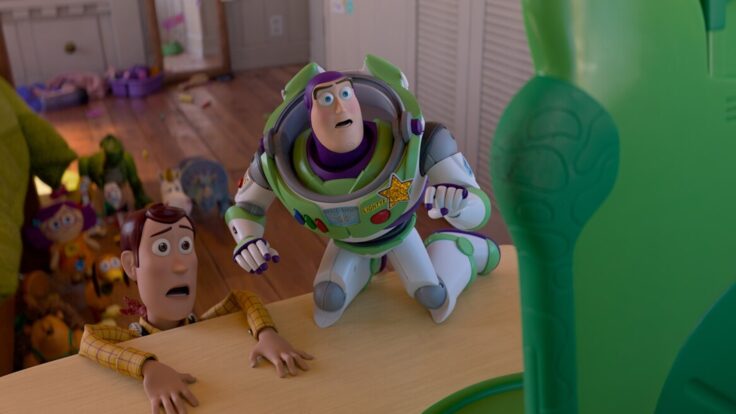
Of course, intellectual property is basically a government-approved monopoly (e.g. Disney gets to control the Toy Story market), and so it should come as no surprise that when someone asserts a bold and novel I.P. claim — as these comedians are doing— someone else responds with an antitrust counterclaim, testing whether the government really will tolerate such market manipulation. Especially at the prospect of concerted efforts by owners to raise the value of their works. That’s what we’ve seen in the music industry. Over the years, even after the ASCAP and BMI settlements, there’s been additional antitrust cases over the licensing of songs. Usually, it’s because some new technological way (TV, the internet, ringtones…) to exploit music has come along or because a breakaway group of songwriters and publishers has authorized someone other than ASCAP and BMI to represent them. Most notably, a dispute in the late 1970s over music on television went all the way up to the Supreme Court, which then decided that offering blanket licenses of song catalogs wasn’t presumptively illegal. Nevertheless, litigation has endured in other contexts with the licensors having more difficulty in escaping antitrust claims.
Thanks to this new development in the comedy suit against Pandora, expect to hear much more about the market for laughter as antitrust litigation tends to focus on defining markets and figuring out harms. But if the plaintiffs can convince a judge that the performance of jokes is protected by copyright despite decades of almost no enforcement, we may see a new paradigm emerge for comedy licensing that figures to impact comedians and streamers even beyond the players involved in this particular case. This very much feels like the early stages of something that could become structurally transformative.
|
|
|
| A federal judge has rejected Donald Trump’s lawsuit against Twitter for permanently suspending his account. The conclusion is that the move wasn’t “state action” and thus the ex-prez hasn’t plausibly alleged a First Amendment violation… The telecom industry has given up fighting California’s net neutrality law after experiencing a loss at the 9th Circuit Court of Appeals… Netflix’s poor financial quarter and subscriber loss has led unsurprisingly to a shareholder lawsuit alleging securities fraud… Florida taxpayers don’t like the prospect of being saddled with a billion dollars worth of debt for the dissolution of Disney World’s self-governing district. They’re now suing the state… New York City, via its worker pension funds, is taking on Activision Blizzard over the proposed Microsoft merger, questioning whether it’s a ploy to escape what it might be able to collect from the video game company’s board for alleged malfeasance… Emily Ratajkowski was sued for posting a paparazzi photo of herself on Instagram. According to a settlement that states the model/actress didn’t infringe, the photographer’s former lawyer has to now pay her. See the stipulation filed with the court. |
|
|
|
| FOUR STORIES WE'RE TALKING ABOUT |
 |
| Bitcoin Madness |
| Elizabeth Warren is right: Fidelity’s decision to offer Bitcoin “savings” in retirement accounts could be disastrous for investors. |
| WILLIAM D. COHAN |
|
 |
| Netflix's Silver Lining |
| Yes, layoffs are coming. But those 220 million subscribers don’t have much to worry about—for now. |
| MATTHEW BELLONI |
|
 |
| Vice’s Next Pivot |
| Jon Kelly joins Peter to discuss the fate of Shane Smith’s legendarily overinflated hipster mediaco in the face of the private equity chop shop. |
| PETER HAMBY |
|
 |
| The Washington Mall |
| Notes on White House succession planning, knives out for Ron Klain, and Trump’s VP shortlist. |
| TARA PALMERI |
|
|
|

|
|
|
You received this message because you signed up to receive emails from Puck
Was this email forwarded to you?
Sign up for Puck here
Sent to
{{customer.email}}
Unsubscribe
Interested in exploring our newsletter offerings?
Manage your preferences
Puck is published by Heat Media LLC
64 Bank Street
New York, NY 10014
For support, just reply to this e-mail
For brand partnerships, email ads@puck.news |
|
|