 |
 |
|
Welcome back to What I’m Hearing, and the second part of my look at the weird new reality in movies, and why two handsome Boston bros think they can reinvent the business model.
Reminder: If you were forwarded this email, become a Puck member by clicking here.
|
|
|
- Zaz’s Max-imum effort: Yes, it was weird seeing a promo for HBO’s new True Detective with Jodie Foster and a Stephen Frears miniseries starring Kate Winslet presented yesterday alongside TLC’s Love & Translation, where American dudes court beautiful women who can’t speak English. On an island, apparently. But will this Max rebranding and mega-content smash-up work? It better. Warner Bros. Discovery C.E.O. David Zaslav premised this entire $43 billion merger on one superservice that can lure viewers who don’t like HBO, raise those engagement numbers, and decrease churn rates. This isn’t Netflix, but it’s a start.
- More Max: It’s not a coincidence that Warner Bros. Discovery noted in its press release for the in-development Harry Potter show that it will be a “decade-long series” adapting each of J.K. Rowling’s books. That’s the same long-term language Zaslav used when recently announcing more Lord of the Rings movies. The messaging is clear: Whoever buys or merges with WBD will have franchises teed up for a looong time, so pay a premium!
- More more Max: Zaslav & Co. were coy about how much Discovery+ programming is actually migrating over to Max, saying only it will be the “best of” the service. I’m told Max is getting about 80 percent of the content that viewers engage with on D+, curated to exclude the stuff nobody watches. Lower-tier reality TV completists can still subscribe to D+ if they need everything. If TLC’s My Feet Are Killing Me doesn’t make it to Max, especially the recent episodes “Horror Movie Bunion” and “My Foot Looks Like Parmesan Cheese!,” I’ll be super pissed.
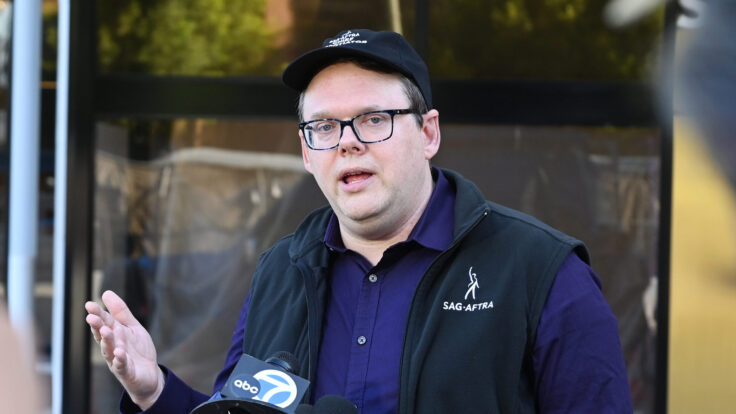
- Where are you spending your strike summer?: With a Writers Guild strike authorization almost assured and negotiations going so poorly, I’ve now heard rumblings that the typically docile Directors Guild is taking steps to secure a strike fund for members in need. That’s another sign that we could be heading for a double-barreled writers and directors walkout after the WGA and DGA deals expire in May and June, respectively. Your move, SAG-AFTRA.
- Box office over/under: Universal’s other, non-Mario April release Renfield is tracking at just $10 million for the weekend, not great for a horror comedy that cost $65 million after incentives. It could actually lose to Russell Crowe’s The Pope’s Exorcist, which cost just $18 million, but I’ll take the over on Renfield, hoping Nic Cage fans will show up.
|
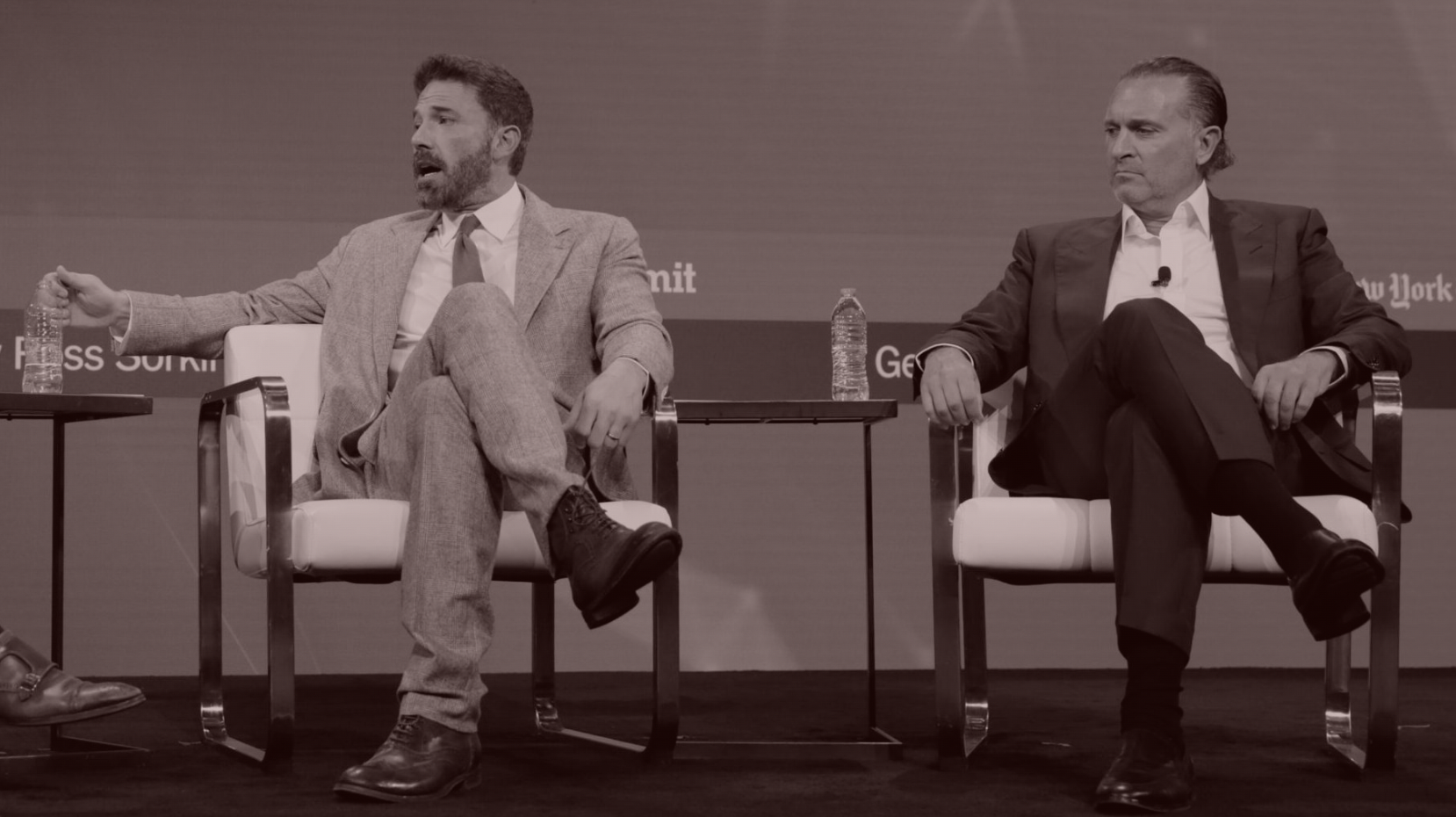 |
| Ben Affleck’s Air and the Super-Weird State of Movies (Part 2) |
| In an age of global buyouts, a vanishing middle class of actors and filmmakers, and a likely upcoming writers strike, it’s easy to see why Artists Equity feels revolutionary. So why are so many executives, producers, and finance types so skeptical? |
|
|
|
| There’s a great scene in Ben Affleck’s new movie, Air, where Michael Jordan’s mother, played by Viola Davis, refuses to close his Nike deal unless he receives a percentage of every Jordan-branded sneaker ever sold. “A shoe is just a shoe… until my son steps into it,” she says to Nike’s Sonny Vaccaro, played by Matt Damon. In real life, the negotiation didn’t play out that way—Nike actually first offered the profit participation; Deloris Jordan didn’t have to demand it. But hey, Hollywood. And at the L.A. premiere last month, the audience erupted at the line. I’ll admit I clapped, and not just because it essentially serves as the climax of the film.
Many of us that night knew the backstory—Affleck and Damon were drawn to Air in part because its message mirrored the business thesis of Artists Equity, the film production and finance outfit they launched with Redbird Capital Partners in November. Talent-first. Knowing your value. Disrupting accepted financial schemes that favor the entrenched players. Artists Equity, according to its founders, would use its own money to develop and shop its own projects, and own both the upside and the downside, paying meaningful backend to the cast and crew in success. Like Jordan, Affleck and Damon are betting on themselves and their ability to lure great collaborators. “Thematically it was on point in terms of what we’re trying to do with the new company,” Damon recently said of Air.
Indeed, to hear Ben and Matt talk about Artists Equity on their recent press blitz, it’s basically a United Artists for the streaming age, a couple of meaningful players leveraging their currency to “reinvent” the model and own more of their work—to tilt the balance of power from the studios and streamers toward those who actually make the movies. In an age of global buyouts, a vanishing middle class of actors and filmmakers, and a likely writers strike due partly to the Dickensian state of backends and residuals, it’s easy to see why Artists Equity feels close to revolutionary. |
|
A MESSAGE FROM OUR SPONSOR
|
 |
COMING THIS MAY FROM NATIONAL GEOGRAPHIC: A SMALL LIGHT. Based on an inspiring true story, Miep Gies (Bel Powley) was young, carefree and opinionated — at a time when opinions got you killed ― when Otto Frank (Liev Schreiber) asked her to help hide his family from the Nazis during WWII. Told with a modern sensibility, A SMALL LIGHT shakes the cobwebs off history and makes Miep’s story more relevant than ever, forcing audiences to ask themselves what they would have done in Miep’s shoes. Here’s a look at the recently released trailer for the limited series, premiering with back-to-back episodes on National Geographic on May 1, next day streaming on Hulu and Disney+.
|
|
|
| And the fact that it’s coming from Affleck and Damon, two of our most enduring movie stars, who literally wrote their own big break (and earned that original screenplay Oscar, William Goldman rumors be damned), has turned Artists Equity into as much of a feel-good Hollywood story as Air, itself. “The people who are putting the value in something deserve to share in the revenue and be compensated, and rather than it being extractive, it’s a partnership,” Affleck told the Times.
Great stuff. But when I bring up Artists Equity with executives, producers, and film finance types, as I have over the past few weeks, I always get a version of “good for them” followed by a healthy dose of skepticism about its model, long-term viability, and ability to disrupt the industry. Wait, just make great movies and sell them for hundreds of millions? Why didn’t I think of that? one producer snarked when I asked about Artists Equity.
I know, everyone is terrible and likes to crap on a well-meaning upstart. But they’re also right that a) Artists Equity is really counting on a booming market for streamer buyouts of star-driven movies, even movies like Air that aren’t automatically commercial; b) many, many film finance outfits that have arrived in town claiming to “disrupt” the business have disrupted only their own bank accounts; and c) Artists Equity hit the lottery on its first film, and if the business model is merely Just make hits, well, that’s not really a business model. |
|
|
| Hollywood talent seems to fetishize United Artists, launched in 1919 by Charlie Chaplin, Mary Pickford, D.W. Griffith and Douglas Fairbanks, because it was truly a remarkable break from the rigid studio system, owned and managed by the talent. But UA pretty quickly hit financial problems, flirted regularly with bankruptcy, and was eventually bought out by Transamerica and merged with MGM after it lost a ton of money on Heaven’s Gate. The $500 million reboot of UA with Tom Cruise and Paula Wagner in the mid-2000s bathed in nostalgia for its original incarnation, but it sputtered quickly when its principals lost interest after a couple middling films, Lions for Lambs and Valkyrie. And the less said about Kevin Spacey’s two months running the reeling Relativity Media in 2016, the better.
Artists Equity promises to be different, and it’s got a champion in Gerry Cardinale, the savvy Goldman Sachs alum who launched Redbird and has made big investments with, among others, David Ellison in Skydance Media (successful), LeBron James and Maverick Carter in Springhill Entertainment (jury’s out), and Dwayne Johnson and Dany Garcia in the XFL (good luck). Former CNN chief Jeff Zucker also announced a $1 billion media acquisition fund with Redbird in December, and Redbird was talking to Bob Iger about something similar right before Iger decided to commit Bob-on-Bob regicide and go back to Disney.
So Cardinale isn’t effing around in media, and when he and Affleck spoke together at the Dealbook conference in November, he seemed pretty confident that Artists Equity could do what others have been unable to do: Make the kinds of movies Affleck likes (lower and mid-budget adult dramas) while also “transitioning monetization [of entertainment] from an agent culture to a principal culture. The individual is the intellectual property.” To that end, Artists Equity brought on veteran executive Michael Joe as C.O.O. and announced $100 million in financing. According to a recent Redbird deck I perused, the $100 million was a “soft commitment,” with just $25 million provided at closing. But another source says $50 million has now been provided, with more money scheduled to hit at various milestones. Affleck, Cardinale, and Artists Equity declined to comment.
That financing matters because this entire model is dependent on either the willingness of streaming services to pay outsized upfront prices for film packages, or the ability of Artists Equity to pay for their own movies and sell them for big prices on the open market. Both carry big risks. As I wrote on Sunday, Amazon Studios agreed to shell out $130 million for Air, giving Affleck around $90 million to make it (and to pay his cast and crew handsomely), while providing a $40 million windfall to the producers and the rights holders. That’s a fantastic, upper-tier result, and I’m told there’s another great deal with Apple for Artists Equity’s second movie, The Instigators with Doug Liman directing Damon and Casey Affleck from a script co-written by Casey.
But as good as these deals are, they’re hardly revolutionary. At this point, they’re fairly traditional buyouts, where the streamer “buys out” global rights and talent profit participation for a hefty premium. On the Smartless podcast, Affleck said the difference is that his company bears the risk of the movie being executed well and on budget, unlike most films where the studio hires the talent and carries all the risks. Artists Equity “takes on the burden of delivering something good,” Affleck said. “If it’s terrible, it’s our fault.”
But that’s actually not the Artists Equity model, at least not on Air. (I know the model will be different on a project-to-project basis.) Skydance, with Affleck and his company attached, auctioned Air to Amazon for a huge price before it was made, totally de-risking it. Luckily for Amazon, the movie turned out great, which is why Mike Hopkins and Jen Salke gave it a theatrical release and an eight-figure marketing campaign. But Affleck and everyone else got paid even if it was terrible. The execution was the sale.
Artists Equity did agree to absorb budget “overages,” so there was some risk that an out of control production would eat into Affleck’s fee and the participations he promised his cast and crew. That’s why he has talked about “incentivizing” everyone to work fast and effectively to save money that can then be captured by the talent, which is not the norm. On typical movies, “my incentive is to get you to spend as much money as possible,” Affleck said at Dealbook. “That’s a disaster.” Here, by contrast, the production asks are simply transferred to the up-front negotiation and baked into an overall price, so Affleck and his team can work cheaper and extract the money for themselves if they so choose. When I asked another experienced producer whether Artists Equity was doing something new and interesting, he responded, Congrats to Ben for figuring out buyouts. Can make lots of money! |
|
|
|
|
| In fact, to my eyes, the only difference between the Air arrangement and, say, the rich deal that Apple made for its big Formula One movie with Brad Pitt from Top Gun: Maverick director Joseph Kozinski, is that that the F1 film’s producer, Jerry Bruckheimer, won’t be on the hook beyond some penalties if it goes over budget. Artists Equity will, but Artists Equity also isn’t making the kinds of big-budget tentpole films that can easily balloon out of control. Air was shot mostly in an L.A. office building in about a month.
So it’s a great model… if these pricey film packages continue to be compelling to the three main streaming companies that support this market. Netflix, Amazon, and Apple haven’t really slowed down their buying, though I’ve heard they’re starting to pull back some, and we’ve seen recent pushback on costs amid the Great Netflix Correction, like the Nancy Meyers rom-com situation. Cardinale and Redbird know this; their deck plainly notes the market for Artists Equity productions is the streamers. If industry economics or an overall recession impacts spending, and those margins that Artists Equity is counting on, the model could be significantly impacted. Or…
Artists Equity also plans to deficit finance and “greenlight” its own films, which any producer knows is a giant red flag as a model. Just ask Aaron Gilbert of Bron Studios, who had some early success but got way over his skis backing tons of movies. Or Birdman producer Worldview Entertainment, which imploded after a few hits. Or brothers Gabriel and Daniel Hammond, whose Broad Green Pictures shut down its production arm in 2017 after pricey misses. The graveyard of hugely capitalized film finance corpses is large and scary.
It’s one thing to fund development, buy I.P. and put together appealing packages for someone else to risk millions of dollars on. It’s quite another to do so yourself and hope to find buyers after-the-fact at festivals or other markets. Will Affleck want to bet $20 million of Cardinale’s money on an unknown filmmaker? What about $50 million? Unless you keep budgets low, that’s a tough proposition, unless, of course, Artists Equity can just make hits. And given the reviews and audience responses Affleck has enjoyed on Air, it would be tempting for him to think that’s possible. But objectively, Ben, it’s not. No company makes only hits, so the business model can’t be to just make hits. Hence the problems that often arise without the major studio-style volume of releases to balance out the misses.
I definitely don’t mean to crap on Artists Equity or what Ben, Matt, and Gerry are trying to do here. It’s admirable, for sure, and Air turned out great for everyone involved. “The people who were bonused on this movie, like [D.P.] Bob [Richardson] and all the crew, their bonus was a piece of the pool of the sale [to Amazon],” Affleck said at Dealbook. “Almost all of them are, on a weekly basis now, the highest-paid crewpeople in history, by a multiple.” That’s fantastic.
But can Artists Equity turn betting on yourself into a long-term model for the film business at a time when the economy is teetering and the tech giants could turn off the money spigot at any time? Are Ben and Matt the modern and more successful version of the United Artists crew? That would indeed be revolutionary. |
|
|
See you Sunday,
Matt
Got a question, comment, complaint, or a good Max pun? Email me at Matt@puck.news or call/text me at 310-804-3198. |
|
|
|
| FOUR STORIES WE’RE TALKING ABOUT |
 |
|
 |
|
 |
| Jeff Bezos Punts |
| The Amazon founder no longer has the Commanders in his crosshairs. |
| TEDDY SCHLEIFER |
|
 |
| D.C. Leak Fears |
| A candid conversation with the chair of the Senate Intelligence Committee. |
| JULIA IOFFE |
|
|
|
|
|
 |
|
|
|
Need help? Review our FAQs
page or contact
us for assistance. For brand partnerships, email ads@puck.news.
|
|
|
|
Puck is published by Heat Media LLC. 227 W 17th St New York, NY 10011.
|
|
|
|