 |
 |
|
Welcome back to What I’m Hearing, coming at you from 30,000 feet as I fly home from Puck’s 2nd anniversary reception in New York. Thanks to everyone who came out and sent nice notes.
Let’s begin…
|
|
|
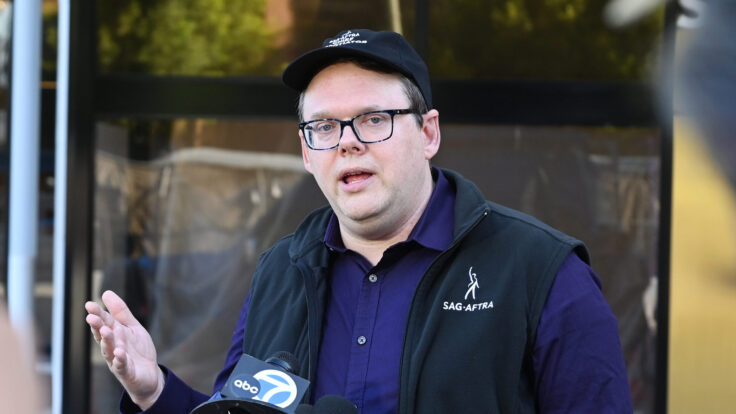
- About that Showrunner strike meeting: As I teased on Sunday, showrunners Kenya Barris, Sam Esmail, and Noah Hawley finally set their chat with the WGA negotiators to discuss strike strategy. We’ll see if this meeting actually happens; many writers have either criticized or downplayed it, and a trade outlet was very careful to couch the sitdown as “NOT a sign of discontent among the guild” (emphasis mine) but rather “a chance to bring more high-profile folks into the process.” Riiight, because guild negotiating committees love it when the stars get involved.
The truth is, four months into the strike, these showrunners have opinions—call it discontent, call it curiosity, call it a desire for engagement, it’s all semantics—and they are representative of many members who have questions … and that’s OK. It doesn’t necessarily mean there is a “fracture” that is damaging to the overall union cause; it doesn’t mean the AMPTP has successfully “divided and conquered;” and it doesn’t mean these guys or others who want answers or information from their leader, Chris Keyser, are anti-union. Or that the media is anti-union for calling it what it is. (At least I’m not anti-union; I’m actually on record saying repeatedly that data transparency is an existential issue and one that the guilds are uniquely capable of fixing via a strike.) Obviously, the WGA can’t provide an audience for every member with a strike gripe. But a dialogue with key constituencies, especially those with seniority and industry clout, can be healthy. No union—especially one as filled with intelligence and opinions as the WGA—is monolithic, and just because it acts through its negotiating committee doesn’t mean the others should stay totally silent.
Same is true on the AMPTP side, where we know there are different viewpoints among the member companies, as Jonathan detailed on Sunday. They have varied goals and interests, and on the C.E.O. calls they certainly express them, just as Barris may prioritize different things than other writers. Everyone is so quick to weaponize any sign of apparent weakness, but what if that dialogue is not a fissure but instead a sign of working toward a stronger negotiating position and a fair deal? Hopefully tomorrow’s showrunner meeting happens and leads to more productive talks when the WGA and studios next meet.
It’s true that agents and others are out there trying to sow dissent to convince the WGA to soften its stance, and the AMPTP members definitely whisper the same to guild members and the media. But that stuff is silly, and the truth is there are showrunners who are upset and feel powerless in this process. All of that can be true while acknowledging the solidarity, the strong turnout at yesterday’s showrunner picket, and the fact that a dialogue among the guild leadership and members is healthy and certainly nothing to be attacked.
- CAA vs the Range defectors: As CAA agents anxiously wait to see what equity, if anything, they can cash out from TPG’s sale of its majority stake in the agency to François-Henri Pinault (and that $7 billion valuation), another group is quietly fighting in arbitration to get what they believe they’re owed. Dave Bugliari, Jack Whigham, and a group of CAA agents that defected in 2020 to start the management firm Range Media Partners, have hired litigator Bryan Freedman and are arguing that CAA improperly nullified their vested equity interests in the company when they bailed. CAA, repped by the Paul Hastings firm, is said to require that employees who leave for rival companies forfeit their equity, but is a management firm a rival? Under California law, agents and managers do different jobs, and managers are in fact barred from performing the services of agents. It’ll be interesting to see how this plays out—and what that CAA equity is ultimately worth. (Freedman and a rep for CAA declined to comment.)
- The math of Khan: Speaking of CAA, its former TV co-head turned WWE president Nick Khan quietly picked up a $15 million “sale bonus” when the pro wrestling outfit’s acquisition by Endeavor closed this week—on top of his salary, stock grants, and regular bonus. Nowhere near Vince McMahon’s windfall, which includes a $111 million dividend and 16 percent of the new TKO stock, with a value in the billions. But Khan joined WWE just three years ago, when the stock was under $45. WWE was at $90 before McMahon announced in April that he was selling, then it traded for the last time this week at over $100. Not bad.
- Disney’s Charter guy on NBC Sports list: Meanwhile, NBCUniversal’s Mike Kavanaugh has his eye on a key Disney executive fresh off its fight with Charter. Justin Connolly, Disney’s president of platform distribution and a key carriage negotiator, is a top candidate for the NBC Sports chairman job vacated this summer by Pete Bevacqua, who bailed for Notre Dame. Two other candidates are also contenders, I’m told, but Connolly has 20 years experience at ESPN and Disney, and Comcast C.E.O. Brian Roberts would probably love to steal one of Bob Iger’s key people. (No comments from Disney and NBCU reps.)
- A true Halloween horror: How bad does a studio horror film based on a hot book have to be to not get a real theatrical release in October? We’re gonna see with Dark Harvest, which was picked up by MGM in early 2020 with the usual trade fanfare and now is just another $25 million turd left for the new Amazon owners. It goes to digital platforms on Oct. 13.
- Box office over/under: 20th’s A Haunting in Venice is tracking for a $13 million weekend, same as the previous Agatha Christie pic did in 2022, and that one starred Armie Hammer and was hurt by Omicron. So I’ll take the over.
|
| Now for a newsy update on the Yellowstone saga… |
|
|
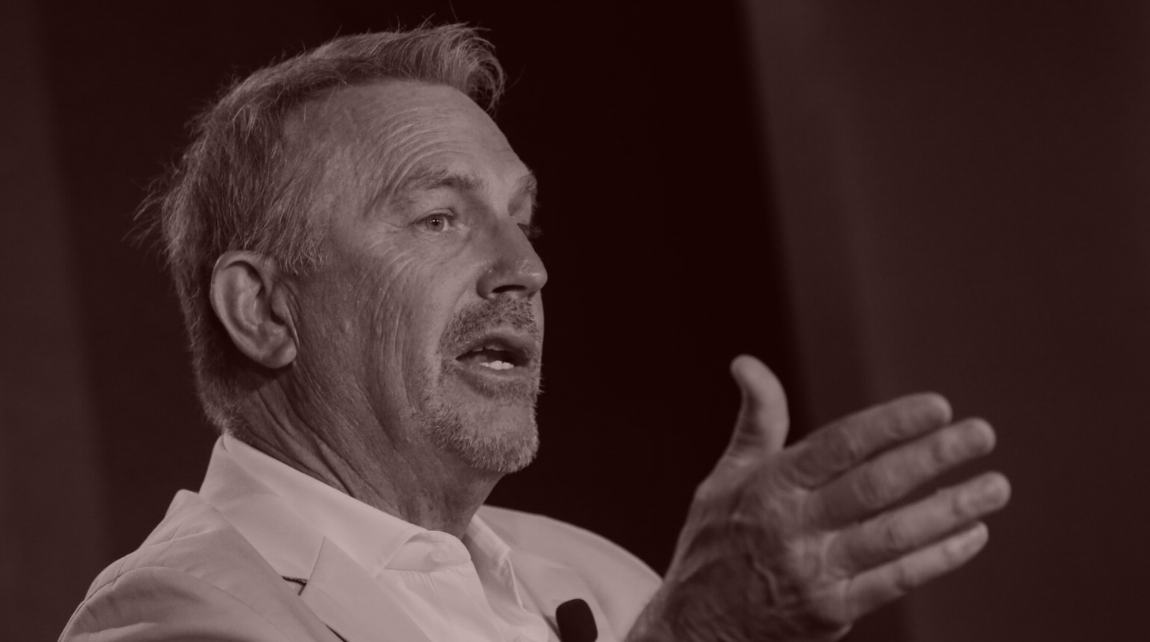
| Here’s a fun contract detail that talent representatives will enjoy: Kevin Costner has a “moral death” provision in his Yellowstone deal. The clause, which was inserted during one of his renegotiations on TV’s No. 1 show, lists in general terms the various ways that Costner’s character can and can’t be killed off, including deaths that would cause shame or embarrassment to John Dutton—and, implicitly, to Costner and his family.
Yes, that’s unusual; I asked a few seasoned talent lawyers if they’d ever seen a clause like that, and nobody had. But it’s kinda not surprising, right? From the beginning, Costner has seen Yellowstone as The Kevin Costner Show, even as its headstrong co-creator and showrunner Taylor Sheridan has maintained ultimate control and the backing of Paramount, and turned it into an ensemble drama with many stars—and the anchor of the lucrative, and very much Costner-free, “Sheridan-verse” of shows. So Costner, with his famously large ego and hostility toward those who question him, felt he needed to protect himself against someone with more power. Hence the clause preventing Dutton from betraying his family or getting fatally kicked in the nuts by a horse. |
|
A MESSAGE FROM OUR SPONSOR
|
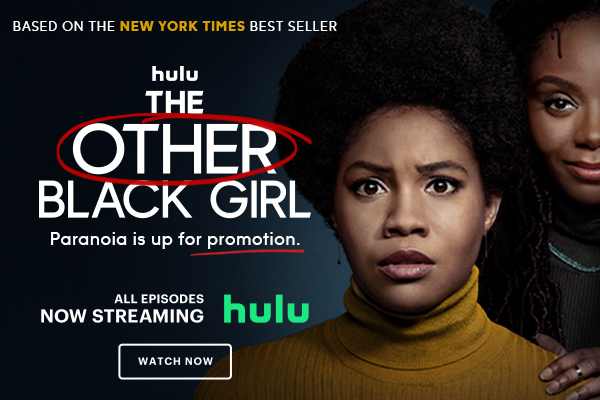 |
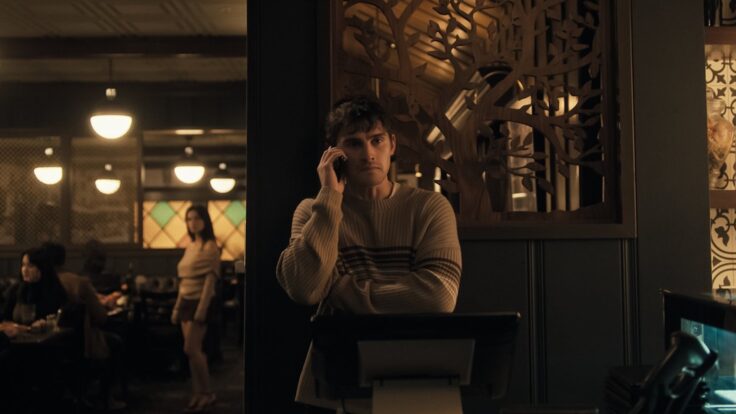
The Hulu Original The Other Black Girl is a genre-bending thriller from Producer Rashida Jones, based on the New York Times best-selling book by Zakiya Dalila Harris. All episodes of The Other Black Girl are now streaming, only on Hulu.
|
|
|
| Ego and power moves are running narratives in this ongoing standoff over Yellowstone, which has dragged on for months now due to the WGA and SAG-AFTRA strike delays. Remember that Costner, earlier this year, was refusing to finish the second half of the fifth season—dubbed “5B”—until he was afforded a reduced work schedule to shoot the second Horizon movie, which he’s directing, and was satisfied by his character’s arc. Costner argued that the delay was Sheridan’s fault, not his, but Paramount and producer 101 Studios ended talks and announced in May that the show will end with Season 5 and restart as a “sequel” series shortly thereafter—essentially a Costner kiss-off.
Costner has since engaged in a wild strike summer of covert efforts to re-engage with Paramount, coupled with aggressive demands to Sheridan and the producers. That dispute culminated with Costner announcing a couple weeks ago at a court hearing in his divorce case that he’s thinking of suing |
|
|
| Those courtroom comments piqued my interest in checking in on Yellowstone: I’d heard that Costner’s reps were basically begging for Sheridan and Paramount to have him back for 5B and possibly Seasons 6 and 7. According to two sources, after Paramount pulled the offer to return and announced the show’s planned end date, Rod Lake, Costner’s producing partner, contacted Keyes Hill-Edgar, C.O.O. of Paramount Media Networks and MTV Entertainment Studios, and asked for an audience in New York. Costner really wanted back in, Lake insisted, to wrap up the character, fulfill the fans’ wishes, and to help promote the first Horizon, which Costner directed last summer and which Warner Bros. still has not given a release date. If Sheridan and Costner could just jump on the phone, Lake told Hill-Edgar, the whole mess could be worked out.
After that meeting, Costner and Sheridan indeed got on a call together in early July to discuss how a return would work. Before the strike, Sheridan had written most of 5B assuming Costner would not be back, but he is said to have been willing to scrap those scripts and re-write them post-strike with a John Dutton arc. But on the call, Costner, while speaking in a friendly tone to Sheridan, unfurled his list of demands: Increased money, reduced shooting schedule, and—here’s the kicker—the right to review, approve, and potentially veto every Sheridan script. That last part was a non-starter for Sheridan, who famously writes Yellowstone himself and believed that 4.5 seasons of megahit TV earned him the right to say no. Paramount walked away shortly thereafter. (Reps for Costner, Sheridan, and Paramount all declined to comment. I also reached out to Costner’s litigator Marty Singer, who declined to comment, and his deal lawyer, Howard Kaplan, who didn’t respond.)
Paramount Media Networks C.E.O. Chris McCarthy is said to have still hoped that Costner’s team might re-engage without those demands as the strike drags on and the window to resolve this feud stays open. But that option for Costner likely vanished when he appeared in the Santa Barbara courtroom Sept. 1 and threatened litigation, saying the summer breakdown was a money issue and telling the judge that he directed his reps to “have them pay me whatever number, we came up with a number”—he suggested it was $12 million per season—“and they walked away.” Then, when asked if he will receive the money owed for 5B, he said, “I’ll probably go to court over it.” |
|
|
| Costner was already paid for 5B, so he was likely referring to suing over 6 and possibly 7. According to sources, Costner believes that since he was offered a rich package to return, Paramount is in breach by yanking it. (A source close to the production counters that the offer was officially pulled.) And Costner and his team believe that Sheridan’s planned kiss-off for John Dutton might violate that “moral death” clause—though, again, show sources dispute that and say Costner has never read the planned fate of Dutton.
Regardless, it’s now more likely than ever that Costner won’t return at all to the show that revived his career—though, of course, this is Hollywood, where money and massaging can resolve even the nastiest feuds. Paramount has done viewer studies that suggest Yellowstone fans are fine with a Costner-less show, and according to ListenFirst, a social listening analytics firm, “John Dutton” was largest driver of views across social media platforms for Yellowstone in Season 1 (driving 44 percent of all views) but has since fallen to only 14 percent of views in Season 5A.
Plus, Matthew McConaughey is lined up—if not actually signed—to take on the “sequel” series with key members of the OG Yellowstone cast, many of whom are happy to see Costner and his personal dramas gone. The strikes have derailed plans for a November premiere of 5B, of course, but since Sheridan did so much work on the scripts pre-strike, and he almost certainly won’t have to rewrite them for Costner, Yellowstone could be one of the speediest returns to production post-strikes. Indeed, I’m told pre-production moves have already begun, just in case there’s a resolution soon.
If Sheridan is indeed done with Costner, and Costner is thus done with Yellowstone, it would be a sad but somewhat predictable outcome. Ironically, for a show about the battle for land, there isn’t enough room for two Type A men and Costner’s inflated sense of himself. |
|
|
See you Sunday,
Matt |
|
|
|
| FOUR STORIES WE’RE TALKING ABOUT |
|
|
|
|
|
 |
|
|
|
Need help? Review our FAQs
page or contact
us for assistance. For brand partnerships, email ads@puck.news.
|
|
You received this email because you signed up to receive emails from Puck, or as part of your Puck account associated with . To stop receiving this newsletter and/or manage all your email preferences, click here.
|
|
Puck is published by Heat Media LLC. 227 W 17th St New York, NY 10011.
|
|
|
|