 |
 |
| Welcome back to What I’m Hearing. Happy July Fourth from my secret summer lair, and happy 50th Disney employee anniversary to Bob Iger, who, I assume, is now eligible for discounted turkey legs at all Disney parks (while supplies last).
Hollywood is clearing out for the week, so if you’re already in Aspen or on the boat, congrats. If you’re stuck in the office or secretly working on the screenplay you’ll never sell, I’m sorry. What I’m Hearing is dark on Thursday, then back next Monday. WIH+ will arrive as usual tomorrow.
Programming note: On The Town, Lucas Shaw and I offered the most undercovered and overcovered stories of the first half of 2024, Mark Gill explained how much Kevin Costner stands to lose on Horizon, and Ben Smith and I pondered the impact of the Joe Biden situation on CNN. Subscribe here and here.
Not a Puck member yet? Click here to fix that problem, in honor of the founding fathers. Got a news tip or an idea for me? Just reply to this email.
Discussed in this issue: Chris Meledandri, Jeffrey Katzenberg, Bob Iger, Mike Cavanagh, Robert Kraft, Daniel Katz, Donna Langley, Jason Blum, Peter Chernin, Dr. Neal ElAttrache, and… Casey Wasserman’s very Nate ’n Al birthday party.
But first… |
| Who Won the Week: Matthew Loeb and Carol Lombardini |
|
| Seriously, the IATSE international president and chief studio negotiator deserve extra fireworks this Independence Day for preventing another debilitating summer strike with the June 25 tentative deal. Jonathan Handel will have a full analysis tomorrow in WIH+.Runner-up: Michael Sarnoski, the Pig director, who graduated nicely to studio fare with A Quiet Place: Day One opening to a franchise-best $53 million for Paramount.
More: The most amusing flex of the weekend also goes to Paramount, which—I’m not kidding—bought 30-second ads for Yellowstone during the pre-show commercials for Kevin Costner’s Horizon: An American Saga—Chapter One at the major cinema chains. Yes, an ad for the show he bailed on to make the movie. Horizon flopped, of course, with just $11 million domestic. But still money well spent by Paramount.
Related: Despite the predictable outcome for the $110 million-budgeted Horizon, the sequel death march is still set for August 16 via Warner Bros. Beyond that? I’m told Costner plans to resume shooting Horizon 3 in August, distributor or no distributor, but nobody seems to know what will happen with Horizon 4. Maybe Paramount+ should submit a lowball offer? |
| A MESSAGE FROM OUR SPONSOR |
 |
| The BMW 7 Series is all luxury, all of the time. Learn more at BMWUSA.com. |
|
|
| Thursday Thoughts (Monday Edition)… |
|
- Seriously, how bored is Barry?: Speaking of Paramount… Really?! Barry Diller, 82, who is on his yacht off Ibiza and Majorca this week, is reportedly also talking to Shari Redstone about buying the parent of the beleaguered studio. Yes, he tried and failed to do exactly that back in the early ’90s, so there’s a strong chance he’s just dancing on Sumner Redstone’s grave here. But there’s also a chance that, like the Ellisons, he sees Paramount as a project, something he can fix with his digitally savvy IAC team. Or something. For no reason at all, here’s a small and very incomplete taste of Diller publicly shitting on Paramount (and Hollywood studios in general) over the past decade:
- “Why Paramount? It’s irrelevant.” —Diller, in 2019, asking why the Times would write about the studio.
- “A stand-alone movie studio today is hardly a great business proposition.” —Diller, at CES in 2017
- “Netflix won this several years ago. … You cannot compete with the momentum, the scale—no one will ever be able to do that.” —Diller, talking to CNBC about the streaming wars, in 2021
- “The movie business is over. … The movie business as before is finished and will never come back.” —Diller, to NPR, in 2021
- “Hollywood is now irrelevant.” —Diller, on Recode Decode, in 2019
|
-
- The Quibi of presidential candidates?: Jeffrey Katzenberg hopes not. But I’m afraid the legendary Hollywood executive turned Joe Biden fundraising chair is facing perhaps his greatest challenge in assuaging donor concerns in the wake of Thursday’s disastrous debate. (Greater, perhaps, than the Antz vs. A Bug’s Life face-off with Pixar in 1998.) The FT reported that Hollywood backers at a party this weekend “expressed anger” at Katzenberg because he “had assured donors that Biden was ‘fine’ as he sought contributions for the campaign.” Yeah… that’s a problem. I, too, believed Jeffrey and was shocked by what I saw onstage on Thursday. At this point, if Biden stays in the race, I’m guessing Katzenberg will call in a favor unlike any other favor to get a big star to publicly stick with Biden. Clooney? Steven? Barbra? (I asked Jeffrey for an interview to help walk the Hollywood donor class back from the ledge, but he declined.)
-
- More: The party the FT referenced was actually Casey Wasserman’s lavish 50th birthday bash at Barker Hangar in Santa Monica. Despite the Biden debate freak-out, the sports agency owner and L.A. Olympics chair lured big Dems like Bill Clinton, Gavin Newsom, Nancy Pelosi, and Doug Emhoff (Kamala canceled), as well as industry people like Bob Iger, Jim Gianopulos, and Robert Kraft. The set by Imagine Dragons and a parting gift of Nikes with a “CW 50” monogram were nice, but I’m most impressed by the full-sized replica booth from Beverly Hills diner Nate ’n Al (dubbed “Lew ’n Casey”), which offered the bronzed and Botoxed class the opportunity to post selfies with his grandfather Lew Wasserman’s Oscar. Can’t make this stuff up.
- Is it AI24 now?: On the surface, A24 taking money from Josh Kushner’s Thrive Capital makes basic sense. Todd Boehly, Daniel Katz, and David Fenkel get a slightly bigger $3.5 billion valuation to pursue commercial movies with The Rock, and Kushner spends a reported $75 million (of a $250 million round) to get himself on the board and into the two or three parties he can’t already get into. But there’s a possibly more sinister motivation. As The Information noted, Thrive is one of OpenAI’s biggest financial backers and evangelists. What better way to ease Hollywood into accepting A.I. movies than to infiltrate the coolest studio in town and normalize—even hipster-ize—OpenAI products like Sora? A24 says that’s not what’s happening, but if you’re Kushner, how could you not use A24 to push your A.I. agenda?
- Box office over/under: I don’t think Universal’s Despicable Me 4 will get to the $154 million opening of Inside Out 2, even with the five-day holiday. But I do think it will beat the $120 million tracking, so I’ll take the over.
|
| Which leads me to… |
 |
| Hollywood’s Biggest Producer Considers Free Agency |
| Comcast/NBCUniversal’s deal with Despicable Me’s Chris Meledandri is up soon, and negotiations to re-sign him have begun in earnest. If he can’t find a way to capture more of the value he’s created, he and his Minions will explore their options elsewhere. |
|
|
|
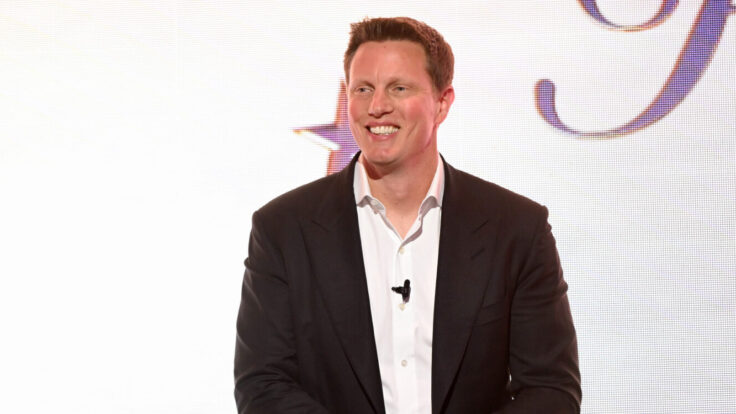
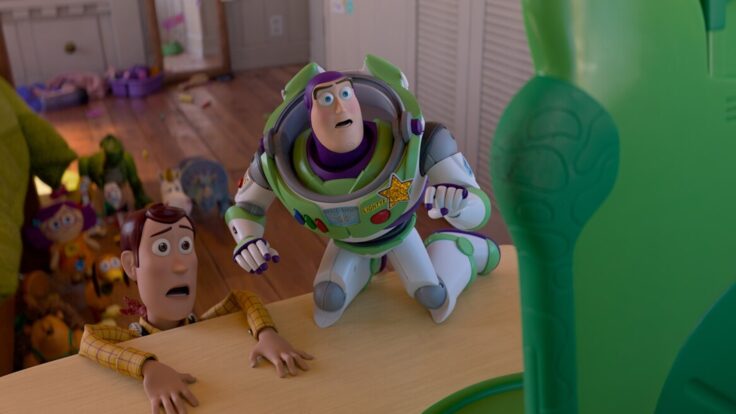
Even by today’s diminished standards, Chris Meledandri isn’t exactly the most dynamic figure in the entertainment industry. Low-key, dressed down, boring. He’s better over lunch—articulate, chatty, even a little gossipy—but if you told a random person that this is the most powerful producer in Hollywood, they’d probably wonder if they were instead looking at that producer’s accountant.That low profile is probably why the news that Meledandri could soon be a free agent hasn’t generated much attention. His wildly successful deal to make animated movies for Comcast/NBCUniversal is up soon—there’s actually some confusion over when exactly, due to California’s rule against personal services contracts that last longer than seven years, but it’s likely next year—and negotiations to re-sign him have begun in earnest, per four sources familiar with the process. His exit from Universal would be a seismic event, the rare film business shift that would almost certainly move the Comcast stock. (Meledandri and Universal declined to comment.)
This is far from an automatic renewal, sources on both sides say, and I’m told those initial talks haven’t gone very far. Meledandri, fresh off last year’s smash Super Mario Bros. Movie and what could be another billion-dollar grosser this July Fourth weekend in Despicable Me 4, wants to capture more of the value he’s created for Comcast—or explore his options elsewhere. Meledandri hasn’t taken outside meetings or otherwise entertained alternative solicitations for his services, per sources, but he definitely irked the Comcast executives by hiring CAA’s Bryan Lourd last summer to figure out the best path forward. He hasn’t done that in past negotiations, which were mostly handled by lawyer Skip Brittenham.
That path will likely end with Meledandri re-upping at Universal. There’s just so much momentum there, and everyone from Comcast’s Brian Roberts and Mike Cavanagh to Universal’s Donna Langley have made it a priority to keep him. Since joining the company in 2007, after a long stint running animation for 20th Century Fox, Meledandri and his Illumination label have gone 14-0 in theaters. Fourteen profitable movies in the theatrical window, some among the most profitable of all time, and zero outright flops:
| Despicable Me (2010) |
$543 million worldwide |
| Hop (2011) |
$184 million |
| Dr. Seuss' The Lorax (2012) |
$349 million |
| Despicable Me 2 (2013) |
$971 million |
| Minions (2015) |
$1.2 billion |
| The Secret Life of Pets (2016) |
$876 million |
| Sing (2016) |
$634 million |
| Despicable Me 3 (2017) |
$1.04 billion |
| Dr. Seuss' The Grinch (2018) |
$431 million |
| Secret Life of Pets 2 (2019) |
$431 million |
| Sing 2 (2021) |
$408 million |
| Minions: The Rise of Gru (2022) |
$940 million |
| The Super Mario Bros. Movie (2023) |
$1.4 billion |
| Migration (2023) |
$299 million |
|
| The Illumination films regularly cost less than $100 million to make, and they do huge numbers on streaming, where they prop up Comcast’s Peacock service first and then go to Netflix for huge license fees. Illumination made three of the top 10 streaming films of 2023, per Nielsen. And I.P. like the Minions has been deployed, Disney-style, across Universal’s five theme parks. It’s basically as close to an ideal talent relationship as exists in Hollywood. Meledandri has made hundreds of millions of dollars on his movies, and thanks to Illumination and its 2016 purchase of DreamWorks Animation, Comcast has, at least in the past couple years, done what most thought unthinkable: beat Disney in feature animation, the lucrative game that Disney literally invented.
But what will it cost to re-up? It’s going to be expensive, and Jason Blum and his Blumhouse are up for renewal at Universal a year later, in 2026. Blumhouse is scaled differently than Illumination, of course, but that will be another tough negotiation. (Blum is also repped by Lourd and CAA.) After all, the thinking goes, if Warner Bros. gave Ryan Coogler eventual ownership of the vampire movie he’s making with Michael B. Jordan, doesn’t the most successful animation producer at work today deserve the same?
Universal is always coy when talking about the ownership structure of Illumination—I think Meledandri likes the misconception around town that he owns his studio. But the reality is that Universal controls Illumination, so if Meledandri were to leave, Universal would own the library, its related I.P., and any derivative rights like sequels, spinoffs, and consumer products. The studio and Meledandri do share ownership of the Illumination brand, so Uni could either block him from using it elsewhere or the two sides could negotiate a compromise if Meledandri wanted to keep the name. In 2011, Universal bought the Mac Guff Ligne studio in Paris, where most of the films are made more cheaply than in the U.S., and renamed it Illumination Studios Paris, meaning Comcast owns that too.
So yeah, Meledandri would be giving up a lot if he bailed, not to mention that Universal has done a great job distributing his films, exploiting the I.P. across the NBCUniversal flywheel, and turning Illumination into a name brand nearly on par with Pixar. I feel bad for Savannah and Hoda when they’re forced at the gunpoint of a Comcast Symphony executive to shamelessly plug Despicable Me on Today, but at this point, to many kids (including my own), the Minions are a far bigger deal than Mickey Mouse. |
|
|
|
|
| Still, the options for Meledandri are tantalizing. He could probably get the mother of all Netflix deals, if he’s willing to sacrifice theatrical releases. Amazon would give him theaters and maybe build a new animation studio around him. Apple might even rethink its pivot away from family content after its disappointing Skydance Animation experiment. Chris could pretty easily raise money from a P.E. firm or outside investor, à la the original Pixar model. Jeff Shell, who worked with Illumination at NBCUniversal, is now at the well-financed RedBird Capital. That’s potentially ownership (or co-ownership) of his films, something he doesn’t enjoy now, and studios would likely jump at the chance to distribute his movies for a fee.One finance source suggested an intriguing path might be to start a new company with the backing of Comcast, which could then secure an output deal for Universal. That way, Meledandri could achieve ownership while not abandoning the partnership that has been so successful.
And, of course, there’s Disney, the animation Goliath at which Meledandri has spent his entire career throwing rocks. I think we can agree Disney has really missed John Lasseter since the Pixar co-founder was shown the door in 2018. Chris could be the steadying force that Pete Docter at Pixar and Jennifer Lee at Disney Animation have yet to show they can provide. Plus, the Disney animated movies still regularly cost $200 million to make, a price tag that raises the bar for profitability in an age when original animated films aren’t an easy sell. One of the big challenges for Bob Iger or whoever becomes the next Disney C.E.O. will be to better incorporate A.I. into the animation process to reduce costs—all without blowing up the creative engines that make great films. Meledandri seems much more likely to successfully integrate A.I. advances than, say, a Pixar team so devoted to its (very pricey) process and culture, right?
Still, Disney seems an unlikely home. Animated movies take years to make, and Meledandri probably wouldn’t just walk away from those unfinished projects. So he’d be a top executive at Disney yet a producer on projects for archrival Universal? That’s the Ryan Murphy Netflix/Disney problem times a thousand. Doubtful. And Meledandri is deep into development with DreamWorks on a new Shrek movie, maybe the most important franchise relaunch at the studio; he stands to benefit for a decade if it works.
Plus, while the Illumination sequels and I.P. adaptations are still performing, Meledandri, now 65, hasn’t delivered a new franchise since Sing and The Secret Life of Pets in 2016. His most recent attempt, Migration, did okay in theaters last Christmas, but Migration 2 is not in development. Anyone thinking of giving Meledandri a billion dollars to create the new Minions might be a little late for that train. Meledandri does have the Nintendo connection, serving on the company’s board and developing a close relationship with its creative force, Shigeru Miyamoto. He could set up his own thing with Nintendo as a backer and have first crack at those characters. Or another game or toy company could come calling. That seems like a great business, and one that might allow Meledandri to flex his muscles beyond just making movies, which is said to be one of his goals in a new deal.
If you believe industry veterans like Jeffrey Katzenberg, the next decade in animation will likely be defined by A.I. and how companies best (and most cost-effectively) deploy the incipient technology. The entire industry is about to be disrupted. To me, that actually makes Meledandri more valuable to Universal, as a business manager and as a creative leader. He’s in Paris this month at the studio, an annual trip where he works on various projects. He probably won’t talk about his own status at the company, but it’s a far bigger issue—with industry-wide ramifications—than any Minion or Mario movie in development. |
|
|
| “I think he’s a con man… I don’t know why we would trust these people.”
—Ari Emanuel, the Endeavor C.E.O. (and friend of Elon Musk), when asked about Sam Altman and OpenAI at the Aspen Ideas Festival. |
|
|
| June was great at the box office, right? Uh, despite a billion-dollar grosser, domestic box office was down 20.8 percent compared with the pre-pandemic three-year average. And the first half of 2024 is now down 39 percent. Yikes. [FranchiseRe]Matthew Ball takes the big-picture view of the decline of movie theaters, complete with alarming charts! [Matthew Ball]
The post-pandemic boom in live music is officially over, but the first half of ’24 is still super strong. Also, Madonna wins. [Pollstar]
Rejoice, at long last, a new set of pop stars is lurking among us. [Bloomberg]
Dr. Neal ElAttrache, Orthopedic Surgeon to the Stars needs to be a show, scripted or unscripted. [New Yorker]
The $15 billion verdict in the NFL Sunday Ticket trial is a Very Big Deal, as John Ourand and Eriq Gardner explain. [Puck]
Peter Chernin’s replacement for David Nevins atop the well-capitalized North Road holding company is… a Scooter Braun underling? Hmmm. [Bloomberg]
Now Scott Mendelson’s take on why the Quiet Place prequel hit when so many others don’t… |
| Why It Worked—A Quiet Place: Day One |
|
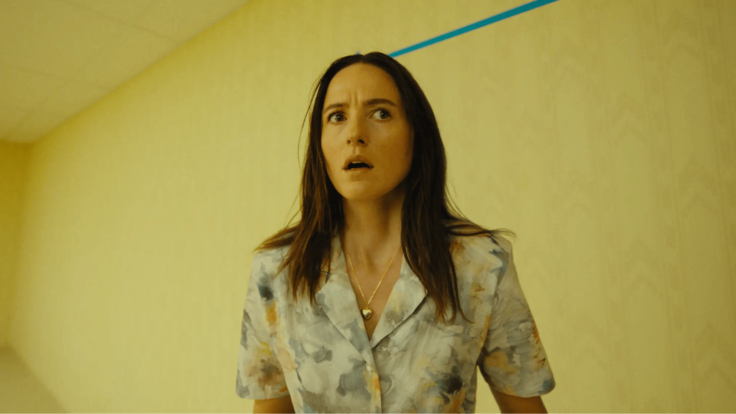
| Stop me if you’ve seen this box office disaster before: an origin story fleshing out expositional details that have already been fleshed out in the prior franchise installments, featuring no returning actors or characters—a movie that isn’t telling you what comes next but rather an explanation of what transpired before you watched the film you enjoyed. And yet, Paramount’s A Quiet Place: Day One bucked the odds, opening bigger than its predecessors ($53 million) and becoming the year’s first blockbuster horror flick.What went right? Audiences and critics liked A Quiet Place ($341 million on an $18 million budget in 2018) and A Quiet Place Part II ($297 million on a $61 million budget in the Covid-hobbled summer of 2021). So, there was a benefit of the doubt for what is essentially a naked I.P. play. However, unlike Matthew Vaughn’s The King’s Man or Peter Jackson’s The Hobbit: An Unexpected Journey, A Quiet Place: Day One wasn’t a glorified remake of the first film. Unlike George Miller’s Furiosa: A Mad Max Saga, it was not even presented as a feature-length character bildungsroman, either. It told a story that looked, played, and felt different from its predecessors, without drowning in irrelevant franchise callbacks.
A Quiet Place: Day One was really more of a spinoff. Save for an extended cameo from Djimon Hounsou, who had a small but pivotal role in Part II, little that transpires directly impacts the family from the first two films. It highlighted a new character—a lonely, cancer-stricken young woman (Lupita Nyong’o)—who inexplicably finds a reason to survive amid a proverbial apocalypse. In other words, it’s a stand-alone alien invasion film that built upon the first two John Krasinski-directed horror hits, starring an Oscar winner whose profile was elevated by Us and Black Panther.
There’s a risk in spending about as much on the disconnected spinoff as on the surefire sequel. However, A Quiet Place: Day One, which cost $67 million, stood out as a spectacle in a genre known for lower budgets and single-location narratives. Meanwhile, it arrived amid a year lacking in event horror flicks and a summer sans a big PG-13 film since Kingdom of the Planet of the Apes in mid-May.
And $67 million, while expensive for horror, is still far less than the $165 million to $265 million spent on the likes of Solo: A Star Wars Story, Furiosa: A Mad Max Saga, and Lightyear. A Quiet Place: Day One could sell itself as an Imax-worthy alien invasion flick regardless of whether audiences cared about the I.P. They used the safety of the brand to craft a worthwhile film that didn’t depend on the brand for artistic or commercial value. —Scott Mendelson |
|
|
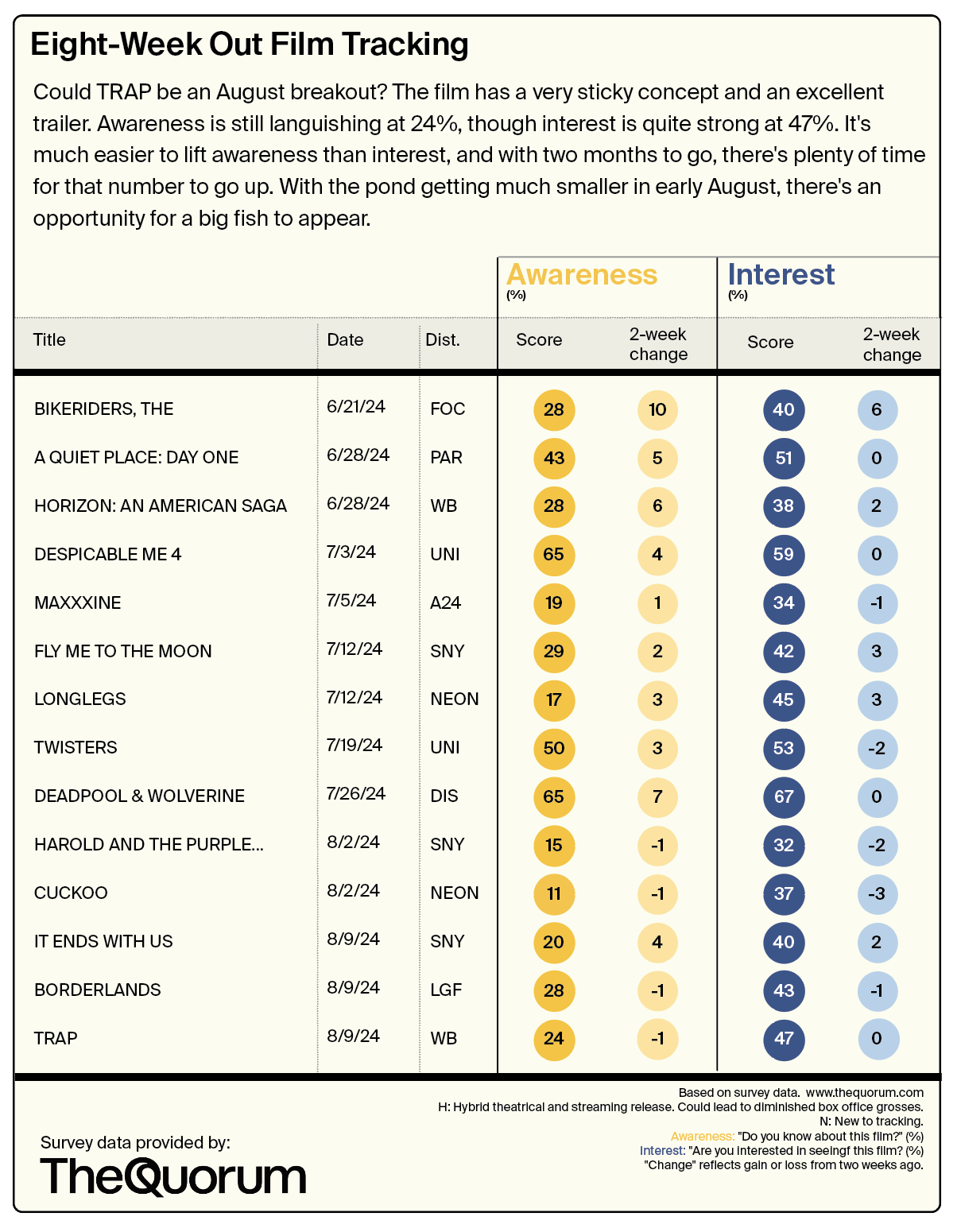
| Enjoy the June and July box office because August is looking pretty bleak, according to The Quorum’s early film tracking chart… |
|
|
| Have a great holiday,
MattGot a question, comment, complaint, or an estimate of the actual number of times Imagine Entertainment has been “for sale” in the past decade? Email me at Matt@puck.news or call/text me at 310-804-3198. |
|
|
|
| FOUR STORIES WE’RE TALKING ABOUT |
 |
| Advanced Zazonomics |
| Diving into Wall Street’s biggest stories with Puck’s Jon Kelly. |
| WILLIAM D. COHAN |
|
 |
|
 |
|
 |
| ‘Titanic Level Disaster’ |
| An emergency analysis of Biden’s grim debate performance. |
| JOHN HEILEMANN, PETER HAMBY & DYLAN BYERS |
|
|
|
|
|
 |
|
|
| Need help? Review our FAQs
page or contact
us for assistance. For brand partnerships, email ads@puck.news. |
| You received this email because you signed up to receive emails from Puck, or as part of your Puck account associated with . To stop receiving this newsletter and/or manage all your email preferences, click here. |
| Puck is published by Heat Media LLC. 227 W 17th St New York, NY 10011. |
|
|
|