 |
|
Welcome back to What I’m Hearing, and a happy Rosh Hashanah to all who celebrate.
Programming note: I’m back on CNBC Squawk Box at 6:50 a.m. Eastern tomorrow, and I did a long interview about the strike with Sam Fragoso on the Talk Easy podcast (here). This week on The Town: Lucas Shaw and I debated whether CAA is worth $7 billion; Endeavor’s Mark Shapiro explained how WWE and UFC will work together; and CNBC’s Alex Sherman updated the Disney succession race. Subscribe here and here.
Discussed in this issue: Drew Barrymore, Ted Sarandos, Joe Cohen, Bob Iger, Duncan Crabtree-Ireland, Stephen Huvane, Kenya Barris, Angharad Wood, Byron Allen, Russell Brand, Carol Lombardini, Oprah Winfrey, Bryan Lourd… and Jeremy Strong’s condo.
But first…
|
| Who Won the Week (Jewish holidays edition): Adam and Sunny Sandler |
|
| It’s not that surprising that the Sandlers’ You Are So Not Invited to My Bat Mitzvah topped the Netflix film top 10 list for the second week in a row. But this thing has a 92 percent on Rotten Tomatoes, and reviews for the younger Sandler are especially strong.
Runner up: Cord Jefferson (not Jewish), the American Fiction filmmaker, for winning the coveted TIFF Audience Award, which basically guarantees a best picture Oscar nomination. No pressure, Amazon/MGM awards team!
Second runner up: Crisis publicists (some are Jewish?). Big week for public apologies! Drew Barrymore, Ashton Kutcher and Mila Kunis, Jann Wenner, Hasan Minhaj, Steve Martin…
Which leads to the story of the week… |
 |
| Social Media Has Already Won the Strike |
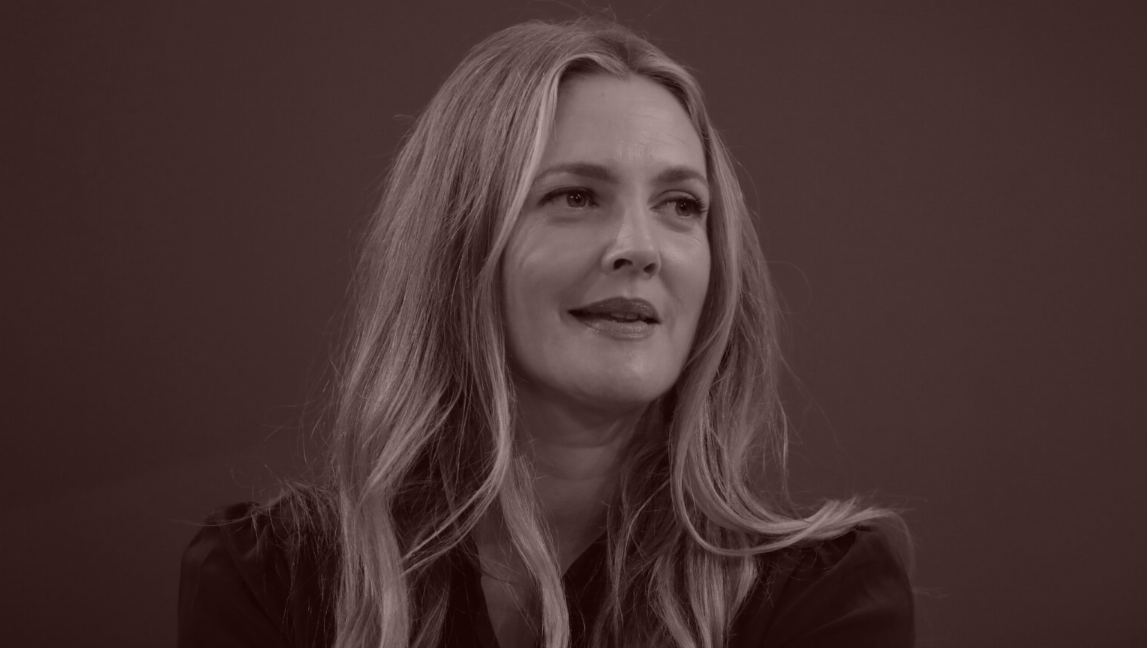
| The Drew Barrymore saga perfectly encapsulates an underappreciated aspect of this labor impasse. Online discourse hasn’t necessarily dictated what the studios will agree to, but it’s unquestionably offered the WGA leadership more leverage. |
|
|
|
I know Drew Barrymore has an experienced publicist, Stephen Huvane, and that both the CAA and CBS braintrusts are advising her. But here’s a free statement that she could have put out instead of the bizarre hostage videos that turned her into perhaps the most high-profile villain of the strike, going from “I own this choice” to “I have no words to express my deepest apologies” in less than a week:
“My talk show is syndicated to 200 stations. Like all the syndicated shows that are returning, we are contractually obligated to deliver new episodes or the stations can drop us. I support the WGA and SAG-AFTRA and hope they achieve a fair deal. I’m also sensitive to the 150 employees who depend on this show for their basic needs. Oprah and Ellen faced this decision in 2007 and they made the same choice.”
I don’t know if that would have ultimately made a difference, but the initial Barrymore video could not have been more ill-conceived. (When I first saw it, I thought it was Chloe Fineman doing Drew Barrymore.) She explained almost nothing about the business issues or any dilemma she faced—after all, The Jennifer Hudson Show, The Talk, and others with WGA writers were also planning to return—and expressed no real sympathy for the striking writers and actors. Instead, she put the privileged face of Hollywood royalty out there for social media to dissect and ridicule—and for the Writers Guild to weaponize against her. Which it did, relentlessly, both behind the scenes and, importantly, through its 11,000 members, many of whom are active online and—shocker—are very effective communicators. The funny memes, the vitriolic shaming, the peer pressure—and from actors too, even though SAG-AFTRA has an active agreement with the talk shows.
Misreading how things will play on social media has been a theme during this strike. Everyone from Bob Iger, and his condescending finger-wagging at Sun Valley, to Ryan Murphy and his litigation threat against a strike captain, and even the Kenya Barris-Noah Hawley attempt this week to get a meeting with the WGA negotiating committee—we can debate the merits of the underlying actions, but there’s no question that they all played horribly on social media, where the loudest voices tend to dominate, and where the writers, actors, and those most sympathetic to them have rallied around the cause. Social media is not real life, of course, but in this strike, and for the first time in the history of Hollywood labor fights, the online pressure has proven nearly insurmountable to those who dare fight it.
I’d argue it’s a problem at the highest levels of the AMPTP, where lead negotiator Carol Lombardini seems to be using a playbook from pre-social media strikes, underestimating the heightened tensions from how it’s all playing online, all while the studio side stays nearly silent. In conversations during the strike, several top executives have said to me some version of, “We’re getting killed out there,” meaning on social media. Heightened accountability (or “cancel culture,” depending on your perspective) is not a new concept, nor is it unique to this strike, but the online campaign by the guilds has arguably changed the game for industry labor fights forever.
Remember, network late night hosts returned without writers after just six weeks of the 2007-08 WGA strike. Conan O’Brien’s statement at the end of 2007 is interesting to read through the lens of the current situation:
“Unfortunately, now with the New Year upon us, I am left with a difficult decision. Either go back to work and keep my staff employed or stay dark and allow 80 people, many of whom have worked for me for fourteen years, to lose their jobs…. So, it is only after a great deal of thought that I have decided to go back on the air on January 2nd.”
Jimmy Kimmel soon followed: “It is time to go back to work. I support my colleagues and friends in the WGA completely and hope this ends both fairly and soon.”
Can you imagine Conan or Kimmel putting out those statements today? No way. Even if they wanted to, the current late-night hosts would get destroyed online. Instead, they’re hawking Casamigos and Pepsi on a podcast to help their staff members. Again, I’m not saying they want to go back; my point is, like Barrymore, they can’t go back—with the exception of Bill Maher, who gave the WGA a middle finger this week, but whose brand is pretty much to extend middle fingers to anything that negatively impacts him personally.
There are a lot of other factors at work in this strike, of course. Public support for the Hollywood walkout and for unions in general is high, thanks to the worsening income inequality in this country since the last strike. The current walkout is both WGA and SAG-AFTRA, raising both the stakes and the tensions. And the major issues in this impasse are arguably more existential than in 2007-08, though I remember the key issues back then—like, say, guild coverage for the internet at all—were considered pretty damn existential at the time.
But the social media warfare has been an under-appreciated aspect of this strike. I don’t think it’s dictating what the studios will ultimately agree to, but it’s afforded the WGA leadership more power: the power to set the media agenda, because most journalists and news outlets are afraid of becoming a target online; the power to silence guild voices that might have publicly questioned the tactics in previous strikes but now have determined it’s not worth it; and the power that comes with at least the perception of unprecedented solidarity, if not actual online-led solidarity, more than four months into a crippling strike, when union vigilance tends to break down in the face of worsening financial pain.
So no, Drew Barrymore was never going to get away with bringing her show back. She was her own worst advocate, and in the current climate, the WGA was sitting there ready to flex its new power over her and everyone else.
Now, Jonathan checks in on the other strike… |
| Meanwhile, Over at SAG-AFTRA… |
|
| With WGA-AMPTP negotiations set to restart this week, the actors’ strike will enter its third month with no talks on the horizon. And that’s okay with SAG-AFTRA, which views any movement towards a deal with either guild as a positive. At 15 times the size of the WGA and twice the annual residuals intake, the performers union is content to let the writers go first, and then build on what the scribes ultimately achieve. There’s an inherent logic, too, as the writers have been on strike much longer, and new productions usually need scripts before hiring actors. In a WGA-first scenario, writers could be writing while the companies negotiate with the thespians.
But don’t expect those talks to be easy, either. For SAG-AFTRA, it’s not just about the top three to five issues—wage increases, streaming residuals and AI, plus pension and health funding and self-tape auditions. The union, I’m told, is unlikely to do a deal without movement on all or virtually all of its many proposals, which amount to 71 pages of contract language.
That could be spin, of course, but leaders like national executive director Duncan Crabtree-Ireland and newly re-elected president Fran Drescher—and the union’s board members, negotiating committee, activists and rank-and-file—feel that the studios have routinely screwed them in past negotiations and that the current labor momentum can generate a major reset. That’s not to say that the union won’t negotiate, but expect hard bargaining and a tough slog. Add to that the slow pace of WGA negotiations and the impending holidays, then be careful—the window for labor deals this year just might slam shut on everyone’s fingers. —Jonathan Handel |
|
|
“Russell Brand categorically and vehemently denied the allegation made in 2020, but we now believe we were horribly misled by him.”
—Tavistock Wood, a division of the UTA-owned Curtis Brown agency, in a statement after detailed rape allegations about its client were published in the U.K.
Uh, really? When Brand was working in Hollywood, he was a notorious perv. WME even dropped the guy a few years ago, with behavior being a big reason, I’m told. It’s very hard to believe Angharad Wood, Brand’s agent, didn’t at least suspect the claims were true back in 2020. |
| Did Pinault Overpay for CAA? |
|
At an all-agency meeting last week, the CAA leadership didn’t discuss who’s getting what from the sale of TPG’s majority stake to François-Henri Pinault, which resulted in a $7 billion valuation for the company. (That prompted more than a few eye-rolls from agents.) But the Financial Times got ahold of documents that were shared with lenders. Some details:
- “Top staff” are in line to pocket more than $200 million, per the report. Does that refer to co-chairs Bryan Lourd, Kevin Huvane, and Richard Lovett—who presumably took money off the table from Pinault’s investment—or top lieutenants like Maha Dakhil and Joe Cohen, who have been waiting for a payday? Either way, the $200 million number seems low.
- The top guys can sell a 5 percent stake, which would reduce CAA’s share of the agency to about a third.
- Pinault will own 56 percent of the company, slightly higher than TPG’s 53 percent. Singapore’s Temasek gets 11 percent.
- Pinault is investing $2.8 billion, and CAA will borrow $425 million. (That new leverage may be where the leadership is taking out more money.)
- CAA generated $1.5 billion in revenue last year—not bad for a services business!—but its operating income ($181 million) was down 15 percent and its net income ($50 million) was down 75 percent. I’m betting that the integration of ICM Partners, which CAA bought last year, impacted those profitability numbers.
|
| What’s most interesting to me is that Pinault seems to have valued CAA at nearly 40x its $181 million operating income, which is a very high number. Like, bigger than Apple’s ratio. Again, 2022 may have been an outlier year, but, as I’ve noted, the agency business isn’t likely to get better as Hollywood contracts over the next couple years. (CAA declined to comment; TPG is an investor in Puck.) |
|
|
| Ben Thompson offers his winners and losers (actually, they’re almost all winners) of the Disney-Charter carriage deal. [Stratechery]
My two takeaways: 1) The bundle survives, which is good not just for Disney but for all of Hollywood; and 2) with Charter now offering the Disney+ ad tier, cable companies are officially competing with Amazon, Apple, and now YouTube to become the platform that re-creates the bundle for streamers.
Bill Cohan makes the argument for private equity—and not Nexstar or Byron Allen—buying ABC from Disney. [Puck]
More Disney: Remember that lawsuit from Fox film financier TSG that claimed Disney screwed it out of profits? Disney just filed a cross-complaint, arguing, among other things, that TSG actually made more money when Avatar 2 and others went to Hulu and HBO Max. [Read the filing here]
Speaking of Hulu, which has always been among the worst at revealing substantial consumption data, it launched a Top 15 chart with metrics so laughably vague that they are basically meaningless. [Vulture]
Some remarkable detective work went into figuring out that Jeremy Strong is selling his Williamsburg condo. [Curbed] |
| Choose Your Side at the Academy Museum Gala |
|
| The annual Academy Museum gala is causing concerns about the dreaded “optics” of big-name stars sitting at tables sponsored by struck companies. As a fundraiser, the gala got an OK from WGA and SAG-AFTRA, and honorees Meryl Streep, Michael B. Jordan, Oprah Winfrey, and Sofia Coppola are expected to attend Oct. 14 along with a starry host committee. But the museum’s chair is Netflix co-C.E.O. Ted Sarandos, and the studios and streamers usually buy a ton of tables, which cost $250,000 to $500,000 each (individual seats are $25,000), and invite their talent to join the executives. (God forbid a wealthy movie star pay their own way.)
This year, sitting with the C.E.O.s—who, in Fran Drescher’s words, want to “keep us their peons”—is probably a no-no. So will the gala be divided down the middle, West Side Story-style? An Academy source says only a third of the tables have been purchased by studios/streamers, and that all guild talent will be seated with other sponsors or at Academy Museum tables. Maybe the strike can be settled by a dance-off. |
|
|
| My Thursday plea for more dialogue between showrunners and the WGA leaders was followed the next day by the cancellation of the planned sit-down. Welp! It did lead to a few interesting responses…
“I understand your point of view regarding the showrunner meeting, but want to emphasize that the NegCom are taking the meeting PRECISELY BECAUSE they are committed to providing an audience to any and all members during the strike. And that's not just hearsay or grandstanding, I have been out on the lines with them since May and there is always at least one or more representatives from the board/committee happy to talk about anything that they can. Plus, they have emails readily available and have encouraged members to contact them if they have questions or ‘strike gripes.’ The point where we get frustrated with the media is the point where the spin becomes ‘these showrunners are getting a privileged meeting with the NegCom so that they can talk about secret, showrunner-y things, while you underlings wait outside in the dark,’ which, based on all available information, just isn't the case.” —A strike captain
“One thing you didn’t mention: These showrunners are management. Some of them employ hundreds of people and manage budgets like studio executives, and those employees are constantly asking when the strike will end. Naturally, they want to be able to tell their people what’s going on, but for the most part they don’t even know. ” —A lawyer
“Who does this negotiating committee represent: writers who work or writers who don’t work? That’s the real question they need to answer, and everyone is too afraid to ask it.” —An agent |
|
|
Have a great week,
Matt
Correction: I misspelled Comcast president Mike Cavanagh’s name on Thursday, which is bad. But I spelled it like Ryan Kavanaugh, which is waaaay worse. Apologies.
Got a question, comment, complaint, or a guess at the above-the-line cost per episode of The Morning Show? Email me at Matt@puck.news or call/text me at 310-804-3198. |
|
|
|
| FOUR STORIES WE’RE TALKING ABOUT |
|
|
|
|
|
 |
|
|
|
Need help? Review our FAQs
page or contact
us for assistance. For brand partnerships, email ads@puck.news.
|
|
You received this email because you signed up to receive emails from Puck, or as part of your Puck account associated with . To stop receiving this newsletter and/or manage all your email preferences, click here.
|
|
Puck is published by Heat Media LLC. 227 W 17th St New York, NY 10011.
|
|
|
|