 |
 |
|
Welcome back to What I’m Hearing, and a reminder to TV Academy members that Emmy voting begins today. Here are my five random questions about this year’s race:
1. Can Netflix’s Beef overcome co-star David Choe’s recirculated podcast anecdote about sexually assaulting a masseuse? (He later claimed the story is fictional.)
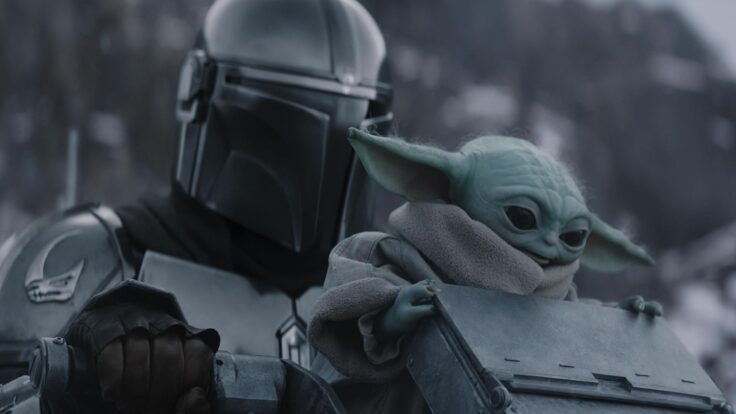
2. Is it possible that two Star Wars shows, Andor and The Mandalorian, crack the drama series category in the race to lose out to Succession?
3. With seven-time talk series winner John Oliver booted to the “scripted variety series” category opposite SNL, which host will take the chat-show title?
4. Can voters admit to themselves that two-time comedy winner Ted Lasso’s third season was not good at all?
5. Amid the strike, will the Emmys actually happen on Sept. 18?
As always, if you’ve been forwarded this email, become a Puck member here.
Let’s begin…
|
|
|
- Disney’s kingslayer slays herself: Bob Chapek hasn’t had much to celebrate lately. But today’s news that Disney C.F.O. Christine McCarthy is stepping down and going on family leave will surely bring a smile to Chapek’s (still bearded?) face. Remember, McCarthy knifed Chapek in the back by telling the board she had lost confidence in him as C.E.O., then helped recruit Bob Iger to return. This after she helped convince Chapek to fire TV chief Peter Rice—so I seriously doubt Chapek and Rice will be getting margaritas together to celebrate McCarthy’s exit.
- Netflix shopping spree?: Don’t look now but the Netflix share price has rebounded to almost $450. Nowhere near the pre-Great Netflix Correction price of nearly $700, but the company now boasts a market cap of around $200 billion. Time to go shopping? Many (including me) think Reed Hastings and Ted Sarandos should have bought Paramount or another major I.P. farm last time its stock ran up. Franchises are franchises, and Netflix doesn’t have many of them. Will the company repeat that mistake now that it’s flying high again?
- As the Globes (still!) turn: If you’re confused by this week’s reveal that the Hollywood Foreign Press Association is now a for-profit concern, and why that’s supposed to be better, don’t worry: Owners Todd Boehly and Jay Penske haven’t figured it out, either. The structure of the new entity is still being worked out as the duo attempts to sanitize the scandal-plagued Globes so some TV or streaming outlet will pay them a small fraction of the $60-something million a year that NBC paid the H.F.P.A. and Dick Clark Productions under its scrapped deal. To that end, Penske, who also owns the major trade outlets, foisted the Globes as a sponsor of a Variety event at Cannes, and, even funnier, a recent THR diversity event, thus forcing champions for inclusion like Eva Longoria and DeVon Franklin to pose in front of the logo for a very famously non-diverse awards body. Hollywood!
- Costner’s Yellowstone plan revealed?: Kevin Costner’s recent divorce filing includes a curious line, given the standoff over whether he’ll return for Yellowstone’s final season, which was announced as debuting in November: “I do not anticipate that I will be on location for at least the rest of 2023.” So… has Costner decided he won’t return, even if he and showrunner Taylor Sheridan can work out an acceptable time commitment to wrap up his arc on TV’s top show? Costner’s lawyer, Marty Singer, didn’t get back to me, but the ongoing WGA strike is a factor here, too. Yellowstone was supposed to resume shooting in July, but a source close to the production says that won’t happen, and they now don’t plan on making that November date—with or without Costner—unless the strike miraculously ends soon.
- Box office over/under: David Zaslav’s favorite superhero movie ever, The Flash (current RottenTomatoes: 67 percent fresh), is tracking for about $70 million. I’ll take the over; DC’s much-abused fans will actually like this movie. And Pixar’s Elemental can’t possibly sink below $35 million, can it? I’ll take the over there, too.
Speaking of Pixar… |
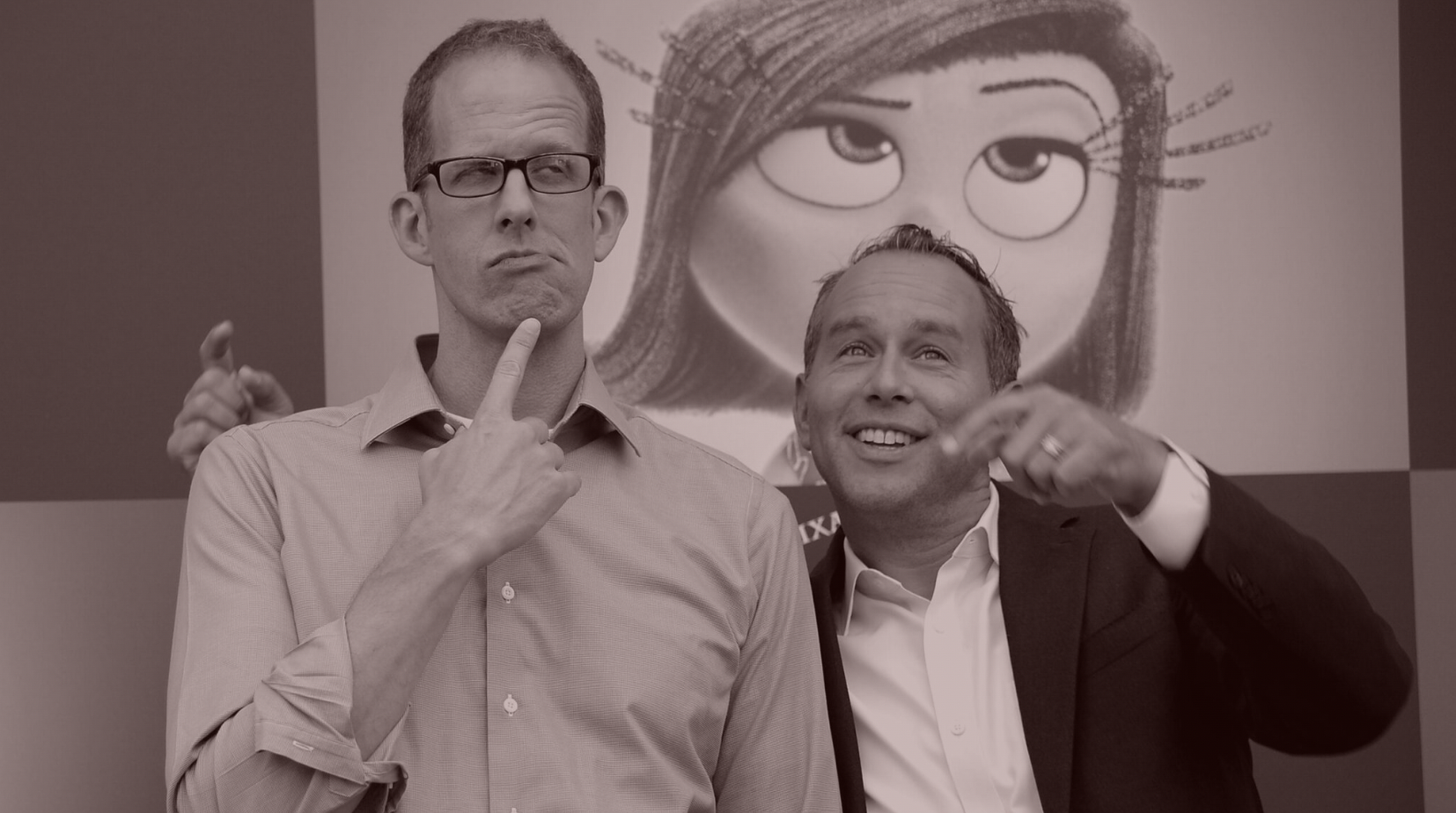 |
| The Troubling Pixar Paradox |
| Recent misses and low expectations for ‘Elemental’ beg the question: Has Pixar lost its magic touch? Perhaps the answer is that original animation is now a smaller business—one that can’t necessarily support the unique culture and $200 million budgets that made Pixar great in the first place. |
|
|
|
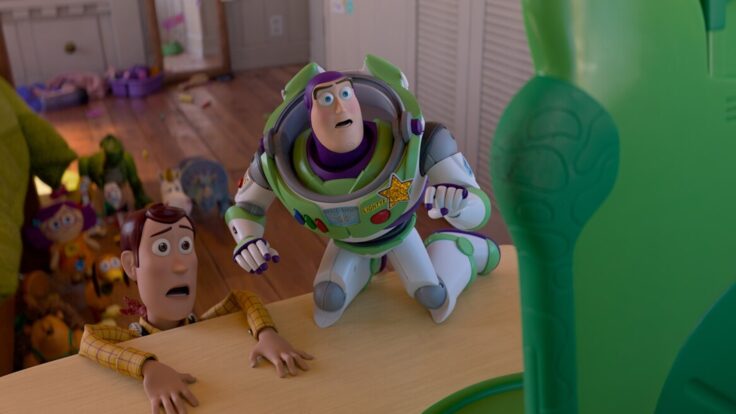
| Last time I walked onto the Pixar campus up in Emeryville—past that giant Luxo, Jr. lamp and the Lego Woody and Buzz—it was to interview its co-founder, Ed Catmull. That was late summer of 2015, at arguably the high point of the company, and I could feel the bravado, even from the quiet, all-business Catmull. Pixar had just released Inside Out, maybe its most original and entertaining film, which grossed $850 million worldwide in theaters. It capped an incredible run of 15 innovative and profitable features, dating back to Toy Story, in 1995. (The Good Dinosaur, released later in 2015, would snap the Pixar streak, grossing only $334 million.)
At the same time, Catmull and his creative partner, John Lasseter, probably the most significant figure in American animation since Walt Disney, had also taken over the struggling Disney Animation Studios after Disney bought Pixar for $7.4 billion, in 2006. And that studio was humming, too, with hits like Wreck-It Ralph and Frozen, and Zootopia and Moana nearly finished. Catmull had even run a victory lap of sorts, writing a management book, Creativity, Inc. (with Amy Wallace), that evangelized the unique, time-consuming, and, yes, really expensive processes that allowed Pixar to kick everyone’s ass in animation. |
|
A MESSAGE FROM OUR SPONSOR
|
 |
| Starring Steve Martin, Martin Short and Selena Gomez, Hulu’s Emmy®-winning comedy “Only Murders in the Building” is “TV’s perfect comedy,” according to The Los Angeles Times. Shirley MacLaine, Nathan Lane, Jane Lynch, Cara Delevingne and more join the hilarious ensemble of neighbors helping to solve — or commit — murder. “Only Murders in the Building” is for your Emmy consideration for Outstanding Comedy Series and all other eligible categories. Visit FYC.Hulu.com for more information. |
|
|
| At this point, most people in Hollywood know the Pixar tenets: The “braintrust” that interrogated each film and filmmaker as if it were a PhD dissertation; the willingness to scrap perfectly okay projects, even if it meant pushing deadlines—refusing to “feed the Beast,” as Catmull calls it—to change scripts mid-production or even to replace directors like Brenda Chapman (Brave) or Bob Peterson (Good Dinosaur). It was all part of creating a “sustainable creative culture,” Catmull writes, “to protect Pixar from the forces that ruin so many businesses.” As Ed walked me through the hangar-like space that co-founder Steve Jobs had personally designed to all but force creativity and collaboration, and to keep out distractions—including from the silly overlords at Disney—there was no reason to second-guess his advice.
That was then… This week, Catmull released an expanded version of Creativity, Inc., and while he doesn’t explicitly address the state of the company, the book arrives as Pixar finds itself in a much different place. Since the billion-dollar success of Toy Story 4, in 2019, the studio has released six films: Onward (2020) and Lightyear (2022) both flopped in theaters, the former hurt by the onset of Covid; Soul (2020), Luca (2021), and Turning Red (2022) were sent by former C.E.O. Bob Chapek directly to Disney+ without any upcharge, a move that may have boosted subscribers but almost certainly cheapened the pristine Pixar brand; and now Elemental, its 26th feature, is tracking to open this weekend in the mid-$30 million range, despite a decent 77 percent Rotten Tomatoes score. That would be a disastrous start for a film that cost more than $200 million to make.
Elemental comes at a pivotal and soul-searching moment for Pixar, as I learned from chatting with about a dozen people in and around the company over the past month. Lasseter’s now running Skydance Animation, of course, having resigned from Disney in 2018 after alleged unwanted hugging and touching, and Catmull followed him out the door by retiring in 2019. Pixar’s current leader, Pete Docter, the much-heralded director of Inside Out and Up, has presided over what some call a creative slump for Pixar and others say is simply a changed market for original animated features. Either way, it’s a real problem for Disney C.E.O. Bob Iger at a time when Iger has a lot of real problems. |
|
|
| Pixar is a close-knit place, both physically and emotionally removed from Hollywood, with an us-against-the-world mentality instilled by Jobs, Lasseter, and Catmull. But insiders say there’s been a subtle yet significant change in its culture recently—namely, increased oversight and, according to some, interference from Disney, especially after the Lightyear disaster.
Budgets are being scrutinized like never before; a few longtime creative stalwarts have defected, like head of creative development Mary Coleman (to Locksmith Animation, backed by Liz Murdoch), producer Darla Anderson (to Netflix), director Lee Unkrich, and several who joined Lasseter at Skydance; last month, Pixar was forced to lay off 75 staffers, its first reduction in a decade; and the writing (or, in this case, the storyboarding) is increasingly on the wall: Soon, Pixar will almost certainly have to share more resources with Disney Animation, a fiscal reality that Lasseter and Catmull likely would have had the juice to avoid.
Docter doesn’t have that juice. Not now, not with the box office what it is. Meanwhile, Pixar has been asked to increase its output—there’s a full-length TV series in the works, Win or Lose; another big-budget series that hasn’t been announced but I’m told is based on Inside Out and created by Soul writer Mike Jones; all the shorts for Disney+; as well as the usual one to two films a year, a mix of sequels and originals.
It all highlights the paradoxical question facing Pixar: Its entire brand is based on using innovative technology to take the kind of major creative swings needed to break through and create something long-lasting and great, but what if the market no longer supports that model? Does it still make sense to produce $200 million original features like Elemental when the path to profitability these days is far tougher? After all, the other studios, like Universal’s Illumination, have figured out how to do this for less money. Can the Disney of 2023 afford that vaunted Pixar culture, the really expensive culture that Catmull believes is the only reason Pixar became Pixar? Is that now an outdated luxury?
On the other hand, can Pixar afford to not spend what it spends? Is the new fiscal reality for Disney a recipe for the kind of creative mediocrity and feeding the Beast that required Iger to buy Pixar in the first place? |
|
|
|
|
| These questions aren’t limited to Pixar, of course. Or even animation. If you’re not looking at the cost of quality content and asking, How do we do this great thing for less without killing what makes it great?, you’re probably getting fired as you read this sentence. Yet Pixar is the poster child here because it seemed to have cracked the code for sustained greatness and profitability.
So all of this is falling on the shoulders of Docter, a cerebral 50-something dude who started at Pixar as an animator in 1990, right out of CalArts, and quickly became one of the Lasseter braintrust’s most influential members— and then his somewhat reluctant replacement. Docter declined through a Disney rep to speak for this column, but in 2021, he told THR’s Rebecca Keegan that he felt “a little bit of dread” when it was clear Iger would ask him to replace Lasseter, with Jim Morris taking on the business-side Catmull role. “I did wonder, ‘If I say no, what happens?’ I don’t want to seem too self-aggrandizing here, but I wasn’t sure who else would do it. And so I said yes.” Not exactly a ringing endorsement of the job.
I asked a couple longtime animation producers/executives what’s going on creatively at Pixar these days. They noted that the films are still solid, industry-best—that’s backed up by their RT scores, which have stayed pretty high—but they may have lost a step in their broad accessibility. There’s been a creative shift under Docter to more personal, filmmaker experience-driven storytelling rather than the more populist themes and humor-heartstrings mix that Lasseter championed. Pixar has always cited the personal nature of its stories—Lasseter’s own father worked at a Chevy dealership, which led to Cars. And his braintrust—Brad Bird, Andrew Stanton, Unkrich, and others—championed universality along with personal storytelling. But above all, the movies were fun.
That jibes with what I heard from one Pixar employee, who lamented that individual filmmakers have been given more power and leeway to pursue storytelling that speaks to them personally, rather than what might “play in Peoria,” as he put it. That may just be a cop-out for Pixar empowering different and more diverse voices than Lasseter did—the studio famously did not have a female feature director until Chapman, who was replaced, and its diversity numbers weren’t great. These days, Kemp Powers, who is Black, directed Soul with Docter; Domee Shi co-wrote and directed Turning Red; and the pipeline is much more diverse.
It also might reflect the disappearance of the monoculture, which has made it harder for any film to catch the zeitgeist. Or, as some believe, it might be that the current generation of Pixar filmmakers is just producing films that fewer people find compelling. It happens in creative businesses—you’ve got the mainstream touch until you don’t. And it might be frustratingly hard to explain why or to fix.
That’s the worst-case scenario: that Pixar has lost its magic. What’s more likely is that original animation has simply fallen victim to the trend that has engulfed other movie genres, like comedy, adult dramas and awards plays: They’re considered mostly for streaming now. Everyone loves to say Illumination is cleaning Disney’s Mickey Mouse clock these days, and it’s true—Iger even said so on his own earnings call, congratulating Universal for the success that his own divisions have lately been unable to achieve. The less said about Disney Animation’s Strange World, the better.
But look at the Illumination movies of the so-called post-pandemic era: Sing 2 ($405 million worldwide amid theater shutdowns), Minions: The Rise of Gru ($939 million), and The Super Mario Bros. Movie ($1.3 billion and counting). All well-done, and congrats to Illumination C.E.O. Chris Meledandri, who may have leapfrogged Marvel’s Kevin Feige as the most important creative executive at any Hollywood studio. But those movies are all pre-existing franchises. The real test for Meledandri will be with Migration, an original movie co-written by Mike White, over the holidays. Let’s see whether that cracks $500 million.
In fact, can you name a recent animated film that was a hit in theaters and wasn’t pre-branded? DreamWorks Animation’s Puss in Boots: The Last Wish ($481 million) is Shrek. Sony Animation’s Spider-Man: Across the Spider-Verse ($330 million and counting) is Spider-Man. DreamWorks’s The Bad Guys got to $250 million last year, so… maybe? It was based on popular kid’s books. My point is the Pixar decline might simply be industry-wide, and out of Docter or anyone else’s control.
Animation has been one of the last genres for original storytelling that can still be a big profit-driver in theaters, but now, DWA’s Ruby Gillman: Teenage Kraken is tracking to open June 30 in the single digits, per NRG. Single digits. Chapek clearly didn’t do Pixar any favors, but maybe outside of pre-branded franchises, original animation is now a smaller, more niche business, and just another category of movie that doesn’t really work in theaters anymore—at least not the huge numbers to which Pixar became accustomed.
But if that’s true… hoo boy, those $200 million budgets will necessarily need to come down. Easier said than done, of course. Pixar just does a lot of things that other animation studios don’t. It carries more well-paid employees, including filmmakers, because it mostly promotes from within, and it tries to avoid “rolling” staff off when they aren’t assigned to a particular project. The development timeline is longer and more complicated, for the reasons I’ve mentioned. Pixar films are made in California, where labor costs are higher, rather than farmed out, or produced in France, at the studio that Illumination owns there. The pressure to reduce these costs will almost certainly grow as Disney tries to dig itself out of the streaming black hole that is sucking up all its profits.
This is what worried Steve Jobs, and why he negotiated protections for Pixar in its sale, protections that seem to be thinning. He also had a generational creative leader in Lasseter; maybe forcing a filmmaker like Docter into an executive role wasn’t the answer. Regardless, Catmull shared Jobs’s fears, and he excoriates cost-cutting for cost-cutting’s sake in his book. “Making the process better, easier, and cheaper is an important aspiration, something we continually work on—but it is not the goal. Making something great is the goal.” The emphasis is Ed’s there, and he’s got more to say on the subject:
I see this over and over in other companies: A subversion takes place in which streamlining the process or increasing production supplants the ultimate goal, with each person or group thinking they’re doing the right thing—when, in fact, they have strayed off course. When efficiency or consistency of workflow are not balanced by other equally strong countervailing forces, the result is that new ideas—our ugly babies—aren’t afforded the attention and protection they need to shine and mature. They are abandoned or never conceived of in the first place. Emphasis is placed on doing safer projects that mimic proven money-makers just to keep something—anything!—moving through the pipeline. This kind of thinking yields predictable, unoriginal fare because it prevents the kind of organic ferment that fuels true inspiration. But it does feed the Beast.
No surprise: Shortly after Iger returned to Disney, he announced Toy Story 5, as well as Frozen 3 and Zootopia 2 at Disney Animation. And then the 7,000 layoffs and the $5 billion in cost cuts. It’s a different era at Disney, with different economic realities. So maybe the Ed Catmull management strategy—and the Pixar culture that he and John Lasseter helped create and foster—is now an unaffordable luxury. Or maybe it’s more important than ever to protect. |
|
|
See you Sunday,
Matt
Got a question, comment, complaint, or a favorite fake Pixar logline? Email me at Matt@puck.news or call/text me at 310-804-3198. |
|
|
|
| FOUR STORIES WE’RE TALKING ABOUT |
 |
| Ryan’s Adieu |
| Notes on the seismic shift atop the Post. |
| DYLAN BYERS |
|
 |
|
 |
|
 |
|
|
|
|
|
 |
|
|
|
Need help? Review our FAQs
page or contact
us for assistance. For brand partnerships, email ads@puck.news.
|
|
You received this email because you signed up to receive emails from Puck, or as part of your Puck account associated with . To stop receiving this newsletter and/or manage all your email preferences, click here.
|
|
Puck is published by Heat Media LLC. 227 W 17th St New York, NY 10011.
|
|
|
|