 |
| Welcome back to What I’m Hearing. Reminder, your Puck membership entitles you to private emails from all our writers, just go to our sign-up page here to curate your inbox. And if this was forwarded to you, become a member today and make your mother proud by clicking here.
Discussed in this issue: Nikki Finke, Chris McCarthy, Brad Pitt, Steven Spielberg, Parker Finn, David Nevins, John Lesher, Harvey Weinstein, Adam Aron, James Corden, and a Paramount power-text chain.
But first… |
| Who Won the Week: Ryan Murphy |
|
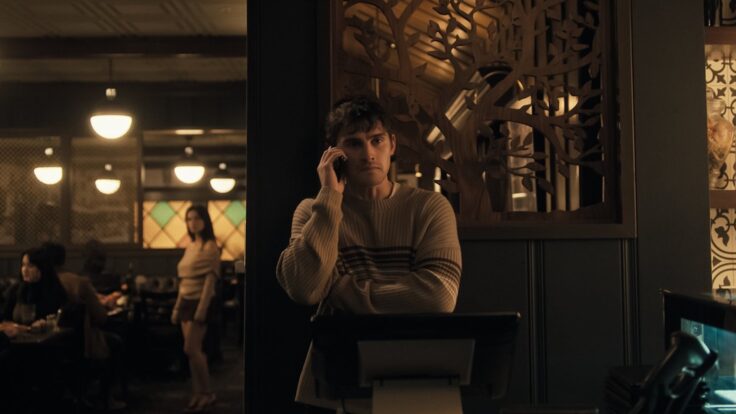
| This is impressive: The producer briefly held the top spot on both of Netflix’s film and TV Top 10 lists, with Mr. Harrigan’s Phone and DAHMER—Monster: The Jeffrey Dahmer Story—the first time that’s happened, per Netflix’s self-reported data.
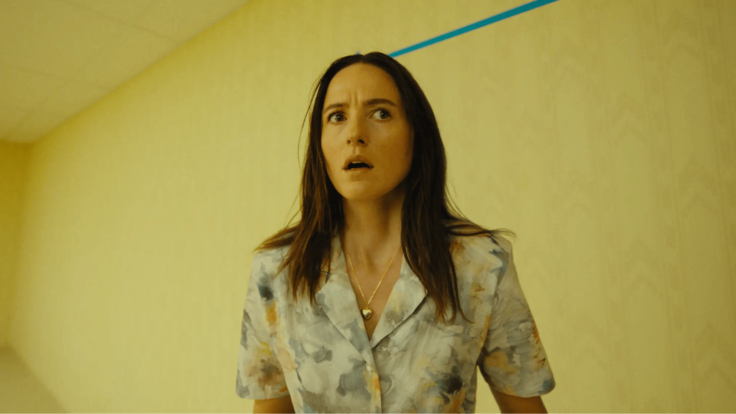
Runner up: Parker Finn, the Smile filmmaker, has a new horror franchise with its $17.6 million second weekend, a crazy-low 22 percent decline from its debut. I, for one, look forward to Smile 6 in 2031. |
| Help CBS Figure Out 12:35 |
|
| Got an idea for the next iteration of late night TV? CBS is officially taking pitches for the show that will replace Late Late Show with James Corden when it ends in 2023. All ideas are welcome, I’m told, and the only guideline is that the broadcast will look (and cost) nothing like the current occupant of that 12:35 a.m. time slot.
The strategy, as CBS chief George Cheeks has communicated to staff, is to figure out the format of the show first, and then I.D. the talent to be involved. That’s a big shift from the usual late-night development path, which centers on finding a compelling host and then building a show around him or her. Former CBS C.E.O. Leslie Moonves famously hired Corden, a British TV star but relatively unknown to U.S. audiences, after seeing him in One Man, Two Guvnors on Broadway, and then Corden and producer Ben Winston developed their version of Late Late Show.
Winston is one of the producers under consideration for the new show, as are others, and the goal is a format—perhaps with multiple, rotating hosts—that could occupy the linear time slot but will be made for and seen primarily on Paramount+, a balancing act the topical nightly talk shows have struggled to walk. As I’ve written, with linear ratings flatlining and Corden, Trevor Noah, Conan O’Brien and Samantha Bee exiting, the entire late-night business model is under fire. The Times reported today that NBC is considering shifting its 12:35 show, starring Seth Meyers, to Peacock, or just slashing his staff to reduce costs. So reinvention seems like the only possible way out of this predicament. |
|
|
| “I don’t even know if it’s legal for him to come back.”
–Dan Harmon, the Community creator, when asked on a panel if ousted star Chevy Chase would return for the planned movie.
Runner up: “This agreement … is acceptable to AMC as it sufficiently respects the sanctity of our current theatrical window policy.”
–My buddy Adam Aron, the AMC Theatres C.E.O., suggesting that a 30 day window between a theatrical debut (Nov. 23) and dropping on Netflix (Dec. 23) is the new standard of “acceptability” for the major exhibitors.
Related: CAA pushed hard for client Rian Johnson to get theatrical for his Knives Out sequel. But now that Netflix will put Glass Onion in 600 theaters over Thanksgiving, it’s up against another marquee CAA client in Steven Spielberg, whose Oscar contender The Fablemans goes wide that week. Spielberg and Universal were counting on relatively weak holiday competition for all-audience movies—competition that just got a bit tougher. |
 |
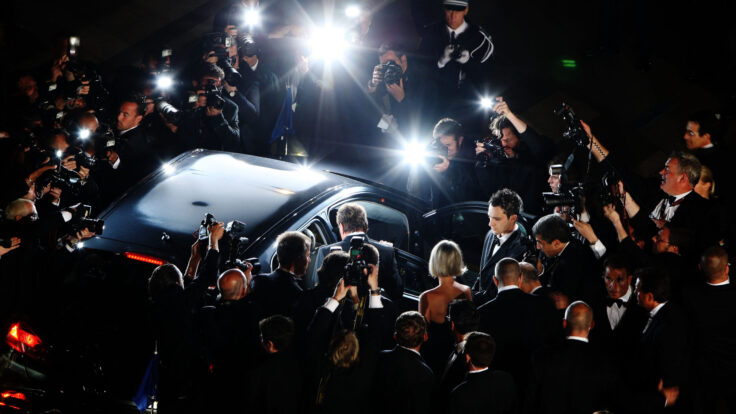
| The Dark Legacy of Nikki Finke |
| Finke presented herself as a no-bullshit reporter who kept Hollywood moguls honest, and we all found her copy completely irresistible. But she perverted the profession by blackmailing sources, often targeting the weak, and weaponizing the internet to push her bile—and her own agenda. |
|
|
|
| My last of probably hundreds of testy exchanges with Nikki Finke over the years occurred about a year ago, in my Twitter DMs, just as we were launching Puck. “You should return to lawyering,” she wrote me. “More money and steady work. Journalism is a dead profession.”
Not exactly in line with the image Finke cultivated during her seven years at Deadline.com as a journalistic crusader, the only person with balls big enough to stand up to the Hollywood moguls and speak truth—or her version of it—to the powerful. She had actually sent me many messages like that when I was editor of The Hollywood Reporter, cynical tirades about how nothing in media mattered and the only thing she was proud of was that she had convinced the car-racing heir Jay Penske to pay her more than $10 million for Deadline in 2009. Having since flamed out of the business that brought her fame and fortune, Finke’s posture in her final years, at least to me, was that it was all beneath her. During that last exchange, she continued: “Try to start out as a partner. Money = happiness. Trust me, I’m incredibly happy!”
I doubted that. Everyone in Hollywood who was active during Finke’s reign—and it was a reign; she dominated the landscape from 2006 to 2013 in a way that is difficult to explain to those who didn’t experience it—has a Nikki story, and most of them are awful. She was awful. Screaming threats. 3 a.m. phone calls. Outright blackmail. I’m all for being super-aggressive on a story—but she’d try to destroy lives, to get agents and assistants fired if they wouldn’t do her bidding. She’d torment publicists with email subject lines like “today’s the day I ruin your career.” She once attempted to sabotage the book deal of a rival journalist I know, just because. She’d have her lawyer send frivolous and harassing letters, and in 2011 she convinced Penske to sue THR for $5 million over some website code we mistakenly used from a Penske site. (It settled.) Nobody does anything in Hollywood unless they’re afraid, she once told me. There’s an element of truth to that, and good journalists know how to exploit that fear, but Nikki took it to a destructive and selfish end.
We all loved to read when she went after someone, but Nikki once told me in blunt terms that she occasionally wrote horrible things she knew to be untrue about people in order to get them to play ball with her in the future. That’s pretty much the definition of libel, but to her it was just a casual Hollywood power play—a way for her to exert control over people with more power than her. And to control the next story, and the one after that. Most journalists, even those with a pointed voice and a perspective (myself included), wouldn’t write anything that they wouldn’t say to someone’s face. But Nikki sidestepped those ethics by being unseen by anyone. Her absence from events and lunches, and the lack of any boss or owner to call and complain about her, made her simultaneously ubiquitous and untouchable—hence that decades-old file photo hovered over Hollywood like a cloud of toxic smoke, and you never knew when she would decide to announce that, say, Paramount executive John Lesher was allegedly “whacked out and shit-faced and falling down drunk.” With Nikki, the power play was disguised as a righteous crusade. Like I said, awful stuff.
That’s why it’s amusing to see all these glowing obituaries and eulogies from journalists on Twitter today after Finke died at age 68 in Florida after a long illness. “Fearless.” “Disruptor.” “One of a kind.” That type of praise. It’s all true, of course—people can be innovative and terrible—but what’s been largely left out of the conversation about her legacy is the terrible part, the tactics by which Finke became so disruptive. Certainly unethical, arguably criminal, in most media environments, Nikki’s bullying would have been rejected, or at least countered. But for some reason—the egos, the fear-based culture, and the transactional nature of showbiz come to mind—Hollywood people not only tolerated her tactics; she was actually celebrated. |
|
|
| Don’t get me wrong. Nikki had deep industry knowledge and incredible journalism skills. At her best, she wrote detailed and definitive accounts of industry failures and successes (mostly failures), executive power plays, and the weekly box office horse race. The prose was never boring, and her willingness to go there influenced a whole generation of business reporters and editors, including me. Her breathless coverage of the Writers Guild strike of 2007-08 brought a welcome new perspective into trade journalism, balancing out the traditional studio-side bias.
Gossip pieces, like that famous email feud between Ari Emanuel and Irving Azoff’s wife Shelli, felt innovative, mostly because it was happening in realtime, and the trade press was so used to rewriting press releases that it didn’t think to chronicle what people in Hollywood actually talk about. From the start, Nikki was used as a weapon by those who fed the beast. Does the Endeavor/William Morris Agency hostile merger happen if Emanuel doesn’t drip a steady stream of damaging scoops to Nikki? I’d argue maybe not. Ron Meyer, another early Nikki enabler, always seemed to appear to be the hero around town. That’s really all it took, the rest of the industry soon fell under her spell.
Finke smartly launched Deadline Hollywood Daily at exactly the right time, just after TMZ showed that web journalism was becoming its own powerful thing, and before the “boring old trades,” as she liked to call THR and Variety, could figure out how to adapt. We all had new web-enabled phones, and we wanted to know what was going on right now. And, at least at the beginning, social media wasn’t big. Thus Nikki could serve us her content in a steady feed, and there wasn’t much to counter it. (Launching Deadline in today’s media environment would have been verrrrry different.) She was the classic disruptor taking on the entrenched incumbents, who had become fat and lazy in an 80-year-old duopoly where the only thing that mattered was what Peter Bart decided to put on the front page of Variety. The web was fast, the standards were low, and Nikki could “update” a story if she got it wrong.
That print mentality seems silly now, but I started at THR in the mid-2000s as a relative outsider, coming from the legal world rather than trade media, and it shocked me how oblivious the senior editors were to what Finke was doing. They mostly made fun of her and her breathless, inartful writing style, and they downplayed as “gossip” the juicy missives she would post (as opposed to the publicist-approved “news” in the trades). Then they would go into an afternoon meeting to decide which casting scooplets would appear in the next day’s print issue. There was just such a fundamental misjudgment about the future of the news media, in general, and trade news, in particular.
People talk about how Nikki disrupted that staid ecosystem. That’s true, and certainly impactful. But if Nikki hadn’t come along to migrate the news online, someone else would have. Her actual innovation—the one that still reverberates today—was demonstrating that trade websites could draw a large audience of general interest consumers online. Nikki’s box office coverage—probably the best thing she did—and then her other articles, started appearing regularly on the Drudge Report, which would captivate millions of unique readers each month who likely would never have discovered that content otherwise. Previously, Hollywood trade journalism had been insular; insider media for insiders only. She proved that it was an important piece of the popular culture, she cherished that relevance beyond the industry—something that was new in trade-world—and she protected it fiercely. When THR figured out that trick, she would send nasty emails when Drudge linked to THR instead of Deadline.
Finke was then able to boast that she was beating the old-school trades in audience, as well as buzz, which led to a complete revamp of the trade business model. The traditional For Your Consideration and congratulatory vanity ads remained, but now there was this whole other online consumer audience. THR and Variety soon went weekly in print, and ramped up their web content. Variety dropped its “slanguage,” a literal alternate vocabulary—full of prexies and toppers and thesps—that was designed to draw a velvet rope around its product. Instead, the new currency was leveraging the access and participation granted to the decades-old print trades to generate consumer-facing scoops that would “travel” online. There’s pros and cons to that strategy—I’d argue that the focus on consumer news has neglected that core industry audience—but it all traces back to Finke. |
|
|
| None of that changes the fact that Nikki was a terrorist. A journalistic terrorist, sure, yet a terrorist nonetheless. She presented herself as a no-bullshit reporter who kept the Hollywood moguls honest, yet she perverted the profession by blackmailing sources, often targeting the weak, and weaponizing the internet to push her bile directly into our inboxes. Outsiders could never really see Nikki for what she was because they found her copy so irresistible. And, after all, Hollywood is such a silly place to begin with, who really cared if there was a woman wreaking havoc in the name of an executive promotion scoop?
After Penske bought Deadline, few at his company could understand why Jay would put up with the constant torment and hand-holding that Nikki required. He paid for her West Hollywood condo, according to financial documents seen by a good source, and he would call and visit her. Their relationship was totally bizarre, but in one way it always made sense to me: Nikki was Jay’s doorway into a world of power and influence not available to any average rich guy. He owed her a lot.
And now Penske has a near-monopoly on all the entertainment trade media, a fact that Nikki lamented to me once she left Deadline. After she was finally photographed and exposed by a website called NikkiStink.com in 2014 (that’s a whole other story), she complained to me a couple times about how Deadline had “gone downhill” without her, whether in protecting abusers like Harvey Weinstein or shilling for Saudi Arabia’s Red Sea International Film Festival. It had become a “boring old trade,” just like she feared.
Sure, but there’s one fact she never mentioned: How all those scoops, and the Deadline of the Nikki years, came with a price. |
|
|
| Joe Adalian shares my disbelief that NBC Universal C.E.O. Jeff Shell is bragging about Peacock growing from 13 million to just 15 million subscribers when he has thrown everything from SNL to Minions to Days of Our Lives, Premiere League soccer and the Housewives at the service. [Vulture] (Disclosure: I’m an executive producer of a Peacock show.)
“Subscriber numbers increasingly look like a vanity metric for a streaming platform… time spent tells a more relevant story about the value that viewers are ascribing to various types and sources of streaming content.” [The Drum]
Just in case anyone wondered what it costs to build global scale in social media these days, TikTok’s parent company lost $7 billion last year. [WSJ]
Frank Biondi’s new memoir was finished by his daughter Jane after the Viacom and HBO executive died in 2019. [LAT]
Jeffrey Katzenberg dropped $1 million into the Karen Bass campaign for L.A. mayor, joined by (lesser) donors Steven Spielberg, J.J. Abrams and Katie McGrath, and Norman Lear. I feel like the pro-Rick Caruso contingent of the primary season has gone quiet? [LAT]
ICYMI: In her column and on the podcast this week, Julia Alexander explained how HBO’s House of the Dragon is beating Amazon’s The Rings of Power in nearly every third-party metric. [Puck]
Happy 100 days since CAA’s $750 million purchase of ICM Partners closed! Relive the glory with my coverage for Puck here and here and here. |
| Will Brad Become a Distraction? |
|
| Brad Pitt has a busy fall. There’s a starring turn opposite Margot Robbie in Damien Chazelle’s Babylon for Paramount, and the trifecta of Blonde, Women Talking, and She Said from his Plan B production company. But all his distribution partners are waiting anxiously to see what the fallout will be from ex-wife Angelina Jolie accusing him in a court filing last week of choking one of their children and hitting another “in the face.” Pitt has acknowledged inappropriate behavior in the past, but his lawyer Anne Kiley said Thursday that he’s “not going to own [up to] anything he didn't do.”
If these on-the-record claims gain traction, would Pitt take a backseat in the promotion or even remove his name from the movies? She Said, based on two New York Times reporters’ quest to expose Harvey Weinstein, and Women Talking, directed by Sarah Polley, both have female stories front and center. And he’s already booked a Vanity Fair cover with Robbie pegged to Babylon.
If I had to guess, I’d say the Jolie claims won’t end up impacting Pitt, at least not as they stand now. This dispute has been going on for six years, no charges were ever filed, and Pitt’s Weinstein bona fides are well-known, since he was one of the few to stand up to Harvey, on behalf of then-girlfriend Gwyneth Paltrow. (Pitt’s rep declined to comment.) |
|
|
| My Thursday column on David Nevins’s exit from Viacom/Paramount and the rise of Chris McCarthy prompted several readers to raise one issue I didn’t: That Nevins had an icy relationship with George Cheeks, the CBS leader who also gained more responsibility in the shake-up. Most people knew about the Nevins/Cheeks animosity (Nevins is not on a text chain among McCarthy, Cheeks, and film chief Brian Robbins), but I focused on McCarthy because his rise has been so sharp and, to many, surprising. Some feedback:
“Great column but what about Nevins and Cheeks? They really don’t like each other. Cheeks is considered part of the Bakish-McCarthy-[Taylor] Sheridan crew. Nevins wasn’t. Sounds very cliquish and high school, but that’s Viacom for you.” –An executive
“[You say Chris] McCarthy is a ‘piece of work.’ That’s the understatement of the year!” –A producer
“McCarthy is the worst kind of suit. He actually sucks the creativity out of every room he’s in.” –Another producer
“Thank you for refusing to buy the Hollywood [B.S.] on Chris McCarthy. He’s doing a great job fixing the bloat at that company.” –An analyst
“David Nevins wasn’t a friend of everyone in TV. He liked a narrow range of shows from mostly white male creators. But he was a professional. A very smart guy who made a lot of great shows at a price. No wonder he had to get out. That’s not in the job description at Viacom.” –Another executive
“These rats (all men, BTW) are all scurrying around the Titanic until it is sold or merged out of existence.” –An actor-producer |
|
|
| Every other Sunday I’m gonna empty my Notes app of short, lighter items, events or sightings, that I haven’t seen reported elsewhere. Send quick tips/ideas to matt@puck.news or 310-804-3198…
Tom Freston is at work on a memoir, which, given his journey through MTV, Viacom and Vice, should be a fascinating read… Comedian and producer David A. Arnold’s three-hour memorial service was sad yet well-done, hosted by Chris Spencer and Kym Whitley with great speeches from Kevin Hart and Will Packer... Plotting a team-up? Free-agent film execs Emma Watts and Tendo Nagenda were lunching together at Hinoki & the Bird… Legendary 86-year-old concert promoter Ron Delsener was piloting the hospitality room at the Killers’ recent concert with Bruce Springsteen at MSG that half the music industry seemingly attended… Bull Durham sequel? Tim Robbins played for the Artists First softball team in its victory on Saturday over 3 Arts in the Entertainment Softball League. (Robbins made some great plays at first.)… Jason and Lauren Blum threw a nice party in their Santa Monica backyard for CNBC’s Julia Boorstin and her new book, When Women Lead. Spotted: Bobby Kotick, City National Bank’s Kelly Coffey, David Oyelowo, Veronica Grazer, Jenna Fischer, Veena Sud, Universal’s Peter Cramer, FullPicture’s Desiree Gruber, artist Alex Israel, journalist Taylor Lorenz, and Boorstin’s husband, Blumhouse’s Couper Samuelson. |
|
|
| Have a great week,
Matt
Got a question, comment, complaint, or a fun and threatening Nikki Finke missive?Email me at Matt@puck.news or call/text me at 310-804-3198. |
|
|
|
| FOUR STORIES WE’RE TALKING ABOUT |
 |
| MSNBC Murmurs |
| A chat with Jon Kelly around Semafor pre-launch buzz, Licht’s vision, and more. |
| DYLAN BYERS |
|
 |
| Herschel Shrugged |
| Republicans are gritting their teeth hoping the candidate can get over the goal line. |
| TARA PALMERI |
|
 |
| Musk Unlimited |
| Notes on the interminable Elon-Twitter debacle, Dalio’s legacy, and a Summers prophecy. |
| WILLIAM D. COHAN |
|
 |
| The NatCon Singularity |
| Mainstream Republicans are making their play for a role in a post-Trump Trumpist party. |
| TINA NGUYEN |
|
|
|
 |
|
|
| You received this message because you signed up to receive emails from Puck
Was this email forwarded to you?
Sign up for Puck here
Sent to
Unsubscribe
Interested in exploring our newsletter offerings?
Manage your preferences
Puck is published by Heat Media LLC
227 W 17th St
New York, NY 10011
For support, just reply to this e-mail
For brand partnerships, email ads@puck.news |
|
|