 |
 |
|
Welcome back to What I’m Hearing on this WGA Strike Eve. I’ll be at the Milken Global Conference this week, in Beverly Hills, so say hello if you see me. And I’m moderating at the Future of Arts, Media, and Entertainment conference on May 17 at Stanford Business School. Tickets for that are here.
First, a little news treat for people who open this email quickly: Apple TV+ will announce later tonight that it is renewing The Morning Show for a fourth season. (Season 3, with Jon Hamm, airs this fall.) Good news for fans and those of us who hate-watch this show religiously.
Programming notes: This week on The Town, Lucas Shaw and I probed the Comcast angle on the Jeff Shell scandal, Ben Winston pushed back on the late-night death narrative, and Ray Subers explained the NRG star power study that I revealed last Sunday. Subscribe here and here.
More: Part 3 of Julia Alexander’s Streamer Report Cards will be published in WIH+ on Tuesday. If you’re not getting WIH+, fix that by clicking here.
Discussed in this issue: Ellen Stutzman, Jimmy Kimmel, David Zaslav, Bob Iger, Jeff Shell, Ted Sarandos, Charlie Collier, Anthony Pellicano, Hadley Gamble, Jay Leno, and Tom Barrack’s short-shorts.
But first…
|
Who What Won the Week: Outsized Pay Disclosures |
|
| It’s been quite a nice run for ill-timed executive salary reveals. On the eve of a crippling writers strike, we learned that Live Nation C.E.O. Michael Rapino’s pay jumped to $139 million in 2022; new Roku media president Charlie Collier got a $53.3 million package (more than Netflix co-C.E.O. Ted Sarandos!); former leaders Matt Blank, Josh Sapan, and Christina Spade took a combined $40 million out of AMC Networks last year; Comcast C.E.O. Brian Roberts’ pay hit $32 million (despite Comcast stock falling 30 percent in 2022), and NBC Universal C.E.O. Jeff Shell was in line for $43 million in awards until he was fired for cause. Whew.
These headlines trigger gag reflexes, and we can certainly debate whether executives should make eight figures for managing creative businesses. But the headlines are sometimes misleading. Collier, for instance, is actually making around $20 million a year—still high, perhaps, to run an outlet just starting its original content push, but he was recruited from a top job at Fox—and he’s got a four-year deal, so all the shares are filed (and reported) at once. On the flipside, Ari Emanuel’s Endeavor pay was said this week to have “dropped” to $19 million in 2022, when his $300 million package was just reported last year. As for Shell… |
| Jeff Shell Is Leaving Money on the Table |
|
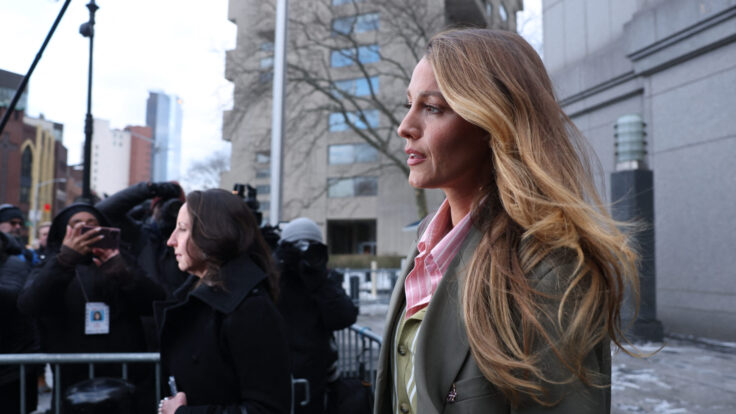
| I’m hearing Shell won’t contest the $40-odd million in salary and bonuses he lost when he was fired for cause over the Hadley Gamble affair. It’s a tough legal argument, and he’s telling friends he doesn’t want to drag his wife Laura through a protracted dispute. This is despite his decision to hire aggressive litigator Patty Glaser and Risa Heller, the crisis PR person who represents Jeff Zucker (and who has also represented Puck). That’s quite a financial hit.
Shell raised eyebrows around town by not apologizing to his wife and family in his initial statement, saying only “I’m truly sorry I let my Comcast and NBCUniversal colleagues down…” To his credit, though, Shell and his team seemed to recognize the error, giving another statement to the Times days later professing he is “profoundly upset with how much pain and embarrassment I have brought to my family.” |
|
|
| “I had absolutely nothing to do with it, although I’m very happy to see it occur.” –Anthony Pellicano, the wiretapping private eye, when asked by Variety if he helped take down Shell, who previously fired Pellicano’s buddy Ron Meyer.
Runner up: “I joined the Star Wars universe and was asked to leave.” –Damon Lindelof, explaining to Esquire how he became the latest creator thrown down an Imperial garbage chute by Lucasfilm’s Kathy Kennedy.
OK, on to the seemingly inevitable WGA strike… |
| 3 Writers Guild Strike Scenarios |
|
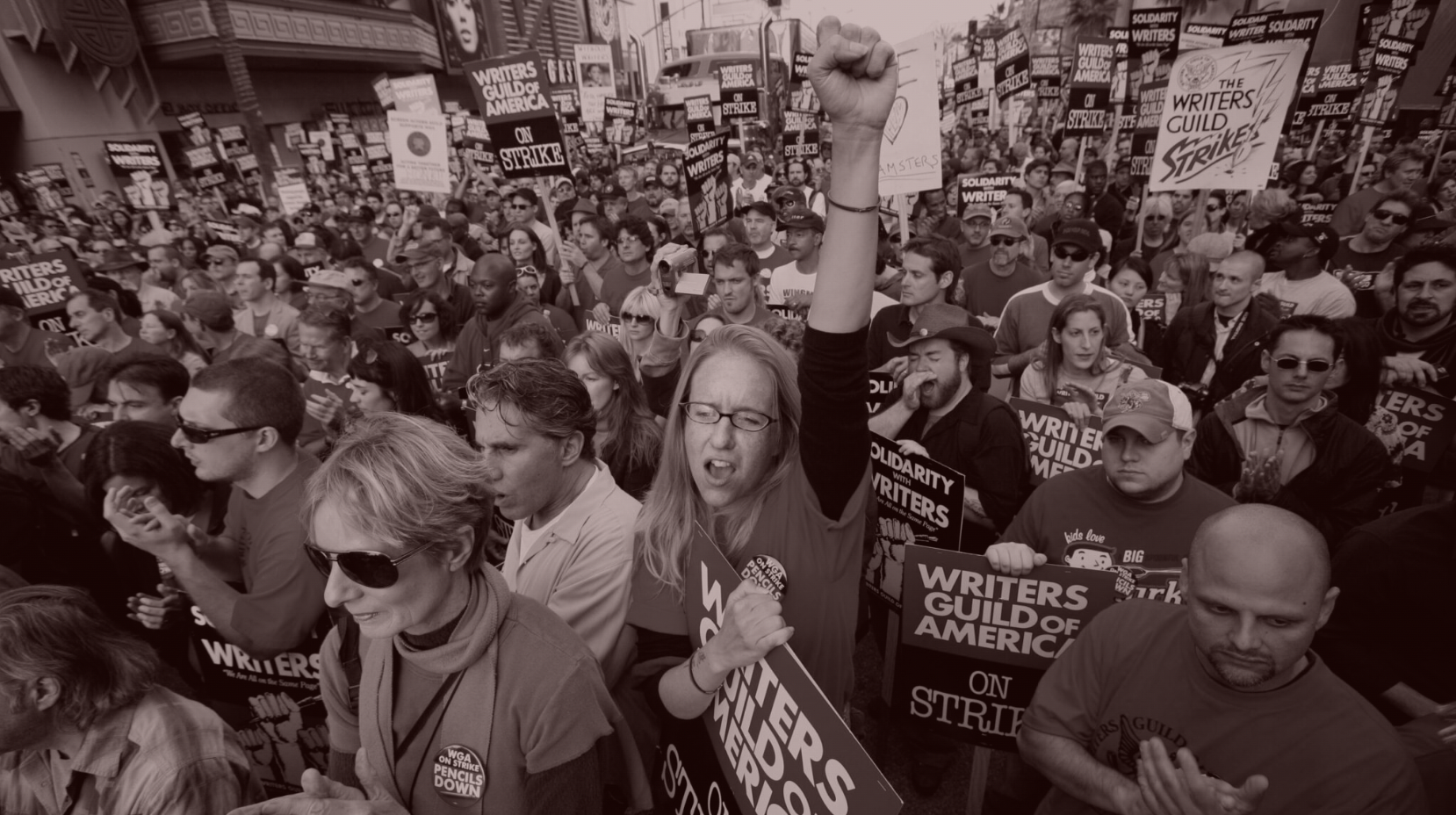
| The network late-night hosts jumped on a Zoom this week for one of a few recent meetings with leaders of the Writers Guild. Stephen Colbert, Jimmy Fallon, Jimmy Kimmel and Seth Meyers have all agreed that their shows will go dark if, and when, there is a WGA strike, which could happen as early as midnight Tuesday. Late-night shows are always the first high-profile victims of a strike, so their actions will get close scrutiny in the next few weeks. I’m told the hosts are all planning to pay their crews during a shutdown, similar to what Leno, Letterman, and Kimmel did back in 2007.
At this point, a strike seems pretty inevitable, despite what your buddy’s girlfriend’s agent might have heard about a “breakthrough.” The writers are committed to double-digit gains, and the studios, for the most part, wouldn’t hate a few months to get their balance sheets in order. Pretty simple. But WGA lead negotiator Ellen Stutzman and AMPTP veteran Carol Lombardini have kept a strong muzzle on the negotiators. This isn’t like 2007-08; the standoff isn’t playing out in the media, and outlets claiming to know what’s going on “in the room” are kinda looking stupid.
If there is a strike, here are three different scenarios for how it could play out, based on conversations I’ve had this week with labor veterans:
- The July Scenario: If both the DGA and SAG-AFTRA make deals at the end of June, the writers will find themselves on a lonely island and will likely settle.
- The September Scenario: The fall broadcast schedule is impacted, the movie pipeline begins to suffer, the Emmys are threatened, and the companies feel they have made their cost cuts over the summer and can justify giving a little to make a deal.
- The December Scenario: Everyone, including the streamers, begins to run out of scripted programs, the substitutes and unscripted fare aren’t generating equivalent viewership, and people start canceling subscriptions. Both sides panic, get together, and make a deal.
Will it be 1, 2, 3 or something worse??
Now for Puck labor contributor Jonathan Handel on an underappreciated aspect of the negotiations… |
|
|
| Information asymmetry: in bloody wars or heated contract negotiations, when one side possesses key data the other doesn’t, the impact can be decisive. That’s why spies and cryptographers thrive. It’s also why the Hollywood labor guilds pushed for transparency in “new media” data even before the streaming wars of the past decade. (The 2008 union contracts required confidential disclosure of license agreements.) It’s why the Directors Guild engages media analysts to inform its negotiations. And it’s one reason that the Writers Guild’s recent campaign against the talent agencies included information-sharing requirements. Knowledge is indeed power.
With a WGA strike looking like it could begin as early as this week, let’s analyze the standoff through an information lens and try to discern what each side—and the public—really knows about writer pay, viewer consumption of their work, and media company profits. These are the most pertinent questions when considering what’s a “fair” deal for the writers. |
|
A MESSAGE FROM OUR SPONSOR
|
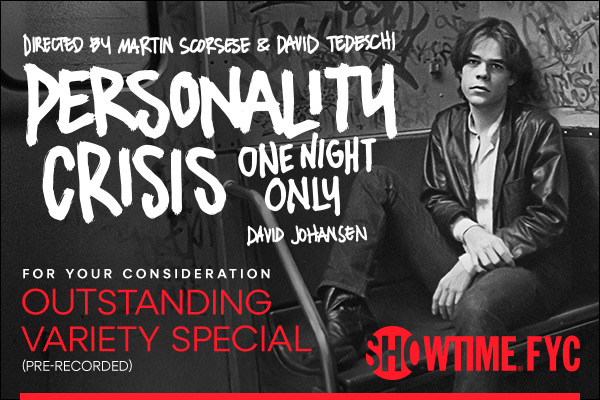 |
| SHOWTIME® presents PERSONALITY CRISIS: ONE NIGHT ONLY. From legendary directors Martin Scorsese and David Tedeschi, PERSONALITY CRISIS: ONE NIGHT ONLY is a portrait of musical iconoclast David Johansen which Deadline calls "A Love Letter to Johansen's musical legacy." From his days leading the groundbreaking rock band New York Dolls to his reinvention as Buster Poindexter – with detours into the worlds of swing, blues and rock – the chameleonic Johansen has created an entire genre unto himself, at once mischievous and deeply personal. Featuring a luminous live performance at Café Carlyle in New York City, where he performs as Poindexter singing the Johansen songbook, along with new and archival interviews, PERSONALITY CRISIS: ONE NIGHT ONLY is a testament to both a lost New York and a performer who remains as fresh and exciting as ever. Streaming now – only on SHOWTIME®. Now stream Showtime with Paramount+ |
|
|
| In comparison to its peers, the WGA West is uniquely transparent: it publishes annual reports for all to see. The WGA East, DGA and SAG-AFTRA don’t; in fact, SAG-AFTRA doesn’t even let its own national board members retain copies of its financials. All of the unions (and their affiliated pension and health plans) also file public reports mandated by law, but these annual LM-2s and 5500s are of limited use in assessing member compensation. The WGA reports are more useful, as they include not just the union’s own audited financials, but also data on writer earnings, including initial compensation and a detailed breakdown of residuals.
Thus we learn from the most recent report that over the five year period from 2016-21, the number of working television writers inched up from 4,841 (with some pandemic oscillations) to 4,934—a 2 per cent increase—while their aggregate compensation grew more quickly, rising from $996 million to $1.13 billion, a 13 percent gain over five years, or about 3 percent when adjusted for inflation.
But while that would seem to imply a modest gain for writers, or at least no backsliding, it’s not really that simple, since average figures, easily influenced by a relative few high earners, can give a distorted picture. In this instance, Aaron Sorkin and Shonda Rhimes don’t do any favors to the average writer. Their earnings can skew the math.
The theatrical initial pay picture is not dissimilar; and when it comes to TV and film residuals, those have increased from an aggregate $385 million to $494 million per year, a 28 percent rise over the five year period. But no figures are offered on the number of people receiving those payments, so it’s not possible to derive and compare averages.
And, anyway, an average is not what we want, because the average writer is not the writer who earns the average pay. The average is not typical. Rather, to know whether the typical writer is better or worse off today than 5 or 10 or 20 years ago, we’d need data on the median writer—someone whose income is at the midpoint of working writers. But the WGAW annual reports don’t include median figures. Recent press reports fact-checking the WGA’s claims of writer impoverishment have struggled with this limitation, using mean figures as an imperfect proxy for unavailable medians, but it is hard to know whether the conclusions amount to anything. |
|
|
| There are so many complicated questions to answer. How do we square the increase in aggregate residuals with writer complaints that the checks are getting smaller? Perhaps the pool of residuals recipients got even larger, thanks to so-called Peak TV and the explosive growth in series over the past decade. Perhaps there are disproportionately more new and young writers with fewer credits on their resumes to generate residuals. Perhaps changes in the residuals formulas or other factors have steered a larger portion of the pie to a smaller subset of writers.
We do know that hit shows on network primetime generated higher residuals than streamers pay, when factoring in aftermarkets such as foreign and now byegone syndication. The analysis is less clear for non-hits, though, because streaming formulas and network formulas are apples and oranges. It’s a morass of perhaps, perhaps, perhaps… and without more detailed data, we just don’t know.
There’s another factor in play, as I reported in 2017—just before another potential WGA strike was averted by a last-minute deal: the economics of Peak TV are tricky. During 2011-2015, the number of series grew by about 50 percent, the number of writers working in TV grew about 20 percent, but the aggregate number of scripted episodes produced grew only by about 7 percent thanks to the decline in average season length—a stunning drop from 18.8 episodes per season to 13.2.
A recent report suggests that this divergence between work and workers may have slowed. From 2017 to 2022, the number of live-action scripted series grew by 15 percent, the number of writers working in TV was essentially unchanged (per WGA data) and although the number of episodes produced in aggregate declined by 5 percent, the number of hours of TV produced was little changed, due to a shift from half-hour comedies to one-hour dramas. In other words, the number of workers and the work for them to do were both essentially unchanged. Seasons were still getting shorter during that period, but less precipitously: the decline from an average 12 episodes per season to 10.2 marks an annual rate of change that’s around a third of what it was in 2011-2015, and that seems to have allowed labor supply and demand to more closely align.
Adding to the difficulties of analysis, I’m informed that the WGAW annual report residual figures include WGAE data even though the report doesn’t say so; this is probably due to the fact that the WGAW handles residuals processing for both unions. Meanwhile, the initial comp figures are specific to the LA-based guild. (WGAW and WGAE are two separate unions that bargain jointly on industrywide agreements, led by the WGAW, home to about twice as many film and TV writers as its New York counterpart.)
The guild has also released a report on writer compensation specifically targeted to the negotiations, and it includes a median figure or two: “Median weekly writer-producer pay has declined 4 percent over the last decade,” says the union, adding that this is a 23 percent drop when adjusted for inflation. But the report doesn’t say anything about median yearly income; and the reference to “writer-producer pay” suggests that this isolated statistic doesn’t include staff writers (who usually have no producer title).
Indeed, the WGAW figures don’t always include overscale compensation and often don’t include producer-side income that writer-producers receive. That money is outside the purview of the WGA collective bargaining agreement, and, indeed, the union may not even know how much its members are paid in their producer capacities. The real issue is, at various levels of seniority, what are a typical writer’s total annual earnings—including weekly, episodic, producer and residual components—and how does this compare to inflation-adjusted figures from 5, 10 and 20 years ago. The union may not know, and the industry community certainly doesn’t. |
|
|
|
|
| But the studios and streamers do know, because they’re writing the checks. That’s a key piece of information asymmetry. The companies know more about writer compensation than the writers’ own union. And thanks to the collective bargaining exemption to antitrust laws, they can share this information with each other via the AMPTP—and, from everything I’ve heard, they do. That inevitably translates to a leg up for the companies in negotiations. And the public—including the industry community waiting on tenterhooks—knows even less, and is left with WGA assertions and anecdotal reports. Unlike the guild, the AMPTP has not released any data on writer compensation.
The companies do release their financial performance each quarter, of course, and by those metrics the streamers and studios are in a still-strong but relatively weakened spot. Certainly they’ve been forced by Wall Street to dance to a different tune since March 2022, when a decline in Netflix subscribers changed the prevailing metric from subscriber growth to profitability. Share prices cratered and continuing layoffs ensued in the media sector, as well as at tech companies, several of which (Apple, Amazon) are also in the professionally-written content business.
But the WGA points to hefty entertainment segment operating profits through 2021, and calls the hard times since then transitory, citing ongoing investment in streaming and Warner Bros. Discovery’s one-off content write-downs that the guild says are intended “to justify an ill-advised merger driven by Wall Street’s demand for growth.” As the union also notes, streamers continue to grow subscribers (although domestic growth has stalled for some), raise prices, and diversify revenue with advertising. And certainly the recent stock slides haven’t prevented eye-popping executive payouts like $50 million for Netflix co-C.E.O. Ted Sarandos and $27 million for Disney’s Bob Iger. Nonetheless, the companies now think a lot harder about overall deals and content at any price.
So, what is the real value that writers, directors and actors deliver? It’s broader than what the streaming formulas capture, which—unlike most other residuals formulas—don’t include a success metric. Netflix’s Wednesday pays the same residuals as a flop because the key input is subscriber numbers (in fact, only U.S. subs), not viewership or other measures of engagement. Limited consumption data are disclosed for top 10 shows, but there’s no standardization to those metrics and none of them flow into residuals formulas. The companies hoard the most valuable data, and what they do release is difficult to compare across platforms.
Yet, the value of a successful series is enormous. For streamers, a hit brings new subscribers and reduces churn. For a company like Disney, a blockbuster can be monetized in merchandise and even become a theme park ride. For Amazon, popular offerings sell shoes, books and everything else. And for Apple, quality programming burnishes the brand and helps drive sales of iPhones and other products. On the whole, these are all profitable companies that benefit greatly from the content produced by guild members.
That’s why data on the downstream effects of scripted film and television is closely held, even though key platforms such as Netflix and HBO Max have deployed ad-supported tiers. The WGA has no access to information that would eke out the true enterprise value of its members’ work and is primarily left to argue that if the studios and streamers are going to spend billions of dollars building worldwide platforms based on members’ content, writers need get an increased share to be able to sustain careers.
All this makes increased transparency a key point of contention in these negotiations, since arguments over what the writers contribute to profitability, and what they therefore deserve, are central to the discussions over initial compensation. The writers—and the DGA as well—are also pushing for increased transparency in the context of residuals, where success metrics, as well as other changes like incorporating global sub numbers, are an important demand.
Would more information make bargaining smoother? Clearly yes, as the parties might be more aligned on basic facts. But some issues will always be open to debate: if good programming increases Steve Madden sales via Amazon Prime—and Jeff Bezos acknowledges that it does—how much of that spike in spiked heel sales should reward the writers, directors and actors; how much to the software engineers, executives, drivers and warehouse workers, and how much to shareholders?
No ethics manual can answer those questions. That, and a paucity of compelling and agreed-upon data, make collective bargaining ultimately an exercise in raw power. Transparency would weaken the bargaining leverage that the media enterprises have enjoyed for a decade in streaming, and (to a lesser extent) for many years prior to the latest technologies.
There ought to be limits to information asymmetry. Like an errant member of MI6, now may be the time for the companies to come in from the cold and share more of the data they’ve been hiding. It just might be the key to the current standoff—and to labor fights far into the future.
Jonathan Handel is an entertainment/technology attorney, author (including a book on the WGA’s last walkout), executive, adjunct professor and journalist. He regularly represents producers and others in their dealings with guilds, was previously outside counsel to SAG-AFTRA, and was on the legal staff of the WGA in the early 1990s.
|
|
|
| Of all the WGA strike walkups, Michael Schulman best gets the writers to explain why they’re so pissed, including The Bear guy who went to the WGA Awards “with a negative bank account and a bow tie that he’d bought on credit.” [New Yorker]
Zack Stentz: “At stake is nothing less than the survival of film and television writing as a viable middle-class career for the majority of our membership.” [NY Times]
My colleague William D. Cohan envisions how a post-Jeff Shell combination of NBC Universal and Warner Bros. Discovery. might go down. [Puck]
Another colleague Teddy Schleifer makes the case for Jeffrey Katzenberg as Joe Biden’s chief 2024 campaign bundler. [Puck]
The Phoenix Suns became the first of what will almost certainly be many teams to abandon their RSN for a free TV channel and an independent streaming service. [Bloomberg]
Ron DeSantis is losing friends in reliably Republican-friendly Celebration, the creepy Florida town that Disney invented in its own image. [Washington Post]
David Simon tells a great story about Harry Belafonte and the time that “one of the finest men of our life and times transformed me into a complete and utter shitbag hack.” [DavidSimon.com]
Somehow—somehow!—the Post got ahold of a video that shows billionaire and former Miramax owner Tom Barrack in shorts in the background of a shot with Jeff Shell accuser Handley Gamble. Somehow! [New York Post]
As Super Mario Bros. crosses $1 billion, it’s worth noting that only one of the five films to hit that mark since the pandemic is a superhero movie (Spider-Man: No Way Home), and nothing generated by Disney has done so (Avatar 2 was a Fox asset). The others are Jurassic World: Dominion and Top Gun: Maverick. [Forbes]
FWIW, here are my movie stock picks post-CinemaCon presentations (I skipped Paramount when I heard Tom Cruise was no-showing, so no Par or Lionsgate):
BUY
—Wicked (Universal, Nov. 2024): The footage from director Jon M. Chu looked much broader than the Broadway material might suggest. Plus, flying monkeys.
—The Creator (20th, Sept. 29): The surprise of the week might be Gareth Edwards’ sci-fi action piece with John David Washington and Gemma Chan. It felt big and ambitious.
—Barbie (Warners, July 21): Everything about this campaign (even Ryan Gosling’s weird pink jacket on stage) has worked so far.
—The Exorcist: Believer (Universal, Oct. 13): Terrifying. Not for me, but will be huge.
HOLD
—The Flash (Warners, June 15): Points to WB for showing all of its biggest bet. But Flash hype is out of control, people. It’s fine. An above-average comic book movie, and not necessarily for all audiences.
—Spider-Man: Across the Spiderverse (Sony; June 2): Everyone seemed to love the 14 minutes shown, but it’s never a good sign when a director says “we are trying to finish this movie” about a month before its release date (and after the film was already delayed a year).
SELL
—Wonka (Warners, Dec. 15): Better, and more Harry Potter-y footage than last year’s disastrous teaser, but Timothée Chalamet still looks miscast. Silver lining: Hugh Grant as an Oompa Loompa is as terrifying as anything in The Exorcist.
—The Marvels (Disney, Nov. 10): Felt like generic late-stage Marvel, and little enthusiasm in the room for a sequel to a billion-dollar grosser. |
|
|
| Tons of national attention on my reveal last Sunday of the NRG list of movie stars that matter to theater-goers. Some interesting feedback:
“The list… supports what I’ve been saying, that all of today’s stars are consumer brands who were created by massive consumer marketing campaigns on television. The only real movie star left is Tom Cruise, who hasn’t sold out to streaming. Everyone else, including Leo, is cashing out with streamer buyouts. Absent mass market campaigns, which aren’t cost effective for streamers, there’s no longer a crop of younger actors who mean anything. That’s advantageous for the streamers, who won’t have to pay 20+mm for next gen actors-cum-stars.” –A producer
“What a colossal failure on the part of Hollywood. No new movie star in a decade, and the franchises that have been the focus of the industry’s marketing machine are all aging and being recycled. A downward spiral.” –An executive
“Please stop trying to apply old metrics to the new reality. There’s no movie stars because there’s no ‘culture’ as we once knew it. Everyone is in their own social media bubble, so of course there isn’t widespread knowledge of actors. We aren’t being force-fed the same people, we are all finding our own stars.” –A non-industry reader
“Johnny Depp is still a major star. So is Will Smith. And outside of Hollywood and Twitter, nobody is paying attention to the Ezra Miller saga. Question is when will Hollywood refocus back on the audience that once loved it?” –A filmmaker |
|
|
| Proving that friendships forged on David Geffen’s yacht are forever, Michelle Obama, Kate Capshaw, and E Street bandmember Patti Scialfa joined Bruce Springsteen on-stage in Barcelona as husbands Barack and Steven Spielberg watched. And yes, there’s video.
Have a great week,
Matt
Correction: Severance scored 14 Emmy nominations, not 5 as I said on Thursday. Apologies to Apple TV+, I was looking at an incomplete list.
Got a question, comment, complaint, or a strike beard “before” photo? Email me at Matt@puck.news or call/text me at 310-804-3198. |
|
|
|
| FOUR STORIES WE’RE TALKING ABOUT |
 |
| Tucker’s Next Act |
| What’s the next stop in Carlson’s evolving rage campaign? |
| TINA NGUYEN |
|
 |
| Fox News Sweepstakes |
| News and notes on Tucker’s future, his succession, and a new CNN threat. |
| DYLAN BYERS |
|
 |
| The Milley Doctrine |
| A chronicle of a transatlantic voyage with General Mark Milley. |
| JULIA IOFFE |
|
 |
| The RealReal Wars |
| P.E. vultures are circling the troubled consignment juggernaut. |
| LAUREN SHERMAN |
|
|
|
|
|
 |
|
|
|
Need help? Review our FAQs
page or contact
us for assistance. For brand partnerships, email ads@puck.news.
|
|
|
|
Puck is published by Heat Media LLC. 227 W 17th St New York, NY 10011.
|
|
|
|