 |
 |
| Greetings again from sunny Montauk, where I’m enjoying the BofA Securities media conference and monitoring the somewhat hilarious kabuki theater of a Paramount shareholder meeting that did not discuss the company’s pending deal to be sold. Today, we’re beginning a new era of What I’m Hearing+, our Tuesday franchise extension of my What I’m Hearing email, where I’ll introduce our featured author and then get out of their way. In this edition, Eriq Gardner has the inside track on a couple of Hollywood’s most impactful legal fights…
🎧 Also, don’t miss the premiere of Impolitic, Puck’s newest podcast from our chief political columnist, John Heilemann, featuring debut guest Andrew Weissmann, the former Enron prosecutor and Mueller lieutenant, about Trump’s sentencing and appeal. New episodes drop Tuesdays and Fridays, sign up here or here.
Now, here’s Eriq on the $20 billion NFL Sunday Ticket fight and a close look at Netflix’s surprise settlement with Linda Fairstein over Ava DuVernay’s docudrama. Plus updates on the ScarJo-ChatGPT dustup, the Times-OpenAI battle, and the final Paramount-Skydance deal points.
Let’s get started... |
|
|
- Paramount’s regulatory gauntlet: Now that we’ve entered the final stretch of the deal saga, it’s fair to ask how regulators might respond to a merger between Paramount Global and Skydance. That was today’s hot topic on The Powers That Be podcast, featuring me and Dylan Byers (listen here.) In my view, Shari Redstone won’t face as much resistance to this transaction as she did during her attempted $2.2 billion merger of Simon & Schuster with rival publisher Penguin Random House. David Ellison has yet to articulate his exact plans for CBS—Dylan thinks a CBS-CNN spin-off merger is within the realm of possibility—but any sort of M&A activity there is bound to raise eyebrows at the Federal Communications Commission.As Paramount and Skydance debate the final points, including who would pay to defend against lawsuits, keen legal observers are keeping an eye on Rhode Island, whose state pension fund has a major stake in the company. Last Friday, state lawyers voiced their dissatisfaction with the sale process, telling a Delaware court, “If Shari Redstone’s misconduct is as bad as reporting indicates, Rhode Island may also require injunctive relief to preclude Shari Redstone from further harming Paramount.”
- South Park drama: Speaking of Paramount, the company just submitted a partial summary judgment motion in its dispute with Warner Bros. Discovery over South Park, seemingly because its rival got a little too nosy about how movies based on the show actually performed on Paramount+. Last year, WBD sued Paramount over the terms of its “exclusive” 2019 licensing deal for the series, and it’s now seeking profits from Shari’s streamer... whatever those might be. (Read the full brief here.)
- A.I. in N.Y.: A few weeks after that Scarlett Johansson-ChatGPT dust-up, a handful of A.I.-related bills are passing through the New York state legislature. One bill aims to establish contracting requirements for the creation and use of digital replicas; another proposes to deny tax credits to films that use A.I. instead of human workers; and lastly, there’s a bill that would impose civil penalties for ads that fail to disclose the use of “synthetic media.” None of these bills is guaranteed a vote, but I hear that the digital replica licensing bill has a decent chance of making it to Gov. Kathy Hochul’s desk, while the other two will likely be tabled.
- Altman’s $210 billion ding: The New York Times is seeking to amend its lawsuit against OpenAI to add 7 million works, many of which date back to World War II. While statutory damages in copyright cases can run $150,000 per work, they more typically average around $30,000. This makes the Times’ archive dig potentially worth approximately $210 billion. Of course, OpenAI is objecting.
- The Fox News files: As strange as it may be for the Biden administration to protect Fox News, that’s exactly what’s happening in the case of Tim Burke, a freelance journalist who faces charges under the Computer Fraud and Abuse Act. Burke surreptitiously accessed a live Fox stream and leaked Tucker Carlson’s unedited, antisemitic-rant-laden interview with Kanye West.The government is currently seeking to return materials it took from Burke when the F.B.I. raided his house last year—including, presumably, more unaired Fox footage—but prosecutors want a protective order to ensure Burke doesn’t release them. Burke has objected that such restrictions would hinder his ability to publish stories of significant public interest—including the possibility of “candid on-air but unbroadcast conversations regarding Fox News’ commentators’ opinions about the 2020 allegations of election fraud.” A hearing is slated for June 26 in Tampa, Florida.
|
| And now for Eriq’s take on major breaking news… |
| A MESSAGE FROM OUR SPONSOR |
 |
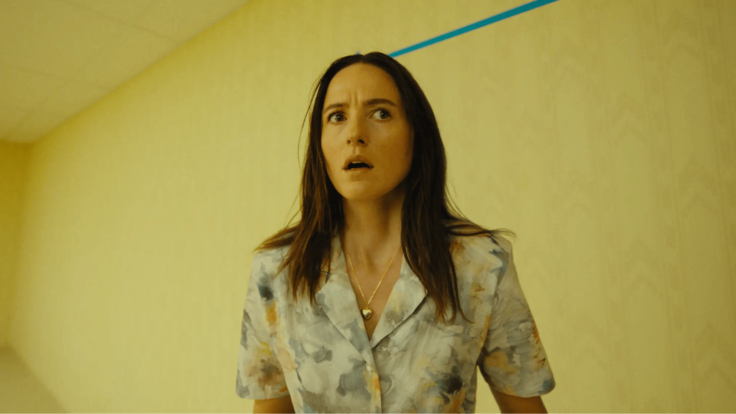
| “A brilliant adaptation. It’s funny, self-aware and tense – an astonishing balancing act." — THE GUARDIANFallout is the story of haves and have nots in a world in which there’s almost nothing left to have. 200 years after the apocalypse, a peaceful denizen from a cozy fallout shelter is forced to return to the surface—and is shocked to discover the wasteland waiting for her.
Starring Walton Goggins, Ella Purnell and Aaron Moten. Emmy eligible drama series FALLOUT is available for Television Academy members at ConsiderAmazon.com |
|
|
| The Netflix-Fairstein Settlement Stunner |
|
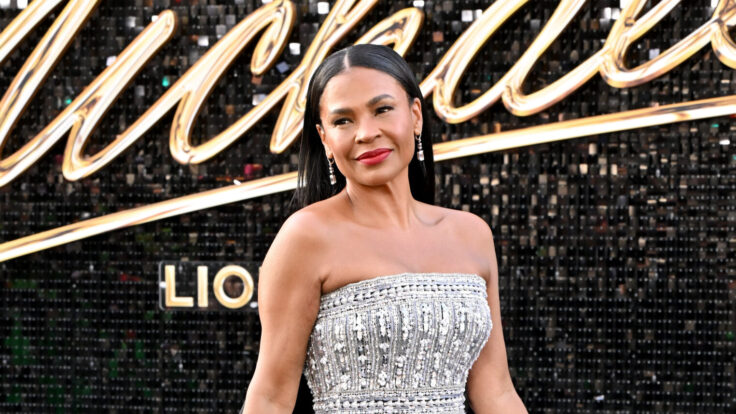
| Last-minute legal settlements aren’t uncommon, but the details are sometimes baffling. Take the just-announced deal between Netflix, the producer of Ava DuVernay’s 2019 docudrama about the Central Park jogger case, and Linda Fairstein, who led the Manhattan D.A.’s Sex Crimes Unit at the time of the attack. Fairstein brought a libel suit over her portrayal by Felicity Huffman in When They See Us, which she claimed depicted her as a “racist, unethical villain.” The trial, which was set to begin June 10, would have been the first time a Hollywood studio defended a “based on true events” series before a jury.Alas, on the eve of trial—which would have started with jurors binge-watching the series together—the two sides have reached a détente. According to a joint statement, “Netflix will donate $1 million to the Innocence Project. Ms. Fairstein will not receive any money as part of this settlement.” A partial disclaimer stating that some events have been fictionalized for the purposes of dramatization has now been moved from the end credits to the beginning of the series. DuVernay went further, ripping Fairstein as a legal loser responsible for her own fate.
The terms are strange, and worth discussing. On one hand, Fairstein wasn’t asking for much in the way of compensation—$9.3 million, plus punitive damages, for the reputational carnage and emotional distress she says she endured. Fairstein maintains that, contrary to the series’ depiction, she never instructed NYPD officers to round up young Black men in Harlem or conduct brutal interrogations, and that her real-life involvement in the case was far more limited. Given the cost of lawyers for a two-week trial, and the relatively modest damages being demanded, the settlement could be viewed as a concession to economic reality. (The parties are responsible for their own legal fees, likely in the millions of dollars.)
That said, Fairstein seemingly would have had the leverage to command a lot more from Netflix than a $1 million donation to charity. Indeed, back in September, U.S. District Judge Kevin Castel refused to dismiss the case on summary judgment, calling out producers for “reverse-engineer[ing] plot points to attribute actions, responsibilities and viewpoints to Fairstein that were not hers.” At trial, Fairstein’s legal team at Nesenoff & Miltenberg would have emphasized the script’s departure from the source material and, to prove the required “actual malice” on Netflix’s part, shown jurors how Netflix executives proposed alterations to the script to make Fairstein’s character more of a villain. Moreover, the trial would have been overrun by reporters (Fairstein had a publicist, Arik Ben-Zvi at Breakwater Strategy, on her team), fueling precisely the sort of media attention that Netflix doesn’t want, at the very moment when it’s been criticized for its recent stalker hit, Baby Reindeer, and is facing a string of libel cases over Making a Murderer, Jeffrey Epstein: Filthy Rich, The Queen’s Gambit, and Inventing Anna, a case that is still pending and recently overcame Netflix’s motion to dismiss.
If Netflix had lost to Fairstein, the result would have not only emboldened libel plaintiffs and driven up insurance costs, but also made Hollywood studios think twice before green-lighting projects in the lucrative biopic genre. Given those stakes, it’s not hard to understand why Netflix accepted the deal—even if the streamer was ready to defend When They See Us on principle, arguing that it presented a substantially true account of the Central Park Five from their perspective. (One of the men, Yusef Salaam, now an activist and New York City councilman, was on the defendants’ witness list and would have likely testified about what he told filmmakers as they researched the story.)
As for Fairstein, however, her decision to bow out is bewildering. In a statement earlier today, she pointed to the summary judgment ruling and said, “This is what this case was all about—not about ‘winning’ or about any financial restitution, but about my reputation and that of my colleagues.”
According to DuVernay’s statement, Fairstein’s husband called a few days ago to pull the plug. Ava further claims that Fairstein had asked for, “[A] cash payout, as well as having a disclaimer at the top of the series When They See Us on Netflix which would state that everything to do with her in the show was fabricated. We refused both.”
DuVernay also claims that Fairstein wanted an agreement that the director wouldn’t talk about her in the future, which the filmmaker says she would only accept if Fairstein never talked about the “Exonerated Five” again. No deal there. “[That] allows me to share what I feel about her claims for the first time,” DuVernay’s statement read. “When They See Us did not get Linda Fairstein canceled. Linda Fairstein’s own actions and words are responsible for everything that she is experiencing. In the days leading up to her defamation trial, Linda Fairstein decided that she was not willing to face a jury of her peers. It’s a phenomenon that often happens with bullies. When you stand up to them, unafraid, they often take their ball and go home.”
Fairstein’s lawyer Andrew Miltenberg countered, “Ava’s characterization is misleading. There was a typical back and forth over a few days about a potential settlement. Initial discussions included a request for Linda’s attorneys’ fees and expenses. Not money for Linda. There was no effort to silence anyone.”
Meanwhile, Netflix’s attorney Bart Williams, at Proskauer, said, “Any suggestion by Linda Fairstein that she was vindicated by bringing this lawsuit is ludicrous… Fairstein caved completely.”
Whatever the ultimate reason for Fairstein’s settlement, the former prosecutor turned best-selling crime novelist was on the verge of making legal history. Instead, she decided to walk away. I think I’d pay to see a movie about that. |
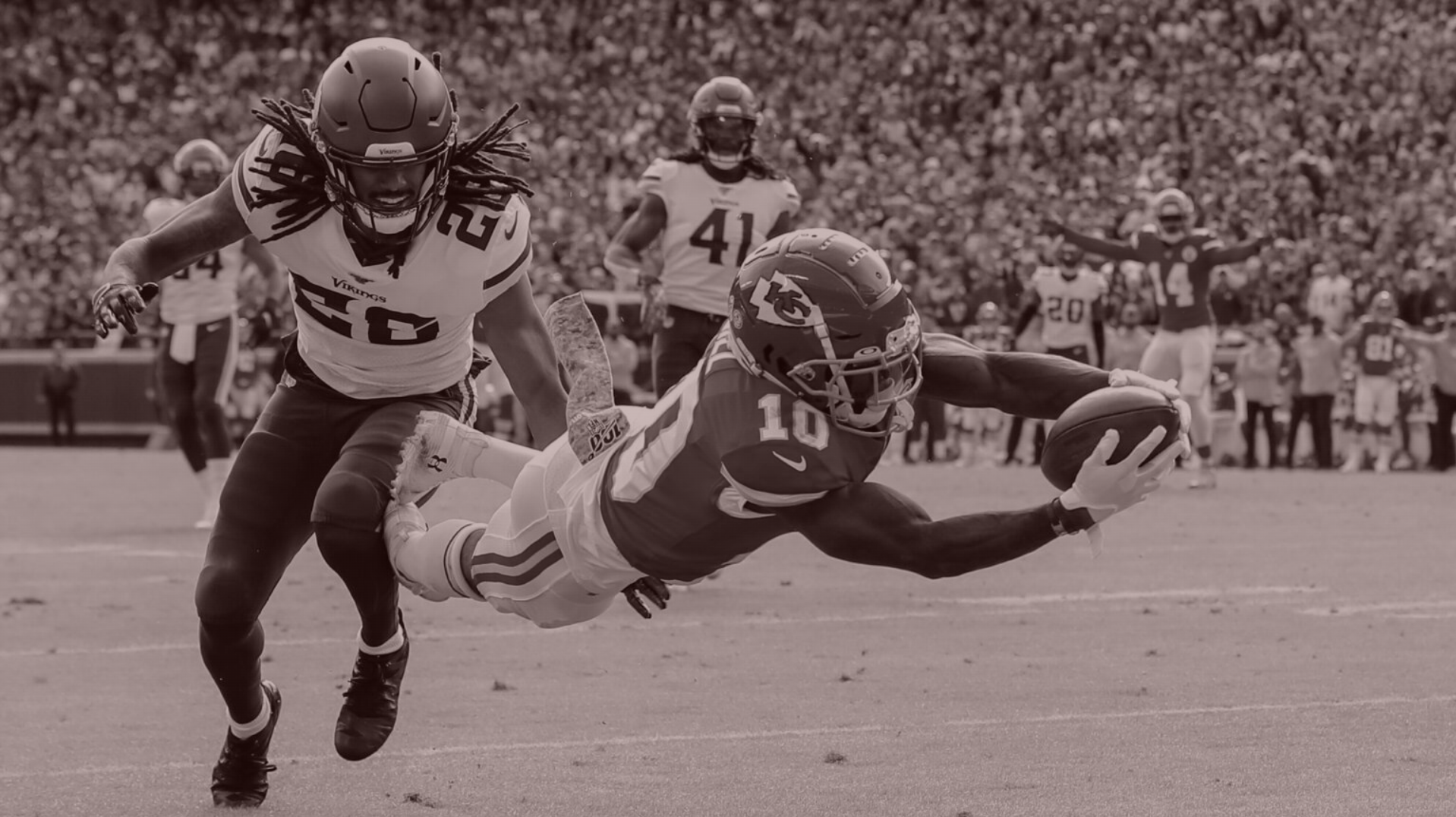 |
| The NFL’s $20B “Sunday Ticket” Gamble |
| After a decade of twists and turns, the league is facing down a 10-figure lawsuit that could also allow teams to cut their own deals with streamers, reshaping the business forever. Can the NFL afford to take that risk? |
|
|
|
| Years ago, when I was a young and broke New Yorker, I would nurse a single beer at a bar for a good three hours to watch a Los Angeles Rams game. Yes, I could have subscribed to the “Sunday Ticket” package, then distributed through DirecTV, and watched the game at home, but that cost a couple hundred bucks. What I really wanted was a way to sign up for just Rams games—the other 31 teams be damned. Still, when “Sunday Ticket” subscribers sued in 2015, alleging that the NFL’s refusal to offer that very product amounted to a conspiracy, it sounded a little bonkers… even to me.Flash forward to today, and that legal action, after some remarkable twists and turns, is finally headed to trial—and there’s $20 billion on the line. Some headlines say $6 billion, based on an economist’s comparison of what “Sunday Ticket” costs consumers (currently $349-a-year for individuals, much more for bars and restaurants) and what the cost would be in a hypothetical market where the NFL operates more like college sports, with various teams or divisions each licensing game telecasts and fans being able to subscribe to smaller packages. But the final number could theoretically be much higher. The plaintiffs are seeking a tripling of actual damages (in line with antitrust law), plus interest.
The trial has the potential to reshape the streaming landscape. If the plaintiffs win, and a judge decides that injunctive relief is necessary to address NFL teams colluding with each other, the league’s ongoing “Sunday Ticket” deal with YouTubeTV could be canceled. Moreover, the league might be prevented from stopping its teams from pursuing their own streaming deals. With a post-trial court ruling, everyone from Netflix, Peacock, and Disney+ to smaller streamers (Fubo, Roku, etcetera) could have the ability to engage directly with individual teams for NFL games. Given the sport’s popularity, that would be a seismic shift for the television economy. |
|
|
| How is something like this even a possibility? In 2015, when the case launched, there wasn’t much reason to believe it’d have legs. Sure, the Supreme Court had ruled in a dispute concerning league-licensed apparel that NFL teams could be held liable for conspiring with each other. But broadcasting seemed different, almost sacrosanct. Back in 1961, after some courtroom defeats, professional football got a limited antitrust exemption courtesy of the Sports Broadcasting Act. In the 1990s, the NFL used the S.B.A. to fend off a class action attacking its first iteration of “Sunday Ticket.” This new case looked similarly doomed and, in 2017, U.S. District Court Judge Beverly Reid O’Connell granted the NFL’s motion to dismiss the suit, agreeing with the league that its arrangement with DirecTV had actually increased output and access to games. Meanwhile, similar lawsuits against Major League Baseball and the National Hockey League settled, resulting in small price discounts for fans.Then came an earthquake. In 2019, the Ninth Circuit Court of Appeals ruled that the S.B.A. didn’t apply to satellite broadcasting, and that no binding precedent required teams to cooperate in producing telecasts. In other words, it would be up to the league to prove at trial the pro-competitiveness of its pooling of TV rights.
The NFL tried to get the Supreme Court to interject. That effort was unsuccessful, although Justice Brett Kavanaugh was intrigued enough by the NFL’s joint venture argument that he essentially invited the league to come back again after the trial. Since then, four years of discovery have ensued, with major networks (CBS, Fox, ESPN…) and would-be licensors (Google, Apple…) handing over evidence. The results of this exhaustive investigation, along with testimony from the likes of Roger Goodell, Jerry Jones, and Robert Kraft, are poised to take center stage over the next six weeks. |
|
|
| Until opening statements, I think there’s an excellent chance we’ll see a deal that averts this trial entirely. In some ways, it reminds me of what happened last year in the libel showdown between Dominion and Fox News. There, with the possibility of a 10-figure verdict, the sides came to a late settlement after the jurors were chosen. Notably, Dominion’s legal team was led by Susman Godfrey, the same firm representing the “Sunday Ticket” plaintiffs. Needless to say, the lawyers have invested a decade into this case and will want to see a return.After all, does the NFL really want to risk a $20 billion tab and a complete upheaval of its television deals? That would be astonishing. Even if the league isn’t overly worried about a massive judgment, or is confident Kavanaugh will come to the rescue, does it really want to expose private correspondence between the league’s owners, or its dealings with broadcasting partners? Currently, there’s a lot of redacted material in the court record, including what it was the league didn’t like about ESPN, which led to YouTube winning the Sunday Ticket rights. Plus, there’s the (admittedly delightful) prospect of Jerry Jones on the witness stand having to explain why he once called the NFL a “price-fixing cartel that has eliminated free competition among NFL teams.”
Of course, arriving at a settlement number that satisfies both sides is tough. With a spectrum of trial outcomes—ranging from nothing, if the NFL convinces jurors it should be treated as a “single entity” for purposes of producing and licensing telecasts, to potentially tens of billions, if jurors conclude there’s no reason a Rams fan on the East Coast should have to pay for Tennessee Titans games—it’s possible the lawyers are too far apart and will actually play this legal game to determine the winner. Now that would be something to behold. |
|
|
|
| FOUR STORIES WE’RE TALKING ABOUT |
|
|
|
|
|
 |
|
|
| Need help? Review our FAQs
page or contact
us for assistance. For brand partnerships, email ads@puck.news. |
| You received this email because you signed up to receive emails from Puck, or as part of your Puck account associated with . To stop receiving this newsletter and/or manage all your email preferences, click here. |
| Puck is published by Heat Media LLC. 227 W 17th St New York, NY 10011. |
|
|
|