 |
|
|
|
Give The Gift of Puck
|
|
Puck members can now spread the holiday cheer by giving the gift of Puck to friends, family, or co-workers with an exclusive 25% off code (HOLIDAYGIFT).
|
|
|
|
|
|
Welcome back to What I’m Hearing+! At this point in the holiday cycle, many of you have checked out. But I know this industry is always working, even in Aspen and on the Big Island, so expect regularly scheduled programming from Puck. I’ll be back with a very fun 2024 predictions piece the day after Christmas.
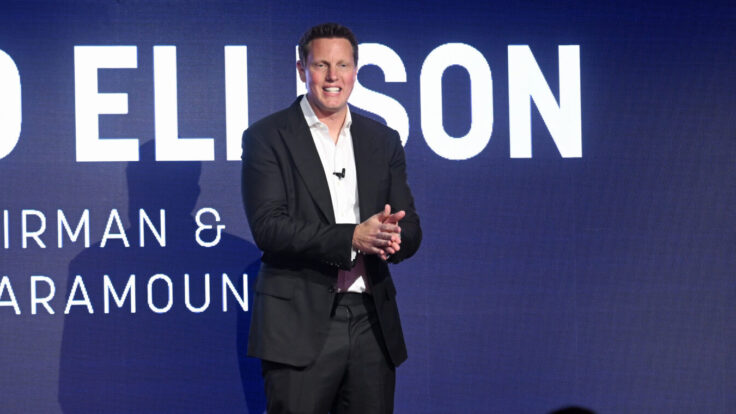
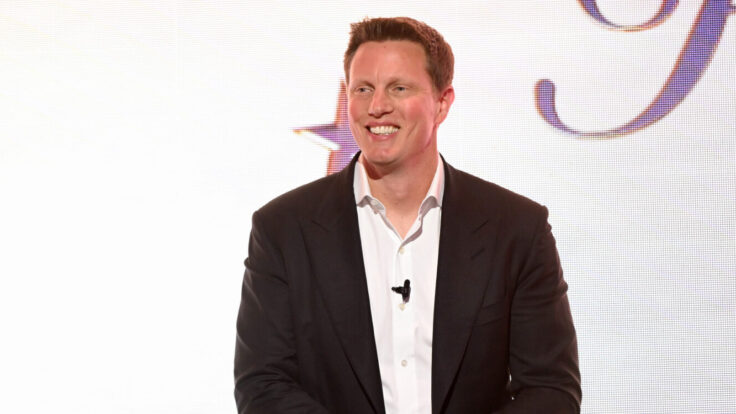
A couple weeks ago, my Puck partner Matt Belloni sent Paramount Global’s stock shooting up more than 14 percent with his report that Skydance’s David Ellison and RedBird Capital’s Gerry Cardinale were exploring a deal for its parent, National Amusements Inc. Tonight, I examine the value of Paramount Global’s underlying assets.
But first…
- Ted loves licensing… except for Netflix content: One striking observation from Netflix’s Engagement Report is that the vast majority of audiences are watching only a sliver of the library. This data reinforced a point made some time ago by Warner Bros. Discovery C.F.O. Gunnar Wiedenfels, who noted that “a small percentage of titles really drives the vast majority of viewership and engagement.” Indeed, this dirty little secret partly explains why the streaming wars have been replaced by the great licensing rush. To paraphrase Natasha Lyonne in her Netflix series Russian Doll, “Windowing! What a concept!”
After summer’s Suits phenomenon, Netflix has been even more aggressive, picking up titles like The Conners from ABC and Warrior from Max—moderate hits that will surely enjoy dramatic boosts on Netflix. After all, as the data dump revealed, 45 percent of all viewing hours were generated from licensed titles, according to Netflix.
And yet, I’ve also found myself wondering why Netflix isn’t licensing its own well-worn or underloved content to collect even more recurring revenue. On a recent call with reporters, co-C.E.O. Ted Sarandos flicked at the issue, observing that Netflix’s personalized recommendation system often surfaces these less-popular titles, thereby keeping them in the content flow, and rendering them more valuable. But hoarding titles that aren’t generating strong engagement doesn’t make much long-term sense when there’s revenue to be made via windowing (like FAST) or licensing to a partner. It’s hard to imagine that a public company—particularly one that has recently experienced the vicissitudes of the stock market—would forgo such a seemingly clear-cut financial opportunity.
Of course, Netflix doesn’t need to license content: It will end the year with more than $6.5 billion in free cash flow, with anywhere from double to quadruple the subscribers as its competitors. But here’s another argument: Netflix is keeping its vault closed because it doesn’t want to assist rivals as they grow. After all, Netflix is using licensing, in part, to reduce churn in the U.S. as it invests internationally. So why would it allow competitors with similar foreign ambitions—largely Amazon and Disney—to employ a similar strategy?
Still, hoarding doesn’t help anyone. Netflix executives have talked about exploring a FAST service similar to Tubi or Pluto TV, and the company is also one of the most active on YouTube, with multiple channels dedicated to content verticals, including comedy and anime. A FAST channel would allow Netflix to own the end-to-end viewer journey and convert non-paying users into paid members. Sarandos mentioned in January that the company was “open to all these different models that are out there right now” and is “keeping an eye on that [FAST] segment.” If Netflix can generate additional advertising revenue on titles that aren’t properly viewed on the main SVOD platform, all while throwing the cash toward international investment, it seems like a pretty clear win.
|
 |
| What is Paramount Actually Worth? |
| Exploring the value, and content synergies, among CBS, Nickelodeon, and the Taylor Sheridan Cinematic Universe, among other assets within Paramount Global. |
|
|
|
| Ever since my Puck partner Matt Belloni broke the news that Skydance’s David Ellison and RedBird Capital’s Gerry Cardinale were kicking the tires on the Redstone family’s National Amusements Inc., the parent company of Paramount Global, the market has been rooting for a change. Paramount’s stock initially popped more than 14 percent on the news, before settling slightly as Wall Street digested the potential limitations of any deal. Meanwhile, this Redstone saga has become catnip at Puck, where my other partner Bill Cohan has produced investor-grade analysis of the opportunity.
So many relevant questions abound. Does Skydance want the studio and streaming assets, or is this a financial play? And if the goal is to control the parent company and sell the empire for parts, where might CBS fit into the streaming landscape? What about cable assets like BET, MTV, or Nickelodeon? And, frankly, should Paramount+, which has recently pared its quarterly losses to merely a quarter-billion dollars, survive as a subscale streamer in such a competitive landscape?
These are the sort of questions that M&A bankers, hedge fund managers, and investors are asking themselves. But as the director of strategy at Parrot Analytics, I’d approach the situation from a different angle: If you divided up the Paramount assets, where would they perform best? And how would you divide them up? By cable network? By franchise? By Taylor Sheridan? Furthermore, which brands or franchises are the most valuable based on their value to other streamers? Examining these questions, as it turns out, really illuminates the true value inside the company. |
|
|
| The Redstone empire should, in theory, be worth more than its $10 billion market value and $15 billion in debt. Paramount Global, after all, is made up of several notable but declining linear networks, a historic studio group, and a dozen or so smaller brands, which together comprise approximately 12 percent of total audience demand for all films and TV shows in the U.S., according to Parrot—second only to Disney (19.6 percent) and Warner Bros. Discovery (16.8 percent) in 2023. Remember, that’s total demand (which tracks consumption, social media activity, and research) across television and movies, not just streaming, where Paramount+ ranks fifth in subscribers and is losing gobs of money.
The argument for breaking up Paramount Global, of course, is that these parts would be worth more than the whole—especially if they were divvied up or absorbed by a larger competitor, and the tax consequences could be mitigated. For example, if WBD or Comcast were to go after Paramount (regulatory obstacles notwithstanding), the former would see a combined corporate demand share of 28.8 percent, with the latter amassing a total of 21.9 percent. Either of these outcomes would result in a new corporate entity with more audience demand than Disney.
At a more granular level, the value of CBS becomes particularly apparent. CBS content accounted for one-third of all the audience demand for Paramount properties (or 4 percent of total U.S. demand), nearly double the next leading segment. CBS content like NCIS and Criminal Minds also routinely occupies four to six slots on Nielsen’s weekly Top 10 for acquired streaming titles. Plus, eight of the top 15 acquired titles in 2022 were CBS shows or aired on CBS channels.
This isn’t really surprising. Netflix’s Engagement Report demonstrated the power of familiar fare and formats, like procedurals. If—just as a thought exercise!—Netflix were to acquire the CBS catalog, promoting the strongest-performing titles and licensing out the rest, the platform’s demand share would shoot up while its overall engagement time would likely increase as well.
Then there’s Nickelodeon, which accounted for 21 percent of Paramount’s total demand share in November, and likely represents the second-largest opportunity for a savvy buyer. Apple TV+ has shown interest in children’s programming but is struggling to find a way in. Also, Apple’s demo leans heavily male and older. Compare that to Disney+’s audience, which also skews male but is much younger. Disney, which already has a Nickelodeon destination on the improved Hulu beta app within Disney+, could make a play to dominate children’s TV.
Perhaps the most tantalizing properties in the Paramount I.P. vault are the Sheridan shows, including the smash-hit Yellowstone and its spin-offs. They are strong drivers of engagement, particularly for Prime Video and Hulu, where users often migrate after watching Yellowstone, according to consumption data. Peacock, which is home to the original Yellowstone (not the spin-offs on Paramount+), accounted for 7.2 percent of programs that audiences watched after. How does that stack up to the competition? According to Parrot, the largest segment of audiences who watched Yellowstone in November then watched a title on Hulu (18.4 percent). This was followed by Prime Video (14 percent), Max (13.3 percent), and Netflix (11.1 percent). On Hulu, for what it’s worth, series that audiences flocked to included Welcome to Wrexham, Only Murders in the Building, and Justified: City Primeval. (Some of these make more sense than others.)
Does this mean that the Yellowstone franchise is most valuable to Hulu (and now to Disney, which will soon fully own the platform)? Not necessarily. While the consumption share indicates audience preferences, and can be used to help plan slates to curb disengagement or churn, it doesn’t account for a show’s ability to acquire or retain high-value customers—which is especially relevant considering the licensing fee that Yellowstone would command. |
|
|
| Not every company is going to have a direct-to-consumer distribution channel work out. I know it. You know it. The executives at Paramount know it. It’s hard to see a world in which the company is sold to a Skydance or another P.E.-backed entity and Paramount+ continues receiving the same level of investment. It will likely shut down or merge, so its library will need a home. And Netflix, as executives have come to realize, needs deep library content to keep the platform humming day in and day out.
And, of course, that’s where the opportunity and challenges arise. A carve-up of Paramount would require a careful and highly sequenced sale process. Moving out too many assets would create tax burdens and potentially diminish the value of the holding company. Success in streaming revolves around the combination of intriguing original programming, strong licensed fare that serves a broader audience, and the ability to rotate both to create the feeling of newness. The true power in Paramount isn’t just what can be made, but what can consistently be licensed out to a group of needy partners.
In a world where Ellison and Cardinale, or anyone else, gains control of Paramount, they would have the power to decide which I.P. they want to develop in-house, and what to offload. If Skydance wanted to own the future of Top Gun (theoretically), does it also need to own NCIS, or does it make more sense to sell it to someone who needs it more, like Netflix or Amazon? Whoever takes over Paramount, the result will likely look like the prom scene in Mean Girls (not the musical): a little piece for everyone in attendance that’s just big enough to make a difference to the top and bottom line. |
|
|
|
| FOUR STORIES WE’RE TALKING ABOUT |
 |
|
 |
|
 |
|
 |
| Old School |
| What should we expect from our elite academic institutions? |
| BARATUNDE THURSTON |
|
|
|
|
|
 |
|
|
|
Need help? Review our FAQs
page or contact
us for assistance. For brand partnerships, email ads@puck.news.
|
|
You received this email because you signed up to receive emails from Puck, or as part of your Puck account associated with . To stop receiving this newsletter and/or manage all your email preferences, click here.
|
|
Puck is published by Heat Media LLC. 227 W 17th St New York, NY 10011.
|
|
|
|