 |
|
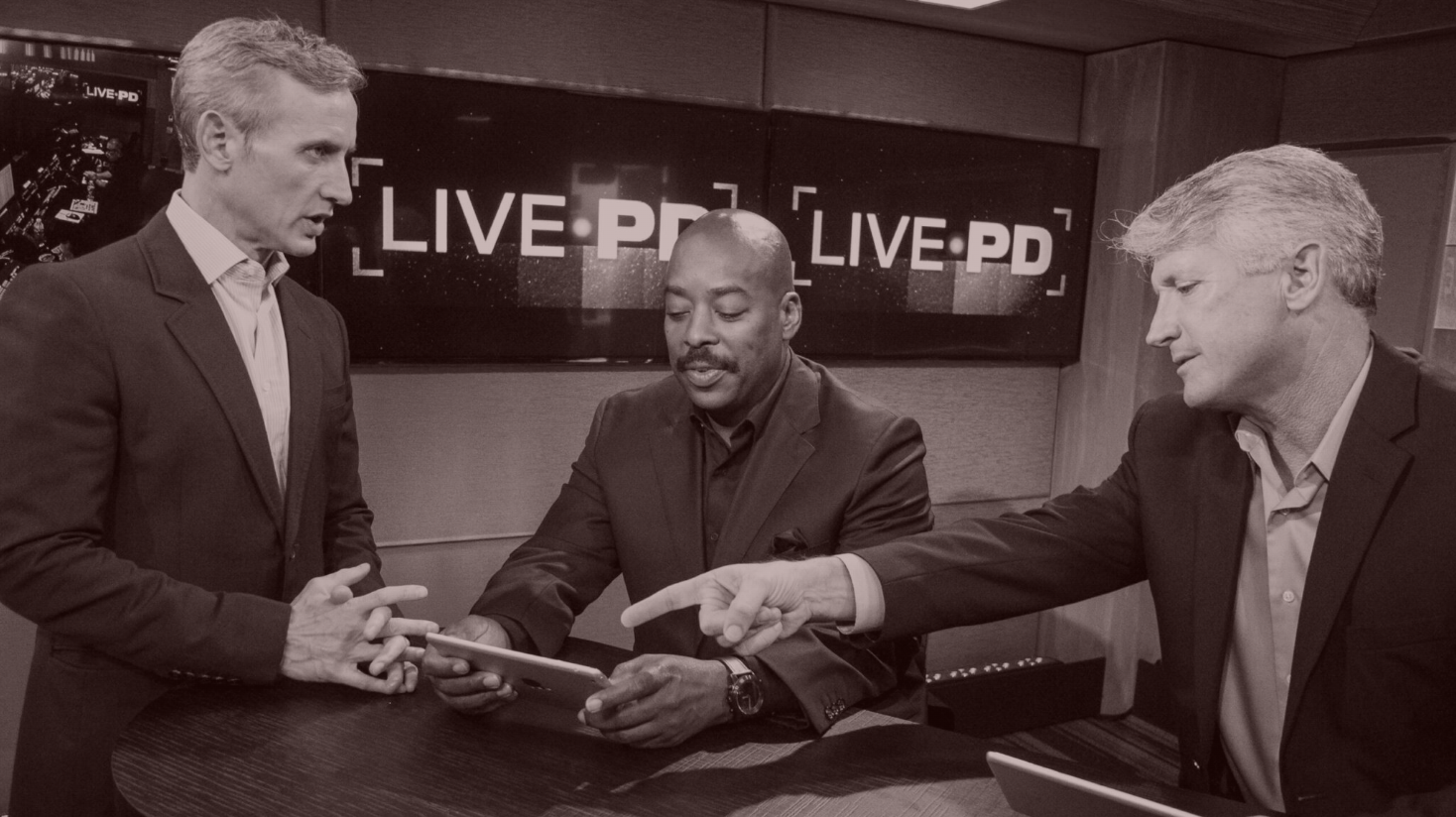
Welcome back to What I’m Hearing+, Tuesday’s WIH supplement devoted to the legal fights that help keep everyone in Hollywood so angry and insecure. For years now, I’ve been following the dustup over A&E’s police ride-along show, Live PD, and its copycat on Reelz, On Patrol: Live. To a casual viewer (such as… uh, myself, occasionally), they really are the same show. But how about from a copyright perspective? Eriq Gardner has an in-depth look at the arguments and testimony, including from the reality TV mogul (and Donald Trump image-maker) Mark Burnett. Let’s let Eriq explain…
But first…
|
|
|
- Universal Music’s Hollywood accounting: Limp Bizkit, the ’90s rap-rock band fronted by Fred Durst, has slammed Universal Music Group with a lawsuit that’s got many rollin’ rollin’ rollin’ their eyes. Astoundingly, they claim that until two months ago, the band hadn’t pocketed a single cent in royalties—a stark revelation considering its voluminous record sales at the turn of the century, hits like “Nookie,” “Break Stuff,” and yes, “Rollin’,” not to mention their recent resurgence. While the $200 million in alleged damages is making headlines, what really piqued my interest—and that of some well-connected music veterans—is the claim of rescission. Is it possible for the band to claw back its copyrights on the grounds that UMG reneged on payments?
The halls of justice haven’t exactly been bustling with rescission cases from stiffed creatives. (My own digging unearthed an interesting appellate decision from way back in 1940.) Meanwhile, Frank Seddigh, the band’s attorney, pointed to a failed effort from the early ’90s. If what’s alleged is true—that UMG had no intention of actually paying royalties—just maybe this becomes a watershed. A big if, of course, and I’d sooner bet on UMG convincing a court this falls short of fraud.
But there’s another layer: Some on the talent side of entertainment have begun experimenting with A.I. tools to audit their royalty statements. Yes, there’ve been a lot of “Hollywood accounting” tales in the past, but I think we’re about to witness a lot more of these cases. Perhaps the soundtrack to this unfolding saga might just feature a few kick-ass tracks from Limp Bizkit. —Eriq Gardner
- Amazon’s MGM time bomb: Back in 2022, Amazon shelled out $8.5 billion for MGM, which I found pretty remarkable from a copyright standpoint. While MGM is a storied Hollywood studio, its most famous properties are somewhat dated—and copyright law allows certain authors to “terminate” and reclaim rights after a certain period (35 years for works created after 1978; 56 years for older works). Beyond the library of existing films, what, exactly, did Amazon pay for?
With that clock always and forever ticking, one ongoing copyright termination attempt against MGM deserves special attention. It pertains to R. Lance Hill’s efforts to reclaim rights to his script for the original Roadhouse (1989), which—surely not by mere happenstance—recently morphed into an Amazon-backed, $85 million remake starring Jake Gyllenhaal and directed by Doug Liman. Now, a few months after the movie debuted on Prime Video, Hill is locked in a legal showdown with MGM. The studio is countersuing, claiming Hill breached the old license agreement by telling the U.S. Copyright Office that he’s the author, contrary to earlier representations that attributed authorship to a loan-out corporation. Earlier this month, a California federal judge allowed MGM to proceed. And since tax-advantageous loan-outs have been fairly common for quite some time, a win here could save a bunch of other properties in MGM’s library, too—firming up the value of Amazon’s multibillion-dollar investment. —E.G.
|
| Speaking of Amazon-MGM and copyright fights… |
|
|
| In the fervid summer of 2020, as the nation reckoned with police brutality after the murder of George Floyd, A&E made the gutsy decision to halt production of Live PD, the network’s cash cow, partly in response to a protest movement brewing against it. Hosted by legal commentator Dan Abrams, the reality show treated police arrests as a weekly sports-like spectacle, complete with whip-around coverage and color commentary, making it one of the highest-rated programs in primetime. Then, in a flash, it was gone. Some might look back at that moment as the epitome of Hollywood’s hasty capitulation to “woke” culture, but it was also a noteworthy business decision: an example of the entertainment industry nodding toward social consciousness, or at least appearing to do so, when several police-oriented shows were coming in for criticism over their treatment of race.
Of course, the moment proved fleeting. Soon thereafter, a strikingly similar program, On Patrol: Live, also starring Abrams, launched on the Reelz network. The new show came courtesy of Big Fish Entertainment—the same MGM subsidiary that produced Live PD. A&E responded with a lawsuit, claiming that its former partner committed copyright infringement. Despite arguments that the Cops-meets-NFL RedZone format was essentially unprotectable, in June 2023 a federal judge allowed the case to move forward. The discovery process commenced. Now, more than a year later, both parties are delivering their receipts.
Just days ago, Big Fish, headed by Dan Cesareo, submitted its summary judgment motion, unveiling a wealth of depositions and emails that could reshape our understanding of Live PD’s suspension. Indeed, this copyright case isn’t just a skirmish about copying. Rather, it has transformed into a broader, more complex dispute about ownership, control, and navigating the post-“woke” terrain of Hollywood. And the surprises are manifold, starting with Big Fish’s bold assertion, rooted in a close reading of its contract with A&E, that it was perfectly within its rights to shop a similar show after waiting out the year following the final episode’s broadcast.
But A&E, I’ve heard, is prepared to offer a remarkable counterargument: that there was no final episode, per se, because Live PD was never really canceled in the first place. And that, despite all the headlines about how the show had become a casualty of a long-overdue reckoning with racial issues, A+E Networks president Paul Buccieri never formally axed the program—and A&E therefore maintains full rights to reboot it. Forget cancel culture; welcome to the era of uncancel culture. |
|
|
| The demise of Live PD came at a particularly inopportune time for reality TV megaproducer Mark Burnett. The man who turned Donald Trump into a star was chairman of MGM’s television division at the time, just as Amazon was finalizing its $8.5 billion acquisition of the company. Live PD, which was produced under his auspices, was generating hundreds of millions of dollars annually, and Burnett was determined to showcase the strength of MGM’s unscripted slate to impress his new bosses. With the rallying cry, “We are a business, not a hobby,” Burnett pushed for the revival of Live PD, insisting on being involved in every discussion: “I want to recapture this revenue, and the time is right,” he told colleagues in October 2021.
Indeed, by that point the social climate had cooled; it was an off year for elections, and Cops—which had been taken off the cable dial right around the same time as Live PD—had made a quiet comeback on Fox News’s streaming platform. Sensing a shift, some at MGM saw a window of opportunity, and Burnett hoped to clinch a deal in time for an Amazon presentation that December. “EBITDA matters,” Burnett wrote in an email to Barry Poznick, president of MGM’s unscripted television division. “#Itsnotahobby.”
And MGM was determined to turn the money printer back on. Poznick later disclosed in testimony that Fox, Nexstar, and Discovery were all in the mix as potential buyers of Live PD—although there was a prevailing concern that A&E might balk at Discovery, viewing it as a rival. Instead, a deal was ultimately reached with a smaller network, Reelz, whose Republican C.E.O., Stan Hubbard, is known for taking on projects shunned by more liberal Hollywood. (Reelz aired the controversial 2011 miniseries The Kennedys, starring Greg Kinnear as J.F.K., when A+E’s History Channel scrapped it.)
But could MGM orchestrate a deal without A&E’s imprimatur? Three years later, that has become the pivotal question. Orin Snyder at Gibson Dunn has essentially contended that Big Fish had what’s known in the industry as “turnaround rights.” According to Snyder’s interpretation, the contract only barred the company from producing a similar show for one year following the cessation of Live PD. After that, he has argued, Big Fish was free to launch an Abrams-hosted police show after waiting out the clock on A&E’s exclusivity. And, as the defendant’s experts point out, it wouldn’t be the first time that a major reality TV success jumped networks. American Idol was canceled by Fox in 2016 only to be resurrected by ABC two years later with its original producers, 19 Entertainment and Fremantle, still on board.
The key difference, which A&E is ready to spotlight: Live PD was originally conceived internally, with Big Fish merely contracted to execute the concept of studio commentary surrounding live police action. This fact, A&E will argue, uniquely positions the network in terms of copyright and control over the format.
In light of these arguments, one particular moment in the lead-up to On Patrol’s debut should ignite significant debate in a New York federal courtroom: What happened when A&E discovered MGM was actively shopping Live PD to other networks? It appears that the parties engaged in negotiations with each other, which Snyder characterizes as solely focused on licensing the trademarked title and its past episodes. Snyder suggests that the lack of discussion around copyrights during this period indicated A&E’s tacit recognition of its limited hold over the live police show format. A&E, represented by a team at Weil Gotshal, will contest this interpretation vigorously in its response later this month.
A+E general counsel Henry Hoberman has already made his position clear during a deposition: “When I saw that premiere [of On Patrol: Live], I was absolutely aghast at what I saw,” he told Snyder. “There’s one thing we don’t do in this industry, and it’s [to] copy other people’s works. And that show was a blatant rip-off of our show, Live PD.” |
|
|
| Of course, as anyone who’s ever spent more than 15 minutes in Hollywood can attest, everyone copies, and I suspect that Hoberman, who was formerly the top legal officer at the Motion Picture Association, is no stranger to this industry truism. That said, what stands out about this situation is the unusual sight of a major network like A&E taking the role of plaintiff in an idea theft case. It’s almost entirely unprecedented.
I’ve heard a couple of explanations for A&E’s legal aggression. One view, sympathetic to MGM, suggests that upon witnessing the success of On Patrol, Buccieri and A&E’s executives may have recognized a colossal blunder, and in an effort to cover their own hides, told the company’s board that its former partner had craftily produced an unauthorized version behind their backs, prompting a visit to the courthouse. Alternatively, there’s the notion that A&E is simply doing what any creator would do, instinctively, upon seeing their original work exploited without permission. Despite the rarity of large TV networks playing the aggrieved party, the audacity of the alleged I.P. infringement was perhaps striking enough to fuel this fiery response. It certainly was compelling enough to persuade a judge to let the lawsuit proceed past an initial dismissal motion a year ago. (In that notable ruling, U.S. District Court Judge Katherine Polk Failla found sufficient originality in Live PD, and enough substantial similarity in On Patrol: Live, to make a rare determination that reality formats can be copyrightable. In light of this, Big Fish adjusted its argument to claim it had license to the copyrighted material.)
I’m not sure which version to believe—the truth probably lands somewhere in the middle. Nonetheless, I find it interesting that A&E is apparently taking the position that Live PD was never formally canceled. Incidentally, it was my former stomping ground, The Hollywood Reporter, that broke the news about the show’s “cancellation”—a characterization that A&E never publicly corrected, even as it was repeated by other media outlets. Moreover, as far as I can tell, both from news reporting and the court record, A&E has never shown interest in resurrecting the show itself. |
|
|
| That’s it for today. I’ll be back on Thursday evening.
Matt |
|
|
|
| FOUR STORIES WE’RE TALKING ABOUT |
|
|
|
|
|
 |
|
|
|
Need help? Review our FAQs
page or contact
us for assistance. For brand partnerships, email ads@puck.news.
|
|
You received this email because you signed up to receive emails from Puck, or as part of your Puck account associated with . To stop receiving this newsletter and/or manage all your email preferences, click here.
|
|
Puck is published by Heat Media LLC. 227 W 17th St New York, NY 10011.
|
|
|
|