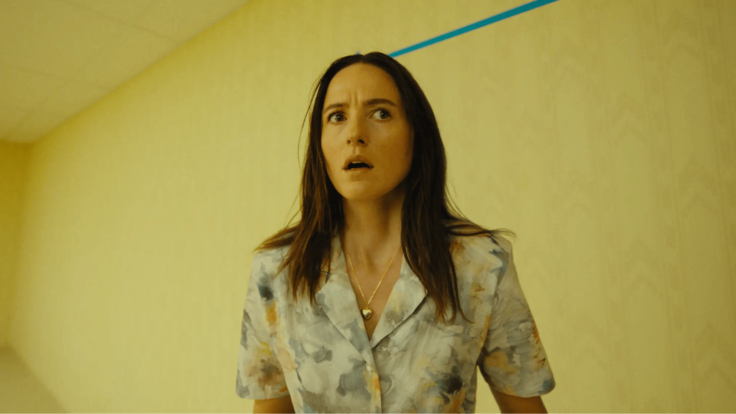
| Last week, while I was in London, I caught up with Netflix analyst Kasey Moore, who relayed an eye-popping fact: The recently released miniseries Baby Reindeer grew its viewership from 10.4 million hours viewed to nearly 53 million, or more than 400 percent from its first week to its second—one of the largest jumps in Netflix history.
Kasey had a few theories about Baby Reindeer’s massive growth, crediting the show’s buzz on TikTok (like many hits these days) and Netflix’s move to capitalize on the early momentum by elevating it to the main carousel in several countries. I don’t disagree with any of that. But I’d go back a step and argue that Baby Reindeer broke out in large part simply because it was on Netflix, and the streamer binge-released it.
Ever since Netflix patented the all-at-once model in the House of Cards era, the format has profoundly changed how consumers engage with TV series. These days, however, viewers have been trained to expect all sorts of release models: Some platforms tranche out their content across weeks or longer, effectively creating mini-seasons, to manage subscriber churn. Others hew to a weekly schedule dictated both by their linear obligations and the sizes of their libraries.
Streamers like the binge model because it captivates viewers’ attention over several hours or days and increases the likelihood they’ll watch their next show on the same platform. The downside, of course, is that the binge model requires a constant supply of new content to satisfy that trained demand for several hours’ worth of episodes, dropped all at once. Disney, Paramount, Warner Bros. Discovery, and NBCUniversal focus on weekly releases, in part, because they know audiences will stick with them on account of brand loyalty. They also know they can’t flood their audiences with more, more, more without breaking the bank and/or harming the brand.
Also crucial to the binge-versus-weekly debate is a particular series’ decay rate, or the rate at which the audience drops off from episode to episode, or season to season. Weekly releases win out here almost every time: Between 2016 and 2023, more than 40 of the top 50 in-demand series with low decay rates were weekly releases, according to Parrot Analytics, where I work as V.P. of strategy. By comparison, when viewers get fatigued by a binge-released show, they tend to stop watching altogether.
In many ways, Baby Reindeer is the quintessential Netflix success story because it conventionally fits into a bingeable profile and, more importantly, into the very DNA that structures Netflix’s unique, cost-heavy success and global aspirations. These series don’t rely on A-list actors. They may be in a different language. They stray from popular genres like science fiction and fantasy. They lean into auteur territory. Since the buy-in isn’t as automatic as a big, genre program tied to pre-existing I.P. (like Wednesday), the larger incentivization structure is viewership convenience. Don’t wait if you’re kind of feeling the show. Keep going.
A winning binge release depends on several factors. Baby Reindeer ticks all of these boxes. It’s a quirky, dark comedy-thriller, based on a true story, written by and starring an obscure British comedian. Each episode is just 30 minutes. By contrast, Amazon’s post-apocalyptic drama Fallout ticks all the boxes for a show that would have thrived as a weekly release but got blasted out all at once: It’s genre fare with well-known actors (Walton Goggins and Kyle MacLachlan), based on popular I.P.—in this case, a video game franchise that’s sold around 50 million copies globally since 1997. It also debuted to strong reviews.
Releasing the shows all at once certainly provides that same sort of audience personalization. And it helps make an already-likely-to-be-popular show appear even larger out of the gate. To wit: Fallout amassed more than 65 million views within its first two weeks across all episodes, and enjoyed the second-largest debut ever on Prime Video, sitting just behind The Rings of Power. Binge releases are always going to look bigger at the start.
The underlying question facing programming executives, however, is what to do if you’re sitting on gold? Is sacrificing the potential long game worth the initial burst of hyper-engagement? My working theory is that Amazon wanted a big show to highlight and support its recently instituted advertising tier ahead of its first Upfront bonanza in May. What better way for its execs to outshine Amy Reinhard, Netflix’s head of advertising, in the battle for streaming ad dollars?
Just as I think that Baby Reindeer would have disappeared if Netflix hadn’t released it all at once, I believe Amazon would have benefited more from releasing Fallout episodically, especially when interest in the I.P. is this high. After all, hits matter more than ever, especially on non-Netflix streamers. The average supply of streaming originals has decreased significantly over the past four years, and total platform demand (i.e., demand for everything available on a service) has grown stagnant, according to Parrot—with the notable exception, of course, of Netflix. |
| Fallout may have had the second-biggest premiere in Prime Video history, but the show saw a decrease of 5 percent in its overall demand within the U.S., in its second week, compared to episodic releases like The Boys, which grew by 12 percent in its second week, and The Rings of Power, which grew by 3 percent in its third week, according to Parrot.
Over on Disney+, the majority of Marvel Studios’ episodic shows grew in their second and third weeks, including Ms. Marvel, Moon Knight, WandaVision, and She-Hulk. Meanwhile, Marvel’s first show to binge-release, Echo, had one of the largest debuts for a Disney+ Marvel series—tied with Loki’s first season at 12.2 million views, according to Nielsen—but soon fell off the charts.
Netflix can withstand these decays. But it’s another story at Disney+—the binge-release model doesn’t incentivize audiences to come back and check out a new series or film since there isn’t enough new content hitting the service. Prime Video is in the same bucket. During the week of March 31, for juxtaposition, the top Netflix series (3 Body Problem) amassed more than 1.7 billion minutes viewed, according to data from the popular analyst who goes by TV Grim Reaper on X. Prime Video saw 812 minutes streamed for its top title, Road House. Fifty percent of Prime Video’s Top 10 titles in the week saw under 100 million minutes streamed. None of Netflix’s Top 10 titles dropped below 100 million minutes, and eight of Netflix’s Top 10 list, as measured by Nielsen, were new.
Truly obsession-worthy entertainment is rare, and the studios able to grasp hold of a runaway train, like Fallout, should reward that scarcity with a weekly release. As I mentioned a few weeks ago, Netflix’s strategy is about convenience: There may be few franchises, but there’s always something. Convenience is a side effect of abundance, and in lieu of abundance, the power of scarcity comes in the form of commanding love for extended periods of time.
Baby Reindeer’s success is derived from scale and convenience of a higher power—the Netflix (and arguably TikTok) algorithm. For its part, Fallout owes a large part of its success to a pre-built fan base. And while both shows may be forgotten a month from now, Amazon will feel the pain of that fade-out far more. |