{{ 'now' | timezone: 'America/New_York' | date: '%b %d, %Y' }} |
|
|
|
Welcome back to the final edition of What I’m Hearing+. No, Eriq Gardner
and the Tuesday email are not going away. We’re just retiring the + in the name. We distinguished the Tuesday edition because it’s tailored to a specific topic (legal disputes now, and before that Julia Alexander’s streaming industry analysis). But increasingly we mix and match authors across the WIH cinematic universe, so it makes sense to just call them all What I’m Hearing. For that reason, like Apple TV+, we’re eliminating the + but you won’t notice anything
different.
Tonight, Eriq has an insightful analysis of the Trump administration’s recent threats to the NFL, and why it might not be as threatening as they seem to think. Plus, the latest machinations ahead of the Blake Lively–Justin Baldoni trial (including who’s being subpoenaed), and the studio A.I. war heats up. All yours, Eriq (and send him tips at Eriq@puck.news).
Not
a Puck member yet? Never too late. Just click here.
Mentioned in this issue: Rupert Murdoch, Elizabeth Warren, Blake Lively, Johnny Depp, Joe Biden, Drake, Roger Goodell, Justin Baldoni, Brendan Carr, Ryan Reynolds,
Mike Lee, Lewis Liman, Bryan Freedman, Rebel Wilson, Donald Trump, Logan Paul, Jenny Slate, Colleen Hoover, Isabela Ferrer, Melissa Nathan, Steve Sarowitz, Bobby Schwartz, and more… |
|
|
|
A MESSAGE FROM OUR SPONSOR |
AI could help studios and producers move faster – but operational gains may be the least interesting implication. McKinsey’s latest research suggests the more important lesson comes from prior technology disruptions in Hollywood: new production tools can do more than lift productivity. They can change what gets made, shift who captures value, and alter the industry’s economics. The analysis suggests AI could affect roughly 20 percent of original content spend over the next five years, at a moment when media companies are
already facing slower growth, fragmented attention, and shifting viewing behavior. The question industry leaders should be asking isn’t whether AI will increase productivity in film and TV – it already is. The bigger question is what happens if AI starts to reshape the entertainment industry itself – and are you prepared? Learn More |
|
|
|

| Eriq Gardner
|
|
- What Blake and Justin don’t want
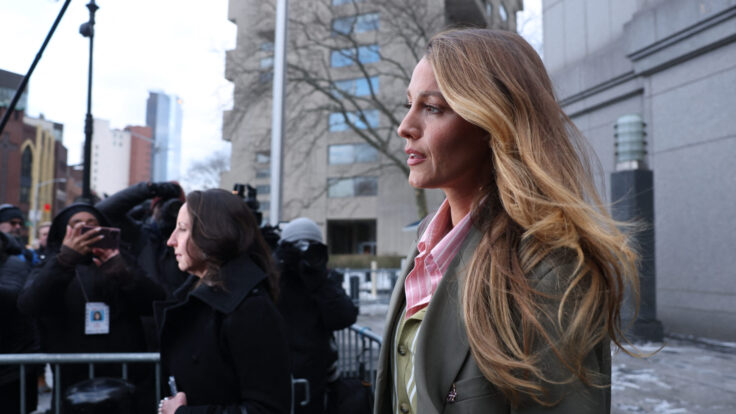
a jury to see: Headed toward trial in U.S. District Court in Manhattan next month, Blake Lively and Justin Baldoni are finally showing the court exactly where their anxieties lie. As I write this, Judge Lewis Liman is staring at a stack of motions in limine—the pretrial bids to keep certain evidence away from the jury’s eyes. So what are Lively and Baldoni most worried about?
Starting with the stuff that may not decide the case, but could color the room,
Lively wants Sony’s internal communications shielded from jurors—particularly, I’d imagine, any suggestion that she has a reputation in Hollywood for being “difficult.” If Lively has her way, the jury will also hear nothing about the “Nicepool” character in her husband Ryan Reynolds’s 2024 film Deadpool & Wolverine—a feminist caricature that was widely perceived as mocking Baldoni. Succeeding there would certainly make Reynolds’s eventual appearance on the witness stand
less awkward. Baldoni’s defense team, for its part, wants to wall off references to producer Steve Sarowitz’s billionaire status, as well as shut down any discussion of publicist Melissa Nathan’s other clients—Johnny Depp, Drake, Logan Paul—and her alleged creation of “smear websites.”
Then there are the fights that could actually alter the balance of power at trial. The most important one may be
Bryan Freedman’s effort to prevent the jury from hearing evidence and testimony about… Bryan Freedman. Two weeks ago, after tossing 10 of Lively’s 13 claims against Baldoni, Liman allowed her to proceed on her incendiary allegation that she was the victim of a Hollywood smear job. Liman dismissed the defamation claim based on what Freedman said to the media, but the tenacious litigator’s alleged role may be one of the cleanest ways for Lively to show motive, escalation, and the
architecture of the alleged campaign against her.
Another consequential fight entails whether the jury is exposed to testimony about social media “bots,” which Lively allies believe were deployed against her—a scenario Baldoni’s team has dismissed as speculative. Meanwhile, both sides are taking swings at the reliability of crisis communications experts, sentiment analysis, and online manipulation.
That’s hardly the end of it. The defense is also trying to exclude testimony and
evidence involving bad experiences other women allegedly had during the making of It Ends With Us, including co-stars Jenny Slate and Isabela Ferrer, as well as author Colleen Hoover. Then there’s the question of whether Lively adequately substantiated the roughly $60 million in “reputational damages” she’s claiming, whether she can seek lost royalties and profits from her product businesses, and so forth. Liman mostly sidestepped those
damages issues at summary judgment. Now he has to deal with them. - Is it still infringement if it happens in China?: Last year, Disney, Universal, and Warner Bros. jointly sued MiniMax for allowing users to deploy its Hailuo A.I. tool to generate videos and images of iconic studio-owned characters, such as the Minions and Iron Man. When I initially heard about the case, my first question was whether MiniMax, a Chinese company, would even bother showing
up in a California court. Well, on Friday, MiniMax arrived fully lawyered up and armed with a favorable Supreme Court ruling in Cox v. Sony Music, moving to dismiss.
The brief, authored by Bobby Schwartz of Quinn Emanuel, is no joke. It opens with the cheeky argument that the Hailuo-generated images of Darth Vader, Wonder Woman, and other
studio-owned icons were not created by MiniMax’s users but rather the studios’ own lawyers fiddling with the tech. From there, MiniMax argued that under Cox, mere knowledge that a service can be used to infringe on copyright isn’t enough for secondary liability, even where filtering tools exist and could theoretically be deployed.
But what’s most likely to generate billable hours at Jenner & Block, counsel for the studios, is MiniMax’s argument that its A.I. tool was developed
outside the U.S. and therefore, given that the studios’ complaint alleged no domestic act of copying, a California court has no business using U.S. copyright law to police “training” occurring abroad, under the extraterritoriality doctrine. - Meanwhile, in the Midjourney battle…: Just as MiniMax was filing its motion, the same three studios were teeing up for another round in their copyright lawsuit against Midjourney, the generative
A.I. tool favored by Discord users. As a reminder, the studios are resisting Midjourney’s effort to pry into their own internal A.I. activity, which the company argues is relevant to discover whether similarly trained models qualify as transformative fair use, whether the public benefit outweighs any market harm, and whether the studios are coming to court with so-called unclean hands. The studios insist that whatever experimentation they may be doing has nothing to do with Midjourney’s alleged
misuse of copyrighted works.
Which sets up the next few months of litigation rather nicely: messy, expensive, and jurisprudentially important. In short, exactly the sort of spectacle that helps explain why the studios did not exactly sprint to the courthouse when the generative A.I. boom began.
|
|
|
|
Stripping the league of its antitrust protection, which has already been winnowed down by
courts, may lead to more football games on paid streaming, and a challenging landscape for conservative broadcasters like Sinclair and Nexstar. |
|
|
|
When word spread a few days ago that the Justice Department was investigating the NFL, just days after
The Wall Street Journal editorial board suggested that the league was exhibiting anticompetitive behavior, plenty of people detected a Murdochian hand—someone prodding the Trump administration behind the scenes. I had a somewhat different reaction: Why was anyone acting like this is new?
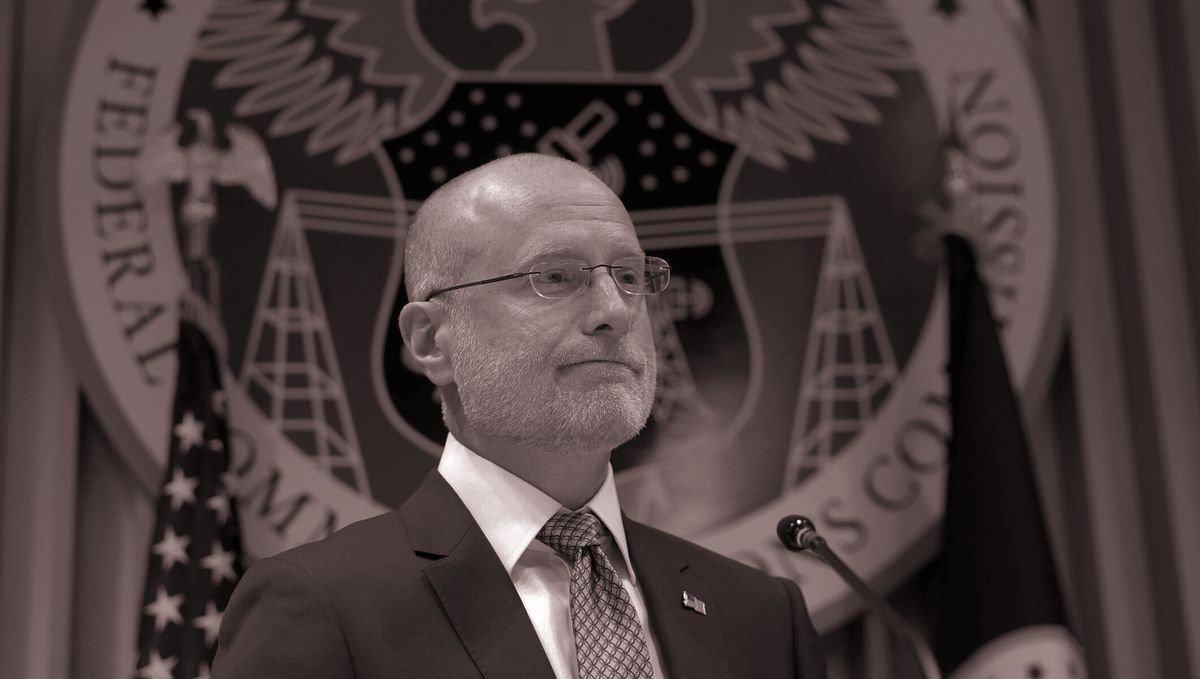
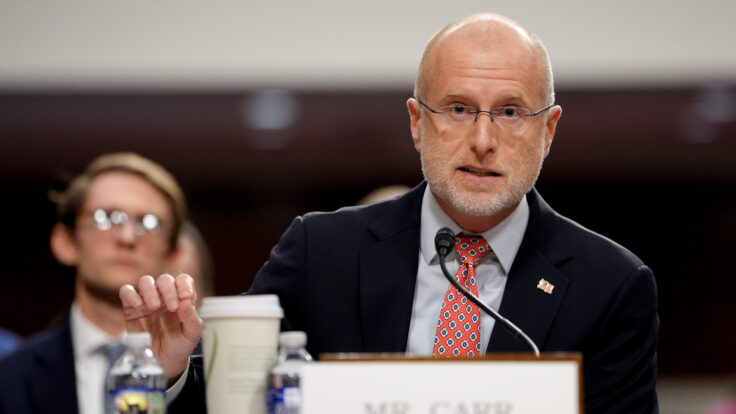
It isn’t. Not even close. Long before F.C.C. chairman Brendan Carr warned that the NFL could “risk losing its antitrust exemptions” by placing too many
games behind streaming paywalls, the league was already in court litigating the outer limits of the Sports Broadcasting Act—the 1961 cartel exception for pro sports TV rights. Back in the late 1990s, the Third Circuit held that the NFL’s cherished exemption was far narrower than the league liked to suggest, and did not extend beyond commercially sponsored free
broadcasting. In the years since, from American Needle at the Supreme Court in 2010 to the Sunday Ticket trial in 2024, the NFL has never been able to escape that basic premise. Carr wasn’t saying anything daring. He was stating the obvious. Senators Mike Lee and Elizabeth Warren, who agree on almost nothing, have also both recently
urged Carr to look into how sports moving to streaming is pushing up costs for consumers.
This was a concern for the Biden administration, too. In fact, during the final days of Biden’s term, the Justice Department weighed in on the Sunday Ticket case, the suit challenging the NFL’s longstanding practice of pooling out-of-market
game rights and selling them as a premium package—first via DirecTV, now YouTube TV. The trial famously yielded a $4.7 billion verdict against the league—before the judge tossed it out. But the eye-popping figure obscured the more consequential issue: the prospect for an injunction that could disrupt the NFL’s pooling model and constrain its ability to package television rights beyond traditional broadcasting. |
|
|
|
A MESSAGE FROM OUR SPONSOR |
AI could help studios and producers move faster – but operational gains may be the least interesting implication. McKinsey’s latest research suggests the more important lesson comes from prior technology disruptions in Hollywood: new production tools can do more than lift productivity. They can change what gets made, shift who captures value, and alter the industry’s economics. The analysis suggests AI could affect roughly 20 percent of original content spend over the next five years, at a moment when media companies are
already facing slower growth, fragmented attention, and shifting viewing behavior. The question industry leaders should be asking isn’t whether AI will increase productivity in film and TV – it already is. The bigger question is what happens if AI starts to reshape the entertainment industry itself – and are you prepared? Learn More |
|
|
|
The threat of an injunction, more than the headline damages number, is what drew the D.O.J.’s attention. Just
days before Trump’s inauguration, in January 2025, the department pointed the Ninth Circuit toward the league’s decision to move Sunday Ticket from DirecTV to YouTube, while also noting that the NFL was extracting higher prices by moving Christmas Day games to Netflix. “The NFL’s illegal practices are continuing,” D.O.J. lawyers argued, urging the
appellate court to allow plaintiffs to pursue injunctive relief, “given that the challenged conduct has been found to have anticompetitive effects.”
So yes, the D.O.J. is investigating. That much isn’t surprising. The more consequential question is what the Ninth Circuit does next, and whether the Supreme Court ultimately steps in. We’re long past probes and performative handwringing over the Sports Broadcasting Act. A meaningful ruling is
coming—one that could do far more to reshape the NFL’s television empire than any politician’s sternly worded press release. |
One question worth exploring is whether streamers elbowing into the NFL’s rights ecosystem should worry that
the deals they’re signing could someday be deemed illegal. I don’t get the sense that Amazon, YouTube, or Netflix are losing much sleep, but maybe they should. An appellate court could soon greenlight a new wave of antitrust attacks, and Trump 2.0 is not exactly shaping up as a business-as-usual regulatory environment. The timing is notable: The NFL continues to carve out new rights packages, and my partner John Ourand has
reported extensively on the league’s designs to renegotiate its existing agreements on richer terms. That leaves current and prospective partners confronting an uncomfortable question: What, exactly, are they buying if the contractual architecture underpinning these multibillion-dollar deals proves unstable?
The business risk is not abstract. What does
it mean to commit vast sums toward the most valuable live programming in American entertainment, only to discover midstream that a court might enjoin part of the arrangement, regulators might challenge the structure, or class-action lawyers might succeed in stripping away the features that justified the price? A streamer could find itself entangled in litigation, burning through discovery costs while holding a contract whose core protections—exclusivity, anti-sublicensing provisions, and
artificial scarcity—come under attack. Even if the deal survives, it may emerge diminished, leaving the buyer with something materially less valuable than anticipated.
This is not a far-fetched scenario. During the Sunday Ticket litigation, DirecTV was a co-defendant from the outset and avoided the 2024 trial only by forcing its portion of the dispute into arbitration. That procedural maneuver kept it out of the courtroom, but it couldn’t dodge the years of discovery,
scrutiny of its role in the distribution model, or the unpleasant experience of having its dealmaking placed under a microscope for participating in an alleged anticompetitive scheme. In one sense, however, DirecTV got lucky: The case moved so slowly that the litigation outlasted its NFL contract. The next distributor hauled into court may not be so fortunate.
Even if that doesn’t worry them, streamers should consider how their own contractual demands could become Exhibit A in the next
antitrust complaint. Today, they can argue they are merely licensing games the NFL is free to sell. Tomorrow, plaintiffs or regulators may ask whether those same companies helped design or enforce restraints that suppressed output, preserved artificial scarcity, foreclosed competing distribution, or maintained elevated prices.
In Sunday Ticket’s first trip to the Ninth Circuit, the court held as plausible the plaintiff’s claim that DirecTV conspired with the NFL. That doesn’t mean every
streaming partner is automatically in the same spot, but it does provide a well-thumbed playbook for future challenges. |
There may be a twist in all this. Many assume that stripping the NFL’s antitrust exemption, especially as
games migrate to streaming platforms, would make it less likely that those games end up going over-the-top. But I’d argue the opposite. If a legal challenge disrupts the league’s ability to pool rights, the likely outcome isn’t necessarily a retreat to broadcast, but rather fragmentation.
Individual teams, or perhaps divisions, could begin negotiating their own deals. After all, college football followed a similar path after its antitrust reckoning in the 1980s. Today’s media landscape is
far larger and more segmented, which would likely create more packages and more opportunities for streamers to expand share.
That outcome would weaken NFL commissioner Roger Goodell’s centralized control and pose real challenges for broadcasters not attached to robust streamers, particularly Trump-aligned Nexstar and Sinclair, which don’t own NFL rights but still benefit when the league keeps feeding games to the broadcast networks that power their affiliate model. Which
explains why Carr and his conservative allies are leaning hard on the argument that the NFL’s safest position is within traditional broadcasting. (Also, they’re probably enjoying the positive press, for once.)
For networks with established streaming arms—CBS, NBC, and ABC—and for newer entrants like Amazon and Netflix, the calculus looks different. There may be near-term disruption and significant legal exposure. Over time, however, a more aggressive antitrust regime could ultimately
benefit them. Which is why I’m skeptical that Trump’s competition regulators will move beyond probes, pointed rhetoric, and press releases. Tough talk about blowing up the current system is easy. A coherent roadmap to achieve their desired ends is conspicuously absent. |
Thanks, Eriq. I’ll be back on Thursday.
Matt |
|
|
|
Need help? Review our
FAQ page or contact us for assistance. For brand partnerships, email ads@puck.news.
You received this email because you signed up to receive emails from Puck, or as part of your Puck account associated with {{customer.email}}. To stop receiving this newsletter and/or manage all your email preferences, click here. |
Puck is published by Heat Media LLC. 107 Greenwich St., New York, NY 10006 |
|
|
|
|