 |
| Welcome back to What I’m Hearing+, Tuesday’s conflict-obsessed companion to the already conflict-laden What I’m Hearing. A big welcome back to Eriq Gardner, who was off last week running the Chicago half-marathon. (In related news, I shuffled around my neighborhood this morning.) Today, Eriq explores a fascinating legal case involving Jack Nicklaus and the owners of the golfer’s name, image, and likeness. Do famous people cede control over their personas in N.I.L. deals? Plus, the latest CAA litigation, a Dish-DirecTV deal hurdle, and tough news for Baby Reindeer’s real-life “Martha.” Take it away, Eriq…. |
|
|
- Bryan v. Bryan, Part 2: Bryan Lourd’s CAA, which recently accused a group of former employees of running an unlicensed talent agency, is now defending itself against allegations of running an unauthorized law firm. The charge is from litigator Bryan Freedman, who, when he’s not representing the Range Media founders or quietly working to spring the Menendez brothers from jail, has a habit of loudly challenging CAA in court. This time, he’s representing former ESPN host Sage Steele, an ex-CAA client. (She originally signed at the agency with Nick Khan, a former attorney who is now the president of WWE.)
Steele sued in June, accusing CAA of failing to uphold its fiduciary duty to a client. The agency allegedly wouldn’t support her after she was reluctant to apologize for criticizing Disney’s Covid vaccination mandate—a scuffle that led to her exit from ESPN. Shortly after the lawsuit was filed, the California Labor Commissioner’s Office resolved a related matter, determining that Steele verbally agreed to pay CAA its usual 10 percent commission, or about $750,000. The agreement included legal services from CAA’s internal business affairs group, but Steele failed to show that the attorney work extended to protecting her free speech rights. The labor commissioner concluded that CAA did not violate its fiduciary duty—in part because Steele knew that Khan’s skills and the agency business affairs group were limited to negotiating contracts—clearing the way for the agency to collect its fee.
Now, Freedman is changing his strategy. He’s leveraging the labor commissioner’s determination that the contract included legal services to highlight a California law that requires attorneys who represent a client on a contingency basis to have the fee arrangement in writing, or the contract may be deemed void. Freedman is using this point to challenge the validity of Steele’s CAA contract, potentially adding another layer to the already complex interplay among agents, managers, and lawyers in Hollywood. —Eriq Gardner
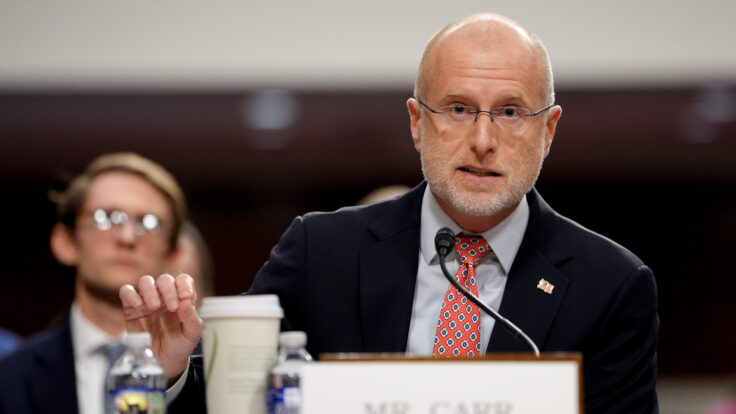
- Does Dish have a Trump problem?: I wouldn’t put too much stock in the conventional wisdom that the DirecTV-Dish merger is headed for a quick and painless regulatory approval. Yes, streaming has been eating satellite’s lunch, and the prognosis is grim for both companies. AT&T’s $48.5 billion purchase of DirecTV in 2014 will go down as one of the worst deals of the past decade, with the telecom giant offloading its remaining stake to TPG at a steep loss. (Disclosure: TPG is an investor in Puck.) Meanwhile, Dish is in such dire straits it’s virtually giving up its business for a buck. (Literally a single dollar, not including debt.)
But there’s a substantial issue for regulators beyond corporate finances. According to F.C.C. data, around 24 million Americans, or about 7 percent of the population, lack access to high-speed internet. Many of these people live in rural areas where satellite TV remains a critical service. Merging DirecTV and Dish could effectively monopolize the market in these areas, likely impacting Trump voters unfavorably, although the politics of this particular regulatory review aren’t yet clear. Typically, we could count on Democrats at the media regulatory agency to look skeptically at proposed consolidation, but there may be something in this for Republicans too. I’ve already heard whispers.
Dish chairman Charlie Ergen also hasn’t made many friends in the industry with his history of pulling legal and regulatory levers to foster more competitive pricing. Broadcasters may take this opportunity to exact some revenge by pushing for a stringent review. —E.G.
- ‘Reindeer’ games with “real-life Martha”: Netflix has appealed a federal judge’s September 27 decision that allowed the Baby Reindeer libel suit to move forward—a strategic move that seems less about potential financial losses and more about avoiding embarrassment. After all, the ruling wasn’t a total victory for Fiona Harvey, who asserts she’s the inspiration for the stalker character “Martha” in Richard Gadd’s Emmy-winning series. Although U.S. District Judge Gary Klausner ruled that statements about the character were indeed false, he dismissed Harvey’s claim for punitive damages—a detail that didn’t capture headlines but is nevertheless consequential. It’s hard to believe Harvey will ever collect much money from this case, especially since most people probably wouldn’t have identified her as the stalker character until she came forward to identify herself. So by appealing under California’s anti-SLAPP statute, Netflix lawyers at Latham & Watkins may be making a calculated move to potentially increase Harvey’s litigation costs before the case progresses much further. Should she persist, the appeal allows Netflix to bring a critical issue before the 9th Circuit—the question of actual malice. Specifically, the appeals court will need to consider whether the series tagline at the top of each episode, “This is a true story,” constitutes reckless disregard for the truthfulness of statements made within the show. —E.G.
|
 |
| The Sad Case of Jack Nicklaus vs. “Jack Nicklaus” |
| Fifteen years after signing away his life rights to a business partner, golfing legend Jack Nicklaus is fighting a messy, potentially precedent-setting legal war to reclaim his name and image—including from an A.I. double. |
|
|
|
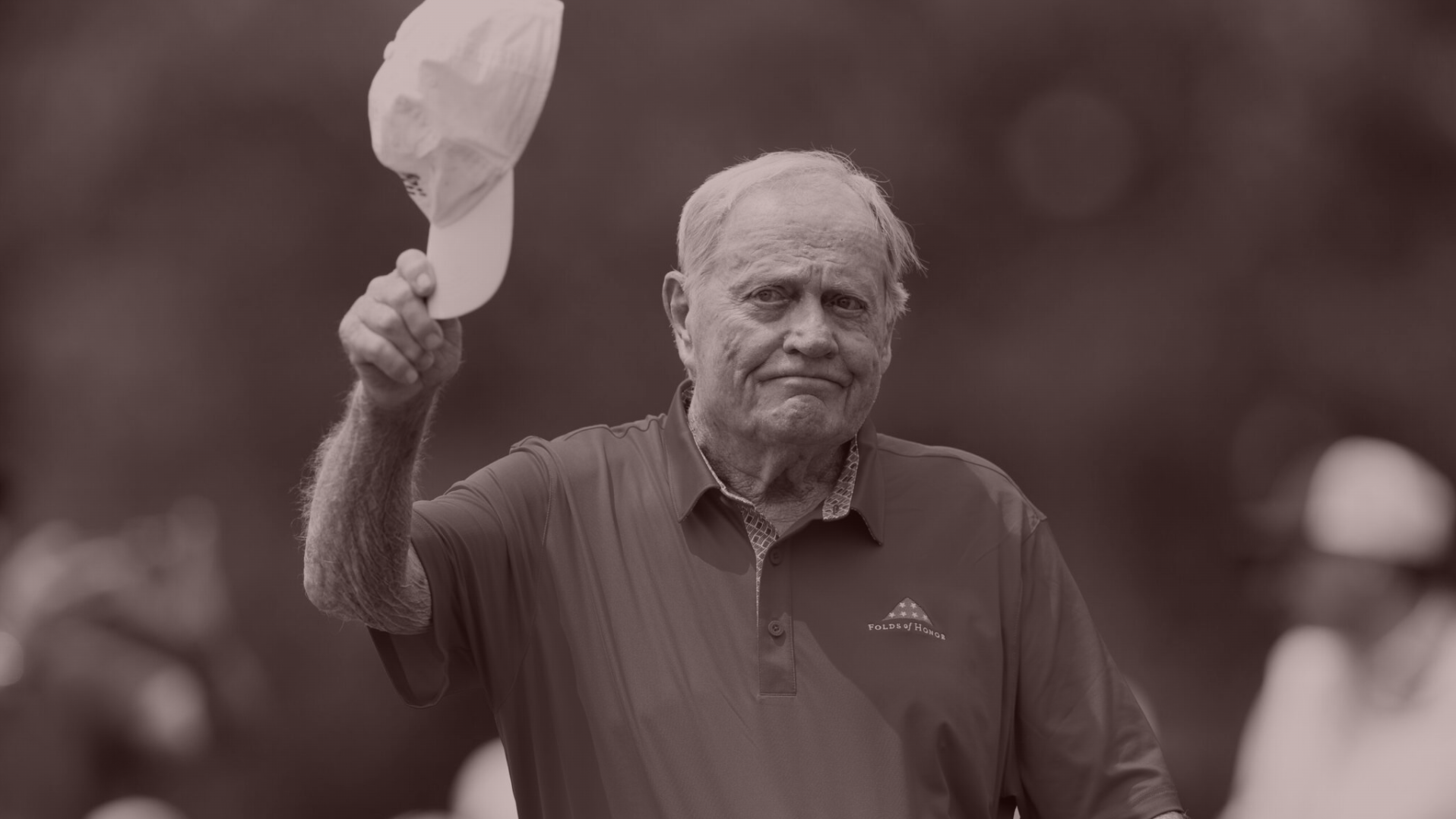
| For the past two years, golfing legend Jack Nicklaus has been waging a legal battle to claw back rights to his name and image from the Nicklaus Companies, which he left in a huff in 2022. Fifteen years earlier, Nicklaus made the fateful decision to sell the company his name, image, and likeness in a deal valued at $145 million. Now, in a particularly surreal twist, which could impact Hollywood and sports stars, the Nicklaus Companies have authorized an A.I. version of Nicklaus—and is accusing the actual 84-year-old retired golfer of unfair competition for doing things like independently designing golf courses or making appearances at events.
The trouble began two years ago, when Nicklaus split from the company and filed an arbitration claim arguing that its attempts to restrain him from commercial activity were time-limited by Florida laws governing noncompetes. Less than two weeks later, the Nicklaus Companies filed its own lawsuit against Nicklaus. This past July, a private arbitrator delivered a split verdict, which I got my hands on.
Nicklaus’s noncompete? No longer in force. And the rights to his name and image? The arbitrator sidestepped that issue but refused the golfer’s demand that social media accounts be returned. So the company can hold on to @jacknicklaus and post what it wishes—as long as it isn’t defamatory.
Of course, the possibility that the company may damage the golf icon’s legacy opens the door for more litigation, of which there’s already plenty, including an unreported defamation case involving allegations that Howard Milstein, a real estate and banking billionaire who partnered with Nicklaus in the Nicklaus Companies, and retains control, defamed his former friend by suggesting that Nicklaus would be open to joining the Saudi LIV Golf league.
In retrospect, a 2022 Golf.com article headlined, “Meet Digital Jack Nicklaus” was a harbinger of the trouble to come. The piece unveiled an A.I.-powered Nicklaus avatar and hinted at a future swarming with digital doppelgängers in sports, Hollywood, and beyond. The kicker was an unwise-in-hindsight quote supposedly from the Golden Bear, himself: “I think the Nicklaus Company will get tremendous use out of this [digital twin] for a really long time,” Nicklaus said. “It could turn out that Digital Jack will advertise a 2045 automobile. Who knows? You could actually do almost anything.” Incidentally, Golf.com is owned by Nicklaus’s antagonist, Milstein.
The Golf.com story became a point of contention in the arbitration, with Nicklaus arguing that it infringed on his “moral rights,” which were explicitly reserved in his 2007 name-image-and-likeness deal. Nicklaus asked for a ruling that would prohibit the company from publicizing words attributed to him, or expanding his brand into additional products and markets, without his prior written approval. Alas, the arbitrator wasn’t convinced that anything in the story was flagrant, and declined to restrict the company as Nicklaus demanded. Nicklaus, for his part, complained in court that he was being turned into a “proverbial invisible man—without use of his name.” |
|
|
| Right now, tons of entertainment and sports stars are cashing in on their famous images. Take, for instance, Sony’s nine-figure purchase of Pink Floyd’s catalog last week, where N.I.L. rights were thrown in. But a shadow looms over these seemingly golden deals: the possibility that individuals could unwittingly cede control over their personas. Until recently, the topic has been the subject of speculative law review articles, but few cases have fully explored the consequences of treating a person’s likeness as a freely transferable property. But that’s all changing, thanks to technological advances—check out deepfake Jake Tapper—and legislative responses that treat identity as something akin to an asset, like a copyright or trademark.
The escalating conflict between Jack Nicklaus and Howard Milstein veers this phenomenon into truly provocative, precedent-setting territory. According to court documents, Nicklaus’s 2007 deal with Milstein was part of a broader estate plan. The golfer had largely retired and was focused on his legacy as the designer of many of the world’s most renowned courses. The advice he got was to cash in on his name and business success, sell a stake in the company, and hand much of the proceeds to his five children. And that’s exactly what he did, with $20 million going to each kid, and some of the rest to charity.
But partnering with Milstein, a litigious banking heir with a patchy sports management record—he once owned the New York Islanders and was blocked from buying the Washington Redskins in 1999—soon proved problematic. Milstein saw billion-dollar potential in their new venture, but when the stock market slumped in 2008, the global golf industry suffered a downturn. Nicklaus, accustomed to a luxurious lifestyle complete with an expensive yacht, found himself pinched as dividends dried up. Meanwhile, Milstein not only cut Nicklaus’s salary from $1.6 million to $1.4 million, he also replaced him as C.E.O., rendering the company’s namesake a mere employee. He also micromanaged the golfer to an extreme. “He wanted me to tell him every place I was going,” Nicklaus recounted in a deposition. “He wanted to know the time I went to the bathroom.” For good measure, Milstein sued Nicklaus’s son Michael for infringing on company-owned intellectual property.
In 2017, Nicklaus offered to buy Milstein out in order to repay him and regain control. Milstein refused, leading Nicklaus to tender his resignation and tell the board that he “want[ed] his life back.” But Milstein wasn’t ready to let him go, and urged Nicklaus to reconsider. Over the next five years, they tried to co-exist under a tense standstill agreement, during which Milstein attempted to distance Nicklaus from one of his closest advisors. Eventually, Nicklaus reached his breaking point, and the lawsuits commenced, including an ongoing case in New York that picks up where the arbitration left off.
In the New York proceeding, the Nicklaus Companies, under Milstein’s direction, are fighting for summary judgment regarding the ownership of the golfer’s publicity rights, and aiming to secure damages for alleged breaches of contract and fiduciary duties by Nicklaus, who they claim is undermining the brand he no longer legally represents. In response, Nicklaus’s team at Stearns Weaver argues that the company is circumventing an invalid noncompete and exaggerating its intellectual property stake. They assert that while some trademarks might belong to the company, publicity rights—those markers of an individual’s identity like signature, nickname, and biographical information—remain inviolable without an explicit, written transfer, which they contend does not exist.
Milstein’s company, repped by the Constantine Cannon firm, disagrees with that assessment and objects to what it sees as Nicklaus’s contention that for $145 million, the company was merely “renting” the publicity rights. The company waves off the notion that a person’s identity is sacred, accusing Nicklaus of reneging on a deal that enriched his family. The judge has scheduled oral arguments for just before Thanksgiving. |
|
|
| In July, the plot thickened again, with Nicklaus amending a pending lawsuit in Florida to allege that Milstein has been undermining his efforts to go independent by telling anyone who would listen that Nicklaus remains tied to the Nicklaus Companies. Perhaps most explosively, Nicklaus also accused Milstein of spreading rumors that he was angling to take a leadership role in the Saudi-backed LIV Golf.
Nicklaus, a cornerstone of the PGA Tour since its inception in the 1960s and winner of a staggering 18 major titles, seems particularly sensitive to portrayals that paint him as a turncoat. He alleges the Nicklaus Companies have been promoting the Saudi narrative by telling reporters that the company was simply trying to “save Mr. Nicklaus from himself” and that this supposed flirtation with the Saudis would devastate Nicklaus’s reputation and harm the brand. Nicklaus replied that he hasn’t made any trips to the Kingdom of Saudi Arabia and, furthermore, any notion that he’d betray the PGA Tour is “pure, unadulterated fiction.”
As provocative as this all is, with subpoenas recently flying out to everyone from Greg Norman to Saudi government and league officials, a recent effort by Milstein to suspend the Florida case adds yet another layer of intrigue. Milstein’s legal team argues that Nicklaus’s defamation claim hinges on first proving the company has no right to his name, image, and likeness. In other words, Milstein is coming extremely close to asserting that someone who sells rights to his or her name forfeits the right to object to how that name fares in the public eye. Or, put another way, if anyone ever defames Jack Nicklaus, it would be Milstein, not Nicklaus, who could plead injury, because Milstein now “owns” the brand.
It’s a curious and potentially precedent-setting development, the likes of which we’re likely to see again as entertainers seek to profit off their life rights. Alas, this unfortunate falling-out between a dealmaker and a legendary golfer demonstrates what can happen in this rapidly evolving space when you don’t see the legal hazards ahead. |
|
|
| Thanks Eriq, that’s it for today. I’ll be back on Thursday.Matt |
|
|
|
| FOUR STORIES WE’RE TALKING ABOUT |
 |
| LVMH Musical Chairs |
| Uncovering the latest M&A murmurs and succession speculation. |
| LAUREN SHERMAN |
|
 |
|
 |
| Appalachian Blues |
| On the MAGA disinformation epidemic disrupting Helene relief. |
| PETER HAMBY |
|
 |
| Joker Sequelitis |
| Breaking down the embarrassing ‘Joker 2’ box office flop. |
| SCOTT MENDELSON |
|
|
|
|
|
 |
|
|
| Need help? Review our FAQs
page or contact
us for assistance. For brand partnerships, email ads@puck.news. |
| You received this email because you signed up to receive emails from Puck, or as part of your Puck account associated with . To stop receiving this newsletter and/or manage all your email preferences, click here. |
| Puck is published by Heat Media LLC. 227 W 17th St New York, NY 10011. |
|
|
|