 |
 |
|
Welcome back to What I’m Hearing+. I’m Julia Alexander.
|
|
I hope you enjoyed a fantastic meal or two over the weekend with your family, friends, and pets. I spent my Christmas watching wall-to-wall basketball, particularly the Lakers and Celtics game, rather than the three experimentally scheduled NFL contests (well, two, since Christmas was on a Monday this year). My two cents: The NFL owns Thanksgiving. I don’t think the league also needs to dominate Christmas, a day the NBA has been scheduling games since 1947!
It may be Hollywood’s traditional dead week, but the industry is understandably aflutter with rumors and speculation about mergers, layoffs, and the trickle-down effects of the strikes. As the director of strategy at Parrot Analytics, I’ve been cataloging these premonitions (and the occasional burst of optimism). Today I’m making my predictions for the streaming business in 2024, from combinations to FAST infatuation to Netflixology.
But first…
|
- My ’23 scorecard: Yes, everyone is Nate Silver this time of year. But I work in the data salt mines and I believe in accountability. So allow me to first offer a few reflections on my ’23 prognostications.
A year ago, I surmised that the studios would continue to offload content (check), streamers would form nontraditional entertainment bundles (check), upstarts like Candle Media would continue to rise (whoops-ish), a global hit would come from India (nope), and tech giants like Google and Amazon would give away their hardware for free to entice more customers (well…). I nailed the first two, got the next hilariously wrong (if directionally right…), whiffed on the fourth, and the jury is still out on the final hypothesis, though obviously, deliberations will stretch into 2024.
The first two predictions were reflective of Hollywood’s economic reality in the Era of Cash Flow Optimization. With the obvious and notable exception of Netflix, virtually every media conglomerate found themselves in the same position in ’23, with revenue outpaced by massive investments in streaming, managing the weight of declining TV assets, and facing the brutal reality that they were multiple M&A deals away from sustainability. All at once, years of “walled garden” strategies were reversed, as everyone from Disney to Warner Bros. Discovery sought to monetize their libraries, even if it meant—quelle horreur—selling shows to Netflix.
After spending much of this year analyzing the end-to-end user journey for many of these series, I concluded that licensing content to Netflix is, alas, not just a necessary evil, but a short-term good, even if it inevitably adds more depth to the original streamer’s moat. Disney, NBCUniversal, and in particular Paramount and Warner Bros. Discovery need to become sellers. Given this reality, I assumed we would see a flowering of production companies trying to sell not only to Netflix, but also to the others.
I stand by this prediction, but I missed on Candle, the Kevin Mayer-Tom Staggs-Blackstone vehicle, which overspent on smaller, brand-name production companies to ramp up its business. A more efficient entrant is North Road, the David Nevins-led company backed by The Chernin Group. The remit for these companies will only expand as Disney, Netflix, et al. explore multiple-touchpoint franchises. It’s not just passive entertainment (video), but immersive entertainment, theatrical extensions, video game adaptations, short-form video exploration, and whatever other technology comes our way, like mixed reality.
I also believed that 2023 would be a big year for tech players with streaming hardware sets, like Apple TV and Amazon Fire TV Stick and Roku. The real story, however, was operating systems rather than set-top boxes. And that battle, which is far more significant and impactful than many in Hollywood realize, animates my list this year…
|
|
|
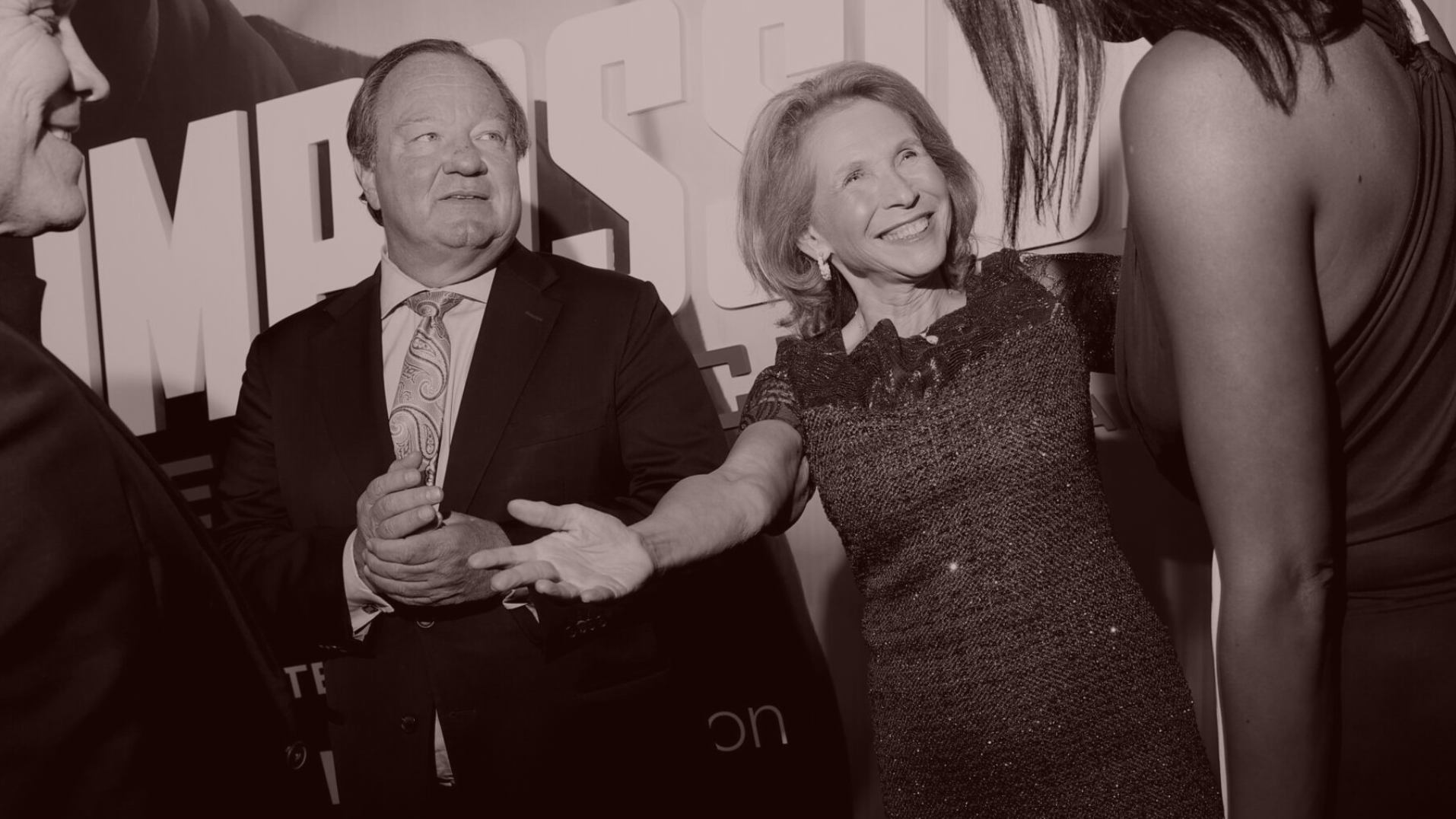
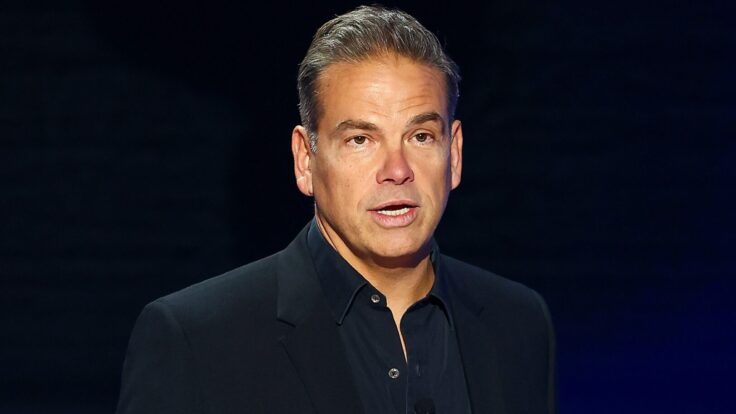
| It’s been a wild, disruptive, and occasionally sobering year for the streaming industry as Warner Bros. Discovery’s David Zaslav turned to licensing, Disney’s Bob Iger began merging Disney+ with Hulu, Paramount’s Shari Redstone searched for a buyer, and Netflix effectively declared victory in the streaming wars. It has also, of course, been an exciting year for those of us in the data analytics and forecasting business. You can read my 2023 predictions scorecard here, but in the meantime, I want to share my industrial forecast for the year ahead. Herewith… |
| 1. Google Will Continue to Quietly Dominate |
|
| One of the most enjoyable aspects of my day job at Parrot Analytics is talking with Hollywood executives about their content strategies. By the end of 2023, however, many of those conversations shifted to another topic entirely. Yes, the streamers are still focused on what titles and genres are performing best with different audiences. But they’re also increasingly fixated on how to own the user experience before subscribers even reach their platforms. After all, the only real estate possibly more valuable than the Netflix homepage is the initial landing screen that viewers first encounter when they turn on their connected TV: Roku, Amazon Fire, Google TV (the successor to the Android OS), Apple TV, etcetera.
Among the challenges facing legacy media players is maintaining relevance on the connected TV level—the user interface, operation software, or original equipment manufacturing (OEM) level. After all, the projections for streaming ad spend by 2024 ($11.1 billion) are one-third the projections for CTV ad spend ($31.8 billion), according to eMarketer. And Google, the biggest thinker of them all, has nearly four times the global market share in TV operating software—across dozens of manufacturing partners—compared to Apple and Amazon. While viewing time on hardware like Xbox, PlayStation, Fire TV, and Apple TV was down as much as 19 percent by Q4 2021 compared to Q4 2020, the viewing time on platforms like Roku, Samsung, LG, and Android exploded, according to media analyst Evan Shapiro. We spend a lot of time thinking and talking about Netflix and Disney+, but there is a reason that Disney executives think about Google more than any other company. |
|
A MESSAGE FROM OUR SPONSOR
|
 |
|
FOR YOUR CONSIDERATION IN ALL CATEGORIES INCLUDING
BEST PICTURE
GOLDEN GLOBE NOMINEE
Best Actor Drama – Andrew Scott
CRITICS CHOICE AWARDS NOMINEE
Best Adapted Screenplay Andrew Haigh
“The Best Film of the Year. Andrew Scott delivers an astounding performance. For those looking for a metaphysical masterpiece, it’s a brilliant and haunting narrative about grief, love and letting go of the past to find one’s self in the present.” – USA TODAY
“All of Us Strangers” Andrew Scott, Paul Mescal, Claire Foy, Jamie Bell and Writer Director Andrew Haigh in Conversation with Dave Karger from Turner Classic Movies.
WATCH HERE
|
|
|
| 2. Paramount Global Will Sell for Parts |
|
| There are now a number of potential buyers for Paramount Global. Skydance and RedBird are sniffing around the parent company, as my partner Matt Belloni first reported, and WBD’s Zaslav recently met with Paramount C.E.O. Bob Bakish. There’s also Comcast, of course, and the usual private equity players, possibly lurking in the background.
But after Redstone spent years consolidating her father’s empire, merging Viacom and CBS in a manner that vaporized billions in value, I don’t foresee Paramount trading in one piece—especially with its $10 billion market value and $15 billion in debt, and with Warren Buffett as its largest shareholder. As I noted last week, Shari’s media empire is worth more broken up into its constituent parts. CBS content, for example, accounted for one-third of all the audience demand for Paramount properties (or 4 percent of total U.S. demand), nearly double the next leading segment, with shows like NCIS and Criminal Minds routinely occupying four to six slots on Nielsen’s weekly Top 10 for acquired streaming titles. And eight of the top 15 acquired titles in 2022 were CBS shows, or aired on CBS channels.
That could be worth a pretty penny to Netflix, which wants more classic middle-America TV series, or even to Warner Discovery as Zaslav explores more licensing opportunities (“co-exclusive” is the hot new term of art in Hollywood). Hell, I could make an argument for Apple, which needs to expand its Apple TV+ catalog if it ever wants to be considered a competitive streamer. But, of course, the Redstones likely need to keep CBS inside the company to preserve the overall terminal value of the entity.
However, the Paramount studios and individual networks seem dispensable. BET recently received a new $3.5 billion bid from Byron Allen, up from the $2.7 billion he offered earlier in 2023. And Bakish is talking to a management-led group about a sale. Nickelodeon is still a treasure trove of kids’ classics that could be appealing to any number of mega-players—Google, Apple, etcetera—looking to catch up quickly in the category. The SpongeBob network already teams up with prominent YouTube creators, like Ryan Kaji of Ryan’s World, which has more than 36 million subscribers.
Most importantly, these would be easier individual sales in a regulatory environment that—bonus prediction!—I expect to get much stricter in 2024. Remember, the D.O.J. blocked Paramount from selling Simon & Schuster to Penguin Random House because the merger limited bargaining power for authors—not because of the impact on consumers. The new F.T.C. and D.O.J. merger guidelines specifically state that the agencies “will consider whether workers face a risk that the merger may substantially lessen competition for their labor.” This ominous phraseology is almost certainly occupying lawyers throughout the industry, especially after the multi-month SAG-AFTRA and WGA strikes, where inequality and lack of opportunity were key pain points. And don’t forget, too, that the botched PRH-S&S merger led to a management team bludgeoning at PRH and a diminished deal for S&S. No one wants to make these costly mistakes on a bigger scale. |
| 3. Sports Leagues Will Go FAST |
|
| Lots of industry experts believe that free ad-supported TV (FAST), a recent bright spot in the industry, may be in a bubble. For one, there’s not much difference between the biggest U.S. players (Pluto TV, Tubi, Freevee, etcetera). For another, the business is almost entirely reliant on older programming that’s also available on other SVOD and AVOD platforms, and there’s no definitive proof that their handful of original titles are finding new audiences. (The Emmy-nominated Jury Duty had a moment on Freevee, but it was helped by cross-promotion on Prime Video.)
And yet, there are some positives: The FAST market in the U.S. is projected to reach $10 billion by 2027, according to research firm Omdia. Furthermore, there are some 250 channels dedicated to a single piece of I.P. in the U.S. (e.g., Pluto TV has a channel that only runs NCIS). This may sound silly—MTV is often lampooned for running Ridiculousness on a constant loop—but it does present monetization options. Paramount or Amazon, say, could take some of their long-running shows, turn them into channels, and monetize that content downstream on a variety of different platforms.
But the biggest white spaces for FAST in 2024 are in local programming—look at platforms like Tubi, with its focus on local news content—and sports. Indeed, FAST platforms present a perfect experimental opportunity for leagues like the MLB, which has a tonnage issue and a media rights issue: too many games, declining viewership, and too many regional sports networks going under. Other leagues, like the NBA, are seeing deals being struck with broadcasters, like in the case of the Phoenix Suns, which went over the air ahead of this most recent season. Still, these arrangements aren’t meeting audiences where they are now. Instead, these deals, like the Suns’, are running to the places that they’re fleeing. The team handed out free antennas to fans ahead of the shift, but even that feels like placing a Band-Aid over a leaking pipe.
The beauty of FAST platforms is that they don’t have to air live sports on an exclusive basis. Games can simulcast on Pluto TV and CBS, for example, or on Fox and Tubi, which creates new monetization channels for the league, more targeted ad opportunities for distributors, and can reach younger audiences. Keep in mind that sports accounted for 117 distinct FAST channels as of July 2022—Impact! Wrestling, Billiard TV, and Fight Network to name a few— without any NHL, NBA, or NASCAR channels available, and we have yet to see a major FAST expansion for leagues such as the MLB, NFL, PGA Tour, or MLS.
Bonus prediction: Next year will mark the peak of sports docuseries and documentaries. Demand for these is falling on average compared to the outliers that drive strong peaks, and spending on these titles will increase in 2024 before starting to fall in 2025 and beyond. Sports docs have always been a bubble for a niche audience; that bubble is inflated, and it will soon burst. |
|
|
| 4. Netflix Will Advance in Gaming |
|
| Netflix Games has a lot to prove, but one truth is abundantly clear: it’s growing, and Netflix is heavily invested in its gaming division. More than 65 percent of survey respondents who use other video game subscription services said they were aware of Netflix Games, according to Statista, with about 23 percent saying that Netflix was one of their favorite services and 22 percent saying it was one of their most used. Netflix games have been downloaded by more than 70 million accounts, according to App Annie, with about 2.2 million accounts playing daily, according to CNBC in October. Most recently, Mike Verdu, Netflix’s head of gaming, told Axios that the company is working on making streaming games more seamless between TV, phones, and PCs, and that his division is developing AAA titles (blockbuster console and PC games) with veteran game developers.
Video game development famously takes a long, long, long time, and triple-A titles are expensive— big bets that can be extremely profitable or a huge waste of time and resources. Gaming was one of Bob Iger’s most public and self-proclaimed failures in his first tour at Disney. But it’s also, arguably, the future of entertainment.
Netflix’s progress here has been slow—less than 2 percent of all global accounts are interacting with its games, which are currently only available on mobile—but the company’s investment is ambitious. Netflix has acquired four game studios and created two in-house, and has more than 90 projects in development. While I don’t expect a major game to come out of Netflix in 2024, I do expect to finally see a stronger marketing push and more innovation, like better crossplay activity to bring a player’s TV screen into the mix rather than relying solely on mobile, or more eye-popping deals, like Netflix’s recent Grand Theft Auto licensing move. Netflix’s famous philosophy is crawl-walk-run: the lack of marketing is the crawl; the acquisitions and development the walk. I predict Netflix will enter the “run” phase in 2024—even if no new major game comes out in the next 12 months. |
| 5. The Bundle Will Move Beyond Streaming |
|
| I made a similar prediction last year, so I’ll keep it brief: Bundling is about to get bigger.
The reality is that direct-to-consumer entertainment companies aren’t just competing with one another, they’re also competing with all subscription products, including news platforms (like this one!), music streaming, meal delivery plans, fitness memberships, gaming services, and so on. And the best way to fight churn—the Sisyphean battle to keep customers once you have them—is to bundle products across categories.
This trend took off in 2023. Verizon’s myPlan offers ad-supported versions of Disney+ and Max at a $6 discount between the two services. Walmart partnered with Paramount+ to create its own Amazon competitor (the jury’s still out on whether it’s working); Apple partnered with Sony to offer free Apple TV+ access to PlayStation+ subscribers. I suspect we’ll see many more of these partnerships in 2024: Spotify could be bundled with Hulu (both companies have experimented with this before for students), for example, or The New York Times with Netflix, or PlayStation+ and Peacock.
The key to preventing customers from canceling subscriptions is to make products feel like a necessity. And the best way to do that is to create lifestyle bundles: packages of services that subscribers can engage with, in one way or another, virtually every day. Sans bundling, surviving the churn wars will require increasing customer acquisition costs, increased marketing costs, and increased content spend just to stay competitive. |
|
|
| That’s all for this year. They say only a fool makes predictions, but I somehow keep finding myself in this position. Only 365 more days to find out how much I got right and, inevitably, where I went wrong.
Until 2024,
Julia |
|
|
|
| FOUR STORIES WE’RE TALKING ABOUT |
 |
| Zaz & Shari |
| Zazmount possibilities, WaPo challenges, and CNN grumblings. |
| DYLAN BYERS |
|
 |
|
 |
| Matches on Fire |
| A close look at the great fashion correction of ’23. |
| LAUREN SHERMAN |
|
 |
|
|
|
|
|
 |
|
|
|
Need help? Review our FAQs
page or contact
us for assistance. For brand partnerships, email ads@puck.news.
|
|
You received this email because you signed up to receive emails from Puck, or as part of your Puck account associated with . To stop receiving this newsletter and/or manage all your email preferences, click here.
|
|
Puck is published by Heat Media LLC. 227 W 17th St New York, NY 10011.
|
|
|
|