 |
 |
|
Welcome back to What I’m Hearing+, my weekly deep dive into the data and dealmaking behind the streaming business. I’m coming to you from Seoul, during my first trip to Asia, where I’m trying to figure out how to stream Succession in both Japan and Korea. Tonight’s WIH+ completes our fun game of hypothetical streaming chess, focusing on the heavyweights: Netflix, Disney+, and HBO Max.
|
|
|
| For the past few weeks, I’ve shared a thought experiment I call platform chess—an exercise that I often employ with my clients at Parrot Analytics, where I work as director of strategy, to determine the genres in which each streaming service is under-invested, over-indexed, etcetera, specifically when it comes to originals they’re acquiring. In Part I, I examined the tech giant platforms: Apple TV+ and Amazon Prime Video, which still have room to grow. In Part II, I assessed the incumbents: Paramount+, Peacock, and Hulu, which have voluminous libraries, but must strategically horsetrade before they are bought or sold, themselves.
I’m not a creative executive, and I don’t pretend that I can re-program these platforms better than their own experts. But I can use proprietary data, as well as third-party sources like Nielsen and Antenna, to provide insights into what’s working, what’s not, and where capital could be deployed more effectively. Herewith, the third and final installment of my streamer report cards, focused on how Netflix, Max, and Disney+ are navigating the landscape—and where they can grow, or cut back, to create the largest and most stable businesses. |
|
A MESSAGE FROM OUR SPONSOR
|
 |
| |
|
|
|
|
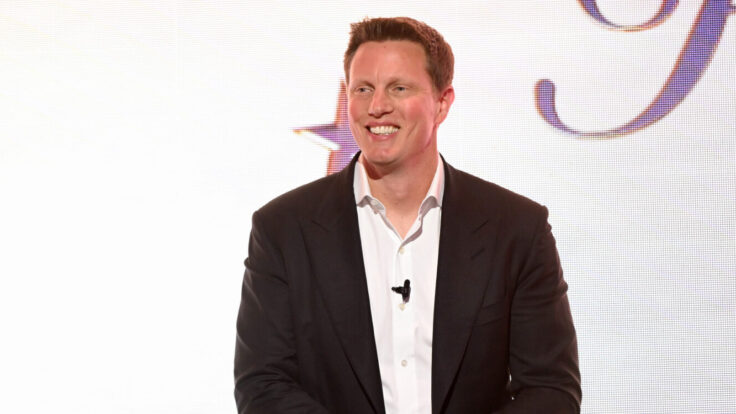
| Netflix, in many ways, is a victim of its own success. With around 232 million subscribers, the first pure-play streaming service was also the first to approach the limit of its total addressable market in the U.S. and Canada. But growth has slowed, forcing co-C.E.O.s Ted Sarandos and Greg Peters to launch ad-supported tiers, password-sharing crackdowns, and other pricing levers to reach new demographics and reduce churn. These pivots were largely greeted with schadenfreude by industry competitors. In reality, however, they were smart and necessary tools for opening new revenue streams. In its infancy, Netflix espoused the virtues of ad-free, direct-to-consumer streaming; in middle age, it has embraced the revenue agnosticism of a mature public company.
Of course, Netflix’s other available lever is tweaking its content strategy, which was historically a “something for everyone” approach, first with hugely popular non-Netflix originals—Grey’s Anatomy, Friends, and Shrek, for instance—and in recent years, as competitors clawed back hits, with its own original versions of those hits.
One of the most fruitful areas that the company has explored is children’s programming. There is a positive 4 percent difference in demand and supply for school age content on Netflix, and a 1.5 percent difference for preschool content, meaning there’s room to grow the investment. And while Netflix has already spent significantly in this space, including on partnerships like Moonbug’s Cocomelon and Miraculous: Tales of Ladybug and Cat Noir, it’s clear that there is even more value to unlock.
The kids’ market, as we understand it, is largely overlooked. These days, the most dominant children’s entertainment app isn’t Disney+ or HBO Max or Paramount+ (home to Nickelodeon)—it’s YouTube. Beyond YouTube, it’s probably TikTok. And that suggests an opening for Netflix. As parents become increasingly concerned about social media, many sense a consensus emerging to push kids to safer media environments.
On this front, Disney+ has a nice cushion— it’s still the most recognizable children’s brand on Earth. But Netflix has a key advantage where Disney+ struggles: it offers content for every stage of a child’s entertainment lifecycle. Increasingly, new audiences are arriving young and staying with the same service as they get older—aging into new movies, shows, specials, etcetera. But good kids’ content, as parents know, is remarkably “sticky.” They watch and rewatch and rewatch. This explains why Cocomelon appears in Nielsen’s Top 10 most weeks, and why Disney+ movies repeatedly show up on the Top 10 movie list. Netflix also has mom, dad, and big sister’s favorite shows, creating a value package for an entire family.
Sarandos once said that Netflix was racing to become HBO before HBO could become Netflix. But looking at other metrics, including a positive 1.2 percent gap between the supply and demand for sitcoms, there’s a clear advantage to Netflix leaning into the sort of broad fare that’s historically worked for the biggest networks. And catering to children, especially during an era of parent anxiety about what they’re seeing on the web, is the perfect top-of-funnel strategy. |
|
|
|
|
| I would say Rest In Peace to HBO Max—a name we barely knew, borne from the ash of the last entertainment phoenix, HBO Now, and, I suppose, the phoenix before that, HBO Go—except that the core of what made the platform so appealing to consumers was basically just the “HBO.” Fantasy dramas, political dramas, and teen dramas make up some of the strongest overall subgenre demand for Warner Bros. Discovery’s crown jewel, sitting at 3.5 percent, 1.1 percent, and 0.9 percent, respectively.
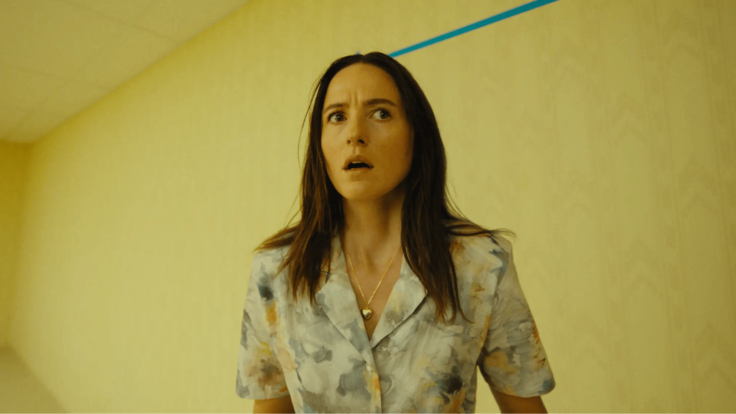
It’s quite easy to see those defining genres and think, duh, Game of Thrones and Euphoria are core to the HBO brand. But they’re more than that. HBO Max, which becomes Max on May 23, has nicely leveraged its hits and bolstered them with shoulder content. The Sex Lives of College Girls enjoys high overlap with Euphoria and Girls, and has also unlocked an audience younger and more female than the core HBO crowd. Fantasy titles like His Dark Materials also have a footprint beyond HBO, and can potentially act as customer acquisition drivers because they fulfill the core needs of the platform yet also appeal to slightly different audience clusters. TV is a hits business, after all, and hits will always drive the strongest level of subscriber acquisition and retention. But knowing the areas to expand, while keeping in line with brand and audience expectations (and where to pull back), can help with portfolio optimization and content valuation.
On the flip side are the areas where supply exceeds demand. This doesn’t imply that investment should stop in those areas (data is best used for context, not as the deciding factor in title acquisition), but it should perhaps be rethought. And the data clearly shows that Max has too many underperforming reality shows, biographical documentaries and historical docs, which evidence a supply-demand gap of -3.7 percent, -1 percent, and -0.9 percent, respectively.
Audiences might be scratching those genre itches on other platforms, like Bravo (via Peacock)—or perhaps the programming itself doesn’t align with the more specific interests of the Max audience. It could be as simple as the currently reality offering on-platform isn’t appealing to any audience, and taking off-platform reality that performs better (like the Discovery fare) increases demand for reality on-platform. Or, it could be that audiences in general do not care for reality on Max—and that’s the big experiment we’re going to see play out.
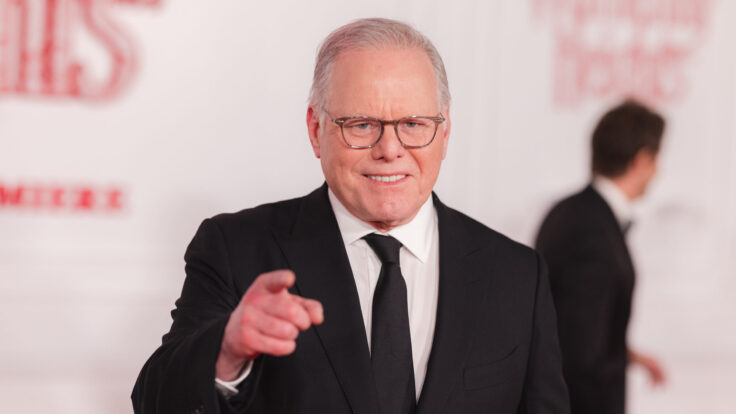
WBD C.E.O. David Zaslav’s big bet is that Max’s success depends on a combination of these considerations. He wants to marry the prestige-based content clusters of HBO while cutting spend on the underperforming prestige-ish reality and doc stuff, replacing it with the existing mid-market reality fare in the Discovery library. For example, would someone rather watch a more upscale show trying to replicate what Guy Fieri or Chip and Joanna do, or would they just rather watch the originals? Peacock is leaning into a similar strategy with its seemingly endless Bravo reality content.
In short, if the product team can figure out how to best utilize the various types of content crowding the experience, Max will be able to expand its audience by offering shows that build out the traditional HBO clusters. After all, that decreased level of demand versus supply takes into account shows that are currently on platform; not what’s off-platform. It will be interesting to see how those figures might change six months after Discovery content is incorporated into Max, which will effectively prove, or disprove, the Zaz Thesis. |
|
|
| Despite serving as a hub for some of the most expansive franchises in history (Marvel, Star Wars, Pixar, etcetera), Disney+ still presents as something of a niche service because of its focus on families—few other streamers feel quite so essential for parents and kids. As long as no one comes along with better animated offerings (e.g. Universal’s recent hot streak with Illumination films, which typically head to Peacock or Netflix), Disney+ has a stable base of around 161.8 million global subscribers who aren’t going anywhere.
The bigger question for Disney+, of course, is how to expand beyond family-oriented genre fare into broader, more adult content, making D+ intriguing for people outside of those audience clusters—in other words, the precise strategy that Netflix has articulated. As usual, the answer comes down to The Great Hulu Question.
The reason I saved Disney+ for last is because the fundamental question for the company isn’t whether to invest in areas where there is slightly higher demand than supply (like musical comedies at 0.5 percent, or spy action series at 1 percent), but whether these are areas that Disney wants to get into with Disney+—or if C.E.O. Bob Iger wants to keep its non-Star Wars, non-Marvel, non-kids’ content on Hulu.
Only a few years into its journey, Disney+ is facing the complex question of what it wants to be when it grows up. Unlike some other platforms, Disney+ doesn’t have consumers questioning its purpose. People get it. Baby Yoda and Disney+ are a very understandable sell. The issue is how to make Disney+ work beyond the fans and to reach those who aren’t thinking about Disney+ at all. And does Hulu, a platform that isn’t differentiated enough from competitors to drive huge business, and is one-third owned by a competitor (and possible suitor in Comcast), play a role? This is the $30 billion-ish issue that Iger is paid handsomely to figure out.
Platform Chess is simply a game—one that imagines different pathways to take down an opponent’s queen. And we’ve entered a stage in the streaming industry where external forces are constantly shifting where those pieces sit, and what directions they can take. This hypothetical game offers just one view of what many of these platforms could do; but much like actual chess, there are thousands of different attacking strategies that companies will try. Things change fast—which is why not everyone can win. |
|
|
|
| FOUR STORIES WE’RE TALKING ABOUT |
 |
|
 |
| Trump’s N.H. Odds |
| On Trump’s odds, DeSantis’s stumbles, and Youngkinology. |
| TARA PALMERI |
|
 |
|
 |
|
|
|
|
|
 |
|
|
|
Need help? Review our FAQs
page or contact
us for assistance. For brand partnerships, email ads@puck.news.
|
|
|
|
Puck is published by Heat Media LLC. 227 W 17th St New York, NY 10011.
|
|
|
|