 |
 |
|
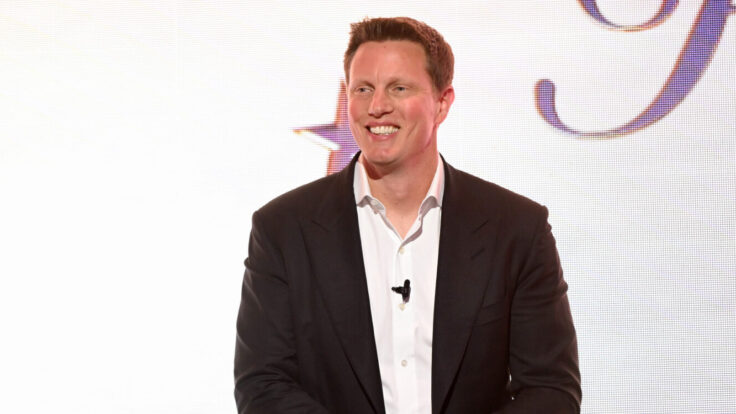
Welcome back to What I’m Hearing+, the Tuesday protein boost to your usual What I’m Hearing smoothie. Regular readers know I’m not a huge fan of Michael Rubin, C.E.O. of the sports apparel company Fanatics, mostly because of his shameless self-promotion and reputation for, uh, aggressive business practices. Today, Eriq Gardner is here with an exploration of the consequences of some of those practices—namely, enough litigation to fill an entire white party with white-shoe lawyers. But first, a couple smaller items from Eriq and the legal world…
|
|
|
- Lou Dobbs’ death delays Fox defense: Electronic voting system company Smartmatic will eventually get to trial against Fox News over 2020 election conspiracies, but don’t count on it happening soon. Lou Dobbs was a co-defendant in the case, and his passing last week triggers a New York law that puts proceedings on pause until his estate can be properly substituted. From what I hear, Fox wants to delay the all-important summary judgment stage, where evidence in the case would be laid bare.
Once the drama resumes, the absence of Dobbs will undeniably shape the proceedings. Known for his explosive comments on air, including dubbing the 2020 vote tabulation a “cyber Pearl Harbor,” Dobbs was a central figure in the case. His deposition can be played at trial, yet under New York’s “Dead Man Statute,” the jury won’t hear any witnesses testify about what Dobbs told them. I’m sure someone could concoct a conspiracy theory about that.
- MSNBC’s day in court: Speaking of defamation: Mahendra Amin, the ob-gyn suing NBC for $30 million after MSNBC falsely reported that he had overseen “mass hysterectomies” at an immigration detention center in Georgia, has now had her case set for a trial. We’ll have to wait until April 22 to find out whether Rachel Maddow, Chris Hayes, and Nicolle Wallace—all of whom covered the original story—will take the stand and testify in MSNBC’s defense.
- Geragos gets Vander-dumped: Catch the latest twist in Bravo’s Vanderpump Rules saga? Star Tom Sandoval has withdrawn his privacy invasion action against ex-girlfriend Ariana Madix. He’s also sacked his attorney, Matt Geragos, for supposedly not making it clear to him that a cross-complaint is essentially the same as launching a full-blown lawsuit—something that predictably annoyed Sandoval once the tabloids pummeled him with headlines.
But that’s not the weirdest part. As it turns out, Geragos is the brother of Mark Geragos, the attorney representing Rachel Leviss in the “revenge porn” suit she filed against Sandoval and Madix back in February. (Consult my prior article or talk to Puck’s Gaby Grossman if you need a “Scandoval” refresher.)
Now, how do two brothers end up on opposite sides of a high-profile, made-for-the-tabloids case? I asked Mark, but he sidestepped my question and quipped that in fact his son and his niece are “both better lawyers than either Matt or me.” Please, someone, get the Geragosi their own reality show...
|
| ✍️ By the way, we’ve updated our Newsletter Experience questionnaire for Puck subscribers. If you haven’t filled yours out, it takes less than 3 minutes, and your feedback will help us develop new products and services. Click here to complete the brief survey—no need to log in. Thanks! |
 |
| White Party Down |
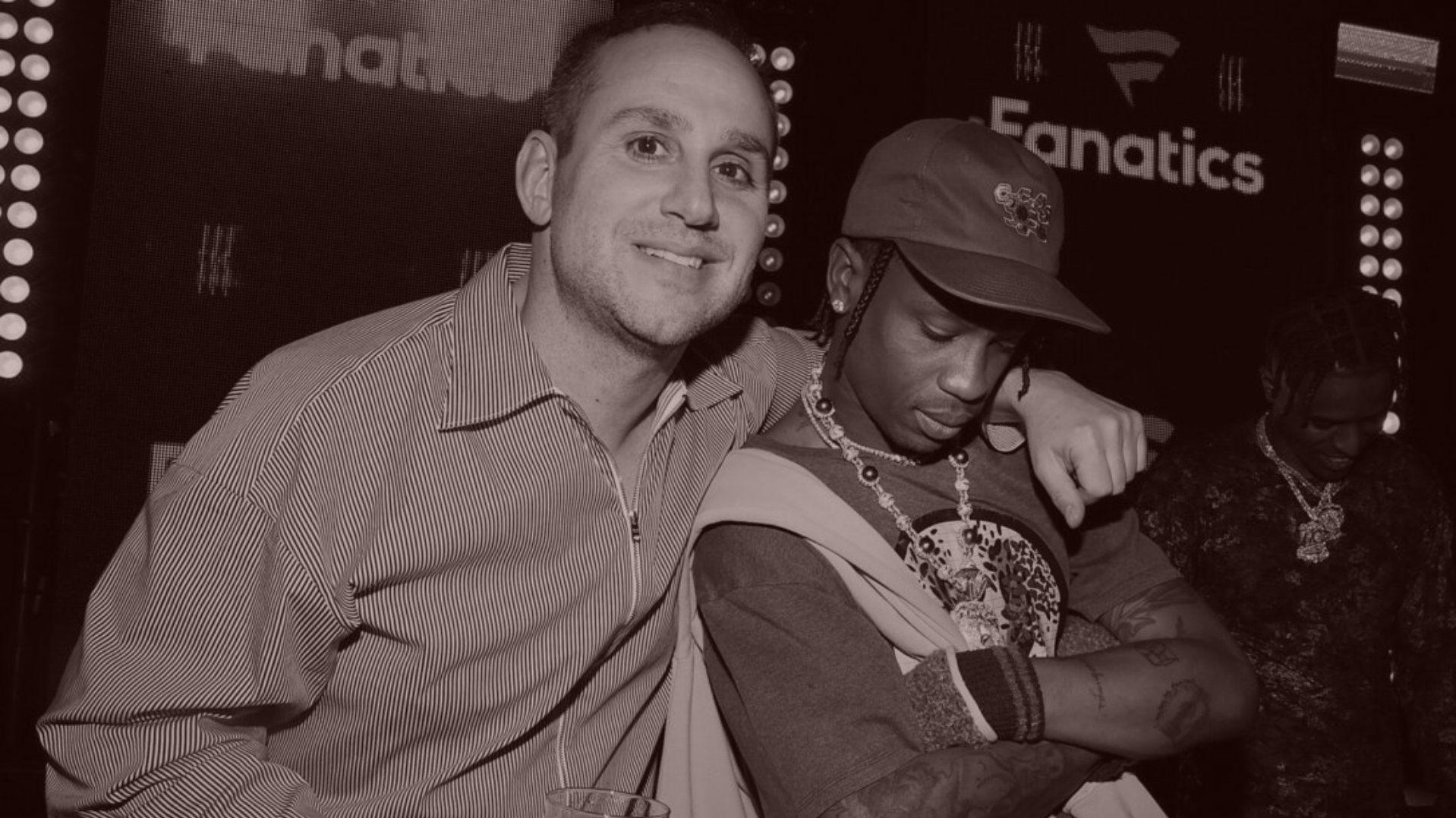
| For years, Fanatics C.E.O. Michael Rubin has created a nouveau riche fantasy life, best encapsulated by his Hamptons summer “all-white” party, based on his sports merchandising juggernaut. Now, a series of legal headaches threaten Fanatics’ I.P.O., and the industry, itself. |
|
|
|
| This month, two events highlighted the outsize ambitions of Michael Rubin, the billionaire Fanatics C.E.O. who has reshaped the sports landscape through high-profile dealmaking. The first, of course, was Rubin’s annual all-white party over the Fourth of July weekend, held at his $50 million Hamptons oceanfront home. The celebrity guest list included the Kardashians, Tom Brady, Drake, Robert Kraft, and Leonardo DiCaprio, each of whom dutifully donned colorless outfits and left with a brand-new pair of custom Air Jordan 1s. Rubin, never one to miss an opportunity to promote himself, then posted multiple videos of the whole affair on his Instagram.
The second, more subdued event took place Monday in a Boston courtroom, where questions surrounding Rubin’s recruitment of the head of Fanatics’ L.A. office, Michael Hermalyn, were being adjudicated before the 1st U.S. Circuit Court of Appeals. The case is tied to a January dinner at Rubin’s New York City apartment, when he approached Hermalyn, a former CBS executive charged with handling V.I.P. partnerships at DraftKings, about spearheading a new Fanatics division aimed at cultivating celebrities and influencers. A few days later, the two men reconvened in Pennsylvania, and Hermalyn agreed to come aboard, pending the resolution of some final issues. |
|
A MESSAGE FROM OUR SPONSOR
|
 |
| Introducing an exclusive bond portfolio personalized by Betterment to your tax situation – automatically seeking additional after-tax yield.
Finally, a bond portfolio with you in mind.
Get started today. |
|
|
| As it turns out, one of those issues may have been Hermalyn’s employment deal with DraftKings, which included non-compete, confidentiality, and non-solicitation provisions. In a scenario that could have been lifted from Seinfeld, Hermalyn told his bosses at DraftKings he needed time off to mourn a friend who had passed away in New Jersey, but then hopped on a plane to Los Angeles. Once he arrived at yet another one of Rubin’s homes, according to legal papers filed by DraftKings, he started downloading several of the company’s “closely guarded and most valuable business documents” related to DraftKings’ V.I.P. business (while also hunting online for an L.A. home of his own). The ploy was uncovered by a forensic investigation after Hermalyn resigned from DraftKings on February 1, and the ensuing bicoastal battles culminated in an injunction against Hermalyn that has landed in federal appeals court.
If this episode were merely about a top executive relocating to labor-friendly California to dodge a non-compete, it would be interesting enough. But the conflict is just one point of light in a constellation of legal challenges Rubin faces as he aggressively forges into new markets. Also among them is an antitrust showdown with the trading card giant Panini over exclusive rights agreements that Rubin’s company recently struck with sports leagues, and a heated arbitration—with potentially billions at stake—over the company’s incursion into the football card market. (A decision is expected imminently.) The legal blowback against Fanatics—a $31 billion company that has raised money from Silver Lake, Softbank, and BlackRock—might not only reshape the company, but have ripple effects across the entire entertainment industry. |
|
|
| While Fanatics operates in what some see as a niche corner of the entertainment industry—apparel, autographs, bumper stickers, memorabilia, etcetera—this is actually a highly lucrative and legally adventurous sector, and one with a rich history of setting precedents. For example, the “right of publicity,” which established that famous individuals have a right to license their likeness, emerged from a groundbreaking 1950s legal battle between Bowman and Topps, two baseball card manufacturers. The ruling led to the baseball card boom, which indirectly led to the unionization of professional sports (group licensing became a crucial revenue stream for the then-fledgling baseball players’ union), and a series of antitrust investigations and lawsuits spanning several decades. (A recent paper in the University of Illinois Law Review lays out this fascinating history.)
Against this backdrop, Fanatics entered the fray. In 2002, after selling an e-commerce company to eBay for $2.4 billion, Rubin made sports merchandise his next target. In the following years, the Villanova dropout meticulously grew his company through incremental acquisitions and a data-driven approach to enhancing the fan experience. His most splashy move came in 202l, the year that Topps, then owned by former Disney C.E.O. Michael Eisner, was set to go public via a SPAC merger. Instead, Fanatics swooped in to score an exclusive deal with MLB and its players union, causing the expected value of the merged company to nosedive, essentially killing the deal. Outmaneuvered for a crucial license, Eisner capitulated and sold Topps to Fanatics.
Fanatics soon forged partnerships with the NFL, NBA, and the WWE, bringing it into direct conflict with Panini, an Italian trading card conglomerate that was unwilling to fold as easily as Topps. Panini hired famed litigator David Boies to pursue a bold antitrust case, contending that Fanatics’ lengthy exclusive deals with leagues—some lasting up to 20 years—would monopolize the market. The case, currently active in New York federal court, accuses Fanatics of wielding control over a specialty manufacturer to limit competition. |
|
|
| Panini has also taken legal action against numerous former high-ranking employees who left to join the competition. Court documents stipulate that, in 2021, Fanatics fomented the early termination of Panini’s existing deals with the NBA and NFL by draining the resources needed to fulfill contractual obligations. (Rubin poached executives in charge of product development and athlete relationships, although the details are heavily redacted.) Fanatics then allegedly set up shop near Panini’s Dallas-Fort Worth offices, positioning itself as a lifeboat for employees aboard a “dead” ship, coaxing them to jump aboard if they wished to continue their careers.
In response to the antitrust complaint, Fanatics hired legal juggernauts Latham & Watkins and Quinn Emanuel to paint itself as an overdue disruptor in a stagnant industry. The defense is portraying Panini as hypocritical, pointing out that the company became a market leader through similar exclusive, multiyear licenses. “The leagues and the PAs picked Fanatics because it offered them innovative ideas,” one motion argues. “That is the portrait of competition working.”
Boies, meanwhile, is emphasizing to a New York judge that the “extreme duration and combination of these licenses” has never been seen before, and that Fanatics is attempting to lock down the trading card market for decades. He also suggests that, just because intellectual property is involved, that doesn’t mean that Fanatics is entitled to a “get out of jail” antitrust ruling—an argument that may be of special interest to dealmakers in entertainment and media.
While both parties await a judge’s decision on whether the case can proceed, the financial strains on Fanatics seem to be intensifying. A few days ago, my colleague William Cohan reported that an I.P.O. is now seemingly off the immediate agenda, projected revenues are down a billion dollars from the previous year (a claim Fanatics disputes), credit agencies have downgraded the company’s debt rating, and there are indications that Rubin has been exploring the sale of a significant portion of his Fanatics stake—although this too has been denied by a company spokesperson. |
|
|
| The Sunday Ticket Question |
|
| Fanatics may also need to navigate fallout from the recent $4.7 billion NFL Sunday Ticket verdict. At first glance, the head-spinning jury verdict last month may seem unrelated, since the trial centered on the NFL’s licensing of an expensive package of out-of-market telecasts, and Fanatics isn’t a TV company. However, the backbone of the case involved the pooling of rights by NFL teams, a practice with which Fanatics is deeply familiar, as its business relies heavily on the legality of group licensing.
If the Sunday Ticket case emboldens class-action lawyers to challenge similar top-down licensing arrangements in other sectors, that could potentially become a problem for Fanatics, which is already facing one similar case. A few months ago, on the precipice of the Sunday Ticket trial, Fanatics was named as a co-defendant in an antitrust suit that contends NFL teams should be competing with each other to sell or license official merchandise. Should the NFL fail to persuade an appeals court that its joint licensing arrangements don’t equate to price-fixing, it could open the floodgates for similar challenges.
Meanwhile, Fanatics’ rivals are not sitting idle. Panini, notably, is entrenched in an arbitration battle with the NFL Players Association concerning the premature end of its deal. Panini is pursuing billions of dollars in damages, with a decision expected soon. The implications of any substantial financial judgment against the NFLPA, particularly in the shadow of the Sunday Ticket decision, could signal broader issues in sports licensing and maybe beyond. (Keep your eye, for instance, on group licensing developments on the A.I. front.) While Fanatics fancies itself a disruptor, exactly how it navigates these complex legal waters—and what ripple effects these challenges might have on its strategy and industry standing—will be fascinating narratives to watch. Expect to see some big rulings on this front in the coming weeks and months. |
|
|
Thanks Eriq, fascinating stuff. That’s it for today, see you on Thursday…
Matt |
|
|
|
| FOUR STORIES WE’RE TALKING ABOUT |
|
|
|
|
|
 |
|
|
|
Need help? Review our FAQs
page or contact
us for assistance. For brand partnerships, email ads@puck.news.
|
|
You received this email because you signed up to receive emails from Puck, or as part of your Puck account associated with . To stop receiving this newsletter and/or manage all your email preferences, click here.
|
|
Puck is published by Heat Media LLC. 227 W 17th St New York, NY 10011.
|
|
|
|